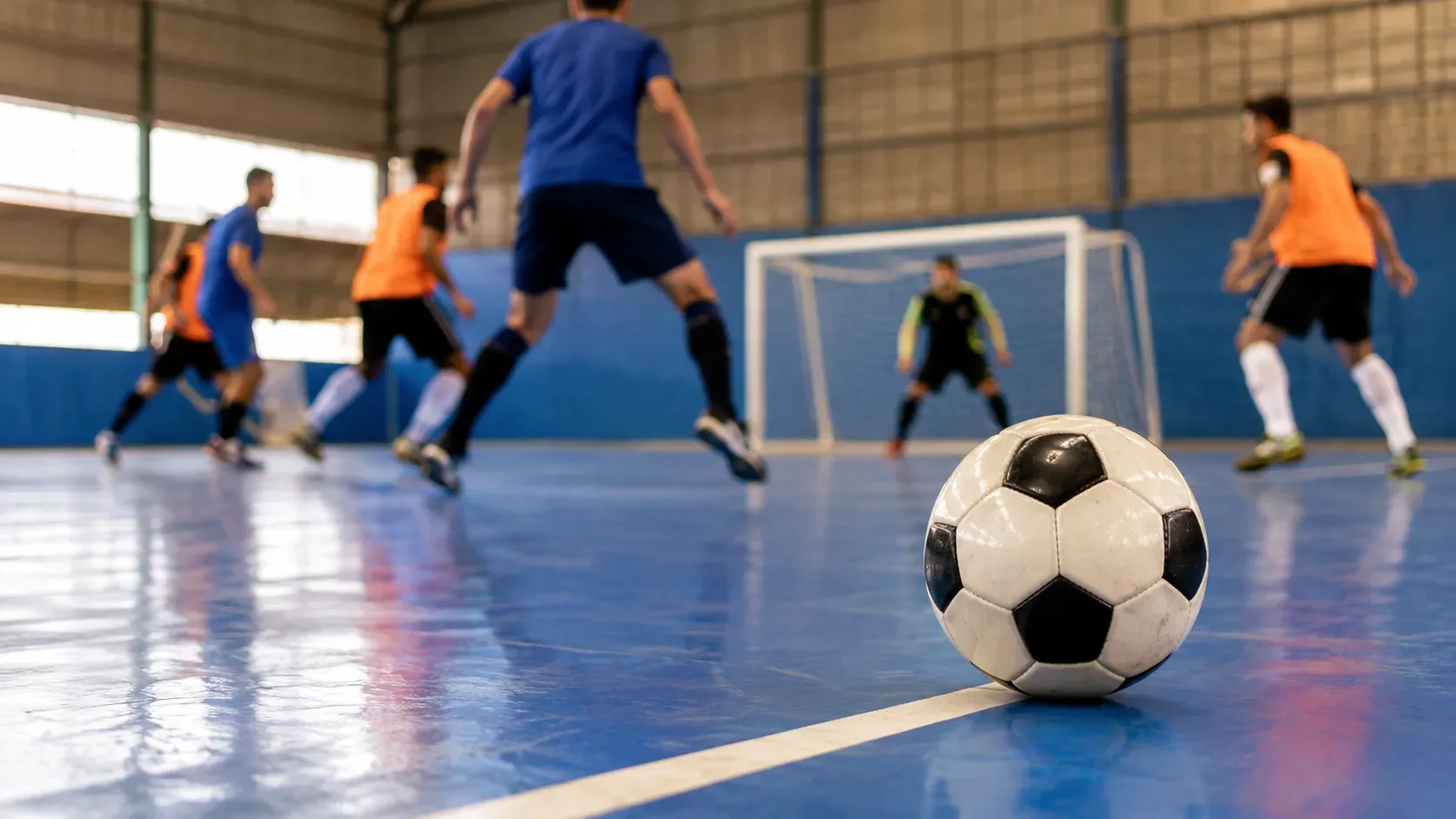
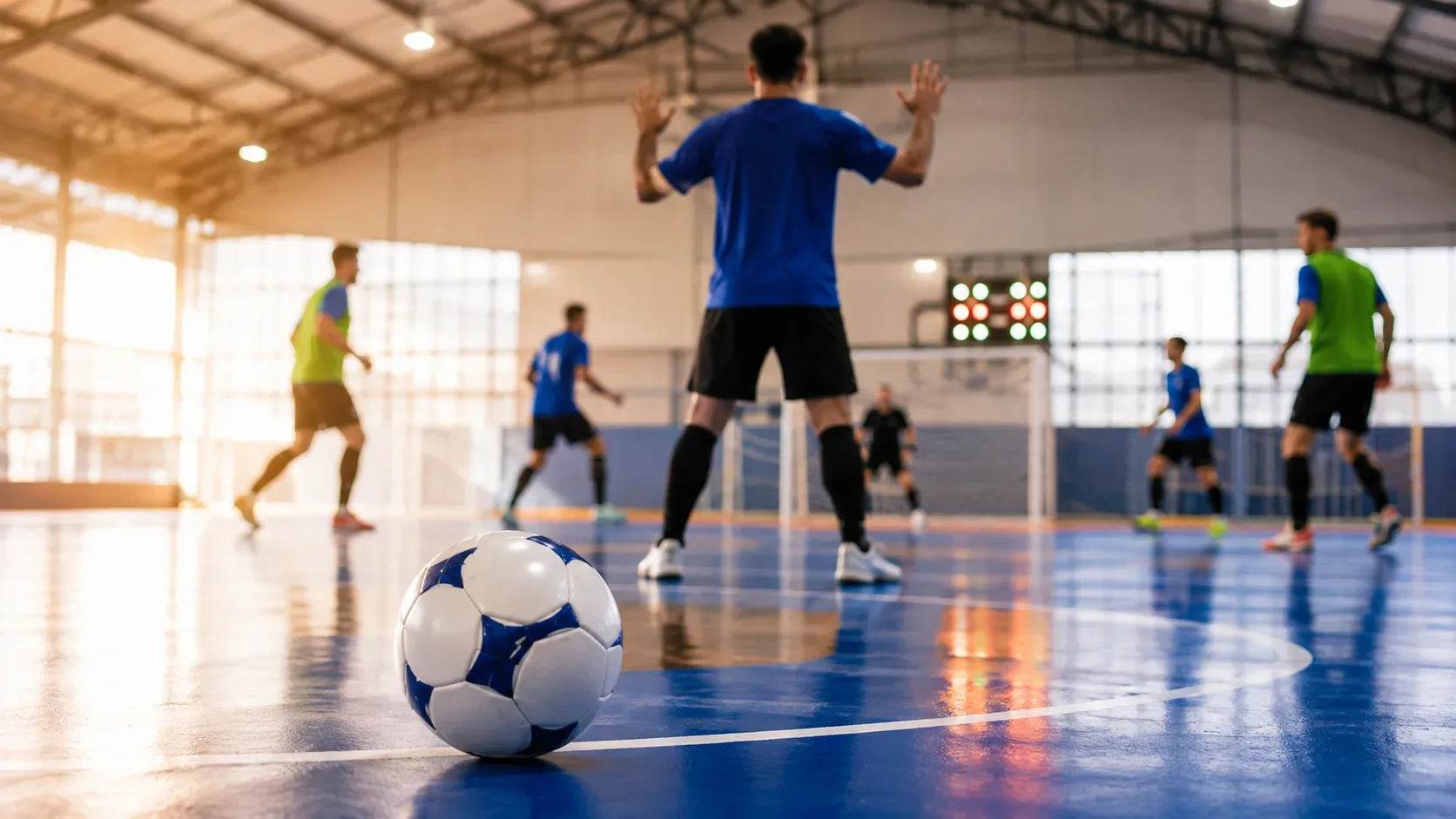
The Aracaju Deaf Futsal Cup will have six matches on Thursday, August 6, and Friday, August 7, 2026, at Parque Governador Augusto Franco, known as Parque da Sementeira. The games start at 6pm and involve four local teams: Ipaese, Saju, Desportiva Saju and Clube Futsal de Surdos.
The schedule was published by Aracaju City Hall at 11:55 am this Wednesday, August 5th. The competition follows the rules of the Brazilian Futsal Confederation, with communication adaptations: the referees use visual flags to replace the whistle, and Libras interpreters accompany the rounds.
There is, however, practical information that does not yet appear in the official release: public entry, the exact point of departures within the park, the operation of the parking lot and the accessibility features intended for spectators. Anyone who intends to follow the games should check for possible updates before leaving home.
Schedule for the Aracaju Futsal Cup for the Deaf
City Hall announced the six clashes and the order of matches. The statement provides individual schedules only for the first two games on Thursday. The third will be carried out “following”. For Friday, the organization confirms the start of the round at 6pm, but does not associate a specific time with each of the three games.
| Date | Times published | Departure |
|---|---|---|
| Thursday, August 6th | 6pm | Ipaese x Deaf Futsal Club |
| Thursday, August 6th | 7pm | Deaf Futsal Club x Saju |
| Thursday, August 6th | In sequence | Desportiva Saju x Ipaese |
| Friday, August 7th | Rounds from 6pm | Saju x Desportiva Saju |
| Friday, August 7th | In sequence | Deaf Futsal Club x Desportiva Saju |
| Friday, August 7th | In sequence | Ipaese x Saju |
Please note: it is not safe to present Thursday's third game or Friday's last two as games officially scheduled for 8pm or another designated time. Although the clashes are sequential, these individual times were not published in the municipal note consulted.
The initial announcement of the competition stated that the matches would be played between 6pm and 9pm, with games consisting of two 20-minute halves. This information helps to estimate the duration of the round, but does not replace an updated table with the time of each confrontation.
Why there will be three games a night
This week's schedule brings together regular rounds and matches that needed to be rescheduled. According to the Municipal Secretariat for Youth and Sports, the games scheduled for the previous Friday were canceled due to the heavy rains recorded in Aracaju.
Therefore, exceptionally, the nights of August 6th and 7th will have three clashes each. The City Hall states that the matches will end the first round of the competition. The statement, however, does not present the complete regulations, the classification table, the tiebreaker criteria or the structure of the following phases.
In the opening round, the four teams scored 14 goals. Desportiva Saju beat Clube Futsal de Surdos 9-1, while Ipaese defeated Saju 3-1. These results were released by the organization, but the updated classification did not follow this Wednesday's schedule.
How visual refereeing works in deaf futsal
The central point is not to remove traditional refereeing, but to make perceptible commands that, in a conventional match, would depend mainly on sound.
The City Hall informs that the Aracaju Cup adopts the rules of the Brazilian Futsal Confederation and uses visual signals by the referees to replace the whistle. Therefore, interruptions, clearances and restarts need to be communicated in a way that athletes can visually perceive the decision.
The logic follows a consolidated principle in deaf sports: the technical rules of the sport are preserved, while the sound signals essential to competition are converted into visual signals. The regulations of the International Committee on Sports for the Deaf require that sports federation rules be applied with adaptations whenever visual cues need to replace auditory cues.
What changes during the match
The whistle is no longer the only or main means of informing that the game must stop, continue or restart. Communication needs to enter the players' field of vision through the flags used by the referee.
The City Hall note does not detail which equipment will be used in Aracaju. Therefore, it is not possible to say, without further confirmation, whether the system uses lights, flags, extended gestures or a combination of these features.
The regulations of the Brazilian Futsal Confederation also include standardized gestural signaling for decisions such as fouls, advantages, free kicks, cards, start and restart of the game. The 2026 edition of the rulebook is the national reference adopted by the entity and state federations.
What doesn't change
Visual adaptations do not transform the competition into another modality. Fundamental elements of futsal remain, such as:
- the technical and disciplinary decisions of the referees;
- marking fouls and applying cards;
- game restarts;
- time control;
- replacements;
- the definition of goals and the result of the match.
There is also no indication that Libras interpreters replace referees or participate in technical decisions. The official information is limited to stating that they will be present throughout the round as an accessibility and communication resource.
What is the role of Libras interpreters
The presence of interpreters can facilitate organization guidelines, warnings, communication with teams and other interactions carried out outside the strictly technical dynamics of arbitration.
It is important to separate these functions. The referee conducts the game and makes sporting decisions; the interpreter acts in accessible communication. The municipal publication does not describe in detail the position of the professionals, the moments of interpretation or the service provided to the deaf public in the stands.
This is information that deserves to be detailed in future updates, especially because accessibility for athletes and accessibility for spectators are not necessarily the same thing.
Where the games will be held
The competition takes place at Parque Governador Augusto Franco, Parque da Sementeira. The initial release of registrations mentioned the park's gymnasium, while the schedule published on August 5th only mentions Parque da Sementeira.
The space underwent a revitalization carried out in October 2025. Among the structures disclosed are two sports courts, bathrooms, changing rooms, common areas, sensory gardens and sports equipment. The existence of these structures, however, does not allow us to conclude which court will host the World Cup or which entrance should be used by the public.
The park's institutional page reports daily operation from 5am to 10pm. This time is compatible with the schedule scheduled for the games, but does not confirm that the specific area of the competition will be open to spectators nor that entry will be permitted until the end of the last match.
What to confirm before going to Parque da Sementeira
Public entrance
City Hall did not inform whether the matches are open to the public, whether there is a need for accreditation or whether there is a capacity limit. No ticket price was announced either. Therefore, the event should not be advertised as free or freely accessible without confirmation from the organization.
Court and internal access
The park has more than one sports structure. The publication does not present a block number, entrance gate, internal reference or access map.
Parking
No details were disclosed about available spaces, vehicle entry, reserved areas, charging, blocking or special traffic operation for both nights.
Accessibility for spectators
Visual signage and Libras interpreters are confirmed for the competition. Public-facing resources, such as:
- accessible route to the court;
- places reserved for people with reduced mobility;
- visibility of the flags from the stands;
- interpretation of warnings and ceremonies;
- accessible bathrooms close to the games area;
- service for other accessibility needs.
Possible programming changes
As previous matches were canceled due to rain, it is recommended to consult the official channels of Aracaju City Hall and the Municipal Secretariat for Youth and Sports on the day of each round. The August 5 publication does not present a contingency plan for a new change.
Visual arbitrage is accessibility, not separate attraction
The question “how does the referee conduct a match when the whistle cannot be the main signal?” helps explain a practical solution, but should not turn deafness into a spectacle.
In deaf sports, the visual resource works as a communication infrastructure. The objective is to ensure that all athletes receive the same command at the appropriate time, without unnecessarily altering the technical essence of the sport.
The International Committee on Sports for the Deaf summarizes this principle by indicating that, in many sports, the rules remain the same and the main adaptations make visible information that would normally be transmitted by sound.
For those who follow the match, observing this structure also helps to understand that accessibility is not just about allowing a person to be present in a certain space. It is about ensuring that information, decisions and changes are communicated in formats that can be understood by all participants.
Checklist to follow the games
Before leaving home:
- Save the order of the six clashes.
- Confirm that the schedules have been updated.
- Check if public entry has been authorized.
- Look for the signs for the court or gym inside the park.
- Confirm parking and access conditions.
- See the accessibility features offered to viewers.
- Arrive early, as the matches will be played in sequence and may start right after the previous game ends.
Frequently asked questions
Is the Aracaju Deaf Futsal Cup open to the public?
The official publication consulted does not indicate whether there will be spectators. It also does not advertise admission, accreditation or free admission. The information must be confirmed with the organization.
Do all games have a set time?
Games start at 6pm. On Thursday, the first two clashes are announced for 6pm and 7pm; the third will be carried out next. On Friday, City Hall released the order of the three matches and only informed that the round starts at 6pm.
Does the referee use a whistle?
The City Hall informs that visual signals will be used to replace the whistle. The note does not describe the specific model or operation of the equipment.
Are the rules different from conventional futsal?
The competition follows the rules of the Brazilian Futsal Confederation. The confirmed adaptations are related to visual communication and the presence of Libras interpreters.
Which court at Parque da Sementeira will the games take place on?
The latest schedule does not identify the court, gate, or interior point. The initial release mentioned the park's gym, but updated access guidance is still needed.
Save the schedule and follow the local blog calendar for updates on times, public access and event structure.