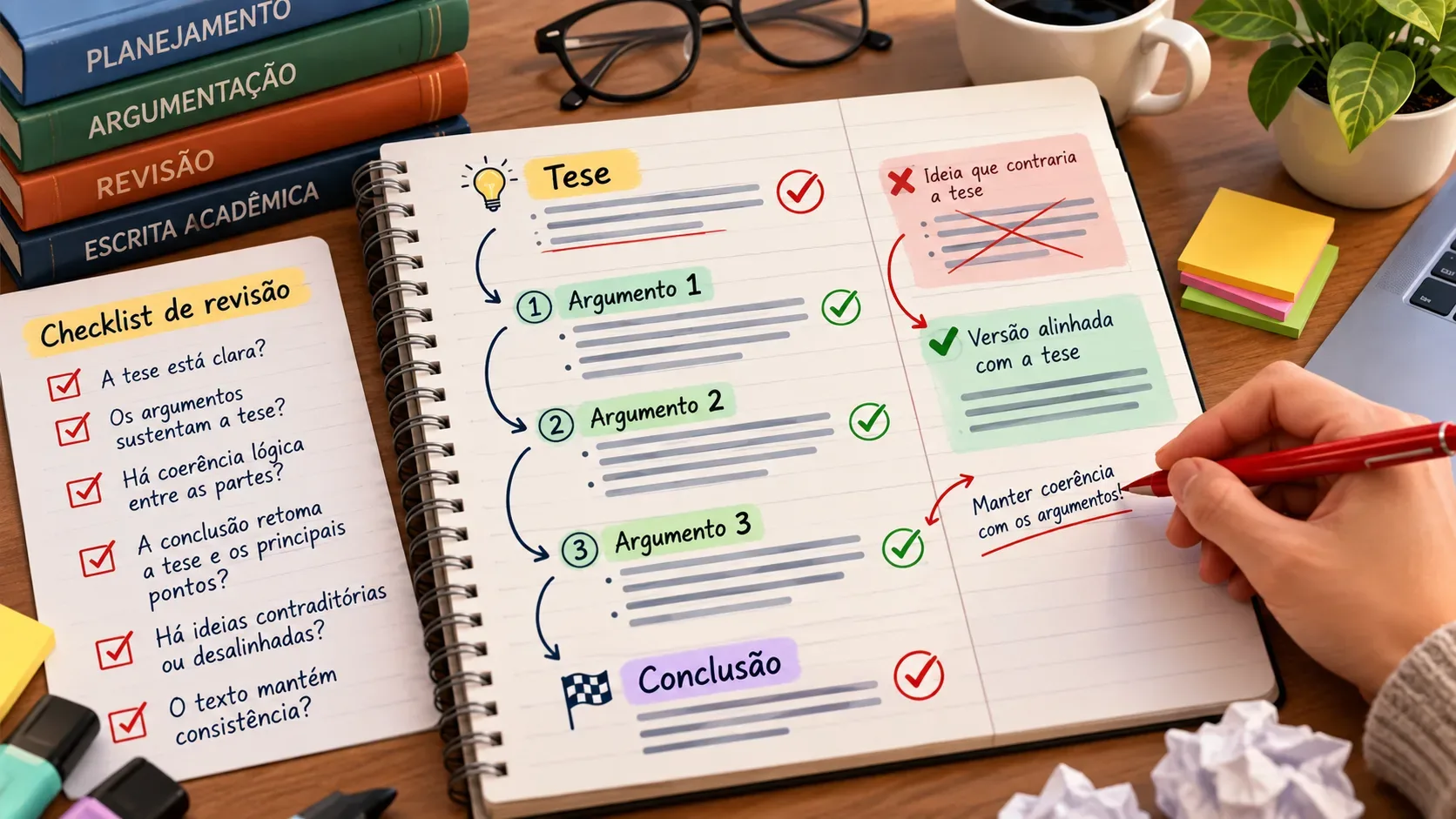

The Enem 2026 essay will be administered on the first exam day, November 8, together with Languages and Human Sciences. The essay is scored from 0 to 1,000 points and is reviewed by at least two independent graders. For candidates trying to avoid a zero, the key is to distinguish the eight situations that can nullify the essay from mistakes that merely reduce the score in one or more competencies.
The list below follows Inep's current Enem 2026 FAQ. The short examples are editorial explanations meant to make the rules easier to understand; the occurrence labels are the ones used by Inep.
The 8 situations that can result in a zero on the Enem 2026 essay
| Situation | How Inep classifies it | Short example |
|---|---|---|
| 1. Failing to address the requested prompt or using a structure other than argumentative-dissertative | Fuga ao tema/Não atendimento à estrutura dissertativo-argumentativa | Writing about a different subject or turning the response into a narrative without an argumentative structure. |
| 2. Leaving the official Essay Sheet without text | Em branco | Writing a draft but submitting the final essay sheet blank. |
| 3. Writing no more than seven handwritten lines, or no more than ten lines in Braille | Texto insuficiente | Submitting only seven handwritten lines even if they address the topic. |
| 4. Including insults, drawings, or another deliberate form of cancellation | Anulada | Adding a drawing or offensive content with the intention of invalidating the essay. |
| 5. Including a section deliberately disconnected from the proposed topic | Anulada | Adding a note to the grading panel, a prayer, or a message unrelated to the argument. |
| 6. Writing a name, signature, initials, or another identifier in the area reserved for the essay text | Anulada | Signing your name at the end of the essay inside the writing area. |
| 7. Writing predominantly or entirely in a foreign language | Anulada | Writing most of the essay in English or Spanish. |
| 8. Using handwriting so illegible that two independent graders cannot read it | Anulada | Submitting text whose handwriting cannot be deciphered by both graders. |
Main source: Enem Frequently Asked Questions — Inep.
Why “eight situations” does not mean eight different labels
Inep lists eight situations but does not assign a unique name to every one. In practice, the eight cases are grouped under four labels displayed in the public FAQ: Fuga ao tema/Não atendimento à estrutura dissertativo-argumentativa, Em branco, Texto insuficiente, and Anulada.
This is why very different behaviors — such as identifying yourself in the text area, writing predominantly in a foreign language, or making the handwriting impossible to read — all appear under the same “Anulada” label. The underlying reason for cancellation is still different; only the final label is shared.
Topic avoidance and the wrong text structure are grouped together in the FAQ
In Inep's public 2026 wording, the first item combines two failures: not addressing the requested prompt or producing a text in a structure other than the argumentative-dissertative format. The label shown in the FAQ is also combined: “Fuga ao tema/Não atendimento à estrutura dissertativo-argumentativa”.
For the candidate, the practical consequence is straightforward: it is not enough to write well about any subject. The essay must respond to the specific topic and use the required text structure. A story, personal account, or another construction that does not perform the argumentative-dissertative task can fall into this first case even if it is long.
Insufficient text: copied lines do not help meet the minimum
Inep states that an essay with up to seven handwritten lines is classified as “Texto insuficiente”; in Braille, the stated limit is up to ten lines. There is also an important rule for candidates who reproduce wording from the source texts or the Question Booklet: copied lines are excluded from the minimum-line count.
This means copying by itself does not appear in the 2026 FAQ as a ninth standalone reason for a zero. The risk is that, after copied material is removed from the count, too little original text remains. For example, an essay may visually contain more than seven lines, but if many of those lines reproduce the prompt or booklet, the valid line count can fall into “Texto insuficiente”.
What a “deliberately disconnected section” means
This rule does not refer to every weak, awkward, or poorly connected sentence. The official wording is a section deliberately disconnected from the proposed topic. The 2025 Enem Participant Guide — still listed by Inep's publications archive as the latest Enem essay guide on September 10, 2026 — explains the concept with examples such as notes addressed to graders, political or protest messages, prayers, religious messages, and passages or sentences inserted without a relationship to the topic or to the candidate's argument.
Therefore, a weak conclusion or a paragraph that partially loses focus should not automatically be confused with this cancellation category. The classification concerns material deliberately inserted outside the expected communicative situation of the essay.
Additional reference: Enem 2025 Participant Guide — Essay.
Hard-to-read handwriting is not the same as officially illegible handwriting
Inep's wording is specific: the essay may be nullified when the handwriting is illegible to the point that it cannot be read by two independent graders. So handwriting that is unattractive, irregular, or difficult is not described by the rule as an automatic zero. The problem arises when both graders actually cannot read the text.
To reduce that risk, the practical advice is to prioritize legibility, spacing, and a letter size compatible with the page instead of compressing the writing so much that reading becomes difficult.
A human-rights violation is not listed as an automatic zero for the whole essay
Another common source of confusion: the current list of eight whole-essay zero situations does not include, as a standalone item, an intervention proposal that violates human rights. In the 2025 Participant Guide, Inep explains that such a proposal receives zero in Competency V. That is different from assigning zero to the entire essay.
The distinction matters because an essay can lose all points in one competency without necessarily having its total score nullified. The eight cases in the FAQ, by contrast, are situations in which the grading panel may assign a zero to the essay as a whole.
How the grading panel determines the essay's status
According to Inep's FAQ, the essay is graded by at least two independent reviewers. Each awards from 0 to 200 points in each of the five competencies. In addition to score differences, Inep considers there to be a discrepancy when the graders disagree about the essay's status.
When there is a discrepancy, an automatic review takes place and a third grader assesses the essay. Depending on the remaining disagreements, the final score may be decided by a three-member grading panel. This helps explain why labels such as “Anulada” or “Texto insuficiente” do not depend simply on one person's isolated decision.
Practical checklist to avoid a zero
- Copy the essay onto the official Essay Sheet; the draft is not graded.
- Address the exact topic and use an argumentative-dissertative structure.
- Write more than seven valid handwritten lines; copied lines from the prompt or booklet do not count toward the minimum.
- Write predominantly in Portuguese.
- Do not include drawings, insults, or devices intended to cancel the essay.
- Do not add notes, messages, or passages deliberately disconnected from the argument.
- Do not write your name, signature, initials, or another identifier in the area reserved for the essay text.
- Keep the handwriting legible enough for the graders to read the entire response.
When the Enem 2026 essay will take place
On September 9, 2026, Inep confirmed that the regular exams will be held on November 8 and 15. The essay is part of the first day, November 8, together with Languages and Human Sciences. The regular duration of the first exam day is 5 hours and 30 minutes.
For rules that may be updated before the exam, candidates should check the official Enem FAQ and the guidance published by Inep on September 9, 2026.