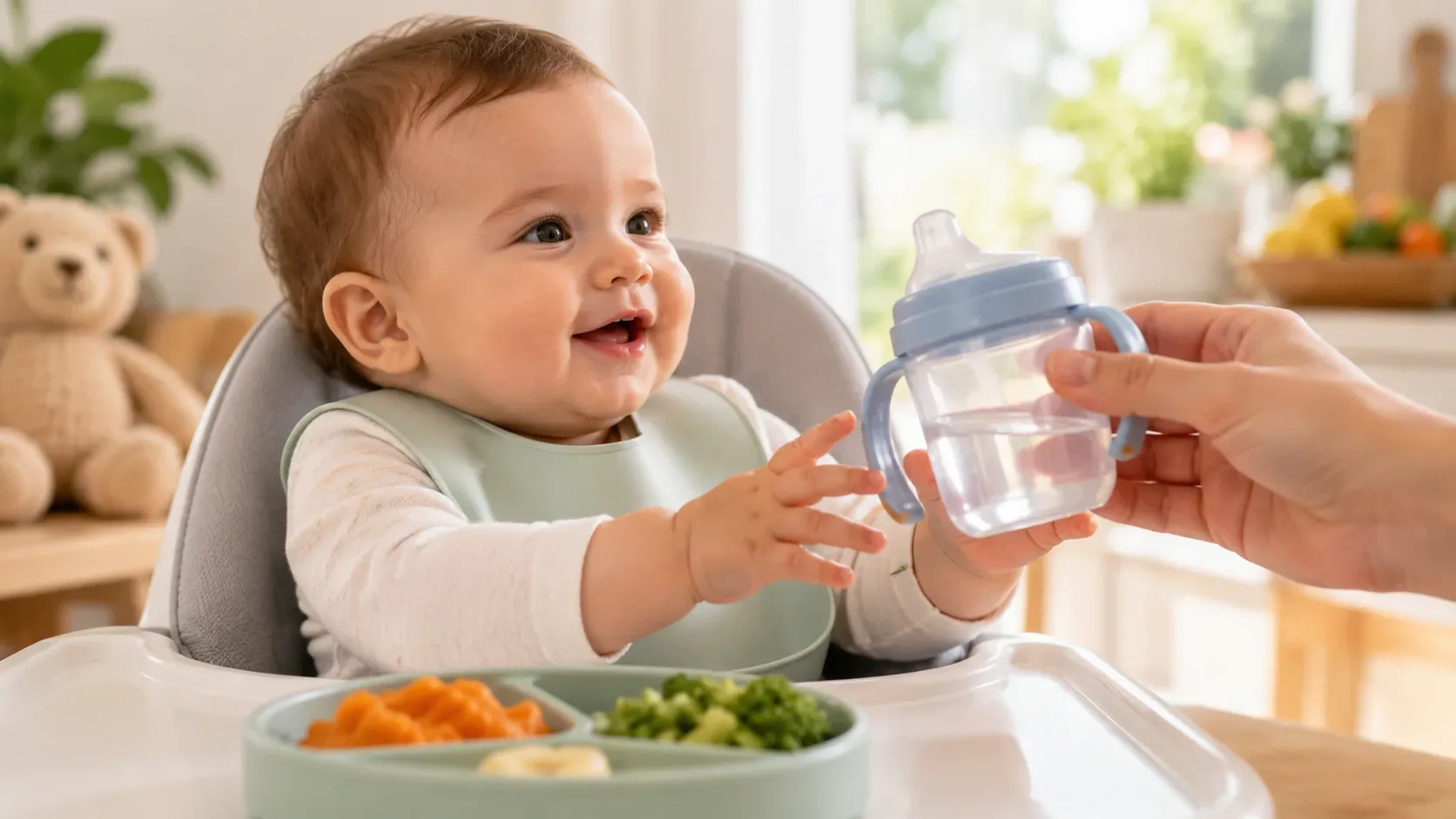
Yes. For a healthy baby who has reached 6 months and started complementary feeding, water becomes part of the routine even if breastfeeding continues. This does not mean breast milk has become less important: it remains a food and a source of fluids, while water is added as a complementary drink. Before 6 months, when a baby is exclusively breastfed, the general recommendation is not to offer water — even on hot days.
What changes at 6 months
The World Health Organization (WHO) defines exclusive breastfeeding as a period in which the baby receives only breast milk, with no other foods or liquids, including water, except in specific situations such as medicines, vitamins, or oral rehydration solution when indicated. The general recommendation is to maintain exclusive breastfeeding for the first 6 months.
Around 6 months, nutritional needs begin to require complementary foods. Brazil's Ministry of Health recommends offering fresh or minimally processed foods in addition to breast milk from this age and including safe drinking water. The full Brazilian Food Guide for Children Under 2 Years states the practical distinction clearly: an exclusively breastfed child does not need water; once other foods are introduced, water should be offered.
Does a baby need water even if they breastfeed many times a day?
Yes, once complementary feeding has begun. Breast milk still contributes to hydration, but the baby's diet now includes meals and foods with different water contents. The recommendation therefore changes from “breast milk only” to including regular opportunities to drink water during the day.
This does not mean forcing a baby to drink a predetermined amount. The Brazilian guide recommends offering water but does not set one daily milliliter target for every 6-month-old. Needs vary with climate, diet, breastfeeding frequency, and individual characteristics. The practical goal is to make water available and familiar, not to turn every offer into a rigid quota.
How to offer water at 6 months
For a healthy baby who is beginning complementary feeding, a simple routine is usually enough:
- Offer safe drinking water. The hygiene of the water, cup, and storage containers matters as much as the timing.
- Use a cup. The Brazilian guide recommends offering water in a cup, especially between meals, rather than making a bottle the standard way to give water.
- Make small offers throughout the day. There is no need to wait for a baby to clearly ask for water; at this age, they are still learning to recognize and communicate thirst.
- Respect the baby's response. If they drink little at one offer, try again later. Learning to use a cup and getting used to the neutral taste of water are part of the process.
- Keep breastfeeding. Introducing water is not a reason to space out or remove breastfeeds on your own.
How much water should you offer?
The general guidance cited here does not give one universal daily volume for every healthy 6-month-old. Brazil's Ministry of Health recommends offering water throughout the day and notes that needs may be higher in very hot places. Rigid targets can create false precision and ignore real differences between children.
In practice, focus on regular opportunities to offer water, especially between meals, without pressure. If the family has received individualized advice from a pediatrician or health team — for example because of a medical condition, special feeding plan, or growth monitoring — that advice should take priority over a generic online rule.
Water should not replace breast milk
Water is added to the routine; it does not take the place of breast milk. WHO recommends continuing breastfeeding during complementary feeding and up to 2 years of age or beyond. At 6 months, a baby still receives energy, fats, proteins, and other important components from breast milk that water cannot provide.
For that reason, it is not appropriate to give large amounts of water to “hold off” hunger, delay breastfeeds, or reduce meals. Water quenches thirst; it is not a substitute for nutrition.
What about juice, tea, coconut water, or other drinks?
For thirst, water should be the reference drink. Brazil's Ministry of Health includes offering water instead of juice, soft drinks, and other sugary drinks among its healthy feeding recommendations for young children. The Brazilian guide also discourages using fruit juice as a thirst-quencher: it is not nutritionally equivalent to whole fruit and may reduce water intake.
Tea, sweetened drinks, and other liquids should not be treated as “flavored water” to make a baby drink more. The earlier a child learns to recognize water as the usual drink, the easier it is to maintain that pattern.
Why not offer water before 6 months?
For an exclusively breastfed baby, breast milk provides the water the baby needs. WHO explains that even on hot days, extra water is not needed before 6 months; if a baby seems thirstier, the general advice is to breastfeed more often.
Besides being unnecessary for most healthy babies at this stage, water can take up part of the small volume the baby would otherwise consume as breast milk. WHO also notes that unsafe water can increase the risk of diarrhea.
A practical decision guide
| Situation | General approach |
|---|---|
| Baby under 6 months who is exclusively breastfed | Do not routinely offer water. Continue breastfeeding on demand. |
| Baby around 6 months starting complementary feeding | Begin offering safe water in a cup during the day while continuing breastfeeds. |
| Baby drinks very little during early attempts | Offer again later without forcing; there is no universal volume target to meet. |
| Very hot days | Create more opportunities to offer water and continue breastfeeding. |
| Medical condition, special feeding plan, or specific professional advice | Follow the individualized plan from the pediatrician or health team. |
When to talk to the pediatrician
The recommendations above describe the routine for a healthy baby. Medical situations can change fluid and feeding needs. If the child has a health condition, follows a special diet or formula plan, is ill, or the family has concerns about growth, intake, or hydration, decisions should be individualized by the team caring for the baby.
The WHO guideline on complementary feeding from 6 to 23 months reinforces the same overall framework: safe, appropriate complementary foods are introduced while milk feeding continues. The central idea is straightforward: at 6 months, water joins the routine along with complementary foods, but it does not replace breast milk and does not need to become a competition over milliliters.