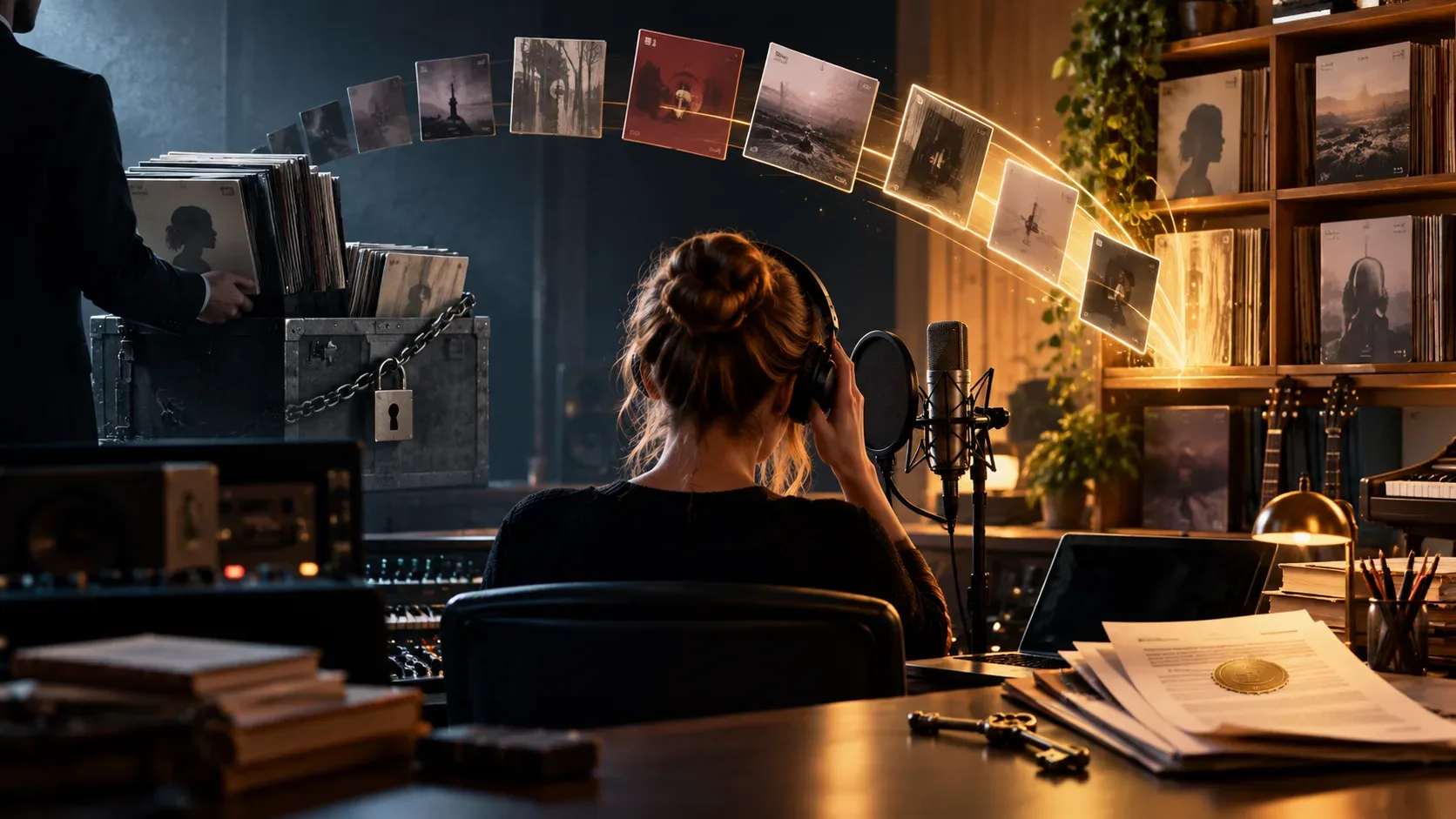
The core of Taylor Swift's masters story is simple: a song and a recording of that song are legally different assets. Swift could be an author of a composition without owning the original recording released by her former label. That separation made it possible to re-record the repertoire, create new masters under her control, and years later buy the original masters as well.
Masters and compositions are not the same thing
The U.S. Copyright Office distinguishes two main rights in recorded music. A musical work covers melody, harmony, lyrics, and other authorship elements of a song. A sound recording covers a specific performance fixed in a file, CD, vinyl record, or other medium. A master is the reference recording from which copies and commercial uses of that version can be exploited.
| Element | What it is | Why it matters |
|---|---|---|
| Composition | The music and lyrics as an authored work. | It can involve songwriters, co-writers, and publishers with their own shares. |
| Master | A specific recording of that composition. | Whoever controls the master controls licensing and exploitation of that recording, subject to applicable contracts. |
| New re-recording | Another performance of the same composition, recorded again. | It creates a separately protected sound recording with a new master. |
That is why owning or controlling the composition does not automatically mean owning the original recording. It is also important not to oversimplify the rights in every track: co-writers, publishers, and contracts can vary from song to song.
How the first six albums ended up outside her control
Taylor Swift's first six studio albums were released by Big Machine Records. The masters of those recordings belonged to the label structure. When Swift left Big Machine in 2018 and signed a new global agreement with Universal Music Group and Republic Records, she structured the next phase of her career around ownership of her new masters. UMG confirmed the new agreement in November 2018.
In 2019, Big Machine was sold to Scooter Braun's Ithaca Holdings, and the masters of Swift's first six albums were part of the transaction. In 2020, that catalog was sold again, this time to Shamrock Capital. Swift said publicly that she had not been able to buy the masters on terms she considered acceptable, and during that period she confirmed that she would begin re-recording the repertoire when her contracts allowed it.
Why re-recording created a new master
The legal and technical logic of re-recording comes from the separation between a composition and a sound recording. When an artist returns to the studio and records a new performance of a song, the new audio is not the same phonorecord as the old one. It is a new recording with its own performance, production, mixing, and mastering.
That allowed the new versions to be exploited as masters separate from the originals. For Swift, the strategy created alternatives under her control for streaming, sales, and licensing. Audiovisual uses, for example, typically require dealing with both the composition rights and the rights to the specific master. Owning a new recording increased her ability to offer an alternative version for a given use, while still respecting the other rights and contracts involved.
What the Taylor's Version releases changed before the buyback
Between 2021 and 2023, Swift released four re-recorded albums: Fearless (Taylor's Version), Red (Taylor's Version), Speak Now (Taylor's Version), and 1989 (Taylor's Version). These editions did not erase the old masters. They coexisted with them as different recordings built from the same underlying compositions.
The strategic effect was twofold. First, the new recordings created a commercial option that she controlled. Second, by directing attention, consumption, and licensing opportunities toward the new versions, the campaign could reduce economic dependence on the old masters. That effect does not follow a public formula for how much a master loses in value. It depends on audience behavior, licensing decisions, revenue from each version, and other market factors.
What changed when she bought the masters in 2025
On May 30, 2025, Swift announced that she had purchased the masters of her first six albums from Shamrock Capital. In the letter published on her official website, she said that all of the music she had ever made now belonged to her and also listed music videos, concert films, album art and photography, and unreleased songs among the assets she acquired.
The central change is that the strategy was no longer only about creating alternative masters that she owned. She now also owned the original masters that had triggered the re-recording project. This brings the historic recordings and the released re-recordings under her control, even though each phonorecord remains a distinct work.
Swift did not disclose the purchase price in her letter. Figures published by media outlets should therefore be treated as market reporting, not as a price confirmed by the artist.
What the purchase does not change
- The old versions and the Taylor's Version releases do not become the same recording. They remain separate masters with their own performances and histories.
- Composition and master rights remain separate. Buying the masters does not erase composition agreements, co-writer shares, or publishing arrangements that may exist track by track.
- The earlier commercial history is not erased. The acquisition changes control of the assets from the transaction forward, but it does not remove the period in which third parties owned the masters.
- The released re-recordings still matter. They remain part of Swift's catalog and retain artistic, commercial, and historical value independent of the originals.
What about the two albums that still had no Taylor's Version?
In the same 2025 letter, Swift said she had completely re-recorded her debut album but had not yet re-recorded even a quarter of Reputation. She also changed the framing of those possible releases: after buying the originals, future versions could appear as a celebration and an artistic choice rather than as a response to a lack of ownership.
That matters because it ends the assumption that the entire re-recording series had to be completed in order to solve the ownership issue. Purchasing the original masters resolved the core property dispute. Anything that remains of the project can move forward for creative, archival, repertoire, or audience reasons.
Why the case became a music industry reference point
The story exposed a structure that is usually hidden inside contracts: the performer, the songwriter, and the owner of the recording do not have to be the same person. It also showed how re-recording clauses, master ownership, licensing, and catalog negotiations can shape a career for decades.
In her 2025 letter, Swift said younger artists had told her they negotiated ownership of their masters because of the conversations created by this dispute. That is Swift's own account, not an independent measurement of the industry, but it helps explain why the episode became a recurring example in discussions about recording contracts.
To understand the trajectory without turning it into celebrity gossip, follow the assets and rights: the old masters stayed with the label, they were sold to new owners, Swift created new masters through re-recordings, and she eventually bought the original masters. The story is less about changing who owns a song and more about understanding that composition, recording, and catalog are different layers of ownership.