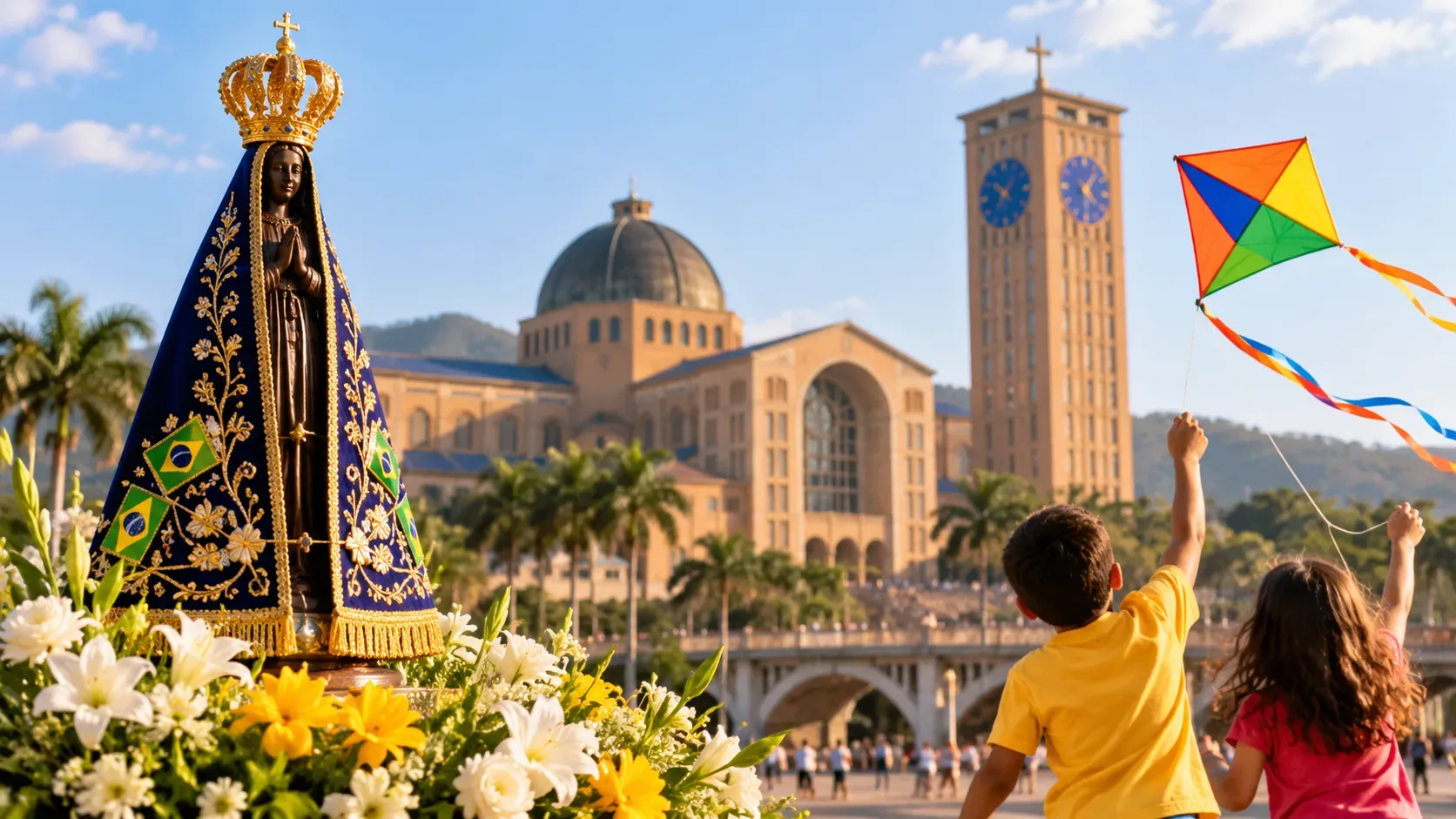
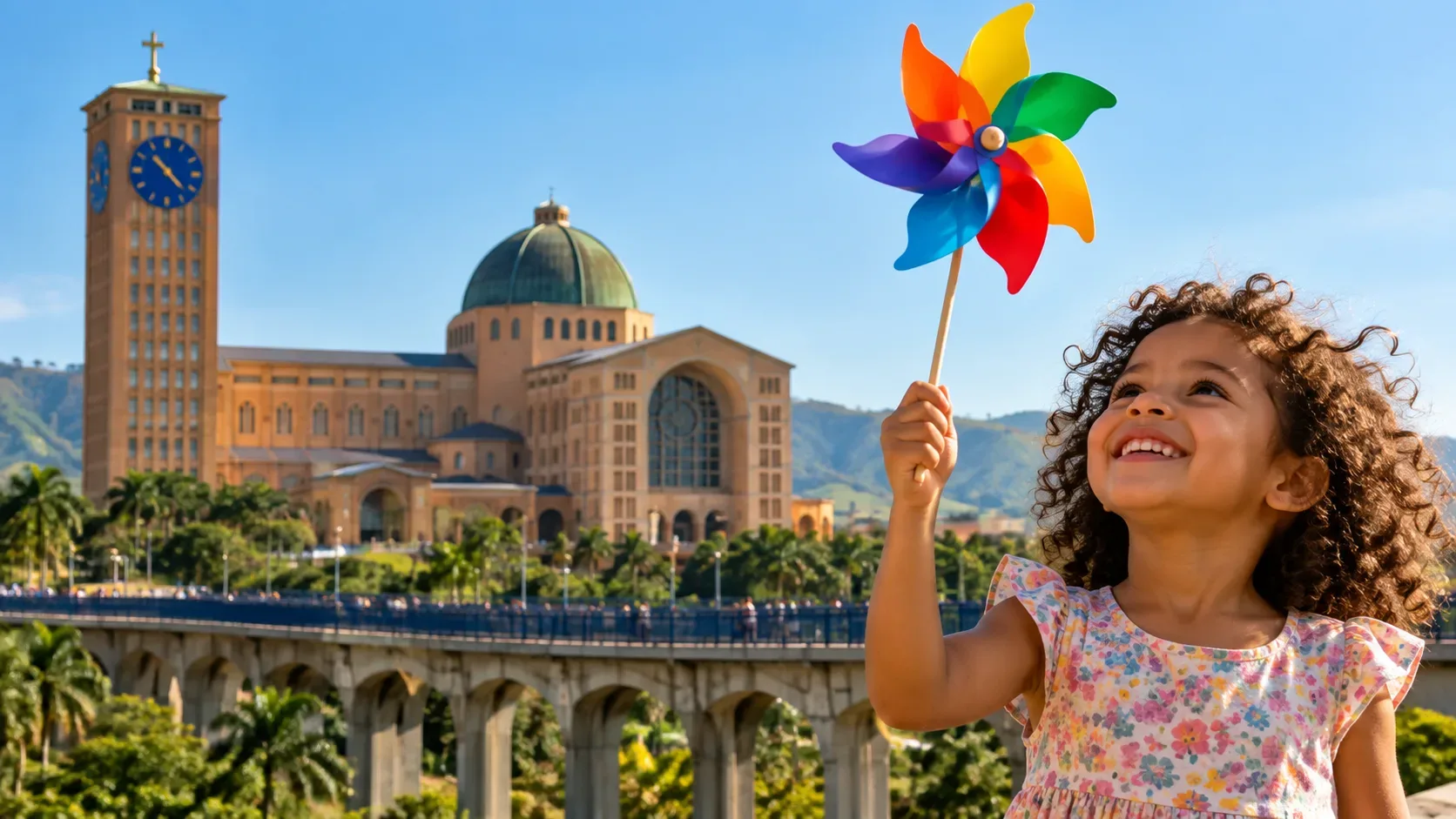
Short answer: October 12 is a national holiday in Brazil because of Our Lady of Aparecida, the Patroness of Brazil, not because of Children’s Day. Children’s Day falls on the same date for a separate and older legal reason: Decree No. 4,867 of November 5, 1924 established October 12 as the nationwide “children’s celebration” day. Decades later, Law No. 6,802 of June 30, 1980 declared October 12 a national holiday for public and official worship of Our Lady of Aparecida.
October 12 combines two different legal histories
For international visitors, the overlap can look like a single celebration with two names. Legally, however, they are two observances layered onto the same date: one centered on children and one national holiday connected to Our Lady of Aparecida. That distinction matters because it explains what actually gives the day its holiday status.
| Year | Rule | What it did | What it means today |
|---|---|---|---|
| 1924 | Decree No. 4,867 | Established October 12 as the nationwide “children’s celebration” day. | This is the legal origin of the date chosen for Children’s Day. |
| 1980 | Law No. 6,802 | Declared October 12 a national holiday in honor of Our Lady of Aparecida, Patroness of Brazil. | This is the legal basis for the October 12 national holiday. |
1924: Children’s Day was assigned to October 12
Decree No. 4,867 of November 5, 1924, available through Brazil’s Chamber of Deputies legislation portal, contains a short rule: it establishes October 12 for a “children’s celebration” throughout the national territory.
The decree does not declare October 12 a national holiday. It sets the date of an observance. That detail prevents a common but inaccurate reading: Brazil does not shut down on October 12 because Children’s Day itself is the national holiday.
1980: the date became a national holiday for Our Lady of Aparecida
The national-holiday status comes from a different law. Law No. 6,802 of June 30, 1980 expressly declares October 12 a national holiday for “public and official worship” of Our Lady of Aparecida, Patroness of Brazil.
So the holiday’s legal basis is religious and tied to the country’s patroness. The 1980 law does not create Children’s Day, nor does it say that the two observances form a single commemoration. It simply makes a national holiday out of a date that had already been selected, since 1924, for the children’s celebration.
So why do both observances fall on the same date?
Because two laws, adopted at different times for different purposes, point to October 12. The children’s observance came first, in 1924. The national-holiday law came 56 years later, in 1980.
That means the modern overlap should not be explained as though one observance created the other. The more accurate wording is: Children’s Day was already observed on October 12; later, the same date became a national holiday because of Our Lady of Aparecida.
What is the national holiday actually for?
Official calendars list October 12 as the holiday of Our Lady of Aparecida. For 2026, MGI Ordinance No. 11,460 of December 29, 2025, which sets out national holidays and optional workdays for the federal public administration, includes October 12 as “Our Lady of Aparecida (national holiday).”
In 2026, October 12 falls on a Monday. For federal bodies covered by the ordinance, it is a holiday, while essential services are to be maintained. States and municipalities may publish their own administrative calendars, but those do not change the national origin of the date.
What commonly closes on October 12
“National holiday” does not mean that every door in Brazil closes in the same way. The most predictable effect is on public offices and activities that follow official calendars; essential services operate under their own duty schedules.
- Public offices: agencies covered by official holiday calendars generally do not keep normal office hours, while essential services continue according to their schedules.
- Banks: the Febraban banking-holiday calendar lists October 12, 2026 as a federal holiday. Travelers should not expect normal in-person branch service that day.
- Schools: school calendars generally observe national holidays, but the exact schedule depends on the school system and institution.
- Shops, restaurants, attractions and transport: they may open, close or use holiday hours. Practice varies by city, sector, labor rules and individual operator.
For visitors, the practical rule is simple: treat October 12 as a real national holiday, but check the hours of each private service you plan to use.
What visitors may notice in Brazil in 2026
Because October 12, 2026 is a Monday, the calendar creates a long weekend for many people. That can change travel, leisure and service patterns, but there is no single nationwide template for every city.
Visitors may also see simultaneous references to “Nossa Senhora Aparecida” and “Dia das Crianças.” Retailers, leisure venues and family programming may emphasize Children’s Day, while official calendars and religious contexts identify the national holiday with Our Lady of Aparecida. Those two presences on the same date reflect separate histories, not a single legal origin.
How to keep the two observances straight
- If the question is “Why is October 12 a national holiday?”, the answer is Law No. 6,802/1980 and Our Lady of Aparecida.
- If the question is “Why is Children’s Day on October 12?”, the legal reference is Decree No. 4,867/1924.
- If the question is “Did Children’s Day make October 12 a national holiday?”, the answer is no.
The overlap is easiest to understand by keeping the chronology intact: 1924 explains the date of Children’s Day; 1980 explains the national holiday.