In an era of AI-generated and AI-tailored applications, asking for a referral can be useful — but the best request is not “can you get me into this job?”. It is a specific request that lets the other person decide whether they can comfortably and honestly attach their name to your application. The contact should receive enough context to make that decision, and a referral should never be framed as a guaranteed interview, a shortcut to approval or a networking debt.
Why referrals are back at the center of the hiring conversation
On September 2, 2026, the World Economic Forum highlighted that as AI tools make applications faster to produce and harder to distinguish from one another, personal recommendations may regain value as an additional signal for recruiters. The point is not that a referral replaces a résumé, experience or technical assessment; it is that it can add human information when application documents become less distinctive.
Earlier research is consistent with that interpretation. Experiments discussed by the NBER found that referrals can contain information about performance and persistence that is not visible in a candidate's observable characteristics. At the same time, referrals are not neutral: a study on Brazil, also released by the NBER, shows how segregated networks can contribute to racial inequality in hiring. Responsible networking therefore requires balancing usefulness to the hiring process with care not to treat social access as automatic merit.
When it makes sense to ask for a referral
The request is easier to justify when you have identified a specific opening, understand its main requirements and can explain why your background relates to the work. It also helps when the person knows you, your work or at least some verifiable context about your track record.
- There is a specific role: send the link or job identifier.
- Your fit can be explained: highlight two or three experiences, results or skills that match the core requirements.
- The person has a basis for deciding: the more they know about your work, the more legitimate the recommendation.
- You can accept a “no” without pressure: the message should leave genuine room for the person to decline.
If the contact barely knows you, asking first for a short conversation, a quick read on the role or guidance about the process is usually more appropriate than immediately asking them to endorse your application. LinkedIn News, in guidance published in 2026, likewise recommends that referral requests be specific, grounded in a real relationship and low-effort for the recipient.
A six-block referral message
A good referral message can stay short because the relevant context is already organized. Think in six blocks:
| Block | Purpose | What to include |
|---|---|---|
| 1. Relationship context | Show why you are contacting that person | A shared project, prior conversation, course, team, community or another genuine connection. |
| 2. Exact role | Avoid a generic request | Job title, company and link to the opening. |
| 3. Fit in a few lines | Give the person material to evaluate | Two or three pieces of evidence tied to the core requirements. |
| 4. Bounded ask | Make your expectation clear | Ask whether the person would feel comfortable referring your profile, without assuming they will. |
| 5. Ready-to-use material | Reduce operational effort | Updated résumé, portfolio or relevant profile, plus a short fit summary. |
| 6. Graceful exit | Keep networking from becoming an obligation | Make it explicit that it is fine if they prefer not to refer you or cannot help. |
Example message that preserves context and autonomy
Hi Ana. I thought of our work together on the X team’s data project because I saw an Operations Analyst opening at Company Y: [link]. The role calls for KPI analysis, process improvement and cross-functional work; over the past two years I have worked directly on all three, including a project that cut closing time by 18%. If you know the process and would feel comfortable doing so, I wanted to ask whether referring my profile would make sense. I can send my résumé and a one-page summary of the most relevant points. If it is not possible or you do not think my profile is a fit, no problem at all.
The value of this format is less about a “perfect sentence” and more about how much decision-making it gives back to the contact. They can assess the role, their relationship with you, the evidence and their own level of comfort before using their name.
What to attach — and what not to dump on your contact
Ideally, provide a small package that makes your application easy to understand:
- an updated résumé tailored to the role, without inventing skills;
- the job link or requisition code;
- a portfolio, GitHub profile, website or work sample when relevant;
- two or three pieces of evidence showing fit with the main requirements;
- any operational information the company may require in its referral program, such as location or availability, only when relevant.
Avoid sending a long dossier, asking the person to “fix” your résumé before referring you, asking them to search for openings on your behalf or handing them a message to copy without understanding it. Referrals work better as informed signals than as administrative favors.
What to avoid when asking for a referral
- No-role requests: “refer me to anything there” transfers the search work to your contact and makes a responsible recommendation harder.
- Emotional pressure: financial urgency or frustration may be real, but they should not turn the contact into someone responsible for your outcome.
- Implied promise of an advantage: a referral does not mean a guaranteed interview or automatic priority.
- Exaggerated familiarity: a LinkedIn connection alone does not make someone able to assess your work.
- Invented information: never ask a person to confirm skills, results or professional relationships they do not know about.
- Network spam: sending the same message to dozens of employees can look opportunistic and can put people in uncomfortable positions.
If the person does not know your work, change the ask
Not every contact needs to become a referrer. When the relationship is weak, replace “can you refer me?” with a smaller, verifiable question: “does this role look aligned with what the team usually hires for?”, “is there a requirement I should understand better?” or “would you recommend applying through this channel?”. If the conversation becomes productive, the person can later decide whether they have enough basis to support your application.
This distinction matters because referral programs differ across companies. At some, the employee simply submits a candidate's name; at others, they may need to explain how they know the candidate or rate the strength of the recommendation. Do not assume that “referring” someone is a responsibility-free click.
How not to reinforce closed networks
A referral can help reduce screening noise, but it can also favor people who are already inside privileged professional networks. The Brazil evidence cited above is a reminder that this risk belongs in the core discussion, not in a footnote.
For candidates, that means not treating networking as a hunt for “useful contacts”: participate in open communities, professional events, study groups, collaborative projects and other spaces where people can get to know your work before any request. For people receiving requests, it helps to separate affinity from evidence: refer only when there is a basis for doing so and, when possible, share job information broadly rather than only within close circles. For companies, referral programs should complement — not replace — public application channels, consistent criteria and active review of diversity and access.
After you ask: follow up without turning it into a demand
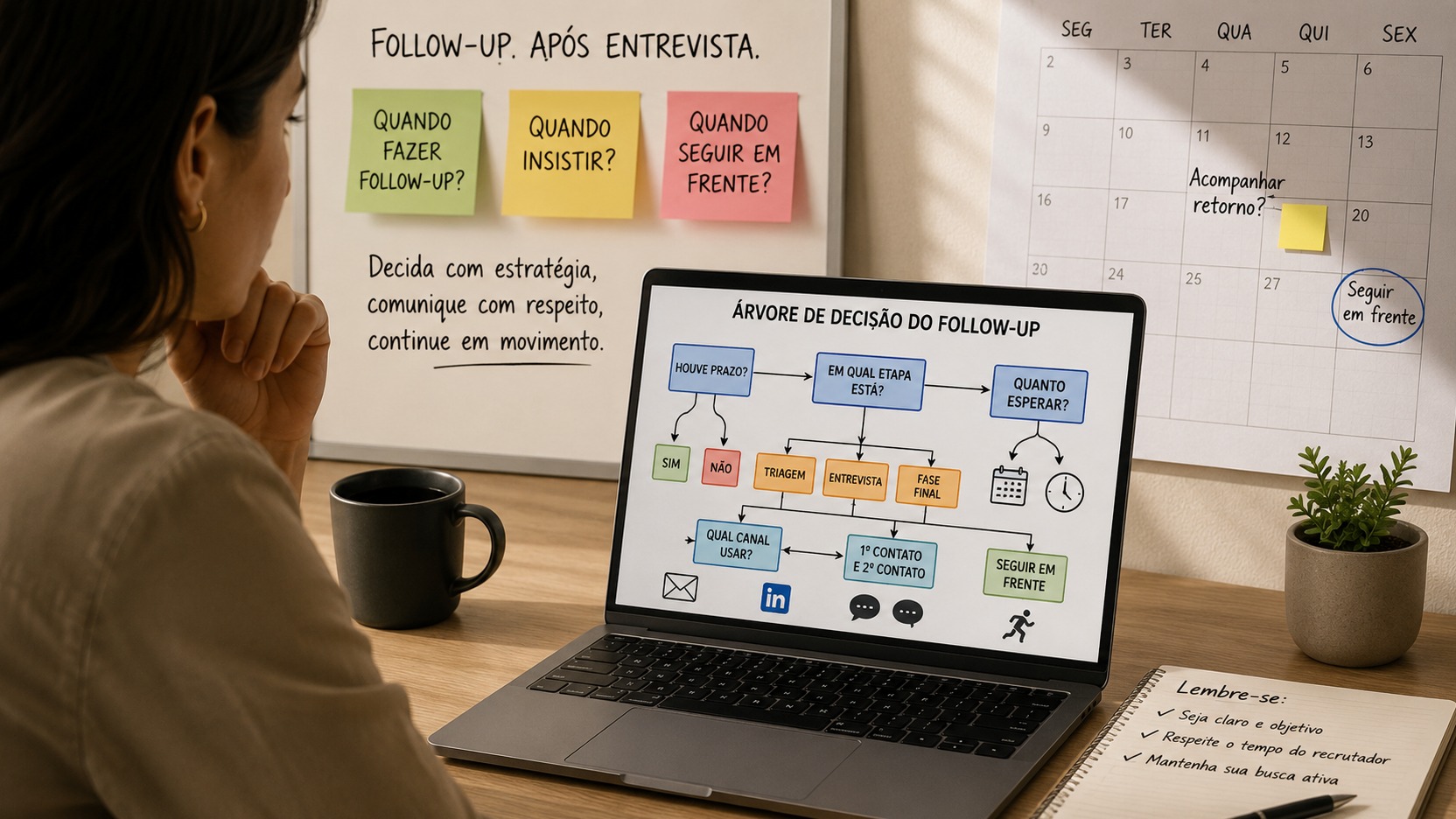
If there is no response, make at most one short follow-up after a few days, especially if the opening is still active. If there is still no reply, continue through the normal application channel. Silence can mean lack of time, insufficient context to refer you or simply a preference not to participate.
If the person refers you, thank them without turning the gesture into responsibility for the outcome. From there, handle the process like any other candidate: complete the required steps, prepare for interviews and communicate directly with recruiters. If you do not advance, do not demand explanations from the contact or ask them to intervene.
Checklist before you send the message
- Have I identified a specific role?
- Can I show two or three real pieces of evidence of fit?
- Does the person have any basis to assess my work or background?
- Does my request allow for a comfortable “no”?
- Have I provided enough material without transferring too much work?
- Does my tone make clear that a referral is not a promise of hiring?
In practice, the healthiest referral preserves three things at once: context for the referrer, autonomy to decline and criteria for the employer. In the age of AI, human connection can become more valuable precisely because it carries information and responsibility — not because it replaces the hiring process.