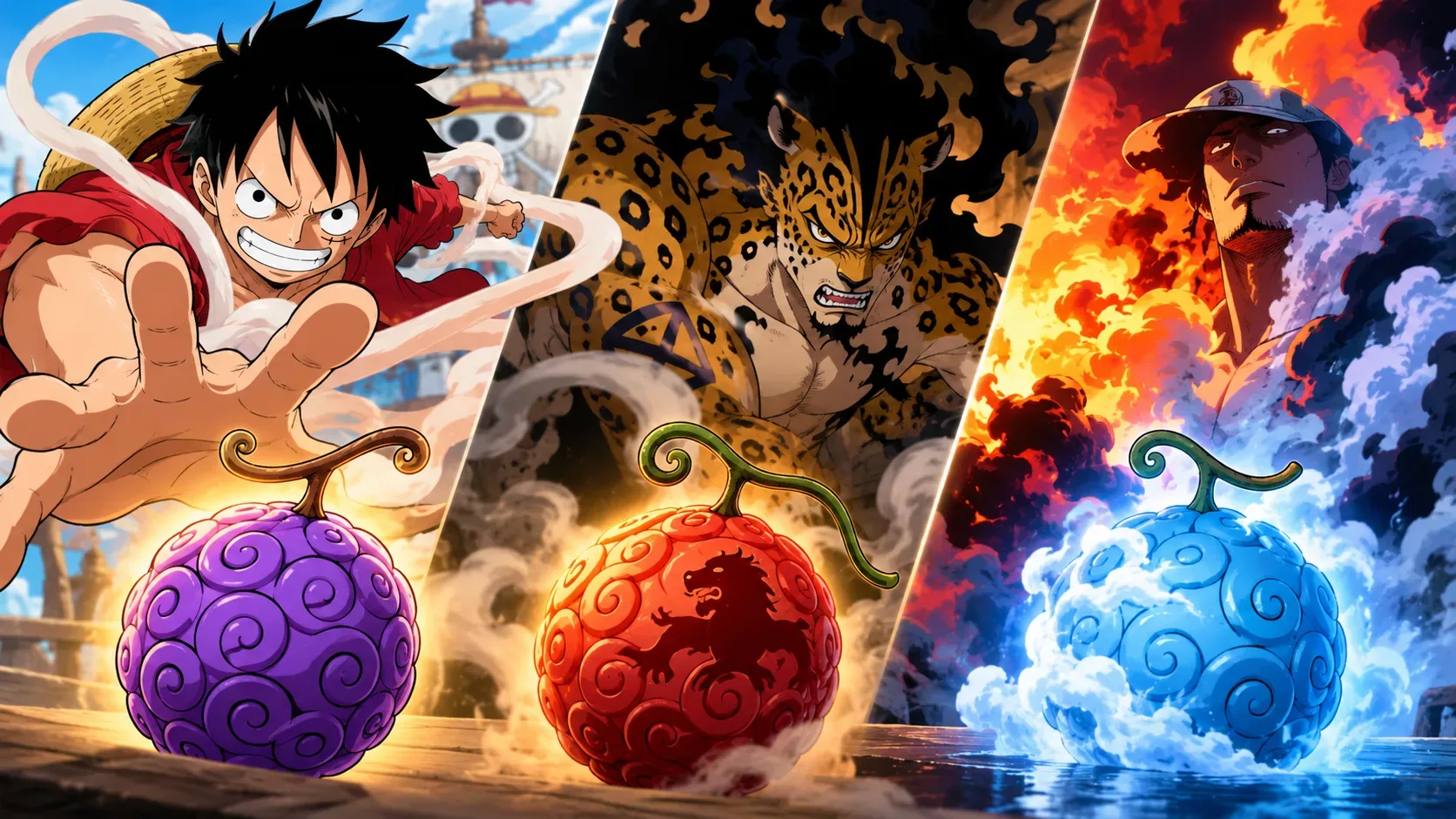
To distinguish a Devil Fruit in One Piece, the best starting point is the power's central effect. If the ability transforms the user into an animal or creature, it is likely a Zoan. If it turns the body into a natural element or phenomenon while allowing the user to produce and control it, it is a Logia. If it fits neither pattern, it normally falls under Paramecia, the broadest category.
The official One Piece website presents these three major classes: Paramecia, Zoan and Logia. Classification depends on how the ability works, not on the fruit's appearance or the user's personality. The official Devil Fruit page also emphasizes that powers vary from fruit to fruit.
Quick flow for identifying the class
- Does the user transform into an animal or creature? Zoan is the first candidate.
- Does the body become a natural element or phenomenon that can also be produced and controlled? That is the Logia pattern.
- Does the power alter the body, create or control something, modify the environment or cause another supernatural effect without meeting the criteria above? It is generally Paramecia.
This flow is useful for understanding the logic of the classes, but it does not replace canonical classification. One Piece includes deliberately unusual cases and late story revelations.
Paramecia: the most varied category
Paramecia covers abilities that differ greatly from one another. A user may have an altered body, produce a substance, control objects or phenomena, create areas with special rules, or affect other people. For that reason, there is no single visual transformation that identifies every Paramecia.
A practical way to study them is to group them by effect, such as body alteration, substance production and environmental manipulation. These groupings help explain the powers, but they should not be confused with a complete list of canonical subtypes. The most important named exception is Special Paramecia: Charlotte Katakuri's Mochi Mochi no Mi can produce and control mochi while also transforming the user's body into that substance, behavior that resembles a Logia. Crunchyroll's Devil Fruit guide highlights this distinction.
Zoan: transformation into living beings and specific models
Zoan allows the user to assume forms linked to an animal or creature. The classic pattern involves the original form, a full animal form and a hybrid form. The official site notes that this is the class in which transformation directly changes the user's physical abilities.
Recognized variants include Ancient Zoans, associated with extinct animals, and Mythical Zoans, based on beings from myth and legend. A fruit's name can also specify a particular model, as happens with several fruits in animal families.
The story also contains artificial fruits connected to Zoan powers. They should not simply be treated as a fourth main class: the central division remains Paramecia, Zoan and Logia.
Logia: becoming, producing and controlling a natural element
Logia combines three traits that help identify it: the user can transform their body into a natural substance, element or phenomenon, produce it and control it. Fire, smoke, sand, ice and light are among the examples shown throughout the series.
That bodily transformation explains why ordinary physical attacks can pass through many Logia users. It does not mean absolute invulnerability: specific weaknesses and combat mechanisms established in the series can allow them to be hit.
Why can similar powers belong to different classes?
The deciding point is not only what a power produces, but how the user's body and ability function. A Paramecia may produce a substance without being classified as a Logia. A Mythical Zoan may grant additional effects beyond transformation. Comparing only the visual result can therefore lead to mistakes.
| Class | Main question | Typical sign | Exceptions or variations |
|---|---|---|---|
| Paramecia | Does the power fail to meet Zoan or Logia criteria? | Body effects, creation, control, or alteration of objects and surroundings | Special Paramecia and highly diverse abilities |
| Zoan | Is there transformation into an animal or creature? | Original, full and hybrid forms | Ancient, Mythical and artificial cases |
| Logia | Does the body become a natural element that is also produced and controlled? | Transformation, generation and control of the element | Properties specific to each element |
Spoiler warning: a revelation changes a famous classification
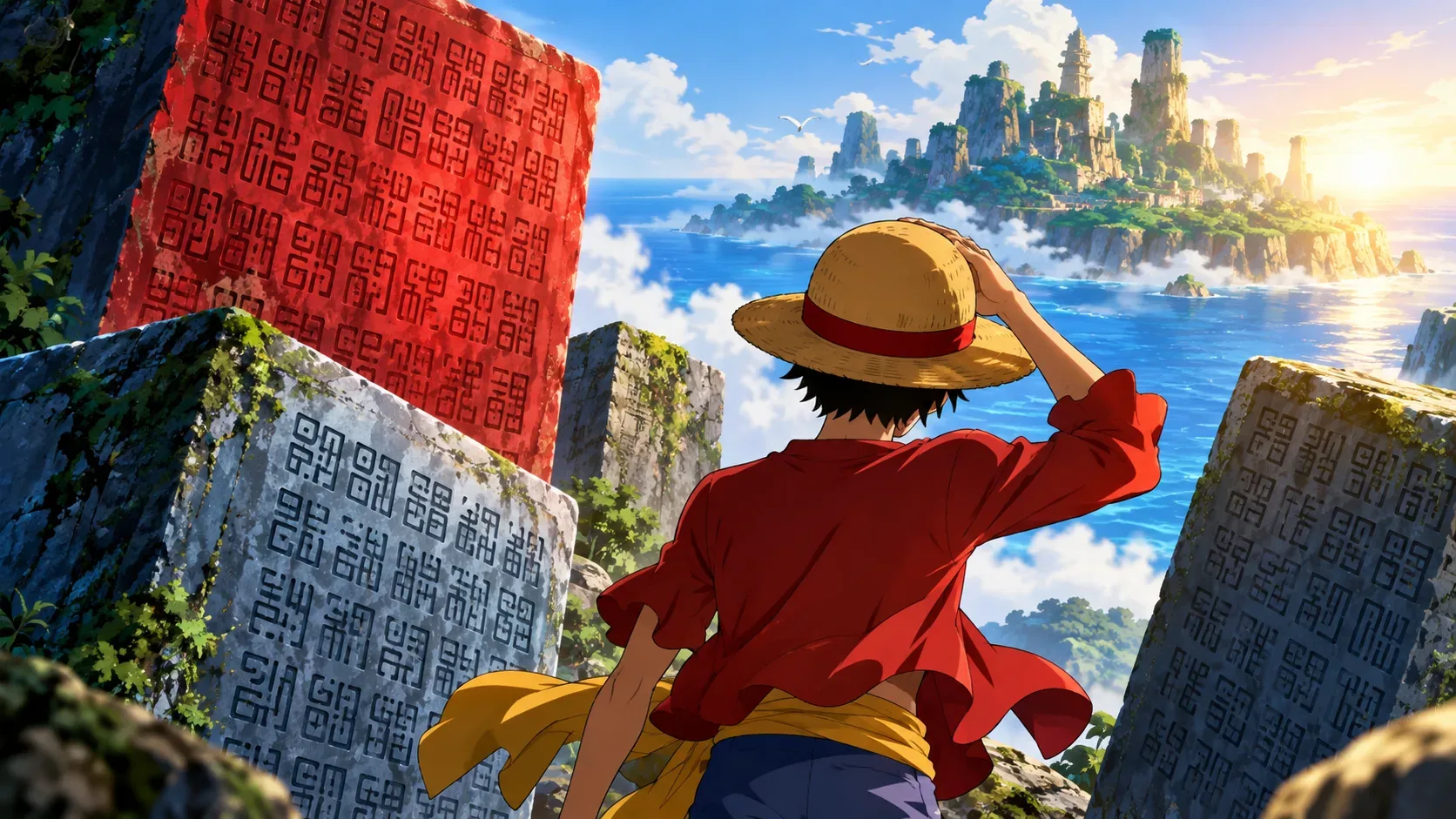
Spoiler for late manga and anime revelations: the fruit associated with Luffy for much of the story is later given a different identification. The revelation classifies it as the Hito Hito no Mi, Model: Nika, a Mythical Zoan. Therefore, using Luffy as a simple Paramecia example without considering the point in the story can cause confusion.
For readers who have not reached that part, the general rule is enough: the canonical classification revealed by the work takes priority over the initial impression created by a power.
How to avoid the most common mistakes
- Do not classify a fruit only by its name or appearance.
- Do not assume that producing a substance automatically means Logia.
- Do not treat Ancient and Mythical as classes parallel to Zoan: they are variants within Zoan.
- Do not turn teaching-oriented Paramecia groupings into official categories without confirmation from the work.
- For late revelations, flag spoilers and use the latest canonical classification available.
In short, the most efficient question is: does the user become an animal, become a natural element, or manifest another kind of effect? That sequence separates Zoan, Logia and Paramecia in most cases and leaves exceptions for a second stage of analysis.