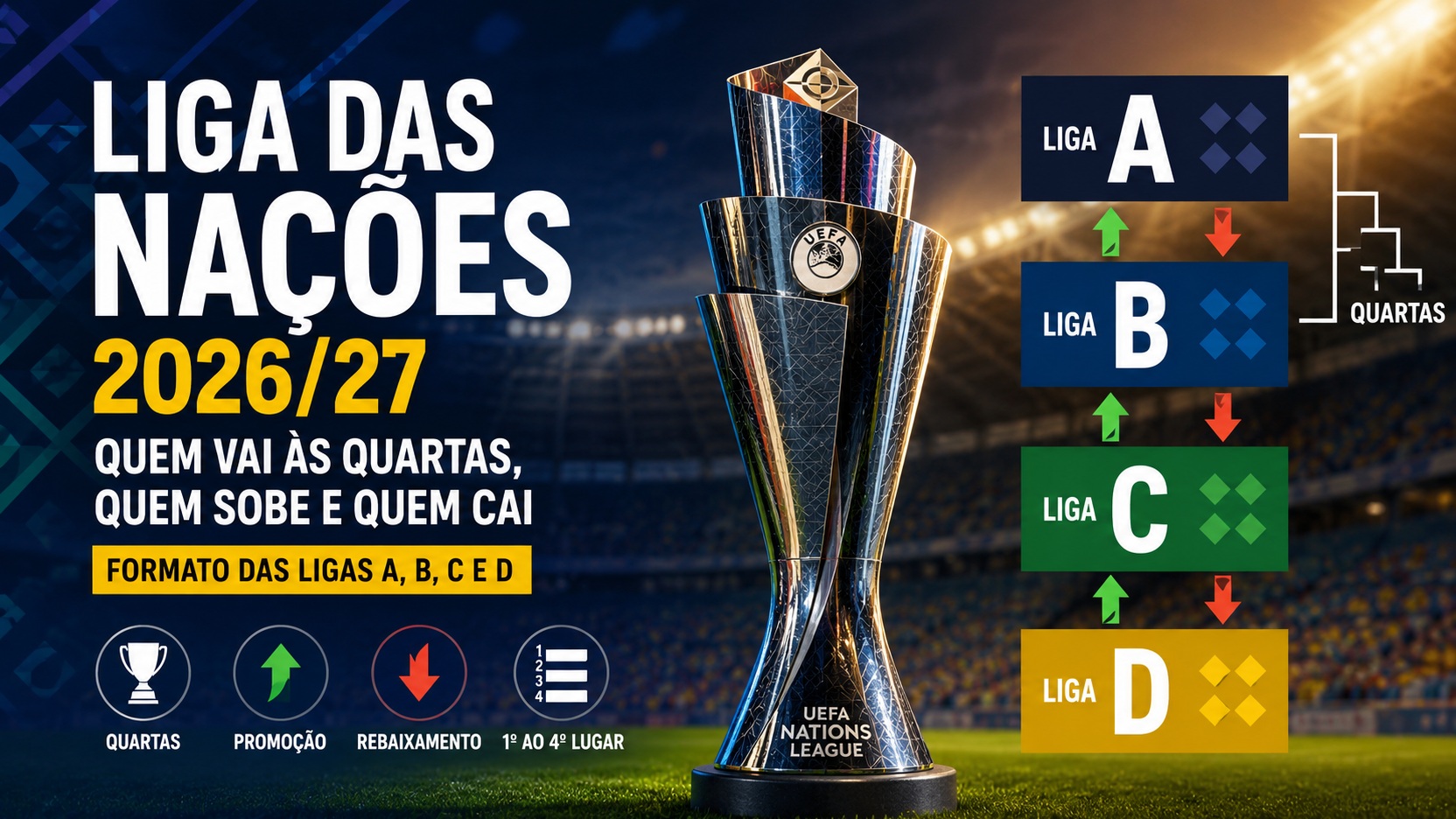
In the 2026/27 UEFA Nations League, a team’s position in the league phase does not mean the same thing in every division. In League A, finishing in the top two leads to the quarter-finals; in League B and League C, first place guarantees direct promotion; and in the intermediate zones, promotion and relegation play-offs come into play. Fourth place also carries a different consequence depending on the league.
The quickest way to read the table is this: in League A, 1st and 2nd remain in the title race, 3rd enters a play-off to stay in the top tier and 4th goes down. In League B, 1st goes up, 2nd tries to go up through a play-off, 3rd tries to avoid relegation through a play-off and 4th goes down. In League C, 1st goes up, 2nd plays for promotion, 3rd stays, and the four teams that finish last in their groups are compared with one another to decide who is relegated directly and who still gets a play-off. In League D, 1st goes up, 2nd goes to the play-off and 3rd stays.
How the league phase works in 2026/27
The 2026/27 edition was drawn with 54 national teams. Leagues A, B and C each have four groups of four teams. Each team faces the other three teams in its group home and away, so it plays six matches. League D has two groups of three teams, with four matches for each team.
The league phase begins on 24 September 2026 and ends on 17 November. At the end of those matches, the standings in each group determine who advances to the quarter-finals, who is promoted directly, who goes down and who must go through a play-off.
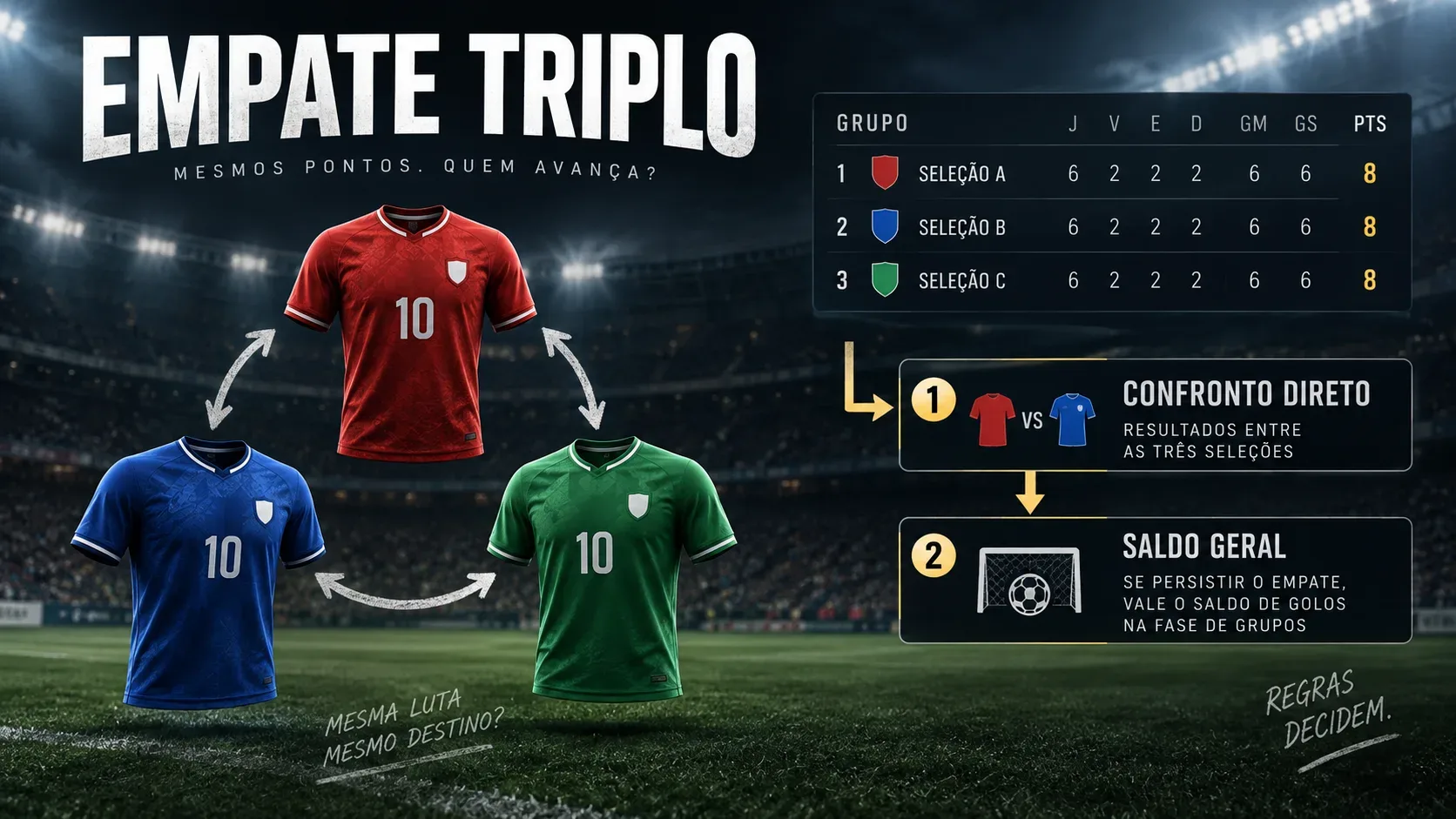
To separate teams level on points within a group, the UEFA regulations start with the head-to-head results between the tied teams. If the tie remains, criteria such as goal
difference, goals scored, wins, disciplinary record and, finally, position in the competition access list are applied.
League A: 1st and 2nd reach the quarter-finals, 3rd enters a play-off and 4th goes down
In League A, the top two teams in each of the four groups advance to the quarter-finals. That produces eight qualifiers: four group winners and four runners-up.
First place brings a concrete advantage. The group winners are seeded in the quarter-final draw and face a runner-up from another group. In addition, the runner-up hosts the first leg, which means the group winner plays the second leg at home.
The quarter-finals are played over two legs between 25 and 30 March 2027. The team scoring more goals on aggregate advances. If the aggregate score is level after the two matches, the tie goes to extra time and, if necessary, penalties. There is no away-goals rule.
The four quarter-final winners reach the final tournament, scheduled for 9 to 13 June 2027, with semi-finals, a third-place match and the final.
For a team finishing 3rd in the group, the consequence is different: it does not go to the quarter-finals and must defend its League A place in a play-off against one of the League B runners-up. The 4th-placed team in each group, meanwhile, is relegated directly to League B under the regulations in force for this edition.
League B: 1st goes up, 2nd plays to go up, 3rd plays to avoid relegation and 4th goes down
League B is the division in which all four positions have clearly different sporting outcomes.
The winner of each group is promoted directly. That means the four first-placed teams in League B earn promotion through the league phase without needing a play-off.
The 2nd-placed team can still reach League A. The four League B runners-up face the four third-placed teams from League A in two-legged ties. The team from the higher division is seeded, while the team from the lower division hosts the first leg.
The 3rd-placed team in League B faces the opposite situation: it must defend its place against a League C runner-up. In that play-off, the League B team is from the higher division and is therefore seeded; the League C team hosts the first leg.
The 4th-placed team in League B is relegated directly to League C. There is no survival play-off for the bottom team in the group.
In practice, League B turns the middle of the table into two different boundaries: 2nd place opens a route to promotion, while 3rd place still carries the risk of relegation.
League C: 1st goes up, 2nd enters a play-off, 3rd stays and the
4th-placed teams are compared In League C, the winner of each group is promoted directly to League B. Since there are four groups, there are four automatic promotions.
The runners-up are not promoted immediately. They face the third-placed teams from League B in the B/C play-offs. The winner of the tie will be in League B under the allocation defined by the regulations for this edition; the loser will be in League C.
The 3rd-placed team in each group remains in League C without playing a promotion or relegation play-off.
The most unusual situation comes in 4th place. UEFA compares the four League C bottom teams in the competition’s interim overall ranking. The two best 4th-placed teams go to the C/D play-offs against the two League D runners-up. The two worst 4th-placed teams are relegated directly.
This means that finishing last in a League C group does not automatically produce the same outcome for every team. Points, goal difference and the other criteria used in the overall ranking can separate the teams that still get a chance in the play-off from those that go down without another match.
The C/D play-offs are scheduled for 23 to 28 March 2028. The regulations also provide for an exception: if any of the teams due to play those ties qualify for the UEFA EURO 2028 qualifying play-offs in the same window, the C/D play-offs will not be played and league status will be resolved by the overall ranking specified in the regulations themselves.
League D: the winner goes up, the runner-up enters a play-off and
3rd stays League D in 2026/27 has two groups of three national teams. Therefore, there is no 4th place in this division.
The winner of each group is promoted directly to League C under the regulations for this edition. The two runners-up go on to the C/D play-offs against the two best 4th-placed teams from League C. The 3rd-placed team remains in League D.
Because League D is the lowest division in the system used in 2026/27, there is no relegation below it.
How the promotion and relegation play-offs work
The A/B and B/C play-offs are played over two legs between 25 and 30 March 2027. The team from the higher league is seeded in the draw, but the team from the lower league hosts the first leg.
In the A/B play-off, a 3rd-placed team from League A faces a 2nd-placed team from League B. In the B/C play-off, a 3rd-placed team from League B faces a 2nd-placed team from League C. The winner of the tie takes the place in the higher division specified by the regulations and the loser is placed in the lower division.
The same principle applies to the C/D play-off, although those ties are scheduled for March 2028 and include the exception connected to UEFA EURO 2028 qualifying. In any two-legged play-off, a level aggregate score leads to extra time in the second leg and, if the teams are still level, a penalty shoot-out decides the place.
What to remember when following the table
In League A, the decisive line for the title is between 2nd and 3rd: the top two reach the quarter-finals, while 3rd is already fighting only to stay in the division. The 4th-placed team is relegated directly.
In League B, every position has its own consequence: 1st is direct promotion, 2nd is a promotion play-off, 3rd is a survival play-off and 4th is direct relegation.
In League C, 1st is direct promotion, 2nd is a promotion play-off and 3rd means staying in the division. A 4th-placed team must be compared with the other bottom teams in the league, because two will still have a play-off and two will be relegated directly.
In League D, 1st is direct promotion, 2nd is a play-off and 3rd means staying in the division.
An important caveat about the following edition
The consequences described above follow the official regulations for the 2026/27 UEFA Nations League, which still provide for promotion and relegation among the four Leagues A, B, C and D.
At the same time, UEFA announced a new concept for 2028/29 in May 2026, changing from four leagues to three leagues of 18 national teams. In that announcement, the governing body said the details of the new format would still be refined and submitted for final approval in September 2026.
Therefore, to understand what each position means within the 2026/27 season, the regulations in force for this edition are the reference. To project exactly how all these positions will be converted into the 2028/29 structure, it will be necessary to check the final details of the transition when UEFA publishes them.