Short answer: if you want to see how the idea of Secret Wars evolved inside Marvel, read Secret Wars (1984) #1-12 before Secret Wars (2015) #1-9. However, the 1984 saga is not a mandatory prerequisite for understanding the 2015 one. For Jonathan Hickman's modern story, the most important context comes from New Avengers and Avengers, where the Incursions and the collapse of the Multiverse are developed.
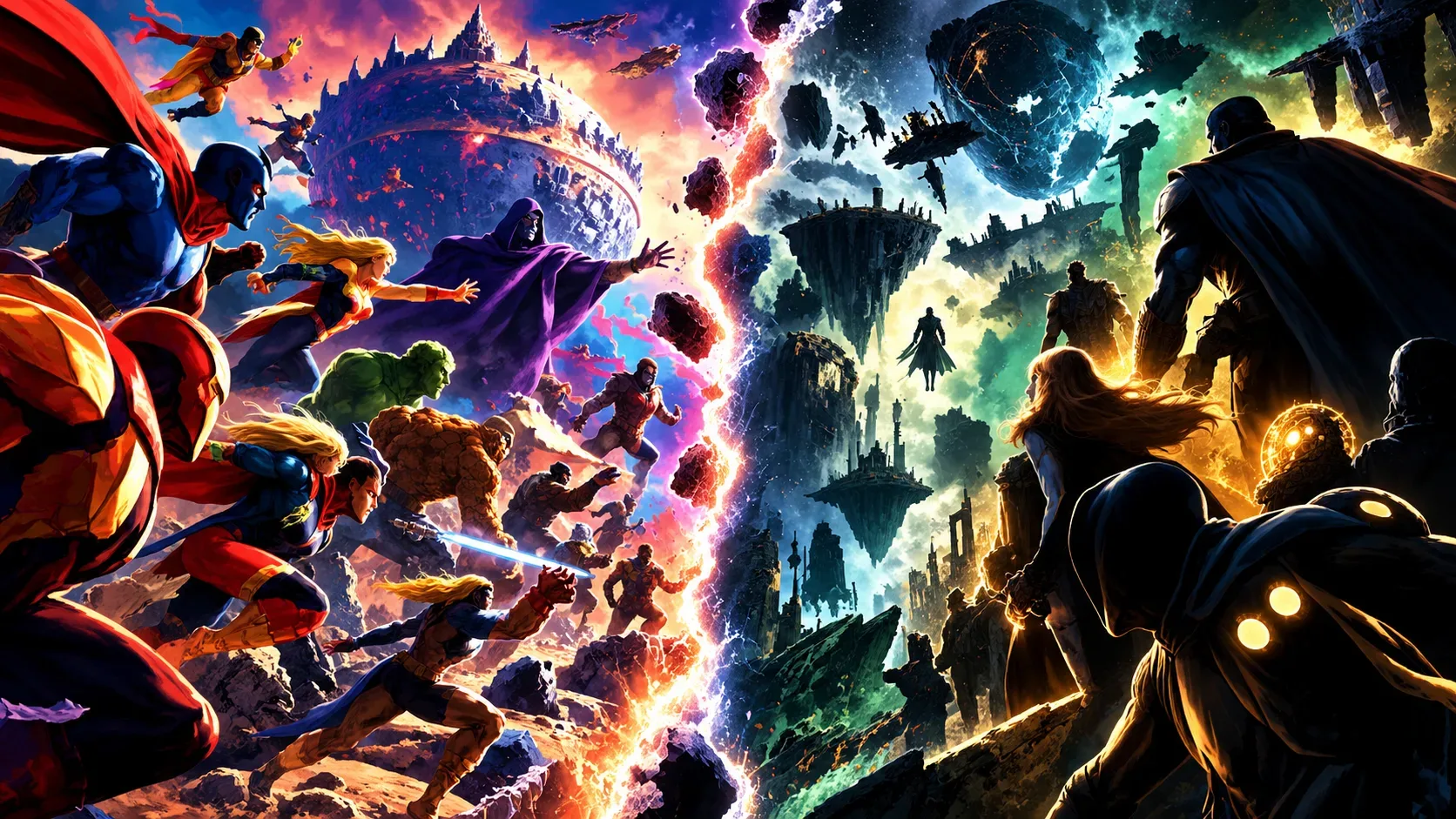
The two stories share names, ideas, and central images, especially Battleworld, Doctor Doom, and a struggle for power on a cosmic scale. Even so, they use those elements for very different purposes. The 1984 story is a major gathering of heroes and villains in an arena built for conflict. The 2015 story is the conclusion of a multiversal crisis and turns Battleworld into a world assembled from fragments of destroyed realities.
Which Secret Wars should you read first?
For most readers who want to compare the two eras, the clearest order is 1984 first, then 2015. Reading them historically makes it easier to see what the modern saga reuses, expands, and changes. You first encounter Battleworld as a battlefield created by the Beyonder and, decades later, find another Battleworld tied to the end of the Multiverse and the rule of Doctor Doom.
This does not mean the 2015 series depends on the plot of 1984 to work. Marvel describes the 2015 story as a saga with some structural similarities to its predecessor, but with much more complexity and far greater consequences for the Multiverse. The narrative starting point of 2015 lies in the Incursions introduced during Jonathan Hickman and Steve Epting's New Avengers run.
| Aspect | Secret Wars (1984) | Secret Wars (2015) |
|---|---|---|
| Main format | 12 issues | 9 issues |
| Premise | Heroes and villains are taken to Battleworld to fight with the promise that their desires can be granted | The Multiverse collapses, and fragments of realities form a new Battleworld |
| Story engine | Conflict between groups assembled by the Beyonder | The consequences of the Incursions, Doctor Doom's rule, and a struggle over the future of reality |
| Scale | Cosmic crossover involving major teams and characters | Multiversal crisis and reconstruction of reality |
| Prerequisite | Can be read directly | Can be read on its own, but gains a great deal of context from Hickman's Avengers and New Avengers |
| Long-term effect | New characters, status changes, and Spider-Man's black costume, which later leads to the Venom symbiote story | Reconstruction of the Multiverse, Miles Morales integrated into Earth-616, and a new starting point for several Marvel lines |
What is Secret Wars 1984 trying to do?
The original series, written by Jim Shooter, gathers many of Marvel's leading heroes and villains on a mysterious planet. Marvel itself summarizes the concept as a contest in which the immensely powerful Beyonder promises an unlimited reward to those who defeat their enemies. The result is a story built around meetings, alliances, rivalries, and battles between characters who were normally spread across different comic titles.
The 1984 Battleworld works mainly as a narrative arena. It exists to place the Avengers, X-Men, Fantastic Four, Spider-Man, and other heroes against Doctor Doom, Ultron, Doctor Octopus, and several other villains. The focus is less on explaining a previous universal crisis and more on exploring what happens when all these characters are gathered under a simple rule of conflict.
The saga also produced consequences that continued beyond its 12 issues. Marvel highlights the debut of Titania and Volcana, temporary changes involving the Thing, and, most famously, the moment when Spider-Man comes into contact with the alien black costume that would later be connected to the Venom symbiote. Doctor Doom also becomes a central figure as he seeks to take the Beyonder's power for himself.
What changes in Secret Wars 2015?
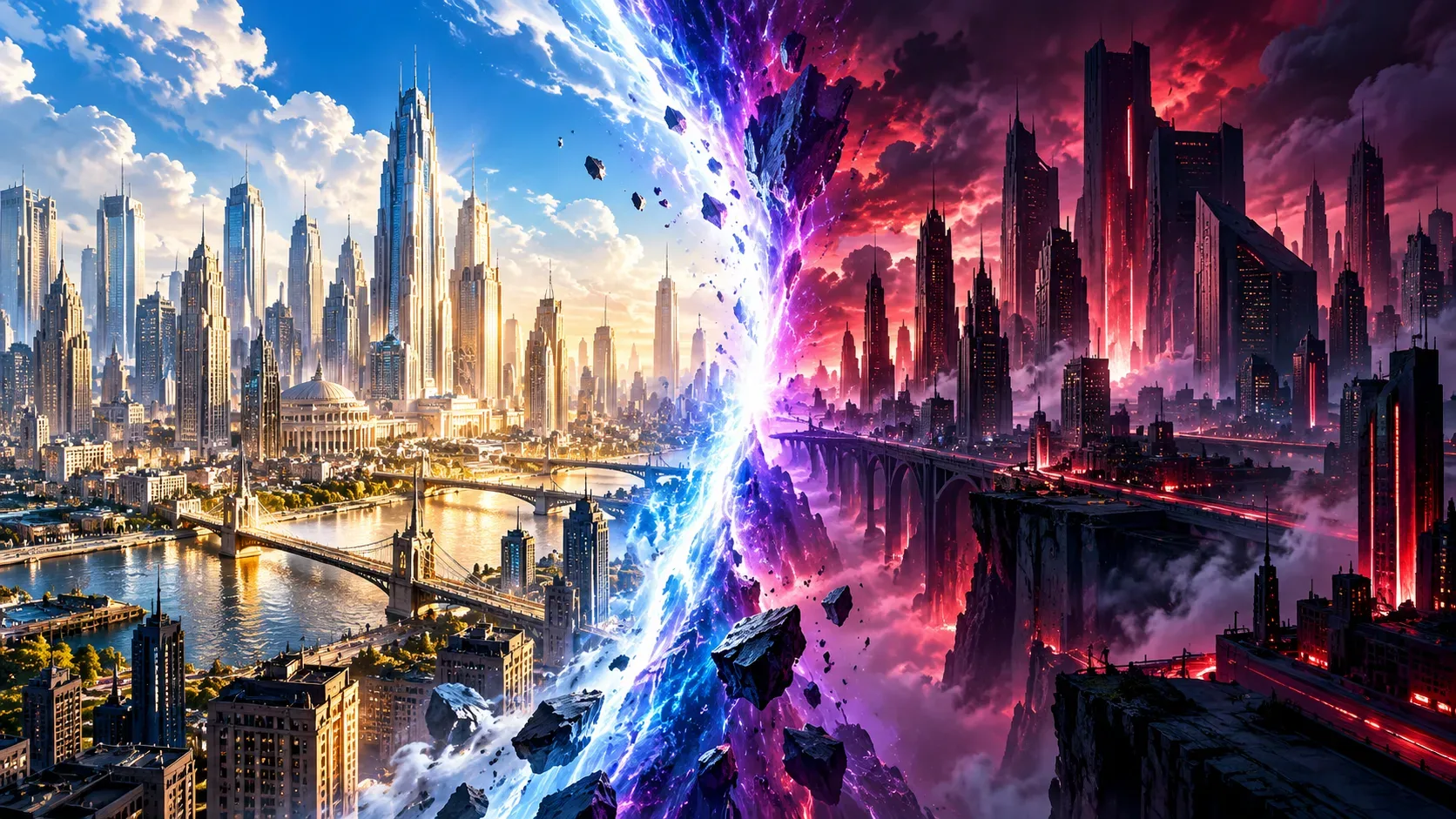
The 2015 version, written by Jonathan Hickman and drawn by Esad Ribić, starts from a very different situation. The Incursions cause universes to collide and be destroyed. At the end of that process, Earth-616 and the Ultimate Universe enter the final collision. What remains is Battleworld, now a planet made of fragments of destroyed realities and ruled by Doctor Doom.
That is why the 2015 Battleworld is not simply another arena for a tournament of heroes and villains. It is the setting produced by the collapse of reality. Its domains preserve different versions, eras, and worlds, allowing the saga to treat the Multiverse as a collection of territories placed under one political and cosmic order.
The scale also changes Doctor Doom's role. In 1984, he tries to steal cosmic power and place himself above the other participants. In 2015, he appears as the ruler of Battleworld and as a central part of the explanation for why any form of reality still exists. The story places the conflict between Doom and Reed Richards at the center of the question of who is capable of saving and rebuilding what was lost.
Is 2015 a direct sequel to 1984?
Not in the sense of a sequel that requires the first saga. The connection is stronger at the level of concepts, echoes, and characters. The name Battleworld returns, Doctor Doom again deals with nearly absolute power, and the idea of concentrating parts of the Marvel Universe into one giant event comes back on a much larger scale.
The decisive difference is the function of those elements. In 1984, the Beyonder creates a world to observe and provoke a war between heroes and villains. In 2015, Battleworld is formed from fragments of the Multiverse after the Incursions and exists under Doom's authority. The modern saga speaks to the original, but its narrative machinery comes from Hickman's run and the multiversal crisis built in the preceding years.
What are the reading prerequisites for 2015?
There are three practical paths, depending on how much context you want before starting.
Path 1: direct reading
Read Secret Wars (2015) #1-9. The miniseries introduces Battleworld, explains its internal order, and carries the central conflict through the reconstruction of reality. You may not recognize every detail behind the Incursions, but the main story remains understandable.
Path 2: essential Hickman context
Before the miniseries, read the arc known as Time Runs Out, which includes Avengers (2012) #35-44 and New Avengers (2013) #24-33. Marvel's own Secret Wars by Jonathan Hickman omnibus groups those chapters with Secret Wars (2015) #1-9, making clear that they form the most direct approach to the event.
Path 3: a sample of earlier context
The official Secret Wars Prelude collection gathers stories from different eras and lines, including New Avengers (2013) #1-3, Marvel Super Heroes Secret Wars #10-12, Fantastic Four #611, Ultimate Comics Spider-Man #1, and Ultimate Comics Ultimates #4. It works as a selection of relevant pieces rather than a complete chronology of everything that led to the event.
What does each saga change in the Marvel Universe?
Secret Wars 1984 produces specific and highly recognizable consequences. Spider-Man's black costume is the most famous because it later connects to the story of the Venom symbiote. Titania and Volcana become part of the Marvel Universe, and the experience on Battleworld alters individual character trajectories.
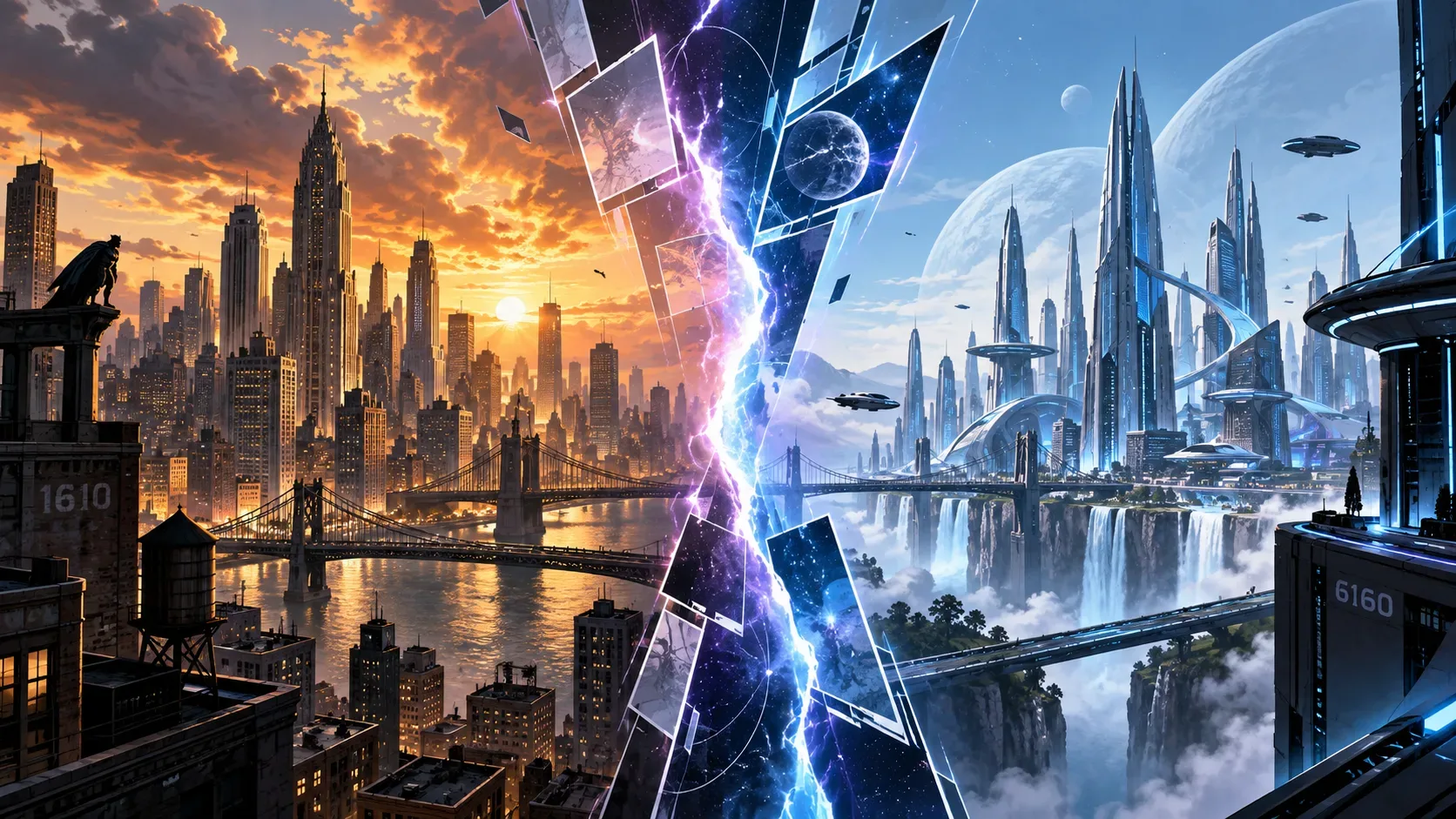
Secret Wars 2015 changes the architecture of the setting itself. In the ending, Reed Richards and Molecule Man take part in rebuilding the Multiverse. Among the most lasting effects, Miles Morales moves from the Ultimate Universe to Earth-616, while the Maker, the Earth-1610 version of Reed Richards, also survives the reorganization. Marvel presented the following era as a reborn universe after the event.
This difference explains why the two stories carry different kinds of weight. The 1984 event changes characters and helps establish the model of the massive crossover. The 2015 event uses that legacy as a language for ending a long story about colliding realities and opening a new state of the Multiverse.
So, which order makes the most sense for you?
- Want to understand the historical evolution of the concept? Read 1984 first and 2015 second.
- Only want Hickman's modern saga? You can start with 2015, preferably after Time Runs Out.
- Want the simpler, more classic read? The 1984 series is more direct and self-contained.
- Want a story about multiversal collapse and reconstruction? The 2015 series focuses on that idea and rewards familiarity with Hickman's run.
In short, 1984 and 2015 are not two versions of the same story. The first establishes Battleworld as the stage for a colossal confrontation. The second transforms the idea into a mechanism for discussing the end, preservation, and reconstruction of the Multiverse. Reading 1984 first improves the comparison; reading Hickman's buildup before 2015 improves understanding of the modern plot.