
The new national civic tourism rule comes into force on August 13, 2026 and ensures visits, mainly by students, to public spaces and bodies considered cultural or natural tourist attractions. It also provides for half price for certain audiences when there is an admission charge.
This, however, does not transform every public building, museum, monument or park into a place with free access, free of charge and without appointments. Schedules, capacity, entry control, security measures, reservation requirements and compatibility of the visit with institutional operations remain the responsibility of the managing body.
MTur Ordinance nº 24 is dated June 22, 2026 and was published in the Official Gazette of the Union on June 29. Its article 8 establishes validity 45 days after publication. According to the counting method provided for in Complementary Law No. 95 — inclusion of the date of publication and the last day, with entry into force on the following day — the period ends on August 12th and the rule comes into force on August 13th, 2026. The date is the result of this legal count; the text of the ordinance does not expressly write “August 13th”.
What changes with the civic tourism rule
The ordinance regulates a provision of the General Tourism Law that determines the guarantee of public visitation to public spaces and bodies recognized as cultural or natural attractions, especially those with cultural, artistic, historical, landscape, archaeological, paleontological, ecological or scientific collections.
In general, civic tourism is a form of cultural tourism motivated by interest in monuments, happenings, civic events and aspects of the political and historical memory of a place. The visit can also have an educational purpose, integrating the tourist experience with teaching and citizenship, cultural and environmental training.
The main practical effect is to create a national reference so that visitation does not depend solely on isolated initiatives. But the right must be exercised in conjunction with the rules of each location.
National law × local rule
| Theme | What the national standard establishes | What still needs to be confirmed in the attraction |
|---|---|---|
| Public visit | Public spaces and bodies considered cultural or natural attractions must allow visits, especially by students. | Which areas can be visited, available days, times, minimum age and need for a guided tour. |
| Half price | Elderly people, people with disabilities, low-income young people aged 15 to 29 and students in basic or higher education pay half the entrance fee actually charged to the general public. | Updated value, purchase method, accepted documents and procedure for reserving the benefit. |
| Free of charge | The ordinance does not determine universal gratuity. If the ticket is already free, there is no value on which to apply a discount. | Free days, local programs, city or state exemptions, and charges for special exhibits or activities. |
| Teachers, guides and monitors | You can use gratuities, exemptions or benefits already provided for in local laws or regulations. | If there is a benefit, which professionals are covered, quantity per group and documentation required. |
| Times and capacity | Visitation must respect schedule, service capacity, security and institutional functioning. | Capacity per session, availability on the chosen date, visit time and advance booking. |
| Scheduling | The standard allows prior scheduling whenever required by the manager. | Official channel, deadline, reservation confirmation, tolerance for delay and rules for groups. |
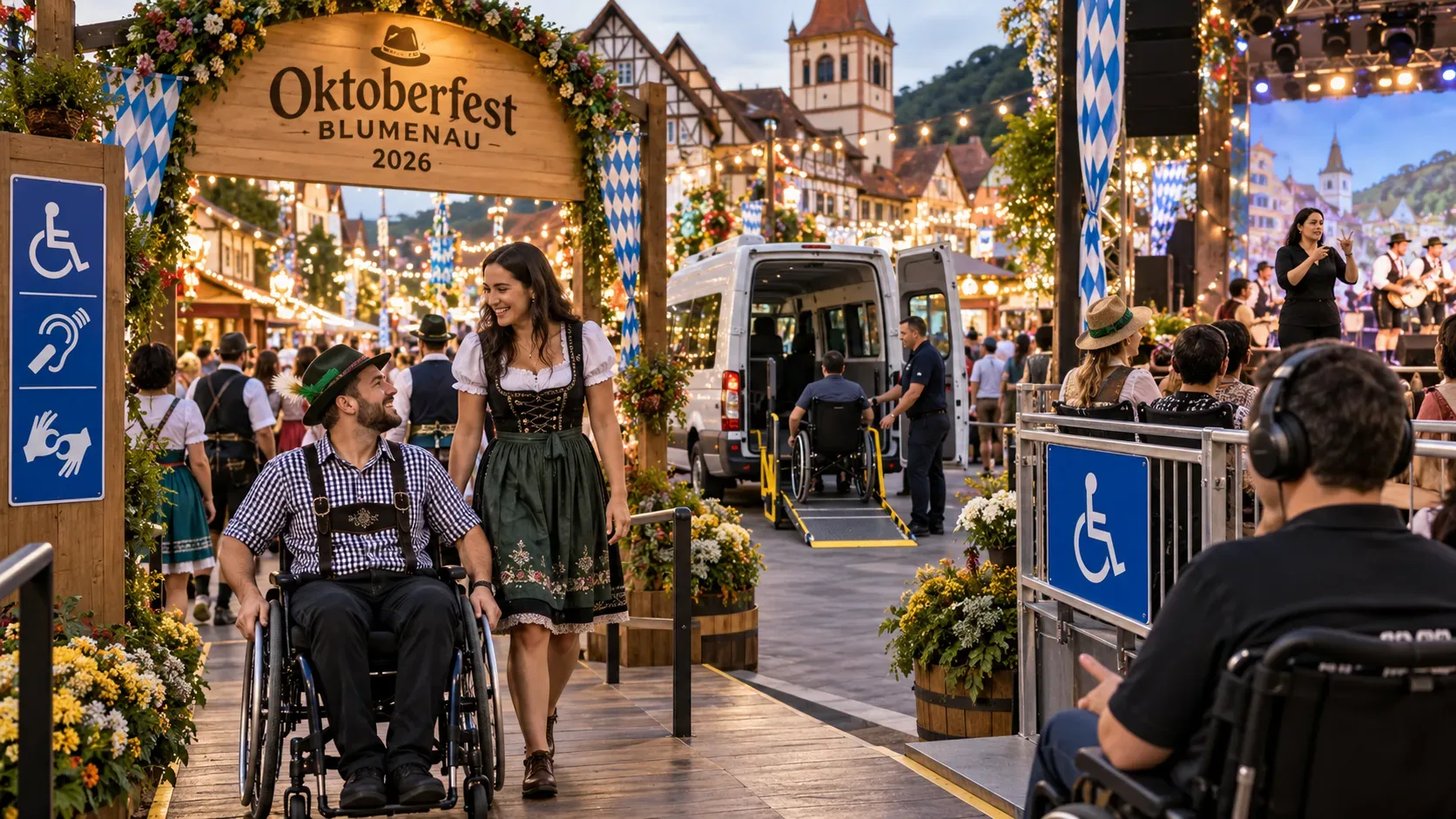
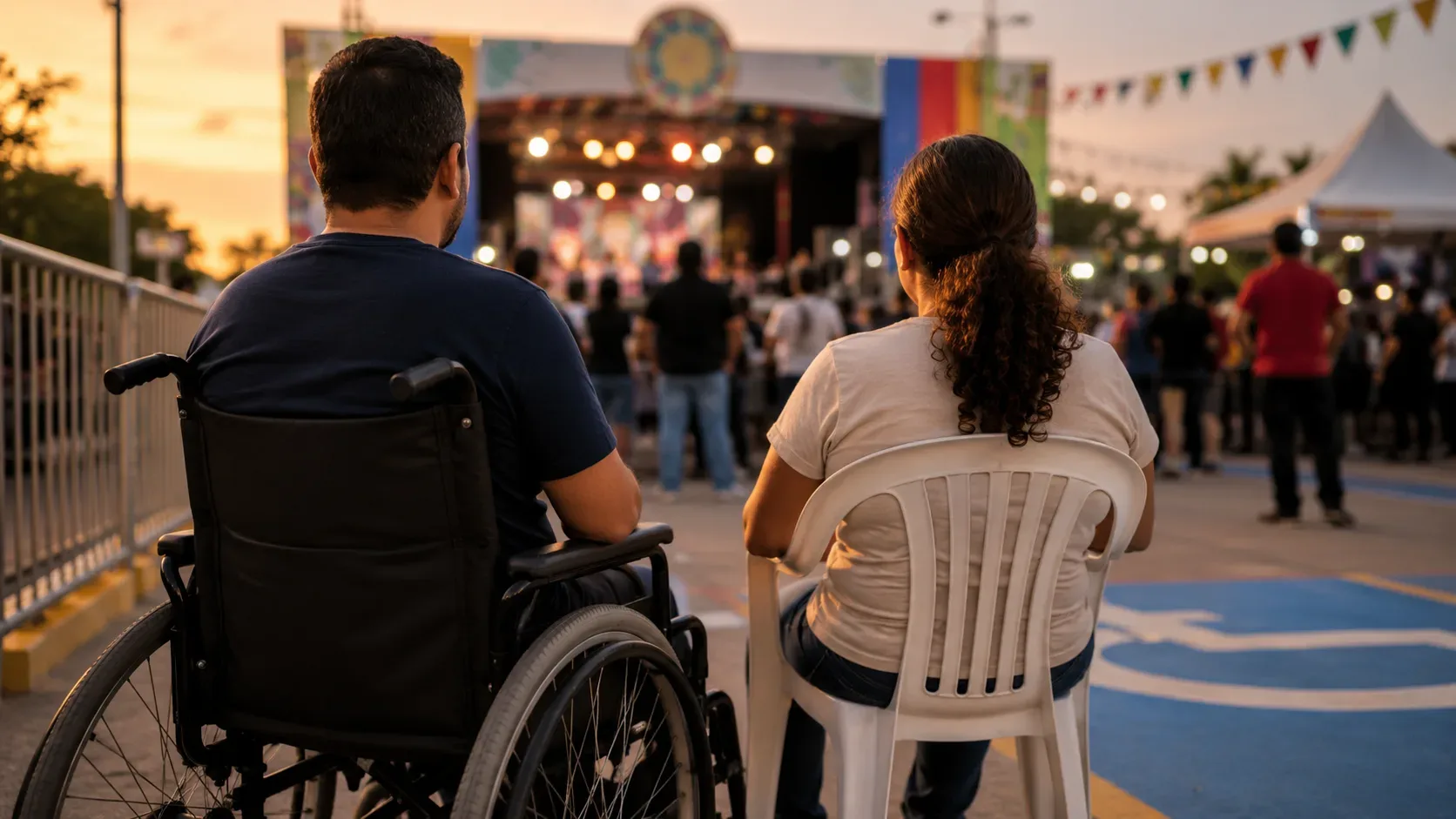
| Accessibility | Inclusion is a guideline and managers must observe accessibility legislation. | Accessible route available, working elevators, toilets, communication resources and advance notice required. |
| Companion of a person with a disability | The Half-Price Law and its regulations provide for the benefit to the companion required at events. The new ordinance does not expressly mention it when dealing with civic attractions. | The application for admission to the attraction and the verification procedure adopted by the manager. |
| Half-price ticket limit | MTur Ordinance nº 24 does not create or reproduce a specific quota for civic visitation. | How the manager will treat the benefit, especially in sessions, temporary exhibitions or activities with limited tickets. |
Physical or operational capacity may limit the number of visitors on a given date, but should not be automatically confused with the lack of right. A sold out session, an institutionally restricted area and a denial of half-price are different situations and must be explained separately by the manager.
Who is entitled to half price
As of the entry into force of the ordinance, payment of half of the ticket price actually charged to the general public is guaranteed, for civic tourism purposes, to the following groups:
- Elderly people, considered those aged 60 or over;
- people with disabilities;
- young people aged 15 to 29 years with proven low income;
- students regularly enrolled in basic or higher education, in public or private institutions.
For elderly people, the Elderly Persons Statute already provides for a discount of at least 50% on tickets for cultural and leisure activities, in addition to preferential access to the respective places.
The expression “half the amount actually charged to the general public” is important. The calculation must consider the entire amount actually offered to the public, and not a fictitious value created just to present the discount. On the other hand, the benefit does not mean free or, as a rule, accumulation with other promotions.
Verification checklist
Elderly person
Take an official document that allows you to prove your age. As the ordinance does not detail an exclusive document for this group, consult the attraction's official page if the purchasing system requests registration or advance validation.
Student
MTur Ordinance No. 24 expressly refers to Law No. 12,933 to define student status. The legislation requires presentation of the Student Identification Card — CIE at the time of purchase and upon entry.
The CIE must follow the national model and contain name, date of birth, photograph, educational institution, level of education and validity. As a rule, it is valid until March 31st of the year following issuance. Proof of registration alone is not the document indicated by the federal legislation cited in the ordinance, although state standards or local policies may provide for other possibilities.
Light:
- Valid CIE;
- official document with photo as a precaution;
- reservation or ticket confirmation.
Low-income young people
The federal framework considers a person aged 15 to 29 to belong to a family with a monthly income of up to two minimum wages and registered in the Federal Government's Single Registry for Social Programs.
For proof, Decree No. 8,537 provides for the presentation of a valid Youth ID accompanied by an official document with photo, both upon acquisition and upon entry. The official government service allows you to check the validity of identification.
Light:
- Valid Youth ID, digital or in the format accepted by the service;
- official document with photo;
- ticket or reservation linked to the benefit.
Person with a disability
The federal half-price regulation mentions, as long as there is no regulatory replacement of the assessment model, the Continued Payment Benefit card of the person with a disability or an INSS document relating to the retirement of the person with a disability, accompanied by official identification with a photo.
This is one of the points that most require confirmation before traveling. Other disability identification documents may be recognized by state or municipal legislation or attraction regulations, but such acceptance should not be assumed without consultation.
Companion required
Law No. 12,933 and Decree No. 8,537 extend half-price to companions when a person with a disability requires assistance. The decree allows declaration of this need by the person themselves or, when this is not possible, by the companion.
However, MTur Ordinance nº 24 does not expressly mention the companion in its paragraph on natural and cultural attractions. For editorial and legal security, confirm in writing how the managing body will apply this benefit to civic visitation.
Are teachers, guides and monitors free of charge?
There is no automatic national gratuity created by the new ordinance for all teachers, tour guides, monitors or educational support professionals.
The text states that these professionals will be able to take advantage of free services, exemptions or other benefits already provided for in the legislation or regulations of the spaces visited. Therefore, you need to check:
- if the benefit exists in that attraction;
- only applies to school groups;
- how many professionals can accompany each group;
- if the guide needs to present professional identification;
- if a teacher or monitor must have a link with the institution;
- if the reservation needs to be made as a teaching visit.
Accessibility: existing right, conditions that need to be verified
The ordinance includes the promotion of the participation of people with disabilities or reduced mobility among its guidelines and determines that managing bodies observe accessibility standards when organizing visits.
It is in addition to the Brazilian Inclusion Law, which guarantees people with disabilities the right to tourism and access to monuments, places of cultural importance and spaces for cultural activities on equal opportunities. The law also determines that public authorities adopt solutions to eliminate, reduce or overcome barriers, whilst respecting accessibility, environmental and heritage protection standards.
This does not mean that every resource will be available on any day or that all routes through a historic asset or natural attraction will be fully accessible. The legal obligation of accessibility does not replace the practical need to check the available route, equipment in operation and adaptations offered.
Verified accessibility block
Before booking, ask the attraction:
- Is there an accessible route from the sidewalk, parking lot or drop-off point?
- Is the accessible entrance the same as that used by other visitors?
- Will elevators and platforms be in operation on the date?
- Is there an accessible restroom on the route open to visitors?
- Are there seats, rest areas or wheelchair rentals?
- Does the route involve stairs, hills, uneven terrain or long distances?
- Is there interpretation in Libras, subtitles, audio description, tactile resources or material in an accessible format?
- Is it necessary to request any resources in advance?
- Are there restrictions on companions, guide dogs or support professionals?
- Is there an alternative plan when a certain area is not accessible?
The Brazilian Inclusion Law defines accessibility as a right linked to independent living, citizenship and social participation. In projects and installations open to the public, the general rule is universal design; when it demonstrably cannot be applied, reasonable adaptation must be adopted.
Confirmation itinerary before travel
- Open the attraction's official page. Avoid relying solely on maps, social networks, blogs or sales pages without a confirmed link with the manager.
- Choose the exact date. Check opening days, holidays, sessions, maintenance, institutional events and possible temporary closures.
- Confirm if there is a charge. Check the full price, half price, any free fees and the date the information was updated. Do not use prices without source and date.
- Read the proof rule. Compare the requested documents with federal legislation and with additional benefits provided locally.
- Check the schedule. Confirm number of places, advance notice, limit per group and whether the ticket needs to be issued before arrival.
- Ask about concrete accessibility. Don’t just ask if the location “is accessible”. Inform your needs and ask for details of the route and available resources.
- Save the answer. Save email, protocol, ticket, page capture and reservation confirmation, especially when there is a benefit or resource requested in advance.
What if the benefit is refused?
First, ask the attendant to inform the reason: document considered invalid, benefit exhausted, session crowded, closed area, specific free rule or denial of half-price recognition.
Request an indication of the regulations used and record the date, time, service channel and identification of the attraction. When there is a responsible public body, the complaint can be forwarded to the institution's own ombudsman. In cases involving ticket sales or consumer relations, it may also be pertinent to consult Procon about the appropriate channel.
The ordinance does not create in the text itself a refund procedure, individual inspection or specific administrative resource for the visitor. Therefore, documentation of the occurrence is important to allow subsequent analysis by the competent body.
Frequently asked questions
Does the rule apply to any public building?
No. The text covers spaces and public bodies considered cultural or natural tourist attractions. Furthermore, the visit must be compatible with institutional functions, security and preservation of the site.
Does all public attractions become free?
No. The rule provides for half-price when there is a charge for admission, but does not determine universal free admission.
Can museums, monuments and parks fall under the rule?
Yes, as long as they are public and classified as cultural or natural attractions. The ordinance also mentions artistic, landscape, archaeological, paleontological, ecological and scientific collections.
Is scheduling no longer mandatory?
No. The manager may require prior reservation, access control and other security measures.
Does half-price guarantee a place in a crowded session?
No. The benefit reduces the ticket price owed by the holder, but does not eliminate capacity limits or replace the required reservation.
Does the concierge ensure that the entire route is accessible?
It reinforces inclusion and compliance with accessibility standards. The concrete availability of routes, equipment and resources needs to be consulted on site, without this taking away from existing obligations in accessibility legislation.
When does the rule come into effect?
On August 13, 2026, considering the official publication on June 29, the 45 days of vacancy and the legal way of counting.
Save this checklist and open the attraction's official page before issuing tickets or booking accommodation. The new rule expands rights and organizes national guidelines, but a trip without surprises still depends on confirming your schedule, ticket, documents and accessibility for the chosen date.