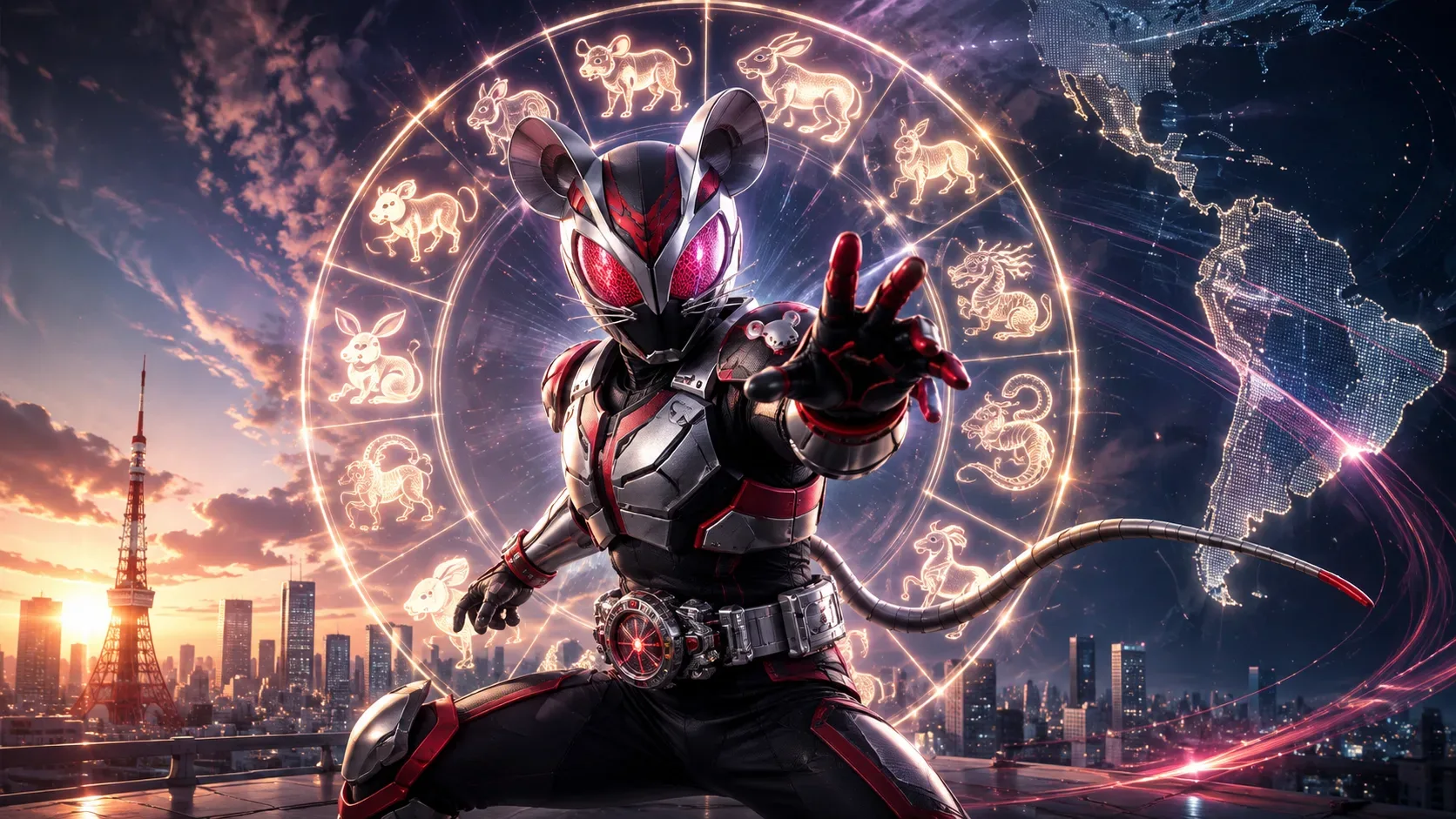
Kamen Rider MY-TH premieres in Japan on September 6, 2026. TV Asahi’s schedule lists the first episode for Sunday from 9:00 to 9:30 a.m. Japan time. The series is the 55th-anniversary Kamen Rider production and introduces Sora Otosumi, a “Meister” serving the Mizuki family who transforms into a mouse-themed Kamen Rider to fight mysterious creatures called Fukashigi. For Latin America, Sato Company announced a simulcast through TokuSato; however, as of September 1, some operational details — especially the final airtime and whether dubbing will be available from episode one — should not yet be treated as settled.
Premiere facts: what is already official in Japan
- Date: September 6, 2026.
- Japan airtime: Sunday, 9:00–9:30 a.m., according to TV Asahi’s schedule.
- First episode: the official site gives the Japanese title “子ねずみ!マイスターとお嬢様,” which can be rendered loosely as “Little Mouse! The Meister and the Young Lady.”
- Lead: Sora Otosumi, played by Ikuho Akiya, transforms into Kamen Rider MY-TH.
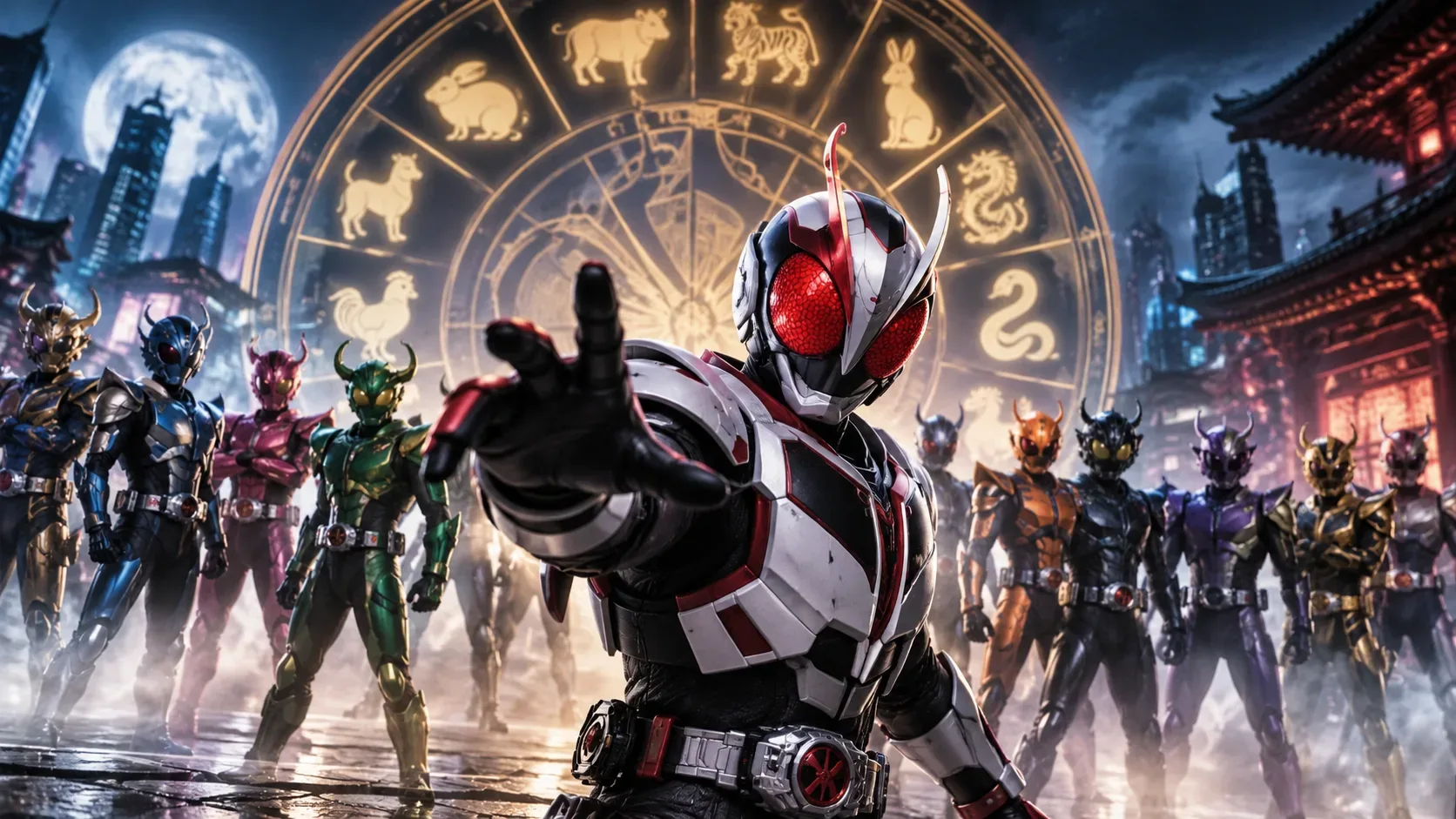
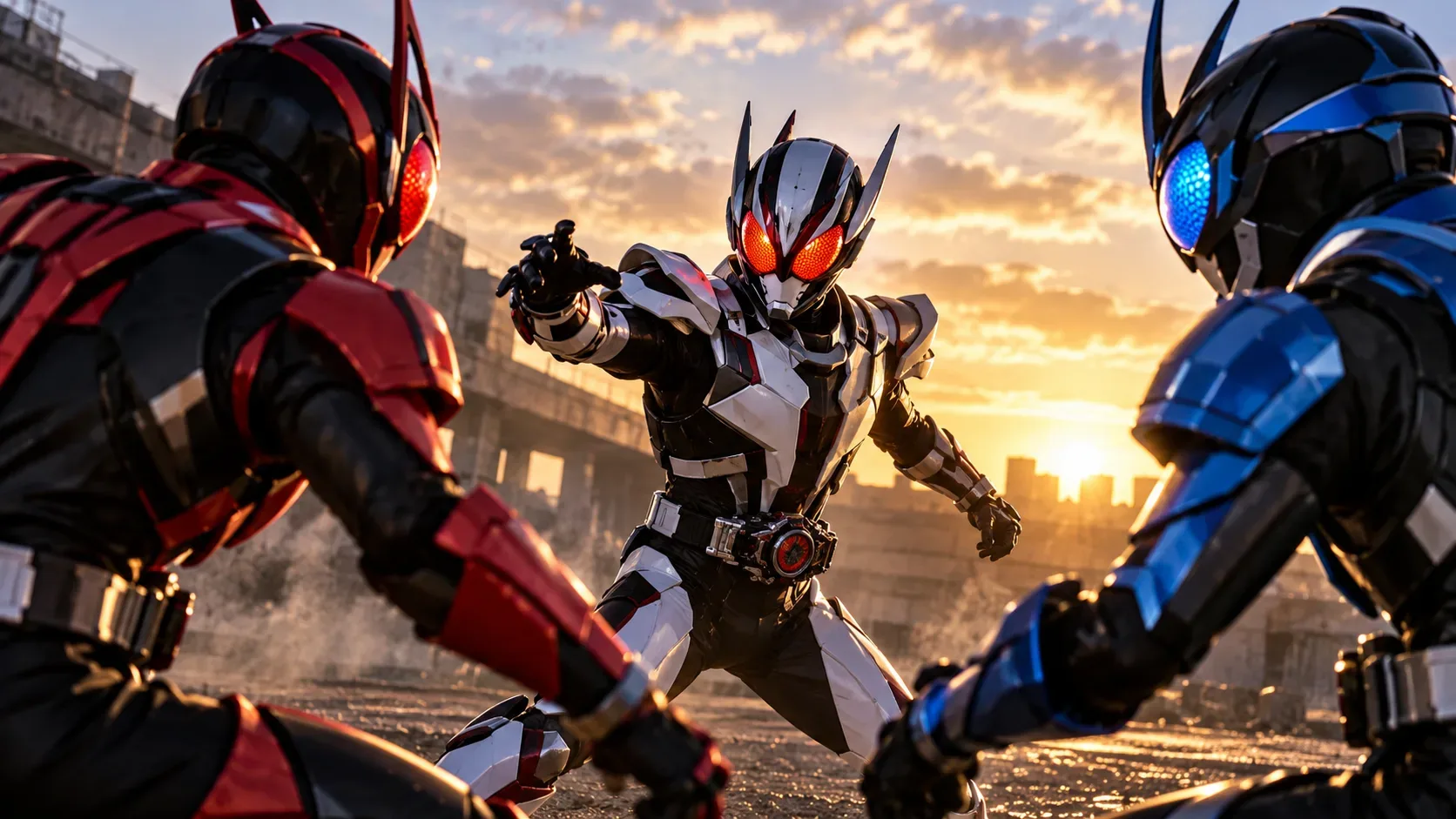
- Premise: Sora protects Yuna Mizuki and fights the Fukashigi while clashing with the organization known as the Twelve Zodiac Alliance, which awakens after one hundred years.
These points appear on the official TV Asahi schedule page, the series website and Toei’s official Kamen Rider portal.
What “MY-TH” means
The official explanation available so far is simpler than many fan theories. When Toei announced the title, it said the Latin-letter spelling inserts a hyphen into MYTH, the English word “myth,” and that the title is read “Maisu” in Japanese. That announcement did not provide an expanded acronym for “MY” and “TH.” Claims that assign separate meanings to each half of the name should therefore be treated as speculation, not official information.
The “myth” idea fits the series’ own presentation, which describes the beginning of a new Kamen Rider mythology. But until the show airs, the full story meaning of the title remains something the series itself still has to reveal.
Why MY-TH is the mouse Rider
TV Asahi describes MY-TH as the first lead Kamen Rider whose main motif is a mouse. Sora is a highly capable professional whose family has served the Mizuki household for generations: he cooks, cleans, repairs things and handles Yuna’s requests while already having combat experience against the Fukashigi. Another official detail is that his transformation device is worn on the chest, distinguishing him from Riders connected to the Twelve Zodiac Alliance.
The mouse is more than a visual flourish. The official synopsis puts Sora on a collision course with Kamuri Minetaka, leader of the Alliance and Kamen Rider MAOU, who is identified as the group’s cat. The cat-and-mouse rivalry is therefore built into the central conflict already revealed.
MY-TH’s “zodiac” is not the Western zodiac
The Japanese material uses 十二支 (jūnishi), the traditional twelve-animal cycle associated with the East Asian earthly branches. It is not the Western zodiac of Aries, Taurus, Gemini and so on.
The official cast page already presents members associated with animals such as tiger, rabbit, snake, dog, sheep, monkey, rooster and dragon. At the same time, Kamuri is officially described as the Alliance’s “cat” — and the cat is not part of the standard Japanese twelve-animal list. That mismatch appears deliberate, but a full official explanation of how the cat fits into the twelve-part structure has not yet been published. It would also be premature to assume every position will map exactly onto the traditional cycle before the series explains its rules.
Latin America: confirmed vs. not yet confirmed
| Point | Status on Sept. 1 | What is known |
|---|---|---|
| Latin American simulcast | Confirmed in the regional announcement | Sato Company announced regional distribution during a TokuSato livestream, according to Tokusatsu.com.br’s report. |
| Platform | Confirmed in the regional announcement | The TokuSato YouTube channel is identified as the home of the Latin American release. |
| Portuguese and Spanish | Confirmed as planned languages | The announcement includes Portuguese and Spanish versions. |
| Episode-one dubbing | Not safe to state as final yet | The regional report records conflicting information: Victor Sato was quoted as saying dubbed versions would be added later, while a consultant associated with the project said the September 5 launch would include dubbing. The safest course is to wait for TokuSato’s final schedule. |
| Brazil local date | September 5 is the date being reported | Regional reports point to Saturday night, Sept. 5, because of the time-zone difference from Japan’s Sept. 6 broadcast. |
| Exact airtime in Brazil and other countries | To be confirmed | The final time was still due to be announced through TokuSato’s social channels. |
| Dub cast and studio | To be confirmed | The material reviewed does not officially lock down the full local voice cast or dubbing studio. |
The regional source for these points is Tokusatsu.com.br’s report on Sato Company’s announcement. Because audio and scheduling details were still being updated, the existence of the simulcast should be separated from the exact conditions of each broadcast.
What to check before watching
- Check TokuSato’s page and social channels on September 5 for the final local airtime.
- Look at the player labels to see whether the episode is subtitled, dubbed or offers alternate audio tracks; do not assume dubbing will be available from the first minute.
- When comparing dates, remember that “September 6 in Japan” can correspond to the evening of September 5 in parts of Latin America.
- Be cautious with cast lists, dubbing schedules or definitive explanations of the twelve-animal system that do not point to an official announcement or an identifiable regional source.