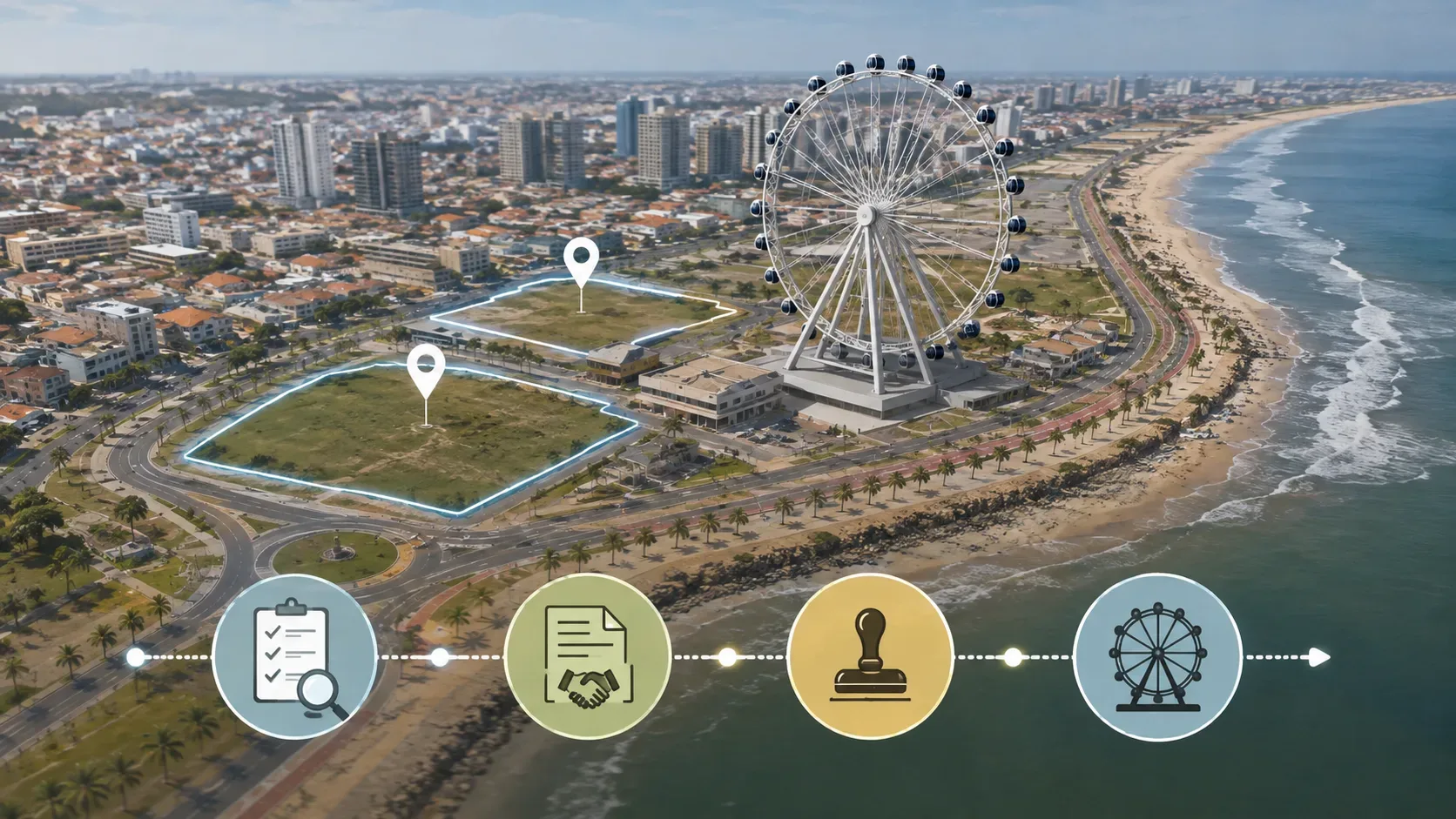
The approval given by the Aracaju City Council on August 4, 2026 does not mean that the Coroa do Meio Ferris wheel is authorized to begin construction. The legislative act deals with a heritage step: the transfer of the use of municipal areas to the State of Sergipe.
In practical terms, the vote seeks to create one of the necessary conditions for the project to move forward in the indicated location. It is not equivalent to the definitive choice of a company, the approval of an executive project, the issuance of the required licenses or the definition of a date for the start of works.
The Chamber approved the transfer of the area not the completed Ferris wheel.
Until this investigation was completed, at 2:32 pm on August 5, 2026, it was not possible to locate in an accessible official source the publication of the sanction of the project approved the previous day. The full text of PL nº 283/2026 also needs to be checked before the final publication of this news.
What the Chamber approved on August 4th
According to the informed legislative agenda, the councilors approved the transfer of the use of two areas located in Coroa do Meio to the Government of Sergipe. The announced purpose is to allow the development of the tourism project led by the Sergipe Development Agency, Desenvolvimento-SE.
This type of authorization resolves an issue prior to the work: which public entity will be able to make available and manage the land linked to the project.
Even after approval by the Chamber, the project still needs to complete its processing in the municipal Executive. As a rule, this includes sanction or veto and publication of the corresponding act.
Without official publication, it is not safe to treat the transfer as fully completed.
The timeline of the Aracaju Ferris wheel
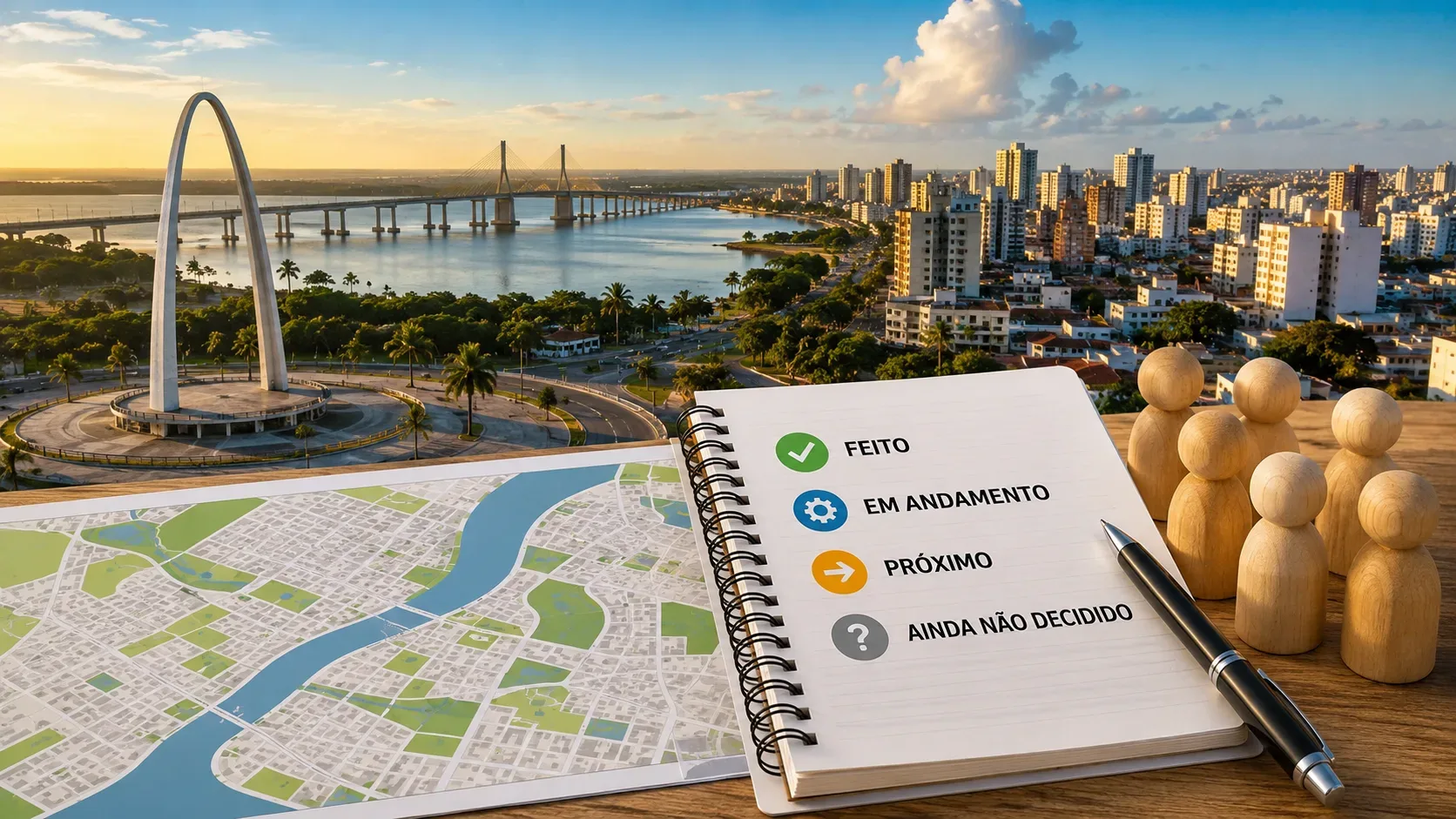
The process can be understood in four major steps. They are related, but should not be confused.
1. Public call to find a partner
Desenvolvimento-SE published the Public Call for Business Opportunity No. 001/2026, linked to Administrative Process No. 142/2026. The notice is dated June 30th and had proof of publication in the Official State Gazette on July 1st, 2026.
The objective is to identify and select a legal entity or a consortium to develop, together with the state agency, the structuring, implementation, operation, maintenance and commercial exploitation of a Ferris wheel in Aracaju.
The notice itself defines the procedure as prospective, preparatory and instructive. It also clarifies that the call, in isolation, does not guarantee the celebration of the partnership. Desenvolvimento-SE may suspend, alter, revoke or terminate the process upon a motivated decision.
Therefore, the publication of the call should not be described as a completed contract.
2. Availability of Coroa do Meio areas
The notice indicates that the development is planned for an area in the Coroa do Meio neighborhood, close to the public marina, Rio Poxim and Shopping RioMar, with access via Avenida Delmiro Gouveia and local roads.
The documentation made available by Desenvolvimento-SE brings together plans, descriptive memorials, land assessments and other files on more than one area related to the project. The call page lists, for example, assessments for plots of 690 square meters and 3,003 square meters. These numbers should not be added together or presented as the definitive dimension of the entire complex without comparison with PL nº 283/2026 and its annexes.
It is at this stage that the vote on August 4th takes place. The transfer of use seeks to make the patrimonial situation of the land compatible with state modeling.
It does not replace the call or subsequent technical phases.
3. Sanction and formalization of the assignment
After legislative approval, the project goes to the mayor for analysis. The sanction transforms the approved project into law; a veto, total or partial, would return the matter to the Legislature for further deliberation.
In addition to the political decision, it will be necessary to verify how the assignment will be formalized, which properties are included, for how long they can be used, what obligations will be attributed to the State and in what situations the area should return to the Municipality.
At the time of writing this version, the sanction was not confirmed in an accessible official publication. For this reason, the assignment must be described as approved by the Chamber and still subject to the completion of the processing.
4. Selection, development and implementation
Even after the sanction and the availability of assets, the notice foresees its own path before construction.
Steps outlined in the document include:
- presentation of qualification documents and preliminary technical proposals;
- verification of license;
- evaluation and classification of proposals;
- disclosure of preliminary and final results;
- approval;
- call from the selected company or consortium;
- celebration of the partnership agreement;
- negotiation and consolidation of the project;
- preparation of studies and regularizations;
- licensing;
- implementation;
- operation of the enterprise.
The proposal presented in the call will not necessarily be the final configuration of the Ferris wheel. The notice expressly states that it will serve as a reference for negotiation, improvement and definition of a consolidated project.
Advancement between phases also depends on approval from Desenvolvimento-SE. After negotiation, a preliminary phase of studies and regularizations, a licensing phase and, only then, the physical implementation of the equipment are planned.
Approved versus not yet defined
| Has already occurred or been formally initiated | Still depends on definition or confirmation |
|---|---|
| Publication of Public Call nº 001/2026 | Final result and approval of the call |
| Provision of notice, draft and technical reference documents | Identity of selected private partner |
| Indication of Coroa do Meio as a planned area | Effective signature of the partnership agreement |
| Legislative approval of the transfer of use, as reported on August 4 | Sanction and publication of municipal law |
| Existence of preliminary parameters for the project | Definitive architectural and executive project |
| Forecast of negotiation, licensing, implementation and operation phases | Urban planning, environmental licenses and other authorizations |
| Exploration modeling by private partner | Final investment, sources of financing and guarantees |
| Projected term of 30 years for the future partnership | Start and completion date of works |
| Technical references present in the call documents | Height, number of cabins and final equipment capacity |
Has the call already chosen a company?
There is no final selection result presented on the official page consulted until August 5, 2026.
The notice provides a deadline for receiving proposals, qualification analysis, technical evaluation, preliminary result, statements from interested parties, final result and approval. Only after these steps will the chosen proponent be invited to enter into the partnership agreement.
The official call page, updated on July 28, 2026, made the notice, annexes, the evaluation committee and a general clarification available, but did not display the final result or signed contract.
Thus, it is not possible to say that there is already a contracted operator.
Is the project shown so far definitive?
No. The published materials serve as references for proposals and business structuring.
The notice requires interested parties to present a preliminary technical proposal and informs that this proposal may be improved during the negotiation phase. The definition of the consolidated project must also cover technical, urban, environmental, operational, commercial and implementation aspects.
This means that conceptual images, presentations and parameters released at this stage should not be treated as a guaranteed reproduction of future equipment.
Data such as height, number of cabins, commercial areas, expected flow of visitors and estimated investment need to be described as modeling references, not as definitive characteristics already contracted.
What the private partner should do
According to the model of the notice, the selected partner must finance, implement, operate, maintain and economically exploit the enterprise. Possible revenues include box office, rental of commercial and gastronomic spaces, events, advertising, sponsorships, parking and naming rights.
The partnership has a projected term of 30 years, counting according to the conditions that may be established in the contract. This period encompasses the study, licensing, implementation and commercial operation phases.
The notice, however, should not be interpreted as a guarantee that the project will be executed without changes. Implementation will depend on selection, negotiation, technical consolidation and obtaining the necessary authorizations.
Why the environmental issue will continue in the process
Coroa do Meio brings together urbanized areas and environmentally sensitive environments. On April 30, 2026, Aracaju City Hall announced a weekly monitoring plan for the neighborhood's mangrove areas, motivated by occurrences of irregular disposal, illegal landfilling and vegetation suppression.
In May, municipal inspections identified problems such as waste disposal, damage to vegetation, sewage dumping and vehicle parking in a Permanent Preservation Area.
These records do not demonstrate, in themselves, that the land designated for the Ferris wheel is within an APP or presents environmental irregularities. They show, however, why location needs to be analyzed precisely and why licensing, studies and environmental conditions cannot be treated as automatic formalities.
The notice also recognizes the need for these steps. The preliminary phase includes surveys, projects, regularizations and land tenure arrangements; the next phase is aimed at obtaining the necessary licenses, approvals and authorizations.
What to watch from now on
To know whether the project has actually progressed, the reader must observe specific documents, and not just new announcements:
- publication of the sanction or veto of PL nº 283/2026;
- definitive text of the law and exact identification of the ceded areas;
- possible changes or extensions of the call;
- list of eligible participants;
- preliminary results and manifestations;
- final result and approval;
- identification of the selected partner;
- signed partnership agreement;
- consolidated project;
- urban, land and environmental studies;
- licenses and authorizations;
- order, schedule or formal communication to start implementation.
Until these acts appear, the most precise formulation is: Aracaju has a Ferris wheel project being structured, with an open public call and a heritage stage approved by the municipal Legislature, but without authorized work to begin.
Save this page to follow the project's next documentary updates and check when each of these steps is formally completed.
Sources consulted
- Develop — Public Call for Business Opportunity No. 001/2026, notice and annexes dated June 30, 2026; official page updated on July 28, 2026. Accessed on August 5, 2026.
- Develops — Draft Partnership Agreement, Annex V, June 30, 2026. Accessed August 5, 2026.
- Aracaju City Hall — “Aracaju City Hall defines environmental monitoring plan for the Coroa do Meio neighborhood”, published on April 30, 2026. Accessed on August 5, 2026.
- Aracaju City Hall — “Aracaju City Hall carries out inspections of the Coroa do Meio mangrove”, published on May 11, 2026. Accessed on August 5, 2026.
- Aracaju City Hall — “City Hall carries out another inspection of the mangrove forest in the Coroa do Meio neighborhood”, published on May 12, 2026. Accessed on August 5, 2026.