As of August 31, 2026, the revision of Aracaju’s Master Plan has not yet reached a draft bill or a vote in the City Council. The process is closing its preparatory stage and moving toward the hiring of a specialized consultancy. The methodology has already been approved by the Municipal Council for Urban and Environmental Development (Condurb), and the next major stage is the technical and participatory diagnosis, combining studies with public hearings.
This helps resolve confusion created by recent headlines referring to a “new phase”: the city government has begun detailing the diagnosis and public-participation process, but its own timeline places the hiring of the consultancy before the full execution of those activities. As of this update, there is no official confirmation of a completed draft, a full hearing calendar, or a bill submitted to the City Council.
What stage is the Aracaju Master Plan revision in?
The revision was established by Municipal Decree No. 8,445/2026 and is coordinated by the Municipal Infrastructure Department (Seminfra), with the participation of the Municipal Works and Urbanization Company (Emurb), other departments, and the Management Group. The Master Plan currently in force is based on Complementary Law No. 42/2000, with later amendments.
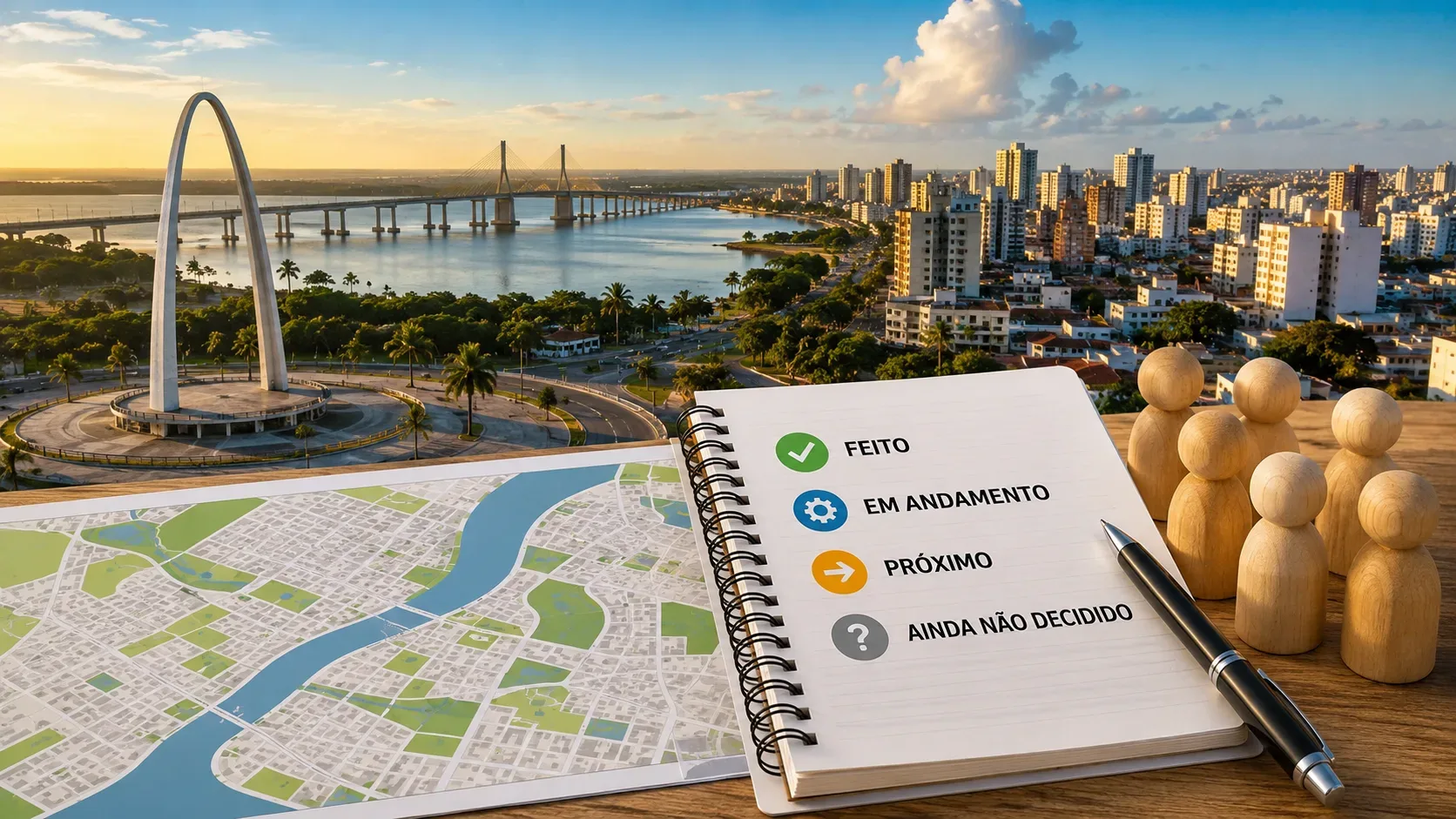
| Status on 08/31/2026 | What it means |
|---|---|
| Completed | Creation of the Municipal Technical Team and the Management Group; definition of the methodology; communication and mobilization actions; approval of the methodology by Condurb; launch of the official website; presentations to oversight bodies and the Legislative branch; an initial City Council public hearing on May 27. |
| In transition | Closing the preparatory stage and moving toward hiring a specialized firm to provide technical and methodological support. |
| Next | Detailed work plan, a citywide opening public hearing, technical diagnosis and community reading, sectoral hearings, and systematization of contributions. |
| Later | Guidelines and proposals, consolidation of content, drafting of the bill, submission to the City Council, legislative proceedings, further hearings, and a vote. |
| Not yet decided or published | Full calendar dates, the text of the future draft, concrete changes to zoning and urban parameters, the final approval deadline, and the effective date. |
What has already been completed
The preparatory stage organized the administrative structure and methodology for the revision. The city government created a Municipal Technical Team with representatives from the departments and a Management Group responsible for coordination. It also held an integration workshop, internal data-gathering activities, educational actions, and pilot territorial-reading field exercises.
The methodology drew on the Federal Government’s Guide for the Preparation and Revision of Master Plans and the guidelines of Brazil’s City Statute. According to the city government, it was presented to oversight institutions, other public bodies, and representatives of the Legislative branch and was approved by Condurb.
The process also gained an official Master Plan website, intended to centralize news, documents, institutional information, and participation channels. The city says the results and compilations from participatory stages should be published there.
What comes next: consultancy and the technical-participatory diagnosis
The official publication of August 27 states that, with the methodology approved, the revision moves to the hiring of a specialized company. The consultancy is expected to support studies, update data, conduct additional surveys, and technically organize the large volume of information produced during the process.
The planned diagnosis will have two connected fronts: the technical reading of the city and the participatory reading carried out with residents. The technical side brings together data on land use and occupation, mobility, housing, infrastructure, drainage, the environment, and economic development. The participatory side is intended to record problems, needs, and opportunities identified by people who live in the city’s neighborhoods.
For that reason, the current situation is best described as a transition from preparation to diagnosis, not as a completed diagnosis or a bill in its final drafting stage. The city’s own sequence places the consultancy and work plan before the hearings that will structure public participation in this phase.
The first major public hearing is still a future milestone
According to the most recent official explanation, the public-participation stage should begin with a major hearing open to residents from across the city. At that event, the city government and the consultancy are expected to present and agree on the methodology, timeline, stages, and calendar. Sectoral hearings should follow to discuss data and specific themes.
As of August 31, the official sources reviewed do not provide a complete calendar for those hearings. Any dates circulating outside official channels should therefore be checked before residents make plans to attend.
What still needs to happen before the new Master Plan becomes law
- Complete the hiring of the consultancy and detail the work plan.
- Carry out the technical and participatory diagnosis. Studies, territorial readings, and public contributions need to be collected, organized, and validated.
- Turn the diagnosis into guidelines and proposals. This is when urban-policy alternatives begin to take shape.
- Draft the bill. The text should consolidate the rules and guidelines proposed by the city government.
- Submit the bill to the Aracaju City Council. Formal legislative proceedings then begin, including committee review, debates, public hearings, and voting.
This sequence matters because it prevents a mistaken reading of the current stage. The official sources reviewed do not show a final version of the new Master Plan ready for approval.
The May 27 City Council hearing was not a vote on the new plan
The Aracaju City Council held a public hearing on May 27, 2026, about the Master Plan revision. The meeting was proposed by councilors Maurício Maravilha and Breno Garibaldi and brought together the Management Group, technical representatives, and members of civil society.
The hearing served as an early-stage debate and institutional dialogue. It does not mean the bill has already been submitted to the City Council. The city government itself says the future draft will only be sent to the Legislature after data compilation, diagnosis, and development of proposals.
The Council has also indicated that it intends to treat the matter as a priority once the bill arrives, while still following the required legal steps, including additional public hearings during the legislative process.
How to participate now and follow the next stages
For residents who want to take part, the most useful step now is to follow the channels where the official calendar will be published and prepare concrete, location-based contributions.
- Official website: planodiretor.aracaju.se.gov.br. The portal includes news, transparency information, and a “Quero Participar” (“I Want to Participate”) area.
- Email listed on the portal: planodiretor@aracaju.se.gov.br.
- WhatsApp service listed on the portal: +55 (79) 98854-7408.
- Phone listed on the portal: +55 (79) 3026-6337.
- In-person participation: follow announcements for the major public hearing and sectoral hearings; the city has also been taking explanatory activities to neighborhoods through municipal programs.
A useful contribution is usually more specific than simply saying a neighborhood “needs improvement.” It helps to identify the location, describe the problem, say when it occurs, explain who is affected, and indicate what change should be discussed. Recurrent flooding, dangerous crossings, missing sidewalks, land-use conflicts, poor access to public transport, and a lack of public facilities are examples of issues that can be connected to urban planning.
What has not yet been decided
The fact that the revision is under way does not mean concrete changes have already been approved. As of this update, the following have not been published as final decisions:
- new zoning or a final redesign of zones;
- final floor-area ratios, height limits, or building parameters;
- final new rules for urban expansion, density, or land use;
- the final draft text;
- the date the bill will be sent to the City Council;
- the voting schedule and effective date.
Those points depend on the diagnosis, participation, proposal-building, and political deliberation stages that are still ahead.
How to verify whether the process has moved forward
Before treating an update as confirmed, look for three signals: publication on the official Master Plan portal, a notice or document from the City of Aracaju, and, once the bill reaches the Legislature, a record on the Aracaju City Council website.
For the current status, the most useful references are the city government’s August 27, 2026 explanation of the revision stages, its August 14 presentation on public participation and next steps, and the record of the May 27 public hearing. The Council also recorded the approval of the request that called that debate.