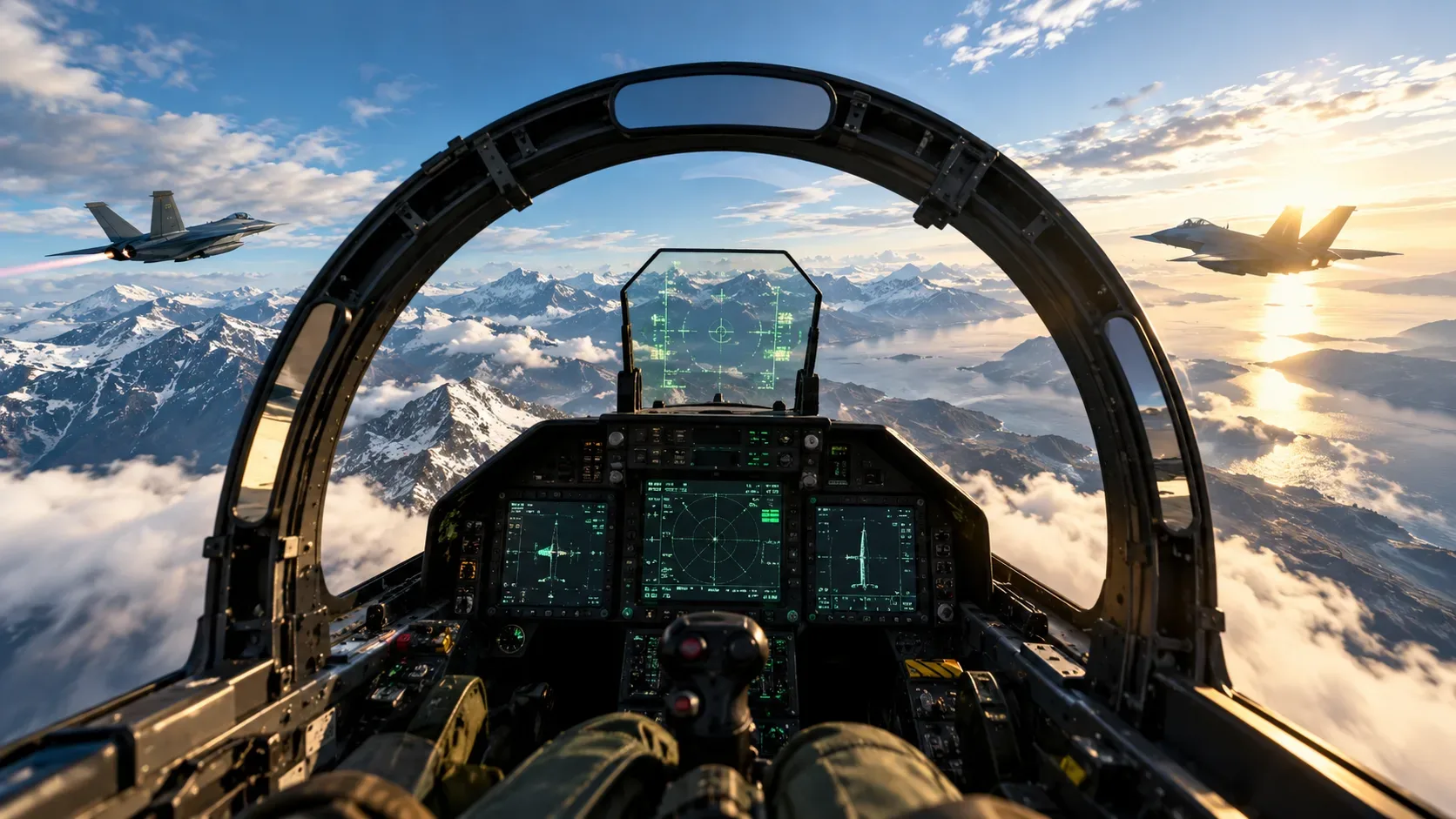
In Ace Combat 8: Wings of Theve, first-person is not just a way to show flight from the cockpit. It also shapes the presentation of much of the story: players see squadmates, briefings, and events aboard the aircraft carrier from the protagonist’s position. The approach described in the PlayStation Blog preview published on September 25, 2026 brings the silent pilot closer to the people fighting the war, rather than leaving the player to watch those moments entirely from the outside.
The announced result combines perspective, limited interactions, time spent with Joker Flight, and radio communications. The crucial distinction is that those interactions can affect how other characters respond to the pilot, but, according to the preview, they do not change the main story.
The first-person camera extends beyond the cockpit
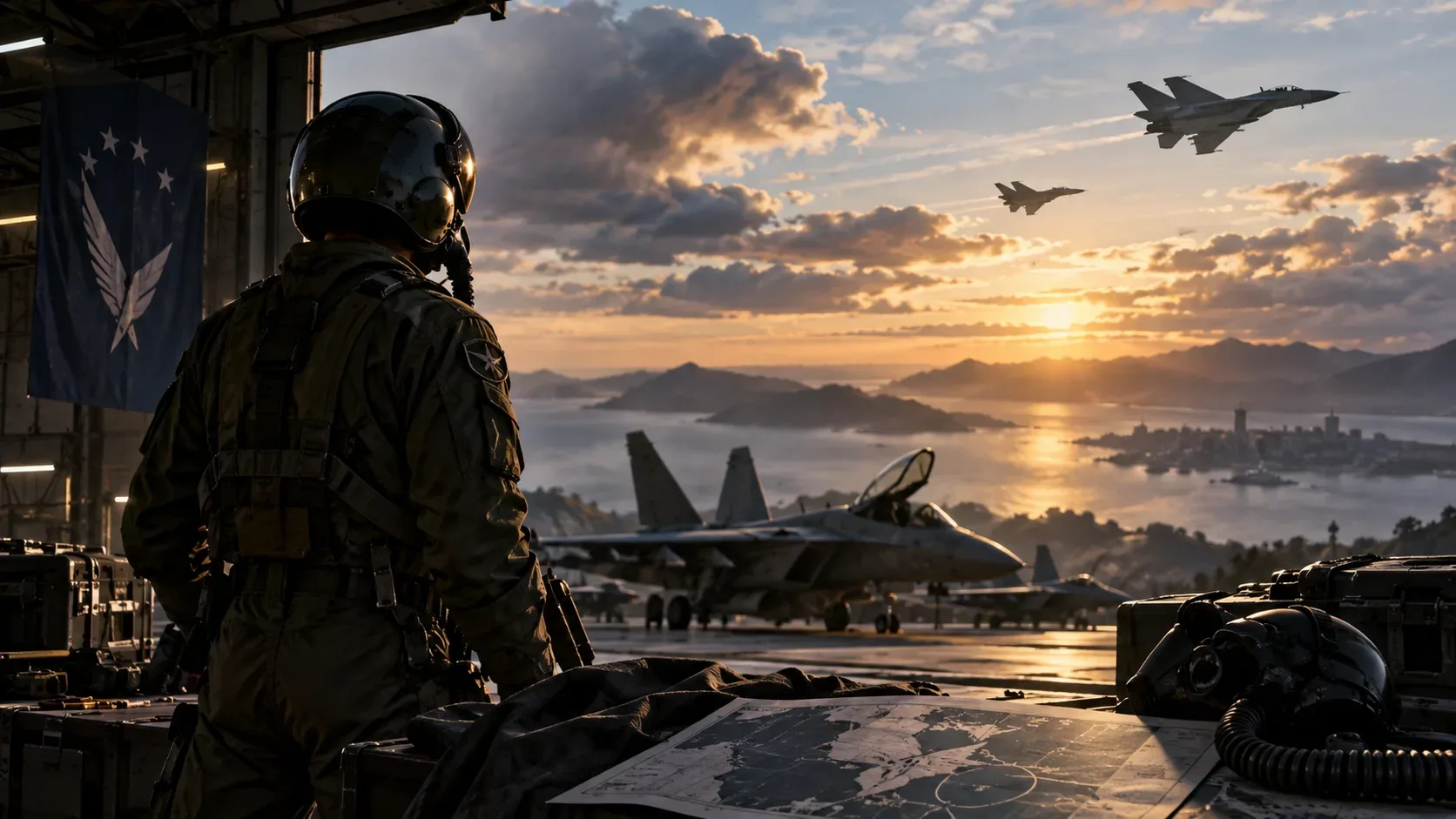
While earlier entries in the series used detailed cinematic sequences to tell their stories, most of Ace Combat 8’s story scenes place the camera in the pilot’s position. Instead of observing a conversation from outside, players experience it as someone present in the space, including rooms and the deck of the Endurance.
This approach carries the perspective across aerial combat and narrative interludes. The protagonist stays silent but is not entirely passive: in the scenes described, players can look around with the right analog stick and respond to prompts at specific moments. The PlayStation Blog also describes DualSense haptic feedback as part of the presentation on PS5.
That does not establish that the entire campaign uses only one camera, that the ship can be explored freely, or that its scenes work like an expansive choice-driven game. The available material chiefly describes how directed sequences are presented and which limited actions appear within them.
The Wings of Theve identity brings the player into the conflict
The premise helps explain why the camera follows a particular person. After the aircraft carrier Endurance rescues the pilot at sea, the protagonist joins the Federation of Central Usea’s struggle against an invasion by the Republic of Sotoa. The pilot becomes connected to Jan “Rex” Cope, a public figure known by the call sign Wings of Theve.
The reputation attached to that name contrasts with the reality revealed early in the plot: Cope is promoted as a hero to maintain wartime morale. After his death, the protagonist secretly inherits the call sign and must occupy the symbolic role he leaves behind. Players therefore do more than complete missions: they embody the person behind a public image built to rally a country.
Showing encounters and reactions through the eyes of this replacement highlights the difference between the public legend and the relationships the pilot actually develops. This is a reading of the presented story structure, not a promise of alternate endings.
Brief responses build relationships, not a branching campaign
The preview describes yes-or-no questions answered using the left and right directions on the DualSense D-pad. In other moments, looking around with the right analog stick or pressing Triangle and Square lets players respond to prompts within a scene. These are bounded interactions woven into the staging, not the extensive branching dialogue systems described in some other games.
One example involves Joker Flight member Coster: during a mission, he asks to leave formation briefly to help allied pilots who are also members of a rock band he admires. The player’s response produces a personal reaction from Coster, showing how squadmates perceive the pilot’s leadership.
The PlayStation Blog explicitly states the limit: the decisions do not alter the main story. Their described narrative effect lies in the characters’ responses and in the sense of responsibility for the people flying alongside the protagonist.
Joker Flight connects cutscenes, briefings, and combat
The squadmates do not appear solely to deliver information before takeoff. The preview features them in scenes between missions, at briefings, and in radio conversations during operations. Bandai Namco’s official overview identifies Baxter, Severskaya, and Coster as members serving alongside the new Wings of Theve.
That continuity can give a comment heard before a sortie more weight when the same pilot asks for support in combat. The relationship is not confined to exposition: it returns in situations that require the squadron to act together.
Players can also command their allies with the D-pad, including sending pilots to engage targets, regrouping them to attack the player’s target, or requesting cover. The orders serve a gameplay purpose, but in the narrative approach being presented they also reinforce the protagonist’s leadership role.
Radio traffic gives the mission’s consequences a human voice
Radio links the pilot’s limited view to events outside the cockpit’s field of vision. The PlayStation Blog describes a territorial-recapture operation that becomes an ambush: ground troops’ voices overlap as they report danger and call for help. Sound design turns a military situation into a series of recognizable pleas, rather than mere objective markers.
The preview also explains that answering soldiers’ calls can lead to acknowledgment later, including when those people return in subsequent missions. Their reappearance gives the fighting a human through-line without requiring the main plot to split into different paths.
This combination is how first-person changes the presentation: players see squadmates up close, hear events they cannot see, and make small decisions within the same campaign. The war across Strangereal remains large in scale, but information reaches the pilot through people they spend time with.
What is confirmed about the approach
The September 25 report is an advance look at the campaign, not a review of the finished release. It supports the presence of mostly first-person story scenes, simple interactions within them, squadmates’ reactions, squad orders, and storytelling over the radio. It does not establish unrestricted exploration of the Endurance or a story with multiple endings.
The official Bandai Namco game page likewise highlights first-person cinematics outside combat and time with squadmates between missions. As of this reporting, the announced general release date was October 2, 2026, for PlayStation 5, Xbox Series X|S, and PC via Steam. The central change, then, is not to replace aerial combat with a first-person adventure, but to put the same pilot at the center of both the action and the storytelling.