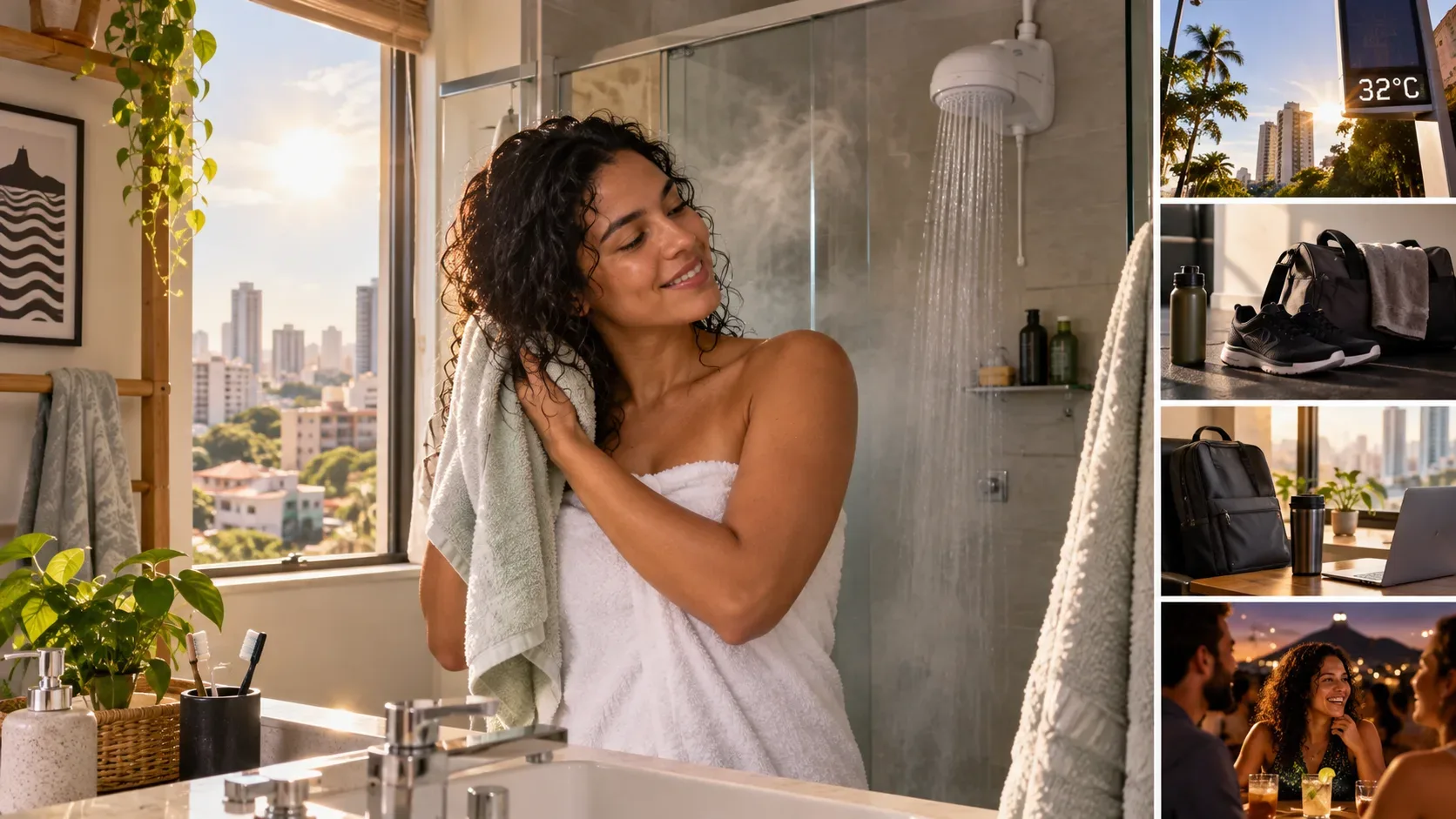
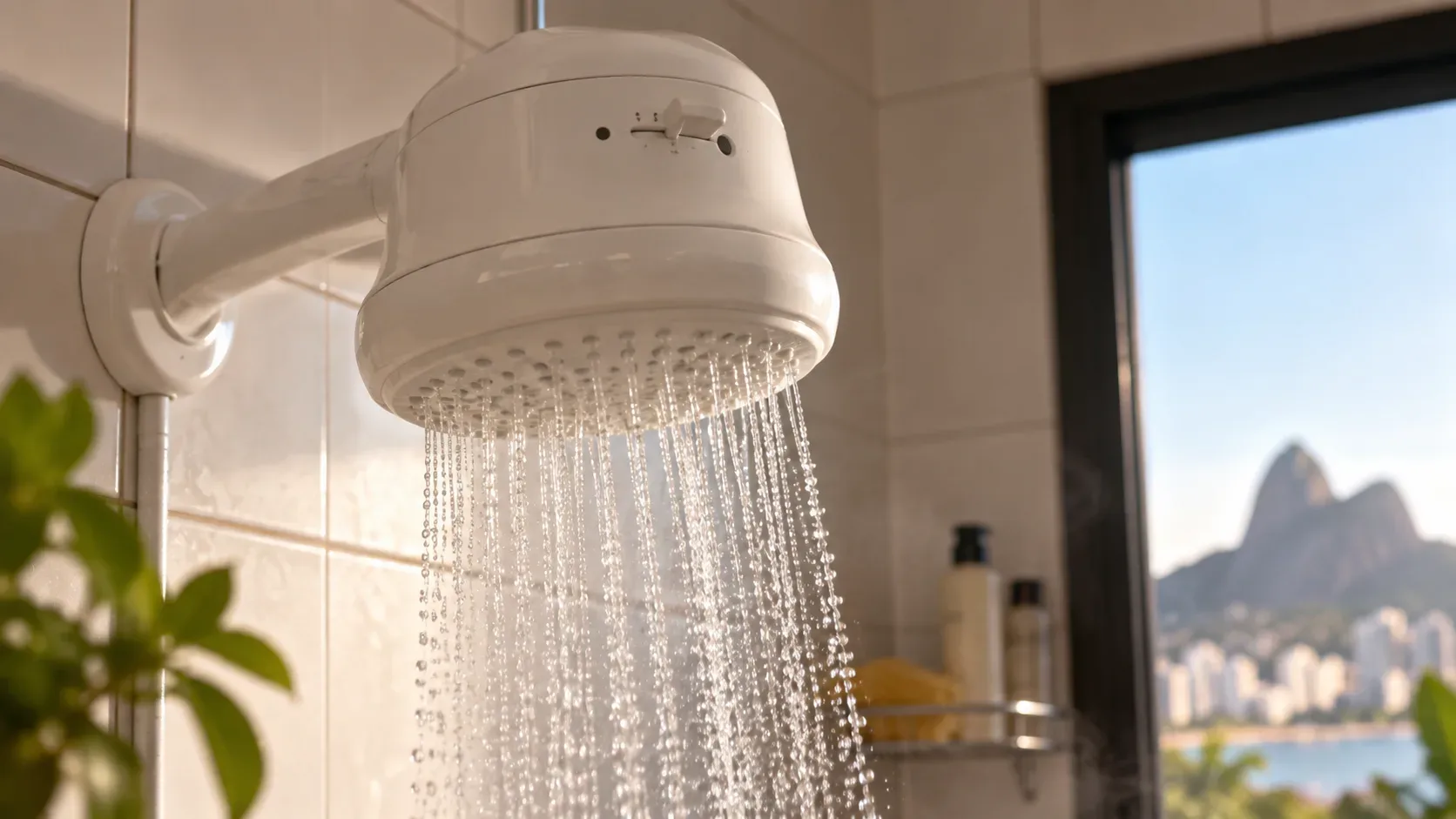
For international visitors, a showerhead with electrical wires entering the unit can look unusual. The basic idea is straightforward: instead of heating water in a storage tank or central boiler, the appliance heats it at the shower itself as the water passes through. That avoids the need to store hot water and helps explain why the solution became so widespread in Brazilian homes.
A useful measure of that presence comes from Brazil's Energy Research Office (EPE). In the 2023 Atlas of Energy Efficiency in Brazil, EPE estimated an average of 0.71 electric showers per household in 2022 and identified electricity as the main household energy source used to heat water. The pattern is not uniform: in very warm regions, some homes do not heat shower water at all. Even so, the electric shower is a familiar part of everyday life in Brazil.
Why are electric showers so common in Brazil?
There are three practical reasons. First, the upfront cost is relatively low compared with systems that require a central heater, storage tank or domestic hot-water network. Second, heating happens at the point of use: cold water reaches the bathroom and is heated right there. Third, the technology has been widely established in the Brazilian market for decades, so products, replacement parts and service are broadly available.
That does not mean every Brazilian bathroom has the same device. There are step-based power selectors, electronic models with gradual control, units with built-in pressure assistance, and homes that use gas, solar heating or unheated water. For a visitor, the key is to identify which external control the specific unit provides rather than assume every electric shower works the same way.
How the unit heats the water
In common designs, opening the water valve sends water through the shower body, and the flow itself activates the mechanism that energizes the resistive heating element. The element converts electrical energy into heat, warming the water as it passes through the internal chamber. When the valve is closed, the flow stops and the heating is interrupted.
These are high-power appliances. As a reference, one domestic Lorenzetti model is sold in versions of roughly 3.2 to 5.5 kW, depending on voltage and configuration. That is why an electric shower should not be treated like a small plug-in appliance: the circuit, protection, grounding, voltage and power rating all need to be compatible.
Controls a visitor is likely to see
| Control | What it does | How to interpret it |
|---|---|---|
| Step selector | Selects discrete power levels such as off, warm and hot; some units use labels such as verão (summer) and inverno (winter). | On many traditional models, the selector should be moved only with the water valve closed. The unit's manual is the authority. |
| Electronic control | Varies heating power gradually. | Some models allow adjustment while the shower is running. That does not mean every unit can be adjusted with water flowing. |
| Water valve | Controls flow rate. | At the same power setting, lower flow generally makes the water hotter, while higher flow reduces the temperature rise. |
The Maxi Ducha Ultra manual, for example, instructs users to close the water valve before changing the power selector. Electronic models such as the Advanced Eletrônica offer gradual temperature control. The safe rule in someone else's home, a hotel or a short-term rental is simple: use only the normal external controls intended by the manufacturer and follow the instructions for that exact model.
A simple visitor routine that does not involve opening anything
- Look at the selector. You may see Portuguese words such as desliga (off), morno (warm), quente (hot), verão (summer) or inverno (winter), or a continuous electronic dial.
- Open the water valve normally. On many models, water flow automatically activates the heating system.
- Adjust only with accessible controls. If the unit has fixed selector positions, close the water valve before moving the selector unless the manual explicitly says that the model can be adjusted while running.
- If the water is too hot, do not open the unit. Use the normal valve and temperature controls, or ask your host how that model is meant to be used.
- When finished, close the water valve. On flow-activated designs, that stops the heating.
On units marked desliga, that position usually turns the electrical heating off; it does not necessarily stop the water itself. In other words, the shower can often run as a cold-water showerhead with the heating section switched off.
What you should not try as a visitor
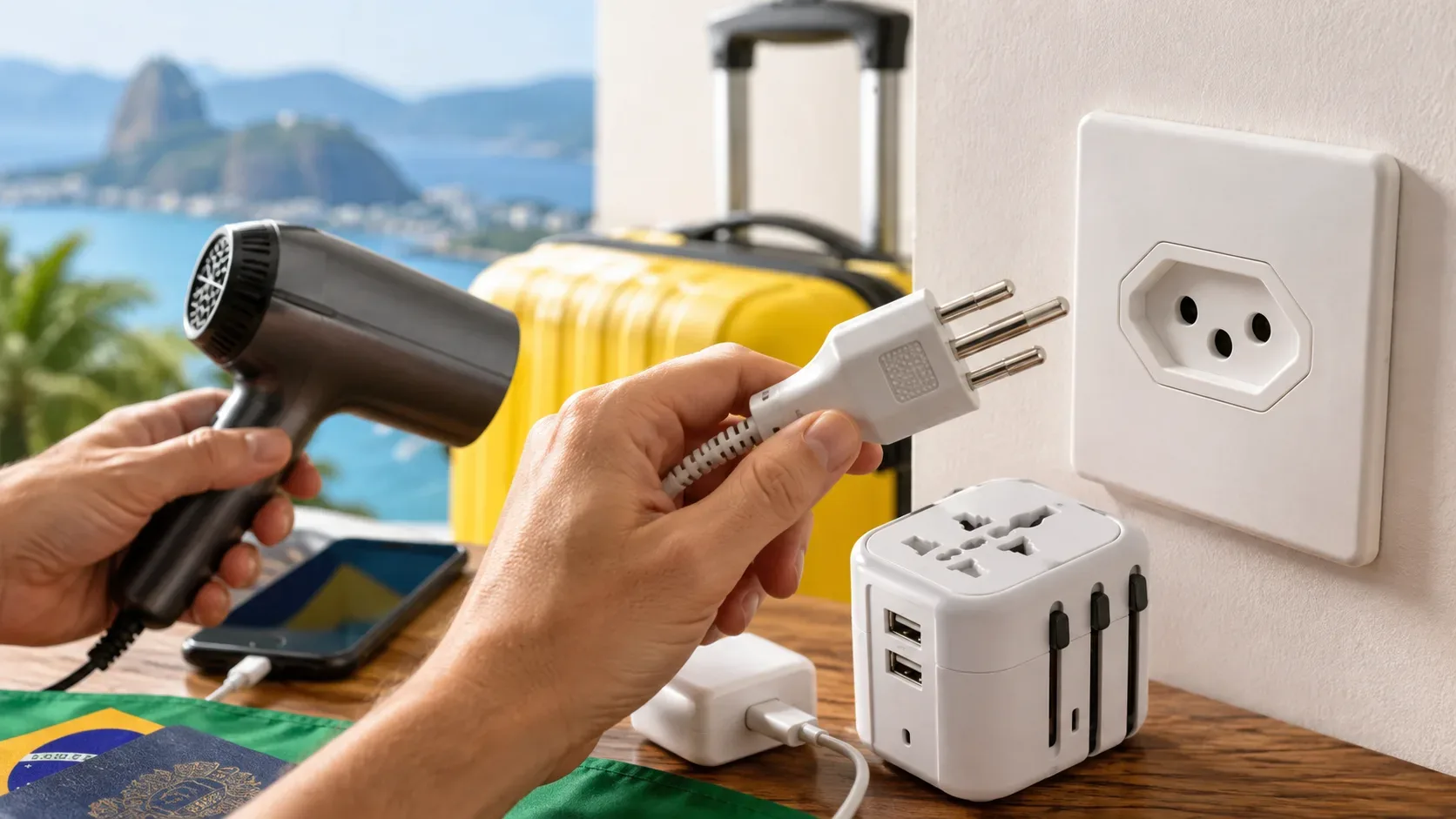
Do not remove the cover, touch wires or connectors, replace the heating element, redo electrical splices, or improvise with plugs, outlets or adapters. Do not install a larger breaker just to stop nuisance tripping. Repeated tripping is a fault to investigate, not a protection to bypass.
Lorenzetti's manual recommends installation by a qualified person, proper grounding, and a circuit protected and sized for the product. In 2025, ITPS, an Inmetro-delegated agency in Sergipe, again advised consumers to use a qualified electrician so the shower is correctly grounded and the risk of electric shock is reduced.
When to stop using it and ask for help
| Warning sign | What to do |
|---|---|
| Shock, tingling or an electrical sensation when touching metal, water or the valve | Stop using the shower immediately. Do not treat this as normal. If it is safe to do so, switch off the shower circuit at the electrical panel and contact the host, maintenance staff or a qualified electrician. |
| Burning smell, crackling, sparks, darkened parts or deformed plastic | Stop using the unit and get professional help. Do not try to tighten or remake electrical connections. |
| The breaker trips repeatedly | Do not keep resetting it so you can continue showering. The cause may be in the appliance, the circuit or the installation design. |
| Water leaking from the appliance body, a crack or damaged housing | Do not use it. The manufacturer's own manual says not to use a product that is leaking. |
| Exposed wires or connectors, a loose cover or a broken selector | Do not handle the electrical parts. Ask for maintenance. |
| Water does not heat, with no other danger sign | As a visitor, treat it as a maintenance issue and tell the person responsible. Do not replace the heating element yourself. |
What a proper installation needs to address
Safety depends on more than the showerhead itself. The circuit must match the unit's voltage and power, use suitable protection, have functional grounding and include the protective devices required for wet locations. Brazil's ABNT NBR 5410 is the reference standard for low-voltage electrical installations and includes additional protection requirements for circuits serving locations with a bathtub or shower.
A normal user does not need to size wires or open the electrical panel. The practical point is simpler: if there is any doubt about grounding, residual-current protection (DR/RCD), voltage, breaker sizing, overheating wires or makeshift modifications, the right step is to call a qualified professional.
Labels, manuals and the exact model matter
Brazil's Inmetro Brazilian Labeling Program (PBE) provides performance information for several product categories, including electric water heaters. For residents, the label and manual help confirm voltage, power and product characteristics. For visitors, taking a photo of the front of the shower and asking the host how that exact model should be used is usually more useful than guessing from its shape.
So, are Brazilian electric showers dangerous?
Not simply because they use electricity. They are appliances designed to heat water instantly and can be used safely when the product is in good condition and the installation meets the applicable requirements. Risk rises when grounding is missing or faulty, protection is inadequate, connections are improvised, components are damaged or electrical work is done without proper qualification.
For a visitor, the best rule is conservative: external controls, yes; opening, rewiring and repair, no. If the shower works normally, use the selector and water valve as intended. If you feel a shock, smell burning, see a spark, experience repeated breaker trips or notice water leaking from the body of the unit, stop using it and ask for local help.
Sources and further reading
- Brazilian Energy Research Office (EPE) — Atlas of Energy Efficiency Brazil 2023
- Government of Sergipe / ITPS — electric-shower safety and use guidance
- Lorenzetti — Maxi Ducha Ultra manual
- Lorenzetti — example of a shower with gradual electronic temperature control
- Inmetro — Brazilian Labeling Program
- ABNT Catalog — NBR 5410, low-voltage electrical installations