Every year, on August 6, the Catholic Church celebrates the Feast of the Transfiguration of the Lord. The date recalls the episode in which Jesus manifests his glory before Peter, James and John, preparing the disciples to understand that the path of the cross would not end in death, but in the resurrection.
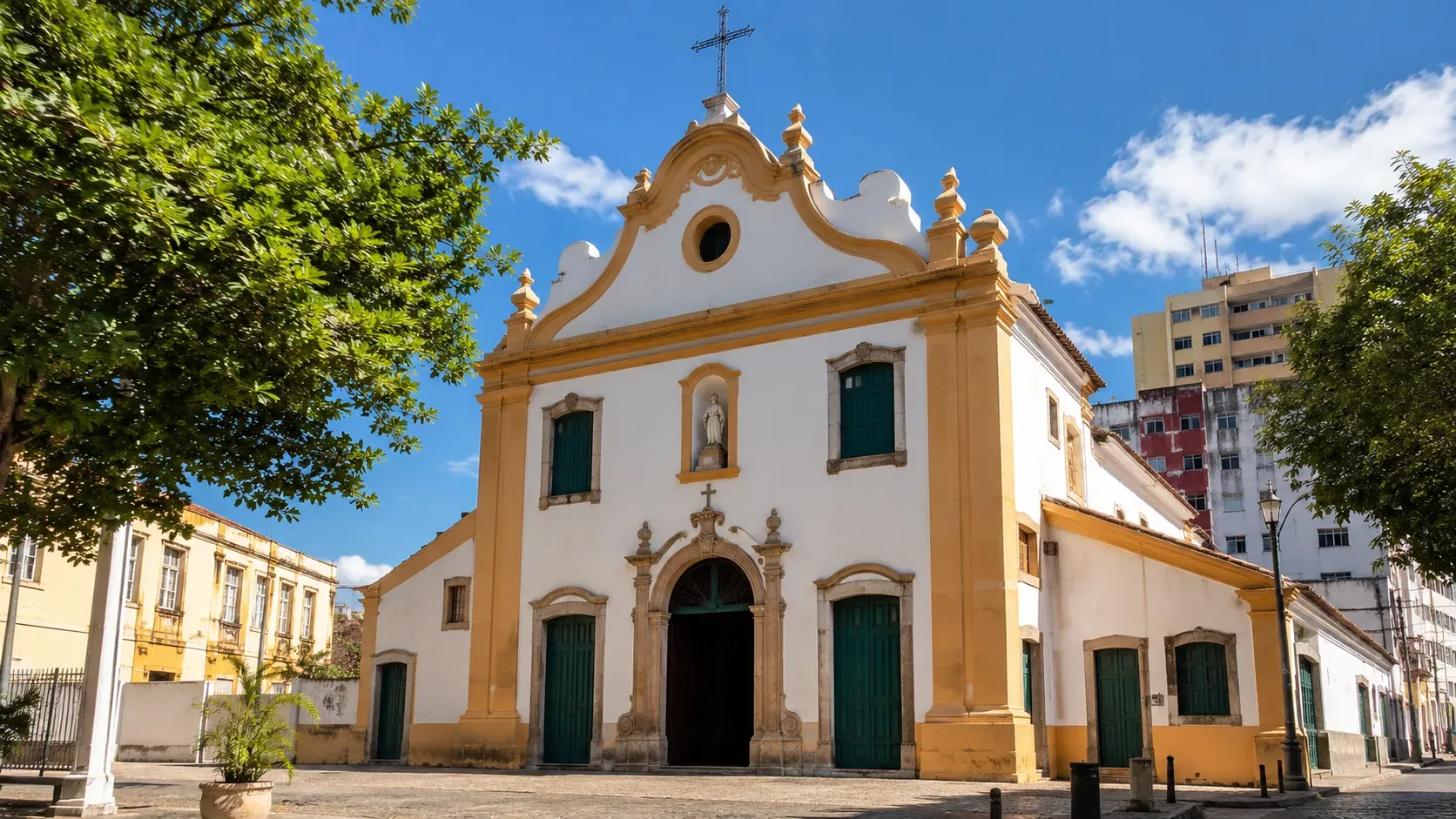
In 2026, the celebration takes place this Thursday, August 6. For Catholics in Aracaju, the date also allows them to recognize a local connection: in the center of the capital of Sergipe there is the Chaplaincy of the Divine Savior, a community whose title directs attention to Christ as Savior.
The relationship does not mean that the chaplaincy was created specifically to celebrate the Transfiguration. It is a spiritual and cultural approach: the festival presents the glorious identity of Christ, while the dedication to the Divine Savior maintains this same Christological centrality in the city's religious space.
What happened at the Transfiguration of Jesus
The episode is narrated in the Gospels of Matthew, Mark and Luke. Jesus leads Peter, James and John to a mountain and, before them, his appearance is transformed: his face shines and his clothes become luminous.
Moses and Elijah appear alongside Jesus. Then, a cloud surrounds the place and the disciples hear the voice of the Father, who identifies Jesus as his beloved Son and orders: “Listen to him”. The narrative ends with the disciples coming down from the mountain and being instructed not to divulge the vision before the resurrection.
Each element helps you understand the meaning of the event:
- Light manifests the divine glory of Christ.
- Moses represents the Law received by the people of Israel.
- Elijah represents the tradition of the prophets.
- The luminous cloud refers to the presence of God.
- The voice of the Father confirms the identity and authority of the Son.
- Peter, James and John become witnesses of what they saw.
- The descent from the mountain shows that the experience of contemplation leads again to the mission.
Christian tradition identifies the mountain in the episode with Mount Tabor, in Galilee. The evangelical texts, however, only speak of a “high mountain” and do not directly present the name Tabor. Therefore, it is more accurate to say that the location corresponds to an ancient tradition, preserved by Christian communities and sanctuaries built on the site.
What is the meaning of the Transfiguration of the Lord
The Transfiguration should not be understood simply as an extraordinary demonstration of power. In the Catholic interpretation, it reveals who Jesus is and prepares the disciples for the scandal of the cross.
Shortly before this event, Jesus had announced that he would suffer, be killed and rise again. The disciples had difficulty accepting this message. The luminous manifestation then offers an anticipation of the Easter victory: the one who would be rejected and crucified is the Son of God.
The Catechism of the Catholic Church explains that, for a moment, Jesus shows his divine glory and confirms the faith professed by Peter. At the same time, he makes it clear that his entry into glory passes through the cross. The Transfiguration thus functions as a foreshadowing of the resurrection and glorious coming of Christ.
Pope Benedict XVI also presented the feast as a “mystery of light” and an anticipation of the paschal mystery. The luminosity seen on the mountain points to the same victory that will be fully manifested in the resurrection.
Glory does not eliminate the cross
One of the central teachings of the festival is that the Christian faith does not separate glory and suffering. The vision received by the disciples does not serve to deny the difficulty of the path, but to help them cross it with hope.
The Transfiguration happens before the passion. Peter wants to remain on the mountain, but Jesus leads the disciples back to their walk. The spiritual experience does not become a permanent escape: it strengthens the reality that needs to be faced.
“Listen to him”: the message that remains
At the center of the narrative is the Father's order: listen to Jesus.
This listening is not limited to hearing religious words. It involves welcoming the Gospel, guiding choices and recognizing that the Christian life is achieved through following Christ. Contemplation of the luminous face leads to daily fidelity, service and hope.
Reflecting on the festival, Pope Francis rightly highlighted that the encounter with Jesus does not end at the top of the mountain. Disciples are called to return and place themselves at the service of their brothers.
Why the festival is celebrated on August 6th
The memory of the Transfiguration is ancient in Eastern Christianity. Its celebration later spread throughout the West, although communities and dioceses adopted different calendars over the centuries.
The date of August 6 was already used in several traditions before the festival was extended to the calendar of the Latin Church as a whole. In 1457, Pope Callixtus III ordered its universal celebration in the Roman rite, after the Christian victory in the siege of Belgrade, which occurred the previous year and was known in Rome on August 6.
This historical episode helped to consolidate the date in the Western calendar, but it does not constitute the theological foundation of the festival. The religious reason for the celebration continues to be the evangelical event: the manifestation of Christ's glory before the three disciples. Liturgical history documents that the festival already existed in the East and in different regions of the West before the papal decision in the 15th century.
Currently, Christians in the East and West celebrate the Transfiguration on August 6, although there are differences between calendars and ecclesiastical traditions. Saint John Paul II highlighted this coincidence by recalling that the feast is observed on the same date by Eastern and Western Christian traditions.
What does “Divine Savior” have to do with the Transfiguration
The expression Divine Savior is a title addressed to Jesus Christ. She recognizes that Christian salvation is linked to his person, his death and his resurrection.
In the Transfiguration, this identity is shown in a luminous way: the Jesus who walks with the disciples and will announce his passion is also the beloved Son, whose glory appears for a brief moment.
Therefore, there is a direct spiritual connection between the festival and the title Divine Savior:
| Transfiguration | Divine Title Savior |
|---|---|
| Reveals the glorious identity of Jesus | Proclaims who Jesus is for the Christian faith |
| Anticipates the resurrection | Remember the work of salvation carried out by Christ |
| Prepares the disciples for the cross | Unites salvation with the delivery, death and victory of Jesus |
| Invites us to listen to the Son | Expresses trust in and following the Savior |
The relationship is theological and devotional. It does not authorize the conclusion, without specific historical documentation, that every church dedicated to the Divine Savior was built for the Feast of the Transfiguration.
The presence of the Divine Savior in the Center of Aracaju
A festival celebrated all over the world finds, in the Center of Aracaju, a concrete reference dedicated to the Divine Savior.
The Chaplaincy of Divino Salvador is located at Rua Laranjeiras, number 110, in the Centro neighborhood. The institutional page of the Archdiocese of Aracaju informs that the community is part of the Forania Mãe da Igreja and the Vicariato São Pedro.
A point of urban religious memory
The presence of a chaplaincy in the historic and commercial center helps to understand how faith also participates in urban memory. Churches and chapels are not just places of celebration: they can function as points of reference, community gathering, silence, prayer and cultural continuity in areas transformed by the city's growth.
In this article, the word heritage is used in this broad sense of religious presence and local memory. The research carried out did not find, in the sources consulted, sufficient evidence to affirm that the building of the Chaplaincy of Divino Salvador is individually listed or protected by a specific heritage act.
This distinction is important. Affective, religious, architectural or community value does not automatically equate to official listing.
How to attend a celebration in Aracaju
Anyone who intends to attend a mass or visit the Chaplaincy of the Divine Savior on August 6, 2026 must confirm any schedule in advance.
The Archdiocese of Aracaju maintains an institutional page for chaplaincy and a general mass consultation system. At the time of research, however, the two pages displayed different information about regular hours. For this reason, no time should be treated as confirmed special programming for the Feast of the Transfiguration.
Before leaving:
- Consult the official channels of the Archdiocese of Aracaju.
- Confirm directly with the chaplaincy whether there will be a specific celebration.
- Check opening hours, access and any last-minute changes.
- Do not consider old publications or agendas from previous years as confirmation for 2026.
The institutional page consulted presents the address and a contact number for the community, but this data must also be double-checked before publishing or moving.
How to live the meaning of the party
Even for those who cannot participate in a celebration in person, the date can be experienced as an opportunity for prayer and formation.
Some possibilities are:
- read Matthew 17,1-9, Mark 9,2-10 or Luke 9,28-36;
- observe which words and images attract the most attention;
- reflect on the order “listen to him”;
- relate the light on the mountain with the difficulties faced in everyday life;
- remember that the Christian faith does not promise the absence of suffering, but hope in the face of it;
- get to know and value the religious spaces present in the city itself.
The Feast of the Transfiguration teaches that the contemplated light does not remain isolated on the top of the mountain. It accompanies the descent, strengthens the mission and allows us to look at the cross from the perspective of the hope of the resurrection.
Save this content to reread on August 6th. Before participating in any celebration in Aracaju, confirm the schedule directly with the Chaplaincy of Divino Salvador or the Archdiocese.
Sources consulted in content
- Holy See — Catechism of the Catholic Church, paragraphs 554 to 556. Doctrinal foundation on the Transfiguration as a manifestation of divine glory and anticipation of the resurrection.
- Holy See — Angelus of August 6, 2006, Benedict XVI. Reflection on the Transfiguration as a mystery of light and Easter anticipation.
- Holy See — Angelus of August 6, 2017, Francis. Spiritual application of climbing the mountain and returning to service.
- Arcaju Archdiocese — Chaplaincy of the Divine Savior. Institutional identification, location, connection and community contact channels.
- Arcaju Archdiocese — Consultation of mass times. Comparative verification of changeable information, not used as confirmation of special programming.