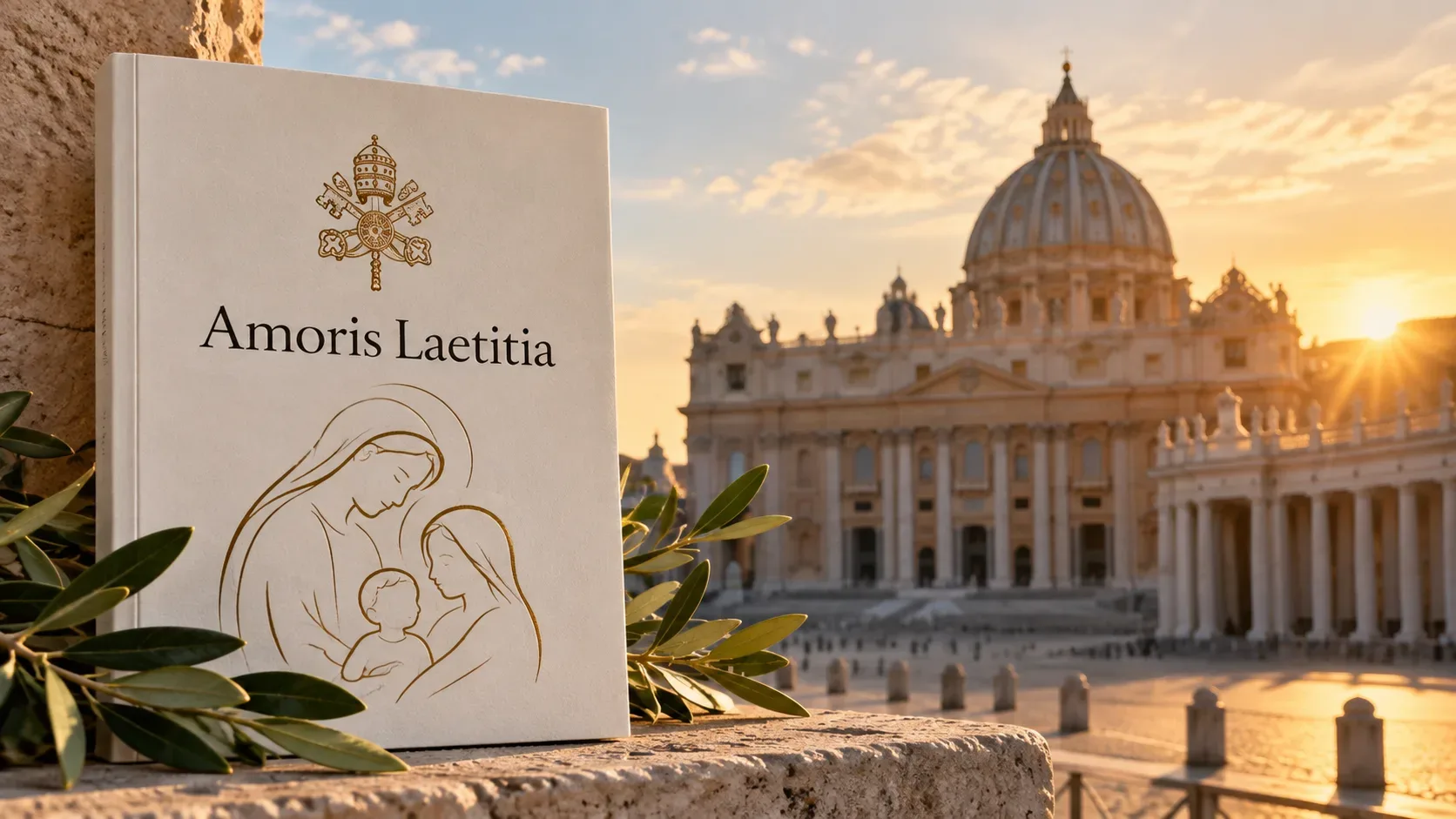
From October 7 to 14, 2026, the Vatican will host a meeting convened by Pope Leo XIV with the Heads of the Eastern Catholic Churches sui iuris and the Presidents of the Episcopal Conferences. The immediate occasion is the tenth anniversary of Amoris Laetitia, published by Pope Francis on March 19, 2016. The key point, however, is not to confuse the anniversary with the publication of a new exhortation: the official material presents the meeting as a process of pastoral listening and discernment on how to proclaim the Gospel to families today, in light of Amoris Laetitia and the experience of the local Churches.
Why a meeting will be held in October 2026
Leo XIV announced the convocation in a message dated March 19, 2026, exactly ten years after Francis issued the exhortation. The Pope described Amoris Laetitia as the fruit of synodal discernment on the family and said that social and cultural changes make renewed pastoral attention to families necessary.
In July, the General Secretariat of the Synod and the Dicastery for the Laity, Family and Life published the official Thematic Framework. This is the most useful guide to what will be on the agenda: it says the working days are intended for encounter, listening and discernment, including family testimonies, reflection on pastoral initiatives and dialogue with experts.
The five themes the meeting is expected to discuss
The Thematic Framework organizes the reflection around five areas. They are presented not as predetermined decisions, but as questions for evaluating experience and identifying pastoral paths.
- Families today: reality, beauty and challenges. The meeting is meant to look at the concrete lives of families in different cultural and social contexts. The situations named include precarious employment and housing, illness, raising children, emotional loneliness, and caring for family members with disabilities, older people or those who are dependent. The underlying question is how to recognize both signs of hope and fragility without separating ecclesial reflection from lived reality.
- Young people and the vocation to marriage. The document asks how the value of marriage can be presented to young people facing economic, social and cultural obstacles, and how couples and families can offer credible witness. It also includes the accompaniment of cohabiting couples as they discern their affective and family journey and mature in a possible choice of marriage.
- The first years of married life. The agenda highlights the beginning of marriage as a decisive phase for strengthening bonds, dealing with the arrival of children and balancing family and work. The focus is on networks of closeness, mutual support and co-responsibility among families and communities.
- Difficulties, fragility and complex situations. The framework proposes assessing how to accompany families affected by poverty, violence, suffering, abandonment, separation and divorce. Its official vocabulary stresses proximity, discernment, accompaniment, respect, patience and hope.
- Families as subjects of the Church’s mission. The meeting does not treat families merely as recipients of pastoral services. The Thematic Framework asks how conjugal and family experience can contribute to handing on the faith, accompanying other families, community life, care and solidarity.
What Amoris Laetitia actually covers
Amoris Laetitia is a post-synodal apostolic exhortation on love in the family, addressed by Pope Francis to bishops, ordained ministers, consecrated persons, Christian married couples and the lay faithful. The official 2016 text gathers the fruits of the synodal process on the family and moves through biblical, doctrinal, relational, educational, pastoral and spiritual themes.
The introduction itself explains that the work was not designed for a rushed cover-to-cover reading. Francis suggests that different readers may focus on the chapters most directly connected to their needs. Broadly, the nine chapters cover:
- the family in the light of Scripture;
- the reality and challenges of families;
- the vocation of the family in the light of Christ and Church teaching;
- love in marriage;
- the fruitfulness of love and openness to life and family bonds;
- pastoral perspectives and the accompaniment of families;
- the education of children;
- accompanying, discerning and integrating fragility;
- conjugal and family spirituality.
This helps avoid a common reduction. Although Chapter VIII is especially well known for dealing with complex situations, the exhortation is much broader. It also devotes extensive sections to everyday married love, education, family life, transmission of the faith, pastoral care and spirituality.
Amoris Laetitia and the 2026 meeting are not the same thing
| What Amoris Laetitia covers | What the 2026 meeting intends to discern |
|---|---|
| A broad vision of marriage and family life drawn from Scripture, Church teaching, experience and pastoral care. | How to proclaim the Gospel to families today amid more recent social and cultural changes. |
| Conjugal love, its growth and its fruitfulness. | How to support young people, engaged couples and married couples, especially in the first years of marriage. |
| The education of children and the transmission of the faith. | Which local experiences help families and communities sustain formation and mission. |
| Accompaniment and discernment in situations of fragility. | How communities can listen to and accompany people facing suffering, separation, divorce, poverty, violence or other complex situations. |
| The family as a subject of pastoral care and evangelization. | How to value families as agents of the Church’s mission, not only as recipients of pastoral action. |
What should not be assumed before October
So far, the official documents consulted describe the meeting as an eminently pastoral and synodal process. They present themes, questions and a method of work; they do not announce doctrinal changes in advance, nor do they allow anyone to know what conclusions will be reached.
It is therefore useful to separate three levels. First, what is already in Amoris Laetitia, the 2016 text. Second, what the 2026 Thematic Framework proposes for discussion. Third, what may result from the meeting — something that can only be assessed after official statements, documents or decisions exist. The fact that an anniversary meeting is being held does not, by itself, mean that a new exhortation will be published.
Confirmed dates
| Date | Milestone |
|---|---|
| March 19, 2016 | Publication of Amoris Laetitia by Pope Francis. |
| March 19, 2026 | Leo XIV marks the tenth anniversary and announces the convocation of the meeting. |
| July 6, 2026 | Publication of the Thematic Framework that prepares the work. |
| October 7, 2026 | Opening of the meeting at the Vatican. |
| October 14, 2026 | Conclusion of the meeting. The official Vatican calendar lists the concluding Mass in St. Peter’s Square at 10:00 a.m. local time. |
How to revisit the exhortation before the meeting
Readers who want context before October do not have to treat the more than three hundred numbered sections as a single block. A practical route is to begin with the introduction, which explains the document’s purpose, and then choose the relevant area: Chapters IV and V for conjugal love and fruitfulness; Chapter VI for family pastoral care; Chapter VII for education; Chapter VIII for discernment and fragility; Chapter IX for family spirituality.
That reading helps explain why the 2026 meeting returns to themes already present in the document while applying them to a current question: how can the Church accompany and evangelize with families in contexts that have changed and continue to change? Until the meeting takes place, this is the safest key for interpreting its purpose without turning expectation into conclusion.