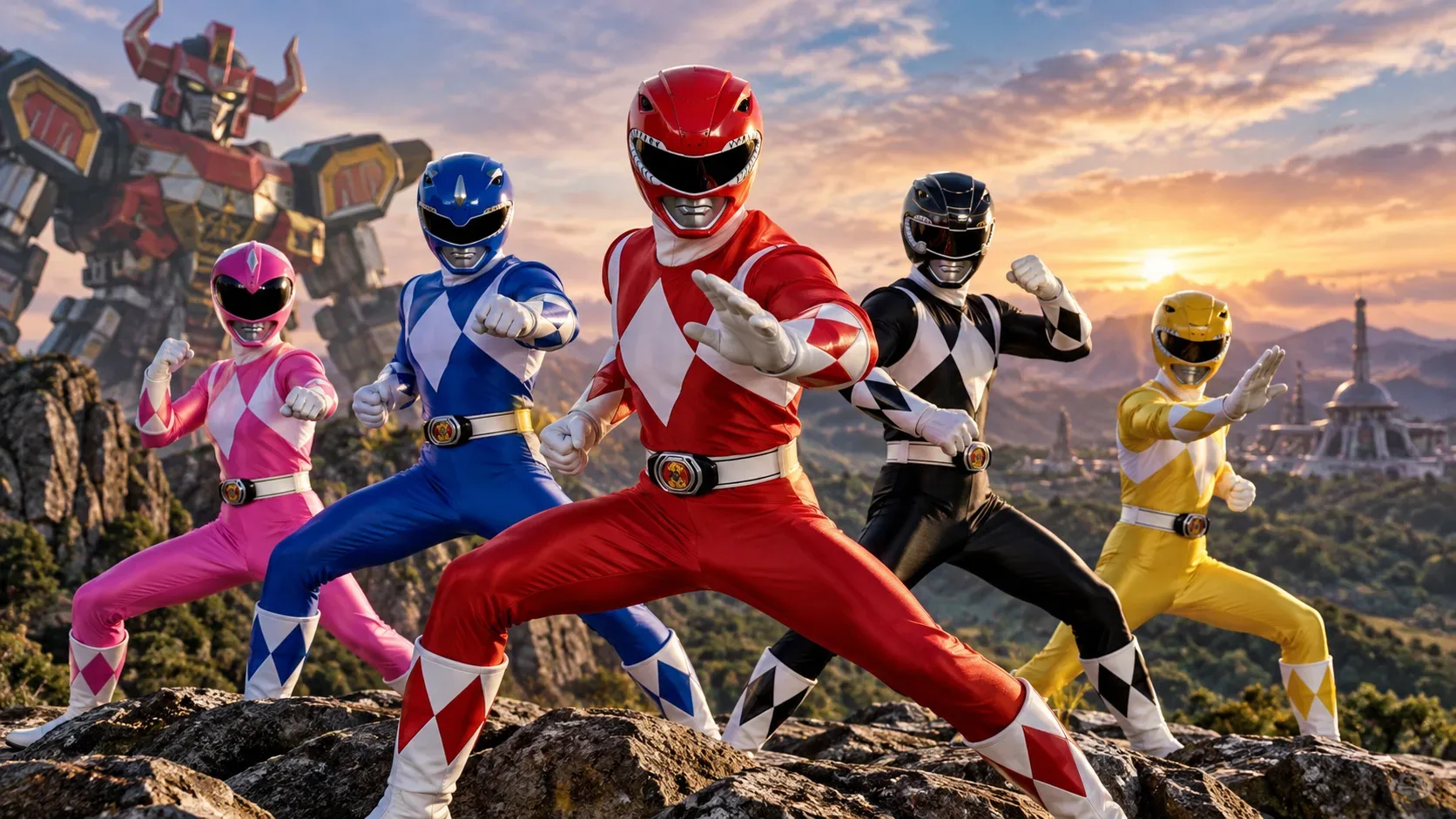
You do not need to watch every season of Power Rangers to understand the franchise. Release order is still the safest way to see everything, but the continuity breaks into very different blocks. The first six numbered seasons form a long-running story that begins with Mighty Morphin Power Rangers and ends with Power Rangers in Space. After that, the series changes teams, settings and central conflicts far more often, while keeping connections through crossovers, recurring characters and the mythology of the Morphin Grid.
The count itself causes confusion. The official numbering reaches season 30 with Power Rangers Cosmic Fury in 2023. Some guides show more television blocks because they count the 1996 transition miniseries Mighty Morphin Alien Rangers and the 2010 re-version of Mighty Morphin Power Rangers separately. This guide follows the 30 numbered seasons and treats those extra productions as bridges or supplements.
Quick answer: which seasons really need to be watched in sequence?
| Block | Recommended order | How much it depends on what came before |
|---|---|---|
| Zordon saga | Mighty Morphin S1 → S2 → S3 → Alien Rangers → Zeo → Turbo: A Power Rangers Movie → Turbo → In Space | High dependence. Powers, mentors, villains and Rangers change from one step to the next. |
| Annual story era | Lost Galaxy → Lightspeed Rescue → Time Force → Wild Force → Ninja Storm → Dino Thunder → S.P.D. → Mystic Force → Operation Overdrive → Jungle Fury | Low dependence. Each season has its own central story, although crossovers and returning characters exist. |
| RPM | RPM | Works on its own and takes place in another dimension. It gains an important connection years later in Beast Morphers. |
| Samurai | Samurai → Super Samurai | High dependence. One story is split across two seasons. |
| Megaforce | Megaforce → Super Megaforce | High dependence. The second part keeps the same team and storyline. |
| Dino Charge | Dino Charge → Dino Super Charge | High dependence. One arc is split across two seasons and takes place in its own dimension. |
| Ninja Steel | Ninja Steel → Super Ninja Steel | High dependence. The second season directly continues the first. |
| Beast Morphers | Beast Morphers S1 → S2 | High dependence between the two parts. RPM is not required, but it gives context to an important reveal. |
| Dino Fury and Cosmic Fury | Dino Fury S1 → Dino Fury S2 → Cosmic Fury | Very high dependence. Cosmic Fury follows the same team and continues the Dino Fury story. |
The opening block is the only long saga that demands full follow-through from the start
If you want the classic story as one continuous narrative, start with Mighty Morphin Power Rangers. Seasons 1, 2 and 3 share the team, base, characters and evolving conflicts. After season 3, Mighty Morphin Alien Rangers serves as a short bridge into Power Rangers Zeo. It is not part of the official 30-season count, but it belongs to the transition and prevents a sudden story jump.
Zeo continues with several familiar characters and a new power set. Next comes 1997's Turbo: A Power Rangers Movie. Unlike the 1995 movie, this film belongs to the television continuity and explains the transition from Zeo to Power Rangers Turbo. If you skip it, Turbo begins after changes that have already happened outside the series.
Turbo passes the powers to a new lineup during the season itself and ends by setting up Power Rangers in Space. In Space closes the long Zordon-associated sequence and resolves conflicts accumulated since the early years. This is the part of the franchise where order matters from beginning to end.
From Lost Galaxy to Jungle Fury, the rule changes: almost every season is a valid entry point
Power Rangers Lost Galaxy still has clear ties to In Space, but it introduces a much more self-contained structure: a new main team, a new setting and a conflict that can be followed without rewatching the previous six seasons. From this point on, crossovers generally work more like meetings between generations than required chapters of the earlier plot.
Lightspeed Rescue, Time Force, Wild Force, Ninja Storm, Dino Thunder, S.P.D., Mystic Force, Operation Overdrive and Jungle Fury can be chosen individually. References reward viewers who know the franchise, but they usually do not block understanding of the season's main story.
Dino Thunder shows how this works: Tommy Oliver returns in a major role and the season crosses over with Ninja Storm, yet it introduces its own group and conflict. Operation Overdrive also brings veterans together for an anniversary story without turning older seasons into prerequisites.
RPM stands alone, but it matters again in Beast Morphers
Power Rangers RPM presents a post-apocalyptic world separate from the main universe, so it can be watched on its own. Later, Power Rangers Samurai makes the idea of separate dimensions explicit, and the franchise crosses those realities again in later stories.
Beast Morphers works as a new entry point and does not require RPM to understand its central characters. However, its second season reveals a direct connection to Venjix, the villain from RPM. Watching RPM before Beast Morphers is therefore optional, but it preserves the impact of that connection.
From Samurai onward, think in two-season pairs
Between 2011 and 2022, the most common structure is the same team occupying two consecutive seasons. The simplest way not to stop a story halfway through is to treat each pair as one long arc:
- Samurai → Super Samurai: the second season continues the same team and conflicts.
- Megaforce → Super Megaforce: the power change is not a full restart; it is the continuation of the same team.
- Dino Charge → Dino Super Charge: one arc split into two parts and set in an alternate reality.
- Ninja Steel → Super Ninja Steel: same team, same narrative base and direct continuation.
- Beast Morphers S1 → S2: two seasons of the same story with increasing links to older mythology.
- Dino Fury S1 → S2: two consecutive stages of the same team, followed by Cosmic Fury.
Cosmic Fury is not a strong standalone starting point
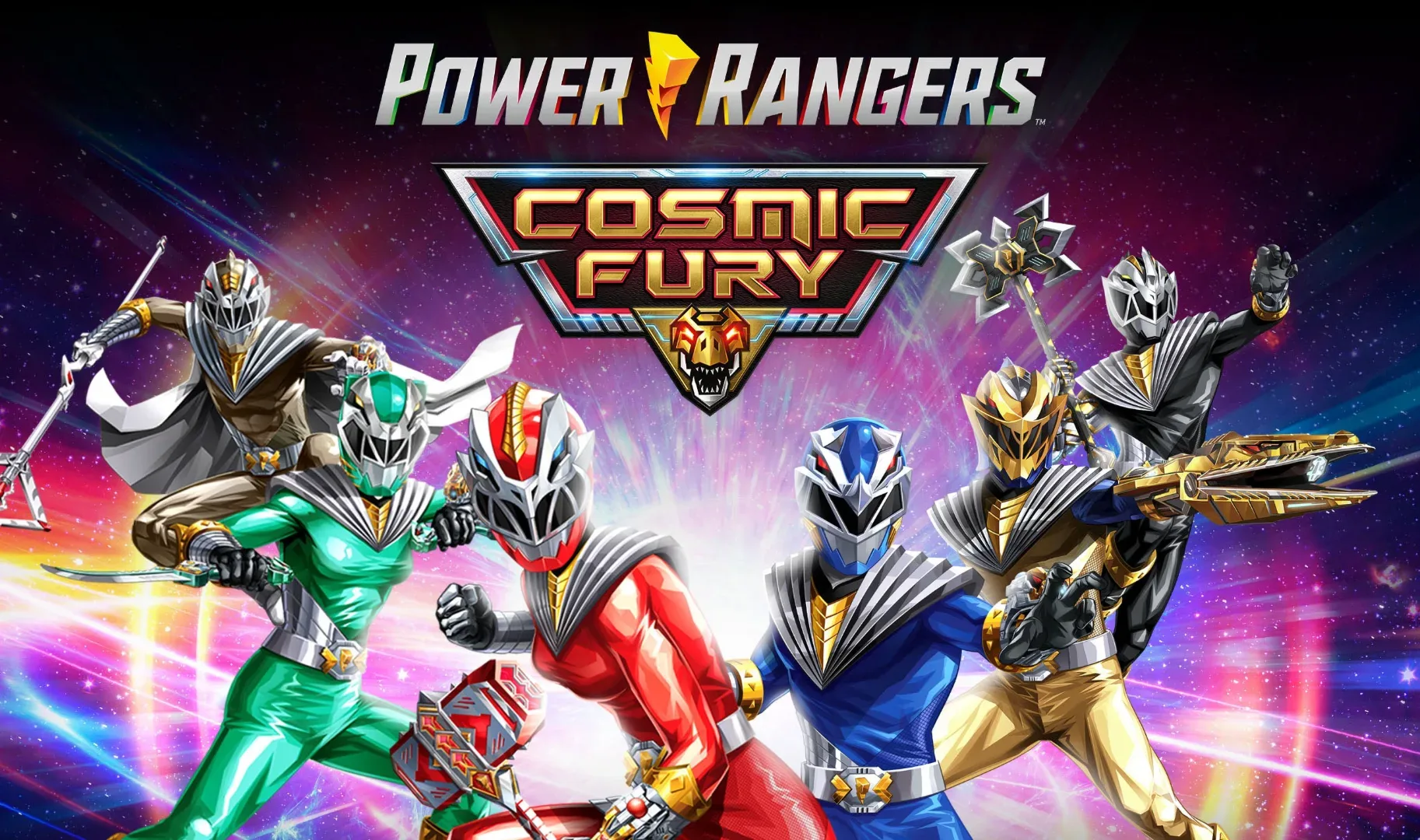
Netflix describes Power Rangers Cosmic Fury as a new journey for the team from Dino Fury. That matters for viewing order: Cosmic Fury does not work like the older annual seasons that introduced an entirely new cast. It keeps the Dino Fury protagonists, carries earlier conflicts forward and also brings back characters from classic franchise history, including Billy Cranston.
For enough context, use the sequence Dino Fury season 1, Dino Fury season 2 and then Cosmic Fury. Viewers who want to catch more legacy references can watch the Zordon saga first, but that is not necessary to understand the modern team's core story.
All 30 numbered seasons in release order
| No. | Season | How to treat it in continuity |
|---|---|---|
| 1 | Mighty Morphin Power Rangers S1 | Beginning of the classic saga. |
| 2 | Mighty Morphin Power Rangers S2 | Direct continuation. |
| 3 | Mighty Morphin Power Rangers S3 | Direct continuation. After it, watch Alien Rangers as the bridge. |
| 4 | Power Rangers Zeo | Continues the team and story of the classic block. |
| 5 | Power Rangers Turbo | Watch Turbo: A Power Rangers Movie first. |
| 6 | Power Rangers in Space | Continues Turbo and concludes the Zordon saga. |
| 7 | Power Rangers Lost Galaxy | New team and story, with links to In Space. |
| 8 | Power Rangers Lightspeed Rescue | Self-contained story. |
| 9 | Power Rangers Time Force | Self-contained story. |
| 10 | Power Rangers Wild Force | Self-contained story with a major anniversary crossover. |
| 11 | Power Rangers Ninja Storm | New entry point. |
| 12 | Power Rangers Dino Thunder | New central cast with Tommy Oliver returning. |
| 13 | Power Rangers S.P.D. | Self-contained story. |
| 14 | Power Rangers Mystic Force | Self-contained story. |
| 15 | Power Rangers Operation Overdrive | Self-contained story with a veteran crossover. |
| 16 | Power Rangers Jungle Fury | Self-contained story. |
| 17 | Power Rangers RPM | Self-contained story in an alternate dimension. Connects to Beast Morphers later. |
| 18 | Power Rangers Samurai | First half of the Samurai arc. |
| 19 | Power Rangers Super Samurai | Direct continuation of Samurai. |
| 20 | Power Rangers Megaforce | First half of the Megaforce arc. |
| 21 | Power Rangers Super Megaforce | Direct continuation of Megaforce. |
| 22 | Power Rangers Dino Charge | First half of an arc in an alternate dimension. |
| 23 | Power Rangers Dino Super Charge | Direct continuation of Dino Charge. |
| 24 | Power Rangers Ninja Steel | First half of the Ninja Steel arc. |
| 25 | Power Rangers Super Ninja Steel | Direct continuation of Ninja Steel. |
| 26 | Power Rangers Beast Morphers S1 | Beginning of a new arc. |
| 27 | Power Rangers Beast Morphers S2 | Direct continuation with an important RPM connection. |
| 28 | Power Rangers Dino Fury S1 | Beginning of the Dino Fury arc. |
| 29 | Power Rangers Dino Fury S2 | Direct continuation. |
| 30 | Power Rangers Cosmic Fury | Direct continuation of the Dino Fury team and story. |
Where do the movies, specials and alternate universes fit?
Mighty Morphin Power Rangers: The Movie from 1995
The first theatrical film uses characters from the classic era but does not belong to the same continuity as the television show. It retells elements connected to the Rangers gaining new powers in an alternate timeline. Watch it as a side story after becoming familiar with Mighty Morphin; it is not a required step between seasons 2 and 3.
Turbo: A Power Rangers Movie from 1997
This is the film that matters to the television watch order. Its story takes place after Zeo and leads into the powers, characters and conflict seen in Turbo. For a continuity-focused marathon, place it between seasons 4 and 5.
Power Rangers from 2017
The 2017 movie is a cinematic reboot in its own continuity. No television season requires it before or after.
Mighty Morphin Power Rangers: Once & Always
The 30th anniversary special reunites characters from the classic generation. It works better after at least Mighty Morphin and some of the Zordon saga, but it is not required for Dino Fury or Cosmic Fury. Treat it as an anniversary reunion within television continuity, not as season 31.
RPM and Dino Charge as other dimensions
The franchise uses a multiverse to explain some major setting differences. RPM takes place in a dimension devastated by Venjix. Dino Charge also belongs to a reality separate from the main universe. Later crossovers allow Rangers from those worlds to meet teams from the main continuity without forcing every season into one simple timeline.
Entry points if you do not want to watch everything
- I want the complete classic story: start with Mighty Morphin S1 and continue through In Space, including Alien Rangers and the Turbo movie.
- I want a mostly standalone season: choose one of the annual arcs from Lost Galaxy through Jungle Fury. Earlier references are bonuses rather than prerequisites.
- I want the alternate RPM world: watch RPM on its own and, if you want the later consequence, continue to Beast Morphers.
- I want a modern two-part era: begin with the first title in the pair, never with its corresponding "Super" season.
- I want to reach Cosmic Fury: start with Dino Fury S1, continue with S2 and only then watch Cosmic Fury.
The practical rule for staying oriented
Use release order when you want to see everything, but do not confuse a shared universe with narrative dependence. Most of Power Rangers exists inside a broad continuity, yet many seasons tell closed stories. The parts that demand strict order are the blocks with direct handoffs: the Zordon saga, each pair beginning with Samurai, the two Beast Morphers seasons, the two Dino Fury seasons and the move from Dino Fury into Cosmic Fury.
If your goal is to save time, choose one of those blocks as your entry point and return to the crossovers later. The franchise then stops looking like 30 mandatory seasons and starts working as a collection of arcs connected at different levels.
Sources and references
- BingeRun: Power Rangers Watch Order, used as a reference for block organization and extra material.
- Netflix Media Center: Power Rangers Cosmic Fury, which presents Cosmic Fury as a continuation of the Dino Fury team.
- Netflix Tudum: Once & Always, on the 30th anniversary special and the milestone 30th season.
- Power Rangers series overview, for the season structure and the shift from a continuous arc to annual stories and later two-season formats.
- Mighty Morphin Power Rangers: The Movie and Turbo: A Power Rangers Movie, to distinguish the alternate 1995 film from the 1997 continuity bridge.
- RangerWiki: Multiverse, for the separation between the main universe, RPM and Dino Charge.