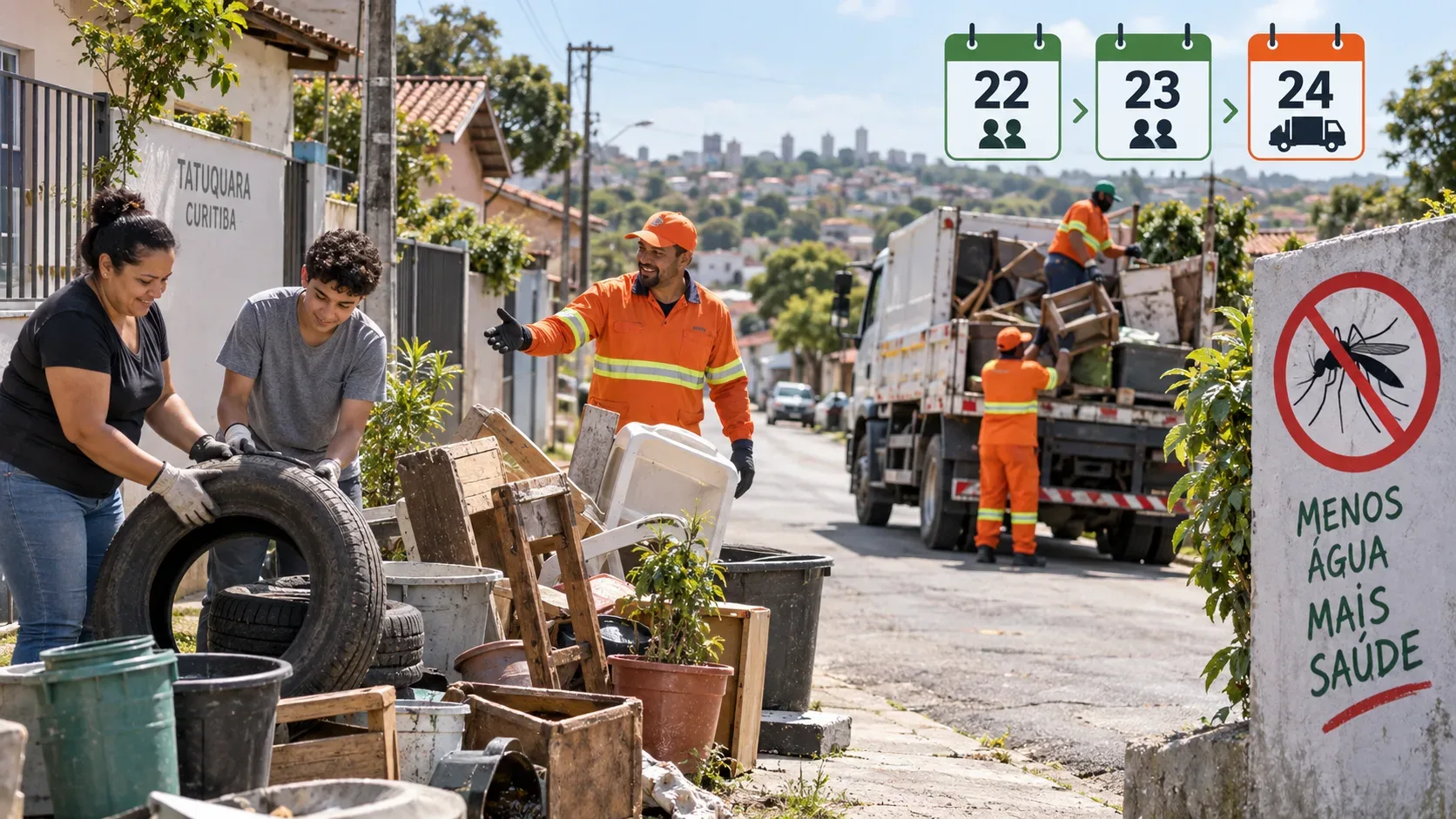
The Curitiba sem Mosquito dengue cleanup drive reaches Tatuquara with three days of activity in the service area of the Pompéia Health Unit. On September 22 and 23, 2026, health agents will guide residents on dengue prevention and proper disposal. On September 24, trucks from Curitiba's Municipal Environment Department will collect the separated materials. The operation covers 18 city blocks, according to the Curitiba city government.
Tatuquara cleanup drive schedule
| Date | Stage | What residents should do |
|---|---|---|
| September 22, Tuesday | Guidance | Receive guidance from health agents and identify which items can be separated for collection. |
| September 23, Wednesday | Guidance | Finish separating materials, respecting the limits and avoiding items that are not accepted in the drive. |
| September 24, Thursday | Collection | Place the materials outside the property on the day the trucks pass. Smaller waste must be bagged or packaged. |
The action will take place across 18 city blocks in the area served by the Pompéia Health Unit in Tatuquara. Guidance comes before collection so residents know how to prepare the disposal and avoid leaving unsuitable materials on the street.
What can be set aside for collection
The official notice lists the materials that may be collected during the Curitiba sem Mosquito drive. They include:
- Tires: a maximum of two per household.
- Plant waste: up to 1 m³ per household and properly packaged.
- Unusable household items: furniture, appliances and other discardable materials compatible with the operation.
- Recyclable materials: bottles, plastics, iron, metals and containers.
- Smaller organic waste: the notice states that it must be packaged or bagged for disposal.
The practical goal is to remove unused objects and containers that may remain on properties and collect water, while organizing disposal for the municipal trucks.
What is not collected
Some materials require a different disposal route and will not be collected in this operation:
- tire quantities above the household limit, such as disposal from tire shops or businesses;
- construction rubble known locally as caliça, which requires a specific collection request through the 156 service;
- heavy or high-volume construction waste;
- unpackaged organic waste and plant debris;
- toxic or hazardous waste, such as light bulbs, medicines, batteries and paint;
- transport vehicles.
These restrictions distinguish the cleanup drive from specific collection services and from proper disposal points for waste that requires specialized treatment.
How to prepare for September 24
- Use September 22 and 23 to check the health agents' guidance and separate only accepted materials.
- Respect the limit of two tires per household and up to 1 m³ of plant waste.
- Package or bag smaller waste and plant debris.
- Do not mix light bulbs, batteries, medicines, paint or heavy construction waste with the cleanup materials.
- Place the items outside the property on September 24, the scheduled collection day.
For residents in the Pompéia Health Unit area, the sequence is straightforward: guidance on September 22 and 23, followed by collection on September 24. Check the material list and limits before putting anything outside.
Source: Curitiba city government, Mutirão contra dengue passa pelas regionais Pinheirinho e Tatuquara, published on September 17, 2026.