In PISA 2025, reaching Level 2 in reading means demonstrating a minimum set of skills for dealing with texts of moderate length: identifying the main idea, locating information based on explicit criteria — even when those criteria require careful attention — and reflecting on the purpose and form of a text when the task explicitly directs the student to do so. According to the OECD country note for Brazil, 49% of Brazilian students reached Level 2 or higher in reading, compared with an OECD average of 69%.
The exercises below are original practice microtexts. They do not reproduce official PISA items; their purpose is to turn the proficiency-scale description into observable reading actions.
What PISA 2025 Reading Level 2 requires
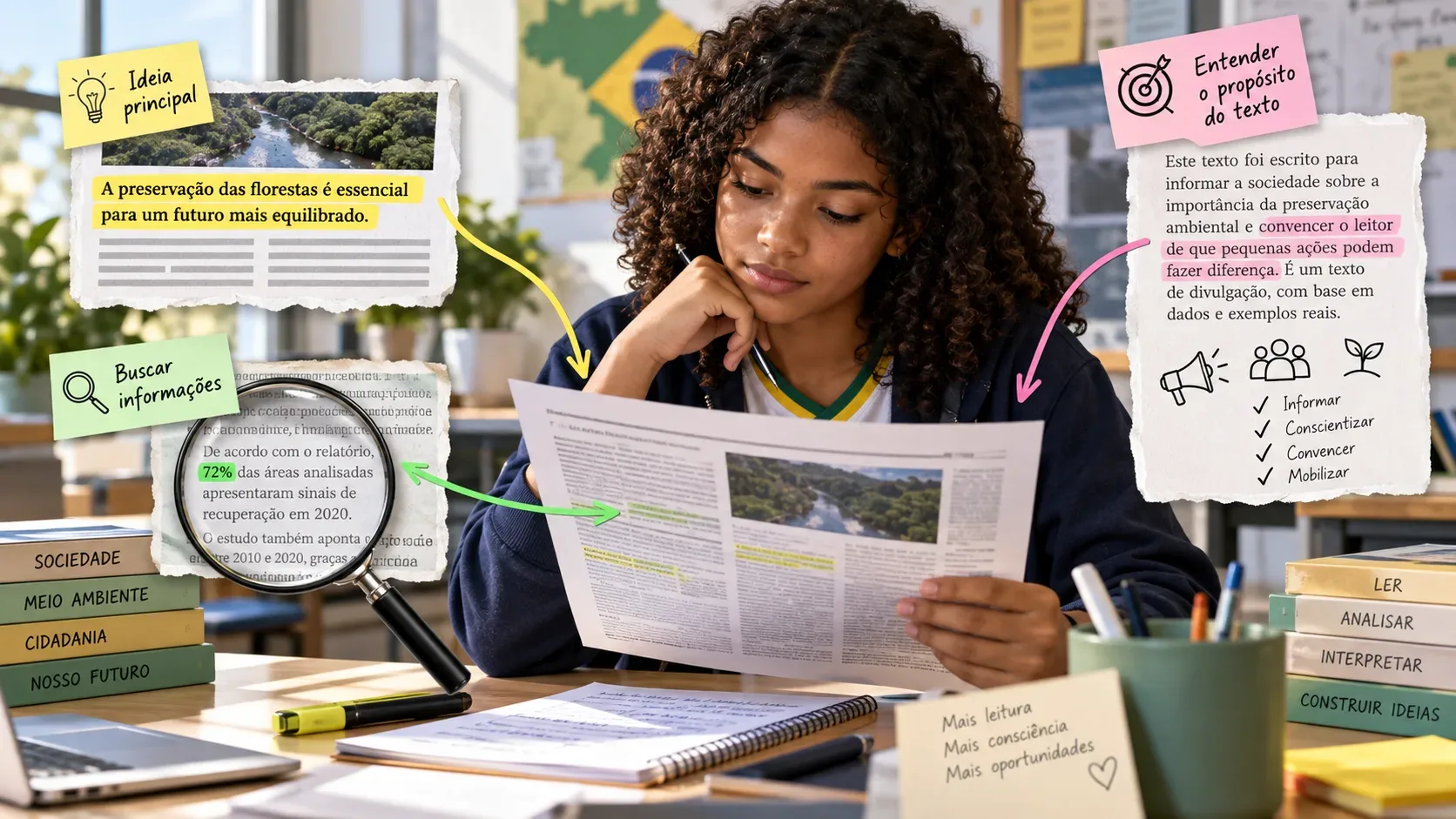
The OECD description helps separate three operations. They may appear on their own or be combined in a question, but they are not the same task.
| Task | What the reader needs to do | Common mistake |
|---|---|---|
| Identify the main idea | Recognize the message that organizes the text as a whole, without confusing the topic with a detail. | Choose a true but secondary sentence. |
| Find information | Locate a detail that meets explicit criteria in the question, combining elements when necessary. | Stop at the first number or word that resembles the question. |
| Reflect on purpose and form | Use clues in the text to explain why it was written and how its organization supports that purpose. | Answer only from the subject matter without considering language, structure or audience. |
1. Main idea: find the message that organizes the text
Microtext: A school library began opening during the lunch break as well. In the first month, the number of loans increased, especially among students who stay at school for a full day. The school administration said it will keep the new hours throughout the semester and assess demand before deciding whether to extend service into the late afternoon.
Question: What is the main idea of the text?
- Separate topic from message. The topic is how the library operates. The main idea needs to state what relevant change occurred in that operation.
- Look for the information that connects the rest. Opening at lunch, increased borrowing and the demand review all belong to the same change: expanded hours and their effects.
- Eliminate details. “Full-day students borrowed more books” is true, but it does not summarize the whole text.
Answer: The school expanded the library's hours, saw an increase in use and will assess demand before deciding on further opening times.
A useful strategy is to ask: if I could keep only one sentence to explain the text to someone else, which sentence would preserve the relationship among its main facts?
2. Finding information: locate a detail that meets the criteria
Microtext: A cultural center offers four workshops in October. Photography takes place on Tuesdays from 6 p.m. to 8 p.m. and is for people aged 16 and over. Creative writing takes place on Saturdays from 10 a.m. to noon and is for people aged 14 and over. Introduction to drawing takes place on Thursdays from 3 p.m. to 5 p.m. with no minimum age. Video production takes place on Fridays from 7 p.m. to 9 p.m. and is for people aged 16 and over. All workshops require advance registration.
Question: A 15-year-old student can attend only on Saturday mornings. Which workshop meets both criteria?
- Turn the question into filters. Age: 15. Availability: Saturday morning.
- Find an option that meets both. Creative writing is on Saturday from 10 a.m. to noon and accepts participants aged 14 and over.
- Do not choose an option that matches only one condition. Drawing accepts the student's age but is on Thursday. Photography and video production do not accept 15-year-olds.
Answer: Creative writing.
This task shows why “finding information” can demand more than copying a word. The correct detail has to satisfy every criterion stated in the question.
3. Purpose of the text: connect content, language and form
Microtext: “Bring your reusable bottle. Throughout this week, the gym's drinking fountains will remain available during practices and events. The measure is intended to reduce the use of disposable cups at the venue. If you need directions to refill points, ask the support team at the entrance.”
Question: What is the text's main purpose, and what feature of its form helps achieve it?
- Notice what the text wants the reader to know or do. It announces a measure and guides a concrete action: bringing a reusable bottle and using refill points.
- Look for language directed at the reader. Verbs such as “bring” and “ask” function as instructions.
- Connect form and purpose. Short sentences and direct guidance make the notice easier to use for people who attend the gym.
Answer: The text aims to inform and guide the public so as to reduce disposable-cup use; direct instructions and imperative verbs help turn the information into action.
At Level 2, the OECD explicitly states that reflection on purpose and form may occur when the student is directly prompted to do so. This matters: highly implicit interpretation is not required to characterize this proficiency level.
How Level 2 differs from more advanced reading skills
Level 2 does not mean “easy reading,” nor does it amount to understanding isolated words. It is the point at which a student can organize the meaning of a moderate-length text, find information using stated criteria and reflect, with explicit prompting, on function and form.
In the same results note, the OECD describes Level 5 or higher as performance in which readers can comprehend lengthy texts, deal with abstract or counterintuitive concepts, and distinguish fact from opinion using implicit cues in the content or source. In Brazil, 1% of students reached Level 5 or higher in reading, compared with an OECD average of 6%. The difference, therefore, is not simply “getting more questions right”: it involves greater length, abstraction and less explicit information.
How to practise the three tasks without memorizing answers
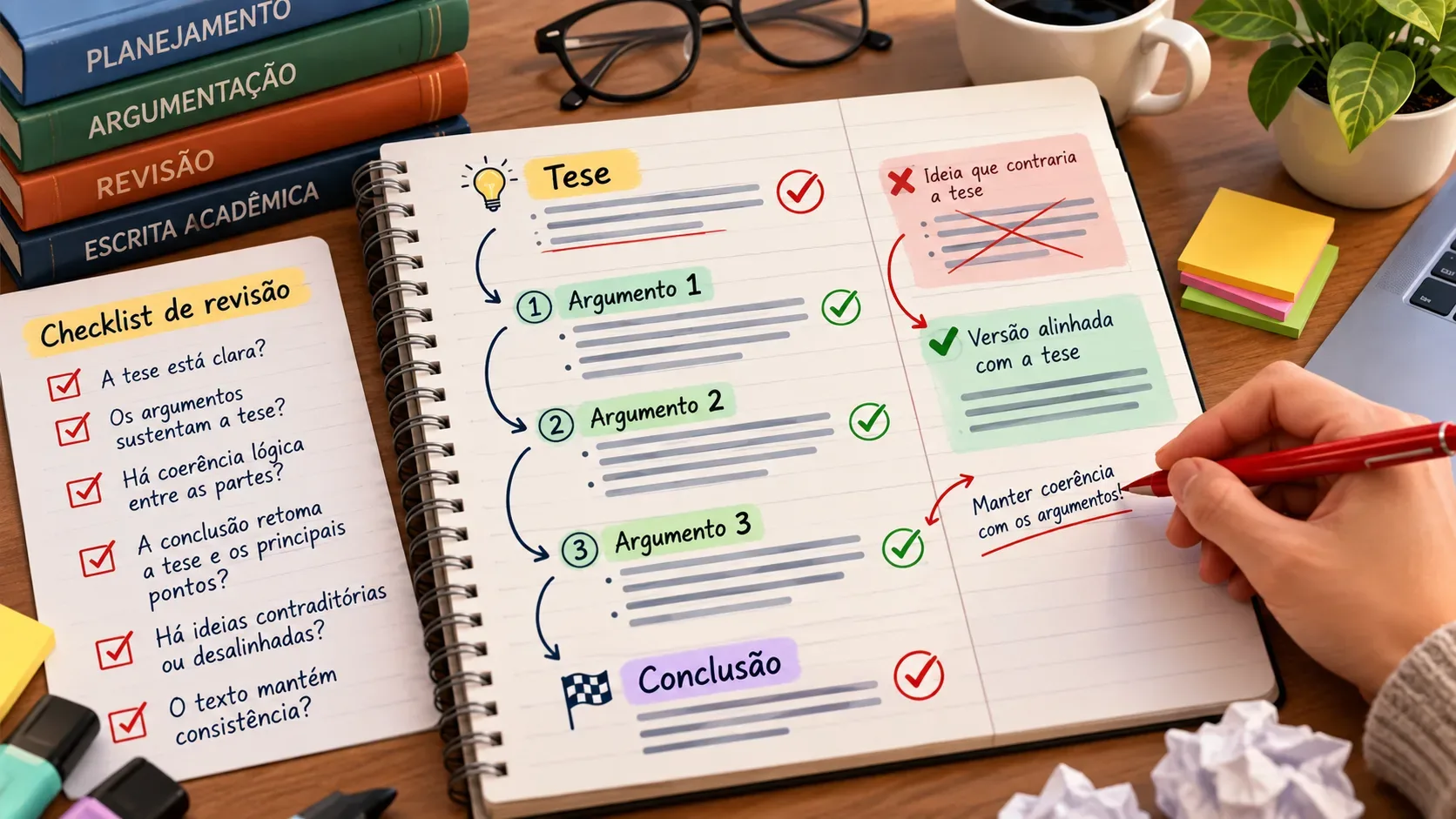
- For the main idea: write one sentence stating what connects the text's main facts; then check whether your sentence explains most of the paragraphs.
- For finding information: underline the criteria in the question and treat each one as a required filter.
- For purpose: ask “what does the author want the reader to know, think or do?” and cite a textual clue supporting your answer.
- For form: observe headings, sequence, examples, instructions, comparisons, data and language choices; explain how one of these elements helps the text achieve its goal.
- To move further: also practise with longer texts, multiple sources and implicit clues, because those conditions are closer to the skills described at higher proficiency levels.
How to interpret Brazil's 49% figure
The 49% figure means that about half of the Brazilian students assessed reached at least Level 2 in reading; it does not mean that 49% “passed a specific Level 2 test.” PISA uses a proficiency scale and estimates performance from the items students answer.
PISA 2025 results were released on September 8, 2026. Brazil's Inep explains that the assessment targets 15-year-old students and that science was the major domain in 2025, with reading and mathematics as minor domains. The Inep PISA results page brings together materials from the edition.