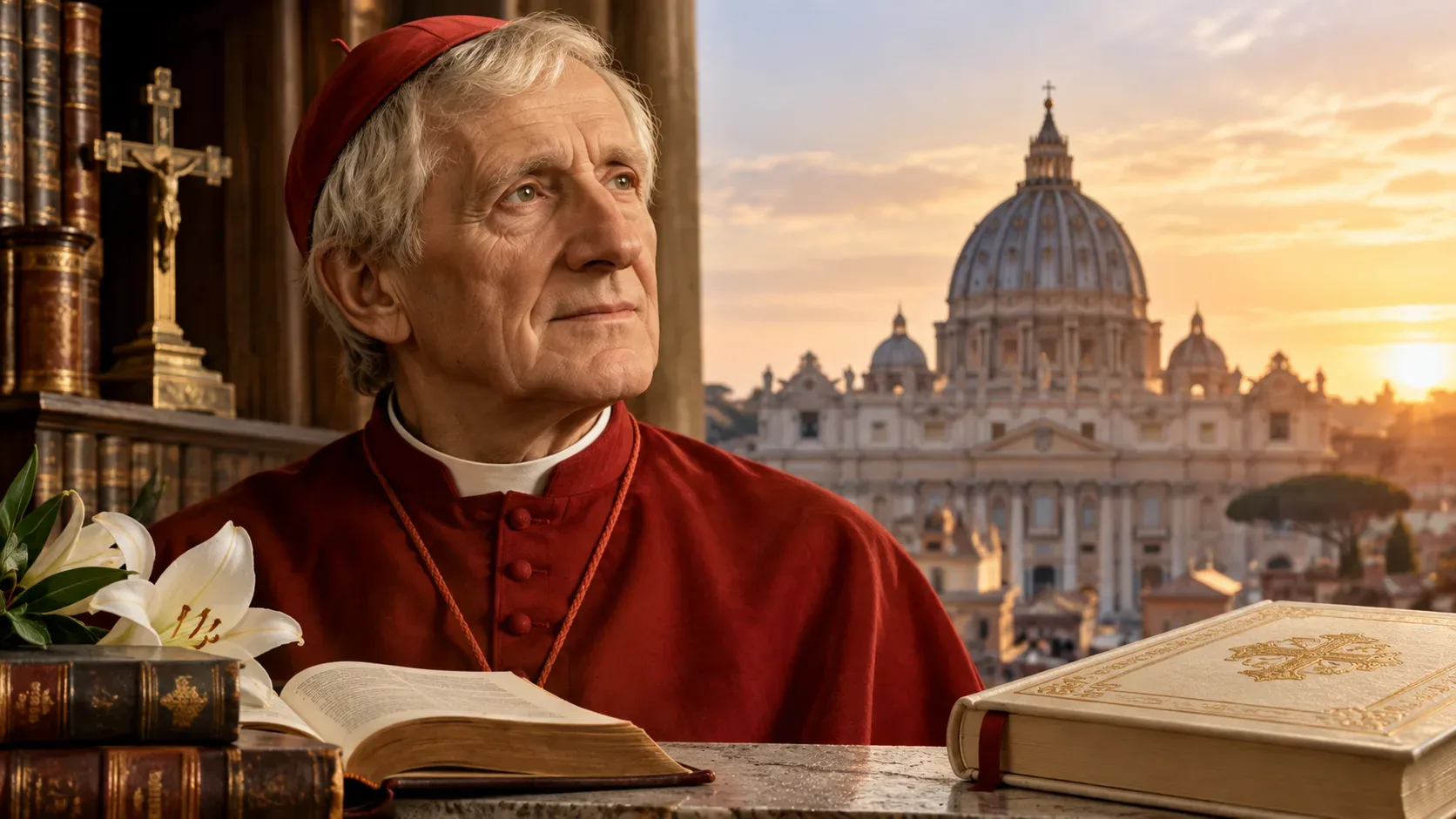
Saint John Henry Newman has been added to the General Roman Calendar with an Optional Memorial on October 9. The decision was made by decree of the Dicastery for Divine Worship and the Discipline of the Sacraments in the name of Pope Leo XIV. The decree is dated November 9, 2025, and was published by the Holy See on February 3, 2026.
The key is to distinguish three things that can sound alike but are not the same: being added to the universal calendar, having a fixed date, and being an obligatory celebration. Newman is now part of the calendar that serves as the universal reference for the Roman Rite, his date is October 9, but the liturgical rank chosen is an Optional Memorial — meaning the celebration may be chosen when the rules for that day allow it.
Why Newman was added to the General Roman Calendar
The decree itself gives the immediate reason: the calendar inscription follows Newman's recent proclamation as a Doctor of the Church. The Dicastery's official commentary recalls that Leo XIV proclaimed him a Doctor of the Church on November 1, 2025, and presents his addition to the calendar as a way of holding up to the universal Church his witness of seeking truth, teaching, preaching, and pastoral service.
This does not mean that every saint or every Doctor of the Church necessarily has the same liturgical rank. Newman's specific decree establishes two concrete points: his inscription in the General Roman Calendar and his annual celebration on October 9 as an Optional Memorial. The official text is available in the decree published by the Holy See.
What “Optional Memorial” means
An “Optional Memorial” is a liturgical rank in which the saint's commemoration does not have to be chosen in every place and at every Mass. On an ordinary weekday in Ordinary Time, for example, the norms allow a choice between the weekday Mass and the Mass of an Optional Memorial that falls on that date.
The practical distinction appears in the General Instruction of the Roman Missal. Number 354 deals, among other days, with Obligatory Memorials; number 355 governs Optional Memorials and provides different choices depending on the liturgical season. In Ordinary Time, the rule allows the weekday Mass or the Optional Memorial, among the other possibilities foreseen. The norms can be read in the General Instruction of the Roman Missal.
| Term | What it means in practice |
|---|---|
| General Roman Calendar | The celebration becomes part of the universal reference calendar of the Roman Rite. |
| October 9 | This is the annual date assigned to Saint John Henry Newman in the general calendar. |
| Optional Memorial | The celebration may be chosen when the liturgical rules of the day allow it; it does not have the same binding character as an Obligatory Memorial. |
| Liturgical books | The Roman Missal, Liturgy of the Hours, Lectionary, and Roman Martyrology receive the additions indicated by the decree and its annex. |
“Celebrated by all” does not mean “obligatory for everyone”
The decree says that Newman's Optional Memorial is to be celebrated “by all” on October 9. In context, this means the celebration has been extended to the Roman Rite through the General Roman Calendar, not that every community is required to choose it on that day.
The very rank of “Optional Memorial” preserves the choice provided by liturgical law. In addition, particular calendars of dioceses, countries, religious orders, or individual churches may contain their own celebrations with precedence. The concrete observance of October 9 therefore has to respect the general rules of precedence and the proper calendar of the place.
What changes in calendars and liturgical books
The decree orders the new memorial to be inserted into calendars and into the books used for the celebration of the Mass and the Liturgy of the Hours. The Latin annex also provides additions for the Roman Missal, the Lectionary, the Liturgy of the Hours, and the Roman Martyrology.
The published material includes the Collect, references for readings, and proper material for the Office of Readings. This means the celebration is not merely a name added to a calendar: it has officially designated liturgical material for its observance.
The role of episcopal conferences
The Holy See published the liturgical texts in Latin, but the decree establishes a further step for local languages. Episcopal Conferences are responsible for translating the texts, approving them, and submitting them for confirmation by the competent Dicastery before publishing them for liturgical use.
This explains why universal inclusion and the updating of a country's printed liturgical book do not have to happen at the same moment. The universal norm establishes the celebration; the episcopal conference handles the authorized translation and publication for its territory according to the process set out in the decree.
What the faithful should look for on October 9
- The date is fixed: Newman appears on October 9 in the General Roman Calendar.
- The rank is optional: it is not a solemnity, feast, or obligatory memorial.
- The celebration depends on the day's norms: the liturgical season and any higher-ranking celebration can affect which option may be used.
- The text used must be approved: for liturgy in the vernacular, the authorized edition of the competent episcopal conference applies after the process required by the Holy See.
In short: decree, date, rank, and implementation
The sequence is straightforward. Leo XIV proclaimed Newman a Doctor of the Church; the Dicastery issued a decree inscribing him in the General Roman Calendar; the date is October 9; the rank is an Optional Memorial; and the liturgical texts are to be incorporated into calendars and books through the translation, approval, confirmation, and publication process carried out by episcopal conferences.
So the 2026 change is more than “a new feast on the calendar.” It is a universal inscription with a precise liturgical rank and a defined procedure for making the celebration appear correctly in the materials used by Catholic communities.