On September 29, the Roman Catholic calendar celebrates the archangels Michael, Gabriel and Raphael in a single feast. In 2026, the USCCB identifies the date as the “Feast of Saints Michael, Gabriel, and Raphael, Archangels,” and the Vatican’s Directory on Popular Piety and the Liturgy likewise lists September 29 as the joint feast of the three. The date does not mean that the Bible places all three in the same scene or on the same day: it is a shared liturgical commemoration of three heavenly messengers named in the Scriptures received by the Catholic Church.
Where Michael, Gabriel and Raphael appear in the Bible
The three names occur in different settings and serve different functions within the biblical narratives themselves. The table below summarizes the most direct passages without turning later Christian devotional symbols into details the texts do not state.
| Name | Main biblical passages | Role in the text |
|---|---|---|
| Michael | Daniel 10:13, 21; 12:1; Jude 9; Revelation 12:7-9 | He is presented as a prince/protector associated with God’s people, is called an archangel in Jude, and leads the angels in battle against the dragon in Revelation. |
| Gabriel | Daniel 8:16; 9:21-23; Luke 1:19; 1:26-38 | He interprets visions in Daniel and, in Luke, announces the birth of John the Baptist to Zechariah and the conception of Jesus to Mary. |
| Raphael | Tobit 3:17; 5–12, especially 12:12-15 | He accompanies Tobias on a journey, participates in the healing of Tobit and Sarah and, when revealing his identity, says he is one of the seven angels who stand before the Lord. |
An important vocabulary point: in the New Testament, Michael is explicitly called an “archangel” in Jude 9. Gabriel and Raphael are called archangels in Christian tradition and liturgy, but the passages that name them do not directly apply that title to each of them. In a homily on September 29, 2007, Benedict XVI described the date as the feast of the three archangels who are mentioned by name in Scripture.
Why the three are celebrated together on September 29
In the current Roman calendar, September 29 functions as one feast of Michael, Gabriel and Raphael. The liturgical grouping brings together heavenly messengers who are named in Scripture; it is not the anniversary of a single biblical event involving all three. The feast therefore should not be read as though the Bible contained one episode in which Michael, Gabriel and Raphael acted together.
Historically, September 29 was especially associated with Saint Michael in the West and became known in English as Michaelmas. In the modern Roman calendar, Gabriel and Raphael are joined to the same date. For a present-day reader, the key point is straightforward: the current Roman Catholic calendar celebrates all three together on September 29.
What each name represents in the biblical narratives
Michael: defense and battle
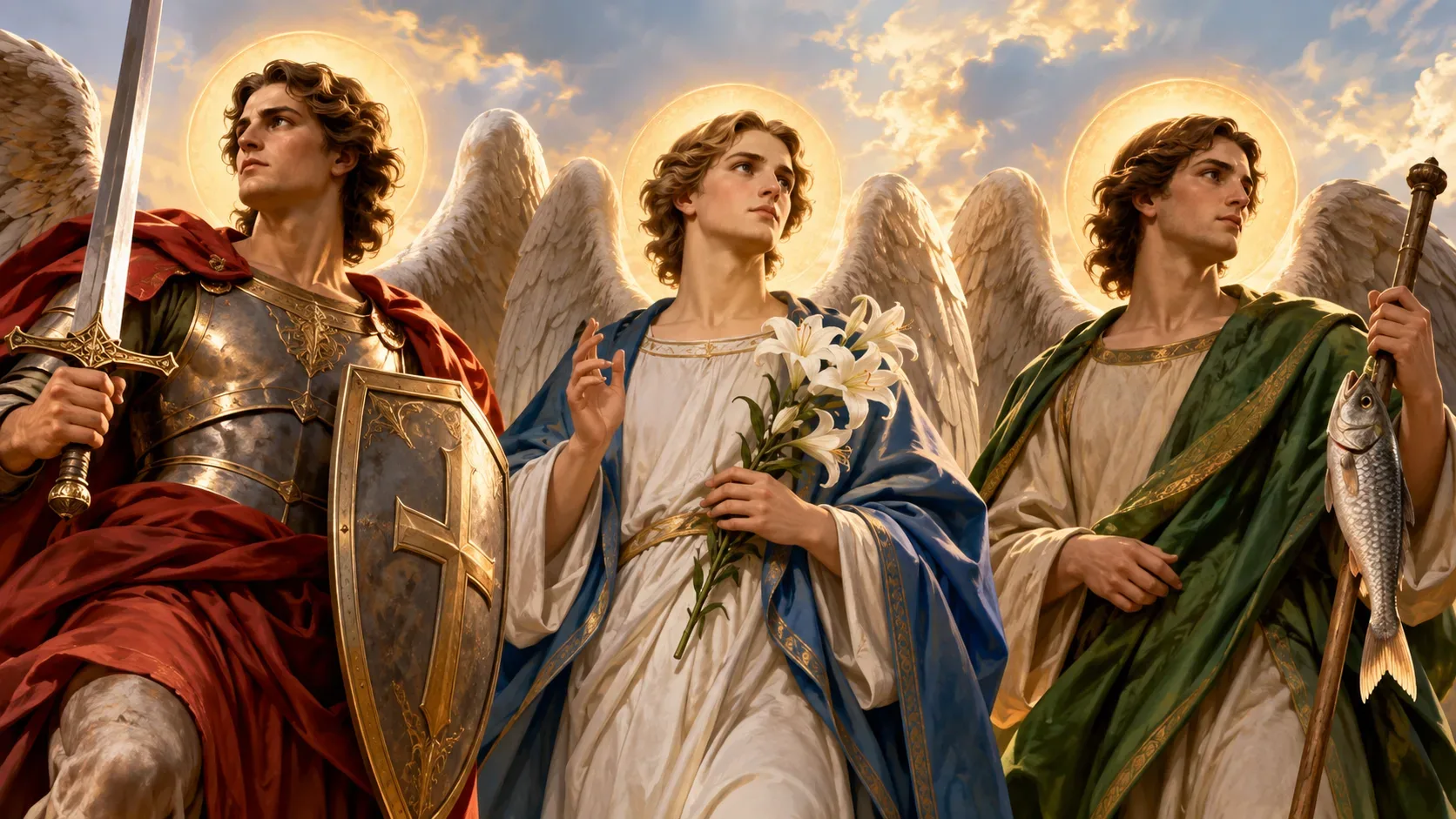
In Daniel, Michael appears as one of the chief princes and later as the great prince associated with the protection of the people. In Jude 9, he is called an archangel. In Revelation 12, Michael and his angels fight the dragon. This is the textual basis for the recurring Christian association of Michael with defense and spiritual battle. Artistic images such as armor, sword, shield or a dragon under his feet are later iconographic developments rather than a single biblical description.
Gabriel: announcement and interpretation
Gabriel first appears in Daniel, where he is tasked with explaining a vision. In Luke, he identifies himself before Zechariah and is later sent to Nazareth to tell Mary that she will conceive Jesus. Christian tradition therefore associates him especially with messages and proclamation. The main biblical point is not a particular visual attribute, but his role in communicating and clarifying a divine message.
Raphael: companionship, healing and intercession
In the Book of Tobit, Raphael travels with Tobias under another identity, guides the journey and participates in the healings that resolve the story’s central conflicts. In Tobit 12:15 he reveals his name; the USCCB note connects Raphael with the “seven angels” and also points to passages where Gabriel and Michael are named in other biblical books. The traditional image of Raphael with a fish comes from the Tobit narrative itself, in which parts of a fish play a role in Tobit’s healing and Sarah’s deliverance.
Why Raphael creates a difference between Catholic and Protestant Bibles
Raphael is the case that most requires a confessional qualification. Tobit belongs to the Catholic Old Testament and is also received in Orthodox traditions, but it is not part of the Protestant Old Testament canon. The USCCB explains that Catholic Bibles contain 46 Old Testament books, including Tobit, whereas Protestant Bibles normally contain 39 and do not include Tobit in the canon. As a result, in a standard Protestant Bible Michael and Gabriel are named, but Raphael does not appear by name.
This does not mean every Protestant community treats Tobit in exactly the same way for historical or liturgical reading. Some traditions and editions print the deuterocanonical/apocryphal books separately. The safer distinction is between what belongs to a tradition’s canon and what may still be read as religious literature or used in particular lectionaries.
How the date differs among Christian traditions
- Roman Catholic Church: September 29 is the feast of Saints Michael, Gabriel and Raphael, Archangels. The USCCB’s 2026 calendar and readings confirm the joint celebration.
- Church of England: Common Worship marks September 29 as “Michael and All Angels.” The date coincides, but the title and liturgical framing are not identical to the Catholic feast of the three archangels.
- Byzantine Orthodox tradition: the Orthodox Church in America commemorates on November 8 the Synaxis of the Archangel Michael and the Other Bodiless Powers, naming Gabriel, Raphael and other archangels. The Roman September 29 observance therefore should not be automatically transferred to the Orthodox calendar.
- Protestant communities generally: there is no single Protestant liturgical calendar. Some historic churches retain feasts connected with angels; others do not observe the date. The absence of Tobit from the Protestant canon also affects how Raphael is presented biblically.
What to distinguish between Bible, tradition and calendar
To understand the September 29 feast without mixing different levels of information, three questions help. First: does the name appear in the biblical text? Michael, Gabriel and Raphael are all named in the Scriptures of the Catholic canon; Raphael is in Tobit. Second: what does the figure do in the narrative? Michael fights and protects, Gabriel interprets and announces, and Raphael accompanies and participates in healing. Third: how does a church organize that memory in its calendar? The answer varies by tradition.
This distinction also prevents later iconography or devotion from being treated as though every detail came directly from the Bible. Sword and armor for Michael, lilies for Gabriel, and a fish or staff for Raphael are useful traditional symbols in Christian art, but they are not a literal list of attributes supplied by Scripture.
September 29, 2026: where to verify the celebration
For 2026, the most direct practical reference is the USCCB page for September 29, which gives the liturgical title and readings for the feast. Vatican News also records the same celebration on that date. These sources confirm the current Catholic calendar; to determine how another Christian tradition observes the archangels, consult that church’s official calendar because the date, title and set of figures commemorated may differ.