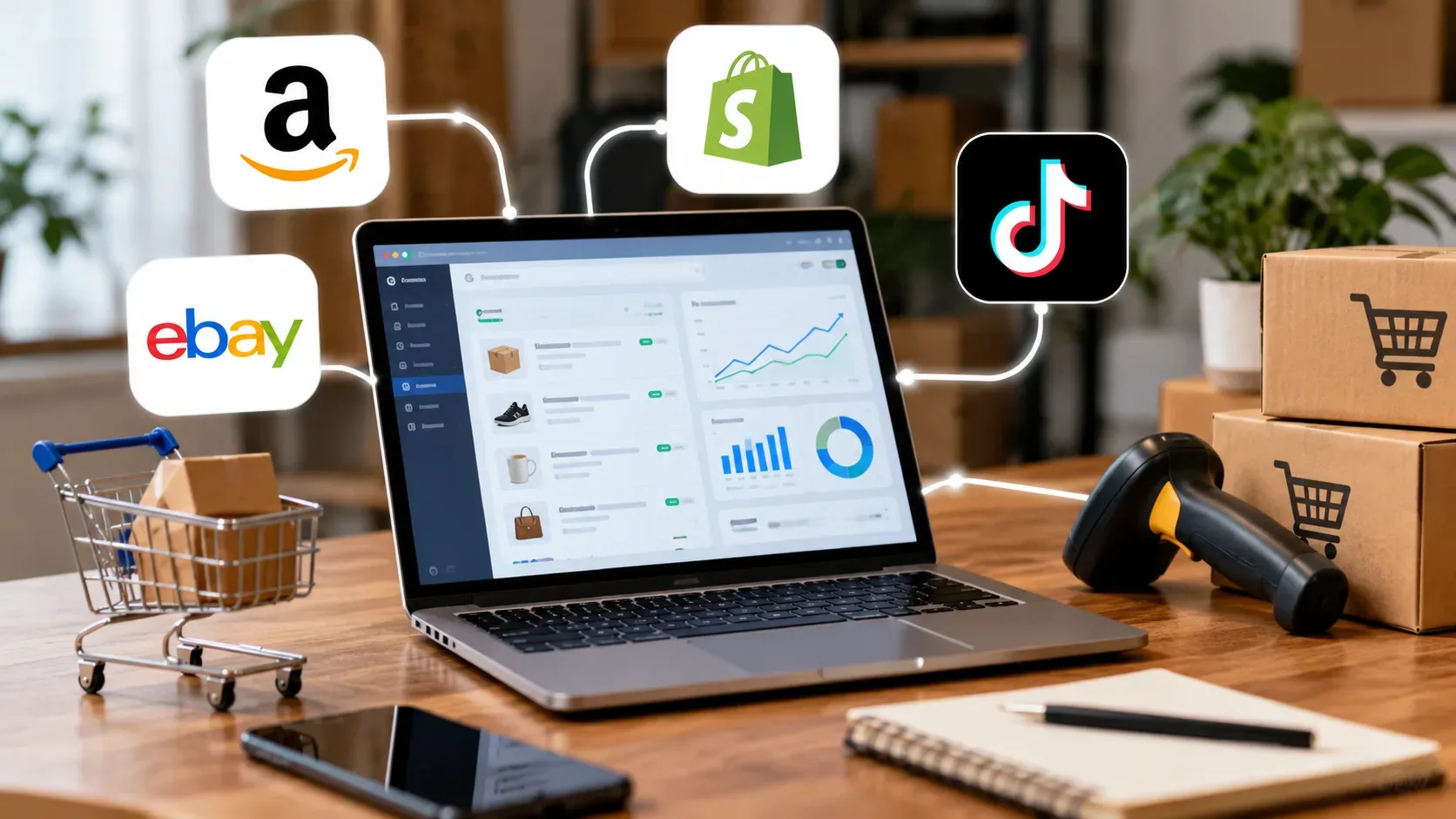
On September 24, 2026, Amazon announced new multichannel tools inside Seller Central designed to bring together part of the selling operation conducted on Amazon itself and on external channels. At the start of the rollout, eligible sellers can connect eBay, Shopify, TikTok, and Walmart accounts, import and link off-Amazon listings, view sales and orders from multiple channels, and trigger fulfillment from one environment. Amazon said the experience is rolling out gradually to sellers in the U.S. store over the coming months. The announcement does not confirm availability in the Brazilian store.
The key point is that Seller Central is becoming a multichannel operating hub, but not everything Amazon described is available from day one. Some catalog, AI creation, and profitability analysis features are presented as capabilities that will expand during the rollout.
What Seller Central multichannel brings together
| Area | What Amazon describes | Status in the September 24, 2026 announcement |
|---|---|---|
| Connected channels | Amazon, eBay, Shopify, TikTok, and Walmart within the same operating flow. | Connecting external accounts is part of the initial experience, with a gradual rollout in the U.S. store. |
| Catalog | Import and link existing off-Amazon listings to the catalog managed in Seller Central. | Available in the initial experience described by Amazon. |
| Orders and sales | View sales and orders from connected channels in the same environment. | Available in the initial experience described by Amazon. |
| Fulfillment | Act on orders from other channels and, when applicable, use Amazon's fulfillment infrastructure. | Available in the initial experience; fulfillment fees may apply separately. |
| Synced listing edits | Change a description in Manage Products and adapt the publication to the requirements of each connected channel. | Announced as an expanding capability, not presented as universally available at launch. |
| AI content | Generate titles and product details prepared for different channels. | Announced for later stages of the rollout. |
| Profitability and metrics | Consolidate profitability by product and channel and incorporate advertising spend, traffic, and sales data. | The dashboard and broader view are described as an evolution of the experience. |
How Amazon, eBay, Shopify, and TikTok fit into the same workflow
The integration does not mean the marketplaces and platforms now share one storefront or the same commercial rules. What changes is the management layer. The seller decides which channels to connect to Seller Central and can view external operations without constantly switching between dashboards.
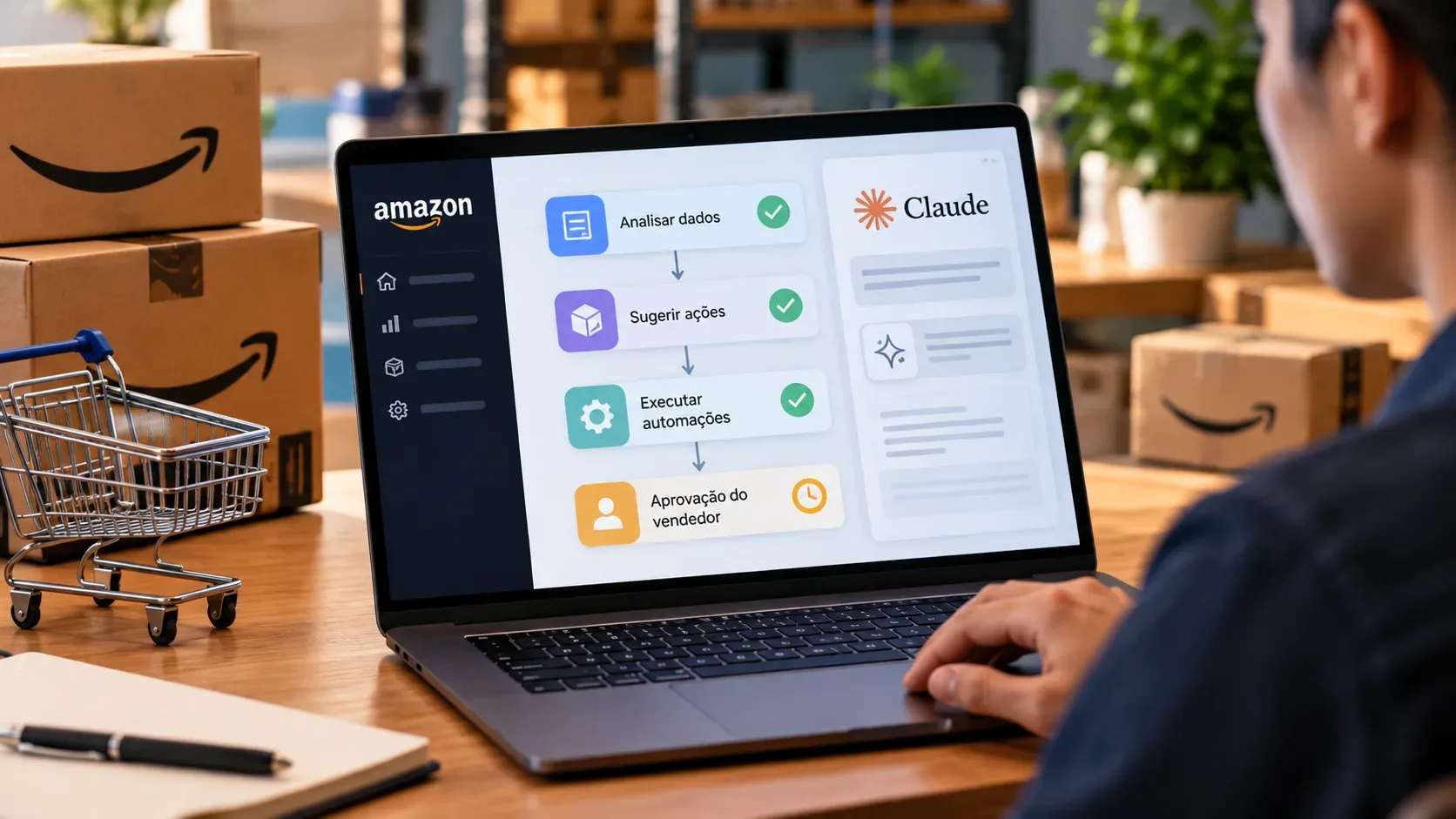
For catalog management, the initial experience allows sellers to import and link listings that already exist outside Amazon. The next step described by Amazon is intended to reduce duplicate maintenance work: the company says sellers will be able to update a description once and have the system adapt the content to each connected channel's requirements. The same announcement links this flow to Amazon's AI listing tools for creating channel-ready titles and product details.
Although this article focuses on Amazon, eBay, Shopify, and TikTok, the official announcement also includes Walmart among the accounts that can be connected in the initial rollout. Amazon also says it plans to add more channels, without naming the next ones in the announcement.
Orders: what becomes centralized
The most concrete change at the start of the rollout is the aggregated order view. Amazon describes Manage Orders as a place where sellers can see unshipped orders from multiple channels, with order details, customer information, and fulfillment options. In the official example, a Shopify order can be selected in Seller Central, sent for fulfillment through Amazon, and have tracking information sent back to Shopify automatically after the shipment is created.
This is different from saying every order must be shipped by Amazon. The announcement says the dashboard can be used to follow orders from connected channels whether or not Amazon handles shipping. When a seller chooses Multichannel Fulfillment, however, that service has its own pricing structure. Amazon's official MCF pricing page says fees depend on factors such as product size, weight, units per order, and delivery speed. Therefore, the announcement's “no additional cost” language applies to the new Seller Central multichannel tools, not to a promise of free fulfillment.
Metrics: what is visible now and what has been promised
For teams monitoring indicators and performance, the rollout stage matters. In the initial experience, Amazon says sellers can view multichannel sales and orders. For the product's evolution, the company describes a real-time profitability view by product and channel, combining data such as advertising spend, traffic, and sales from connected accounts.
This layer could reduce the need to export reports from several platforms and reconcile figures manually. Even so, the announcement does not provide a complete list of metrics, margin formulas, refresh frequencies, or attribution rules for each channel. It is therefore not safe to treat the announced dashboard as a universal replacement for financial, accounting, or analytics tools already used by a seller.
Privacy and control of external data
Amazon says the seller chooses which channels to connect and what data to share, and can disconnect an integration at any time. According to the company, access controls are designed to prevent this data from being shared with other sellers or used to inform Amazon's own retail business decisions. This is Amazon's statement about how the product works and should be read together with the terms and settings actually shown to the seller's account during connection.
Availability: why it should not be described as already available in Brazil
The announcement limits the rollout to sellers in the U.S. store and says availability will expand gradually over the coming months. As of the announcement date, the text provides no equivalent confirmation for the Brazilian store and no public Brazil timetable. Seeing the feature announced for Seller Central therefore does not mean every Brazilian account can already use it.
It is also important to separate seller location from store scope. The announcement refers to sellers in the U.S. store. A Brazilian company operating across marketplaces should check the specific Seller Central environment for the relevant account rather than assume eligibility simply because it has an Amazon registration.
How to check whether the feature has reached your account
- Sign in to the Seller Central operation covered by the rollout.
- Open Settings in the upper-right corner.
- Look for the multichannel settings page identified by Amazon.
- Check which connectors are shown for eBay, Shopify, TikTok, and Walmart.
- Before connecting an account, review the requested data, permissions, and disconnection options shown in the flow.
- After connecting, verify which features are actually enabled for your account, because the rollout is gradual and some capabilities were announced for later phases.
What the launch changes in practice
For sellers included in the rollout, the immediate benefit is less about “replacing” eBay, Shopify, or TikTok and more about reducing operational fragmentation. The initial experience concentrates account connections, listing links, sales and order visibility, and fulfillment actions. The future direction expands that model to cross-channel catalog maintenance, AI-assisted content creation, and profitability comparison.
For operations in Brazil, the practical conclusion is narrower: the feature has been announced, but Brazilian availability was not confirmed in the September 24, 2026 announcement. Until there is a specific rollout or corresponding documentation for the Brazilian store, the accurate reference remains the U.S. store rollout.