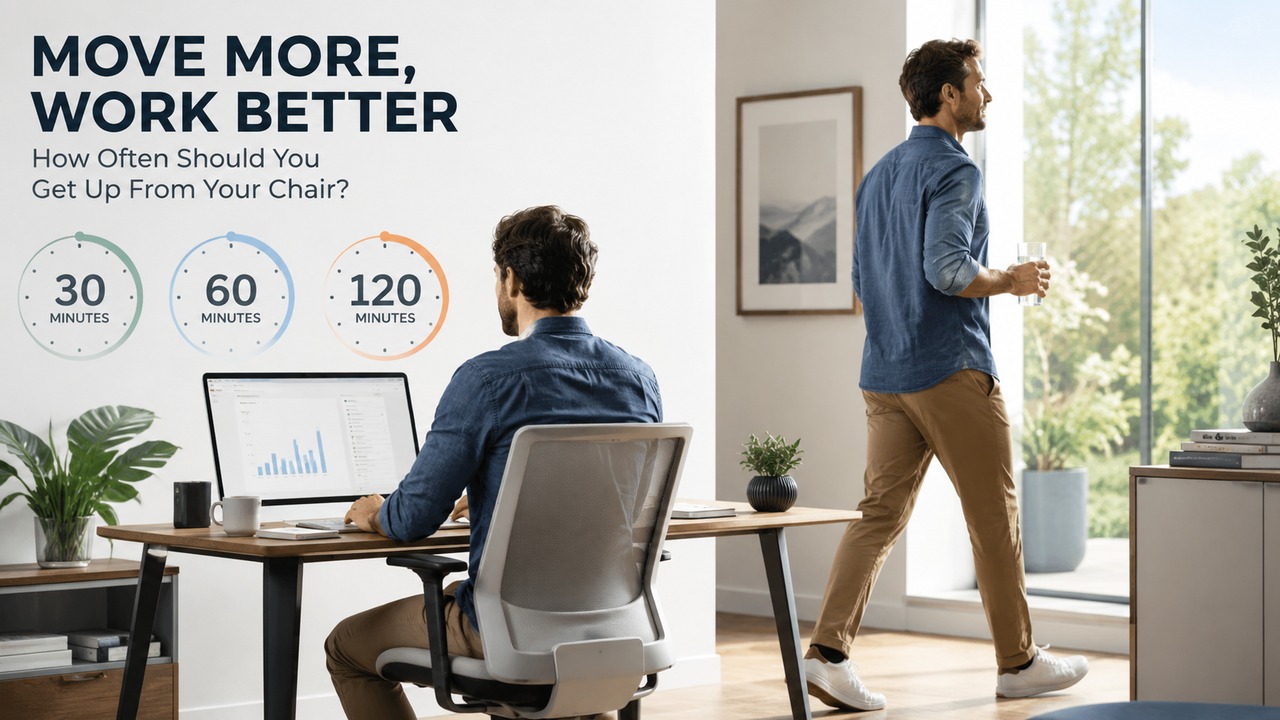
Yes, five minutes can count. Current guidelines no longer require that aerobic activity be performed in sessions of at least ten minutes. A short block of moderate or vigorous intensity can be added to the weekly total, while light movement can also be useful to replace some of the sedentary time.
This does not mean, however, that any five-minute period has the same effect or that five minutes a day are enough to comply with all recommendations. Intensity, frequency, accumulated volume, muscle strengthening and individual conditions remain important.
In the consultation carried out on August 3, 2026, the current World Health Organization page still indicated the guidelines published on November 25, 2020 as the current reference. The WHO reports that the next update is expected in 2030.
Myth or evidence: what really counts?
| Assertion | Verdict | What the evidence allows us to say |
|---|---|---|
| “Less than ten minutes is no use.” | Myth | The requirement for minimum ten-minute sessions has been removed. Activity of any duration can contribute to benefits when accumulated. |
| “Any five minutes are equally included in the weekly goal.” | Inaccurate | To make up the aerobic recommendation, the block needs to reach moderate or vigorous intensity. Light movement is still preferable to sitting, but it does not automatically equate to five moderate minutes. |
| “Five minutes a day will solve everything.” | Myth | A short block is a portion of the total, not an automatic replacement for recommendations for aerobic activity, strengthening and, in the elderly, balance. |
| “Only gym or formal training counts.” | Myth | Walking, cycling, using a wheelchair, dancing, performing active work and some household chores can be physical activity. |
| “Interrupting sitting time means the goal has been reached.” | Myth | Getting up and moving reduces the sedentary period, but a light break may not reach enough intensity to enter the sum of moderate or vigorous activity. |
| “The same short sequence works for anyone.” | Myth | Age, pregnancy, disability, medical condition, functional capacity and prior experience change what is appropriate and safe. |
The change from the old ten-minute rule was not just a change of advertising message. The evidence review that informed the guidelines concluded, with moderate certainty, that physical activity of any duration is associated with better health outcomes and that the previous minimum threshold should be removed.
What does it mean to say that “five minutes count”?
The expression can have three different meanings. Separating them avoids both the “all or nothing” thinking and the exaggerated promise that a few minutes replaces any other care.
1. Count as movement instead of sedentary lifestyle
The WHO states that some activity is better than none and recommends reducing sedentary time. Swapping a few minutes of sitting for light walking, standing tasks, or other movement can be a favorable change, even when the intensity doesn't reach a moderate level.
This type of break is especially relevant for those who spend many hours sitting, but should not be presented as a way to automatically “cancel” all other sedentary behavior.
2. Count towards weekly aerobic total
For adults aged 18 to 64 years, the WHO recommends weekly:
- 150 to 300 minutes of moderate aerobic activity; or
- 75 to 150 minutes of vigorous aerobic activity; or
- an equivalent combination of the two intensities.
Strengthening activities for the main muscle groups are also recommended on two or more days a week.
A five-minute block that reaches moderate or vigorous intensity can, therefore, be added to the other blocks. There is no need to wait until there is half an hour available.
3. Count as the beginning of a progression
For those who are inactive, five minutes can act as a possible entry into a more active routine. WHO guidelines recommend starting with small amounts and progressively increasing frequency, duration and intensity.
The Brazilian Ministry of Health also informs that the activity can be divided into small blocks and reinforces that “every minute counts”. The guide, however, maintains weekly references and muscle strengthening, showing that the message should not be interpreted as “any minimum is enough”.
How to perceive intensity without relying solely on the watch
Five minutes on the stopwatch tells you how much time has passed, but does not alone reveal the intensity.
The Physical Activity Guide for the Brazilian Population presents a practical speech-based test:
- in moderate activity, breathing and heartbeat increase, making it possible to talk with difficulty, but not sing;
- during vigorous activity, breathing becomes much faster and talking becomes difficult or unfeasible.
This perception is relative. A walk may be light for one person and moderate for another. Climbing stairs can be an everyday task for someone trained and a very high effort for someone else. Therefore, the following examples are ways of organizing time, not intensity prescriptions.
Examples of short blocks throughout the day
| Everyday situation | Example block | How to interpret |
|---|---|---|
| Offset | Walk for five minutes before going to work, school or home | You can enter total aerobics when the pace is moderate for that person |
| Public transport | Get off at a safe point a little earlier and complete part of the journey on foot | Two short routes can be added together |
| Work break | Walk around the room for three to five minutes | Helps stop sitting; the intensity will determine whether it also makes up the aerobic goal |
| Stairs | Use a flight of stairs during a regular commute | May represent vigorous effort for some people and require adaptation or another alternative |
| Free time | Dance to music, walk the animal or take a short walk around the block | Pleasurable activities tend to be easier to repeat |
| Household chores | Sweep, clean or organize the environment at a pace that elevates breathing | The task name does not define the intensity; It matters how it is done |
| Adapted mobility | Perform active movement in a wheelchair or upper limb activity compatible with functional capacity | You must consider accessibility, technique, comfort and possible professional guidance |
| Strengthening | Distribute previously guided strength activity into smaller sessions | Strengthening is recommended by muscle groups and days of the week, not just the sum of minutes |
The WHO recognizes physical activity in the domains of leisure, transport, work and domestic tasks. The rapid review published in 2024 also found studies with walking, light running and stair climbing carried out in periods of less than ten minutes.
How minutes can accumulate
Math helps visualize strategy:
- three five-minute blocks per day, over five days, adds up to 75 minutes per week;
- six five-minute blocks per day, over five days, adds up to 150 minutes per week;
- two five-minute blocks in a day are still ten minutes, even though they did not occur together.
In the second example, the 150 minutes would reach the lower limit of the adult recommendation only if all blocks were of moderate intensity. If some of it is light, that portion still represents movement, but should not automatically be recorded as moderate activity.
These accounts show how to distribute volume; they do not determine how many blocks a specific person should perform. Nor do they include, by themselves, muscle strengthening, balance, flexibility, rehabilitation or preparation for sporting goals.
What the short block studies found
A 2019 systematic review evaluated the relationship between session length and health outcomes. The work identified evidence that periods of less than ten minutes were also associated with favorable outcomes and found, in a cohort study, similar associations with mortality when moderate to vigorous activity was analyzed by total volume or by blocks of at least five or ten minutes.
A rapid review published on May 11, 2024 brought together 12 studies on multiple aerobic blocks of less than ten minutes. Ten studies were randomized, eight included people who were sedentary or had a chronic condition, and all 12 reported at least one favorable health outcome. The five studies that reported adherence found high percentages, but some of them used the same sample.
The authors concluded that the strategy is promising for increasing activity and adherence, but noted important limitations: it was a rapid review, the search covered publications up to September 2023, racial and ethnic diversity was poorly described, and generalization to other populations remains limited.
So the evidence supports the idea of accumulating short blocks, but it does not make exactly five minutes a universal dose, nor does it guarantee that any short activity will produce the same result for blood pressure, fitness, glycemic control, body composition, or mental health.
Why five minutes can't replace all recommendations
Weekly volume remains relevant
Removing the minimum limit means that smaller periods can be added. It doesn't mean that total duration no longer matters. The WHO notes that higher levels of activity tend to bring greater benefits, although relative gains diminish at high volumes.
Strengthening is not just counting minutes
Recommendations for adults include working the main muscle groups at least two days a week. A short session can be part of this organization, but five minutes of any movement does not automatically fulfill the strength component.
Individual goals require specific planning
Population guidelines describe volumes associated with general health benefits. They do not replace assessment or planning for rehabilitation, return after surgery, symptom control, sports performance, changes in body composition or management of an illness.
Recommendations change depending on the group
Block summing should not be applied using the same account for all ages and conditions.
Children and adolescents
Between 5 and 17 years of age, the WHO recommends an average of at least 60 minutes of moderate to vigorous activity daily throughout the week, with vigorous, muscle- and bone-strengthening activities on at least three days. The adult benchmark of 150 minutes per week should not simply be transferred to this group.
Older people
For people aged 65 and over, the range of 150 to 300 moderate minutes or 75 to 150 vigorous minutes remains. Multicomponent activities are also recommended, with an emphasis on functional balance and strength, on three or more days a week to promote functional capacity and prevent falls.
Pregnancy and postpartum
For pregnant women and postpartum women without contraindications, the population recommendation is at least 150 minutes of moderate aerobic activity per week. The WHO emphasizes prenatal and postnatal monitoring and the need for clinical guidance when there are complications or contraindications.
Chronic conditions and disability
The WHO includes recommendations for people with chronic conditions and disabilities, but advises that activity be appropriate to ability, health status and physical function. Some people may need a health professional or adapted physical activity to determine the appropriate type and amount.
A practical path without turning a guideline into a recipe
One way to apply general information is to observe where the movement can already fit into the routine:
- Identify short periods that actually exist, such as part of your commute, a break, or an everyday task.
- Differentiate between a light pause and a block that raises the breath to a moderate intensity.
- Add up the periods carried out during the week, without neglecting those shorter than ten minutes.
- Note whether there are also appropriate opportunities for strengthening and, when necessary, balancing.
- Increase gradually, respecting functional capacity, recovery and any clinical guidelines.
The central point is not to exchange a barrier for a charge to fill every minute of the day. It means abandoning the idea that an activity is only worthwhile when there is time for a long session.
Five minutes are not a complete solution, but they are not wasted time either. When performed with appropriate intensity and repeated throughout the week, they can integrate a relevant volume of physical activity. When they are light, they can still replace part of the sitting time and serve as a start to a more active routine.