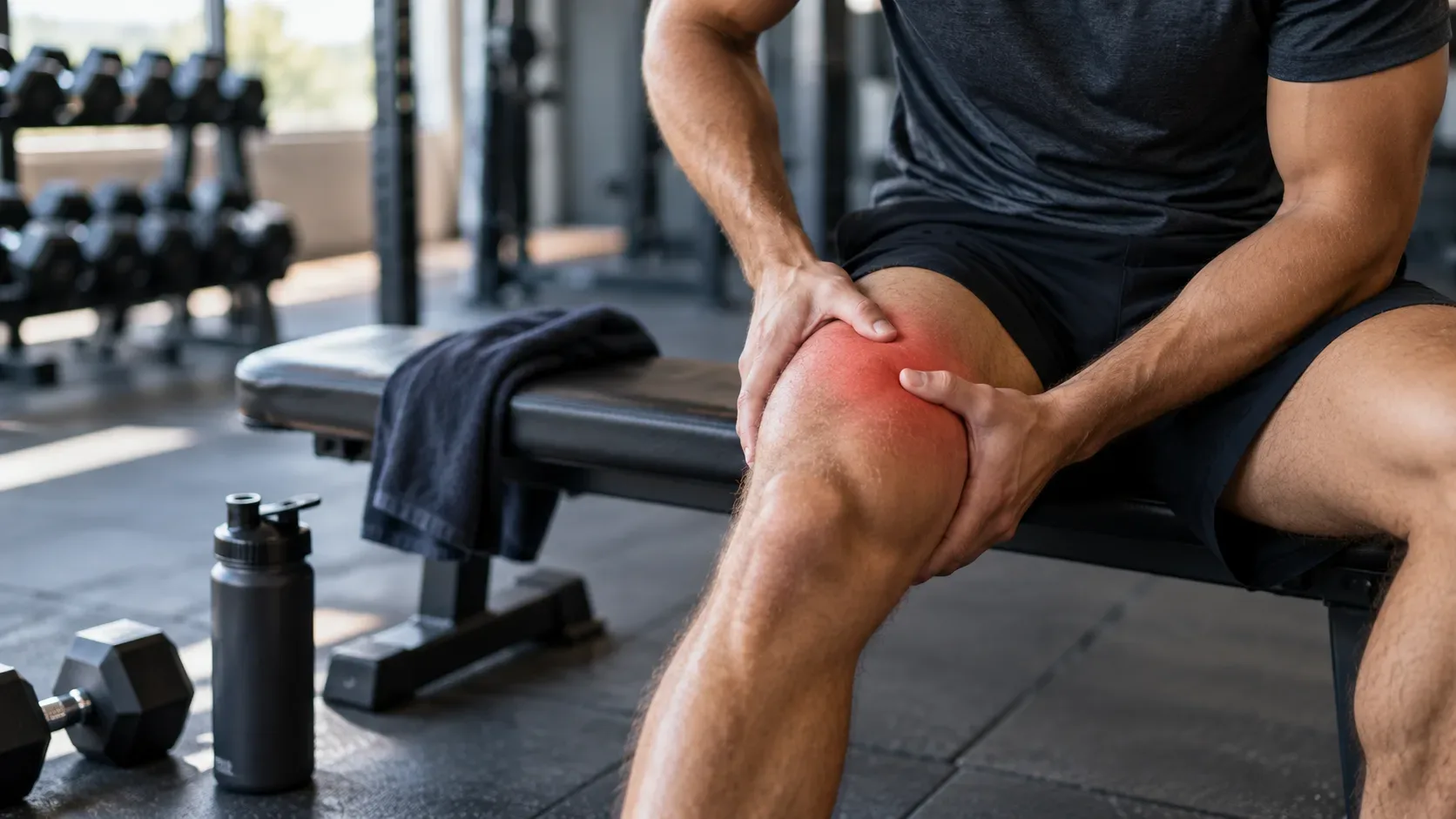
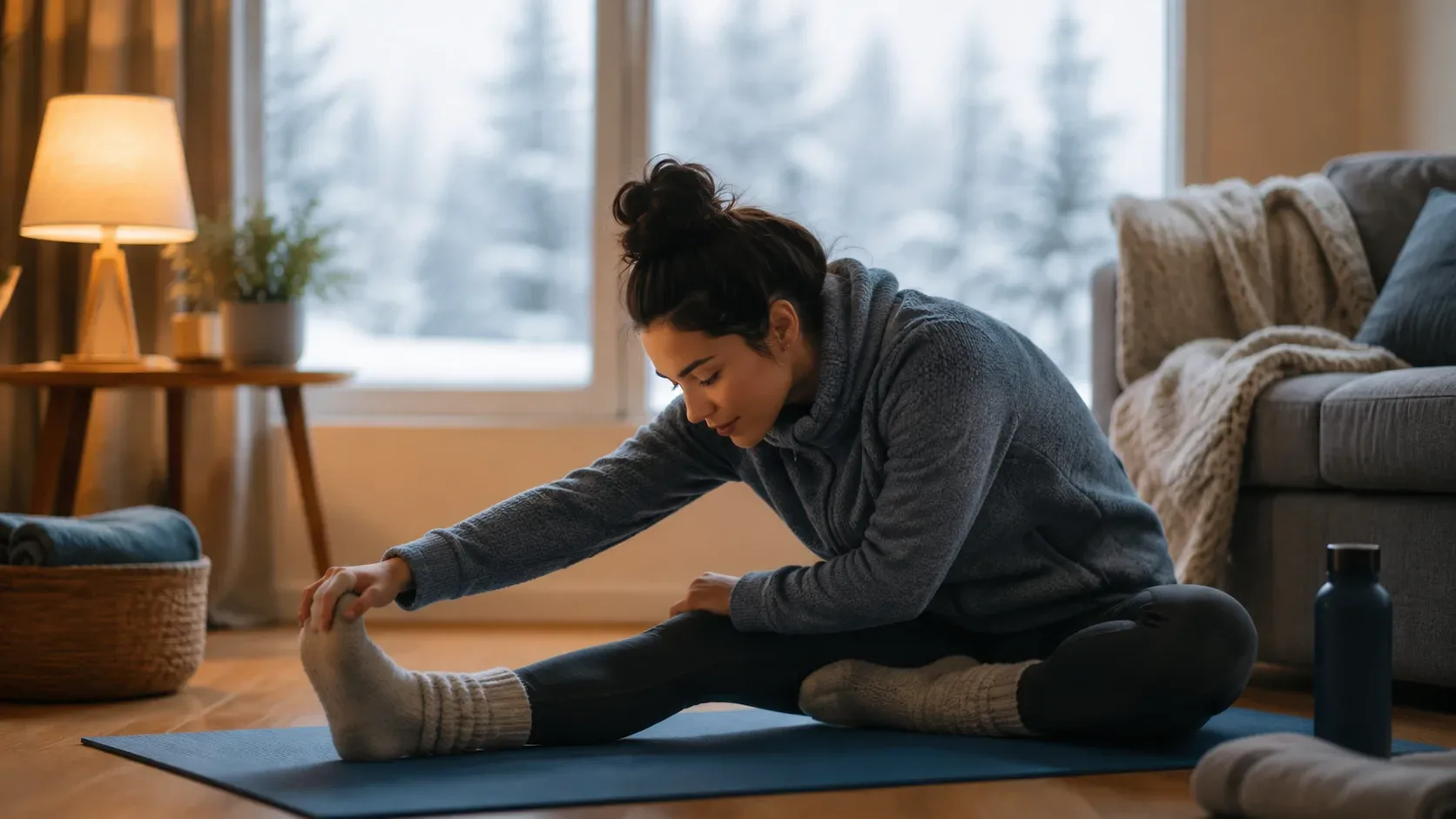
When the temperature drops, getting up later, avoiding the street and swapping movement for the couch may seem like the easiest choice. The problem isn't slowing down on a difficult day. He appears when the whole week becomes a wait for Saturday and the weekend begins to carry the obligation to make up for what wasn't done.
The goal of difficult days is not to break records; is to preserve the habit.
To achieve this, this guide proposes a simple plan: set aside a few moments throughout the week and choose, in each of them, a version of 5, 15 or 30 minutes. Five minutes keeps the commitment alive. Fifteen creates a possible session in a tight routine. Thirty help move toward weekly recommendations.
This plan is an organizational tool, not an individual training prescription. People with a clinical condition, pain, functional limitation, pregnancy, disability or long period of inactivity should seek appropriate guidance to adapt the type, intensity and progression of the activity.
The cold changes the plan, not the importance of the movement
In guidance published on May 26, 2026, the State Department of Health of Paraná recommended keeping the body moving during cold periods. For days with lower temperatures, the advice was to adapt activities to indoor environments or dedicate more attention to warming up before practicing outdoors.
This does not mean that everyone needs to follow formal training. The Physical Activity Guide for the Brazilian Population considers physical activity any voluntary movement with energy expenditure above that of rest. Walking, climbing stairs, dancing, cycling, walking, taking care of the yard and carrying out certain household tasks are possible examples. The guide also differentiates physical activity from physical exercise: exercise is planned and structured, while everyday movement can take place during leisure time, commuting, work, studies and at home.
For adults, the Brazilian reference is at least 150 minutes of moderate physical activity a week, or 75 minutes of vigorous activity, in addition to muscle strengthening activities on at least two days of the week. The World Health Organization provides a range of 150 to 300 minutes of moderate aerobic activity, or 75 to 150 vigorous minutes, for substantial health benefits.
These numbers are a public health reference, not a debt that needs to be paid off at once. The Brazilian guide itself informs that the activity can be divided into small blocks and summarizes this idea in an important message: every minute counts.
Why trying to make up for everything over the weekend often fails
Doing physical activity on Saturday or Sunday can contribute to the volume of the week. The weekend is not the villain. The problem is turning it into a punishment: sitting still for several days and then trying to do a much longer or more intense session just to erase the feeling of guilt.
For those who are starting, resuming or facing discouragement in the cold, this thought creates three barriers:
- the task seems too big;
- any unforeseen event over the weekend destroys the entire plan;
- the person starts to evaluate the week only by the accumulated total, ignoring the construction of the routine.
A more realistic alternative is to distribute short encounters with the movement. The Physical Activity Guide for the Brazilian Population recommends gradually increasing quantity and intensity, incorporating movement into daily life and identifying times that are most likely to be completed. Updated guidance from the US Centers for Disease Control and Prevention also highlights that any amount of activity provides some benefit and that the weekly total can be broken down into smaller chunks.
The gain from the minimum plan is not just in the calories burned or the minutes recorded. It's about reducing the number of decisions needed to get started.
The 5, 15 or 30 minute plan
Choose some times of the week in advance. When the time comes, don’t argue with yourself about whether you’ll have a “perfect” session. Just ask: is there 5, 15 or 30 minutes today?
| Available time | Function in plan | General examples |
|---|---|---|
| 5 minutes | Preserving commitment on a difficult day | Walk around the house, safely go up and down a flight of stairs, move arms and legs, dance to music, or take a brief active break |
| 15 minutes | Create a short, workable session | Walking, dancing, stationary bike, mobility, beginner-oriented activity or combination of comfortable movements |
| 30 minutes | Increase weekly volume | Continuous walking, adapted class, recreational activity, active commuting or other option compatible with the person's condition |
The suggestions are examples, not a required sequence. The type of movement must respect space, safety, experience, physical condition and any professional guidance.
The 5-minute version
The five-minute session exists for days when the barrier to entry is high: intense cold, late, tired or lack of motivation.
It does not alone replace the weekly recommendation. Its function is to prevent a bad day from being interpreted as complete abandonment. Instead of “I didn’t do anything today”, the person keeps the schedule, moves the body and preserves the connection with the routine.
Five minutes can also work as a start. After this period, you can stop without guilt or continue, if your body is comfortable and you have time available.
The 15-minute version
Fifteen minutes fits into a longer break, before showering, after work or while a meal is in the oven. The period may begin at a light pace, advance to a comfortable movement, and end with gradual deceleration.
There is no need to choose complicated activities. Walking in a safe place, dancing, following a practice suitable for beginners or performing movements already known may be enough to fulfill the day's appointment.
The 30-minute version
Thirty minutes in five days add up to the 150 minutes per week that appears as the minimum reference for adults in Brazilian guidelines, when the activity is of moderate intensity. This does not force anyone to reach that duration immediately.
The 30-minute version should be chosen because time and willingness allow — not because the person is trying to pay off an accumulated debt. Beginners may need smaller sessions and gradual progression before sustaining this period comfortably.
How to use the plan during the week
A simple way to apply the proposal is to define five recurring schedules, for example, from Monday to Friday. On each day, choose the version possible.
The account shows the difference between preserving the habit and reaching the weekly benchmark:
| Predominant choice in five days | Approximate total |
|---|---|
| 5 minutes a day | 25 minutes |
| 15 minutes a day | 75 minutes |
| 30 minutes a day | 150 minutes |
The 25 and 75 minute levels should not be presented as equivalent to the 150 minute recommendation. They can function as approaching steps, especially for those who were inactive or going through a phase of greater difficulty.
It is also possible to mix durations. A week might have two 5-minute days, two 15-minute days, and one 30-minute day. The total will be less, but there will be five opportunities to practice the behavior. In another week, more days may be 15 or 30 minutes.
The weekend is free for rest, active leisure or an additional session chosen with ease. It stops being the court that judges the week.
Reduce the barrier before the cold arrives
Motivation varies. Preparation is often more reliable. A few simple measures reduce the number of decisions between intention and start.
Set a probable time, not an ideal time
Choose a moment that already exists in your routine: after coffee, before showering, during a work break or right after arriving home. The Brazilian guide recommends identifying times with the greatest real chance of accommodating the activity.
Have an internal backup plan
When rain, wind, low temperatures or poor lighting make an outdoor activity uncomfortable or unsafe, replace it with an indoor option. This adaptation was reinforced by the Paraná Department of Health in its May 2026 guidance.
The backup plan must be decided beforehand: walking around the rooms, dancing, exercise bike, suitable guided activity or simple movements already known.
Make the start visible
Clothes, shoes, water bottle or organized space can act as reminders. The objective is not to set up a home gym, but to reduce small tasks that encourage postponing.
Record attendance, not just performance
In a diary, mark that the meeting took place and write down the duration: 5, 15 or 30. Avoid evaluating every day by speed, distance, weight or intensity. For those who are building regularity, showing up is part of progress.
How to perceive moderate intensity
The Physical Activity Guide for the Brazilian Population presents a practical reference: in moderate activity, breathing and heartbeat increase, and the person can talk with some difficulty, but cannot sing. At vigorous intensity, talking becomes very difficult.
This “conversation test” is a general indication and does not replace professional assessment. Medications, heart or respiratory diseases, pregnancy, conditioning, altitude and other conditions can alter the perception of effort.
For beginners, increasing duration and intensity at the same time can make adaptation more difficult. In general, it makes more sense to first consolidate the frequency and advance gradually, respecting body signals and professional guidance when necessary. The Ministry of Health and CDC recommend starting gradually, especially after periods of inactivity.
Care when moving in the cold
When the activity is carried out outdoors, preparation needs to consider temperature, wind, rain, floor and lighting.
The American Heart Association recommends using layers of clothing that help retain heat and keep the body dry. It also advises avoiding excessive exertion, taking breaks and staying hydrated, even when the sensation of thirst is less.
Before speeding up, start gradually. The Paraná Department of Health has reinforced warming up before outdoor activities in the cold, and the American Heart Association recommends progressively increasing heart rate and breathing at the beginning of the session, instead of going directly to the main effort.
Stop activity if you experience chest pain, fainting, severe or unusual shortness of breath, confusion, loss of coordination, or persistent tremors. Confusion, slow reactions, altered speech and loss of coordination are among the signs associated with a dangerous drop in body temperature and require immediate attention.
People with cardiovascular diseases may experience greater discomfort or risk during exposure to cold. Anyone who has a clinical condition, uses medications that influence exertion or body temperature, feels pain, has functional limitations or intends to resume activities after a long break should consult a qualified health or physical education professional.
Fever, shortness of breath, extreme tiredness or relevant respiratory symptoms should not be treated as a simple lack of motivation. The guidance from the Paraná Department of Health is to seek evaluation at the health service, with urgent care when there is shortness of breath or signs of worsening.
Movement is not a promise of immunity
The communication published by Paraná in 2026 addressed nutrition, hydration and physical activity in the context of care during the cold period. This does not authorize presenting exercise as guaranteed protection against flu, colds or other infections. The state guidance itself highlighted that vaccination remains a central measure to prevent serious forms of respiratory diseases.
Regular physical activity is part of a health promotion routine, but does not replace vaccination, clinical evaluation, treatment or prevention measures recommended by health authorities.
A minimal plan to save
- Choose five possible times of the week.
- Prepare one option outdoors and one indoors.
- At each time, select 5, 15 or 30 minutes.
- Start gradually and end by slowing down.
- Record attendance, without turning movement into punishment.
- Increase the time little by little, according to comfort and appropriate guidance.
- Use the weekend as a choice, not as payment for a debt.
Save this plan for the next cold days. Regularity does not require that every session be long. It starts when there is a version small enough to survive the hard days.