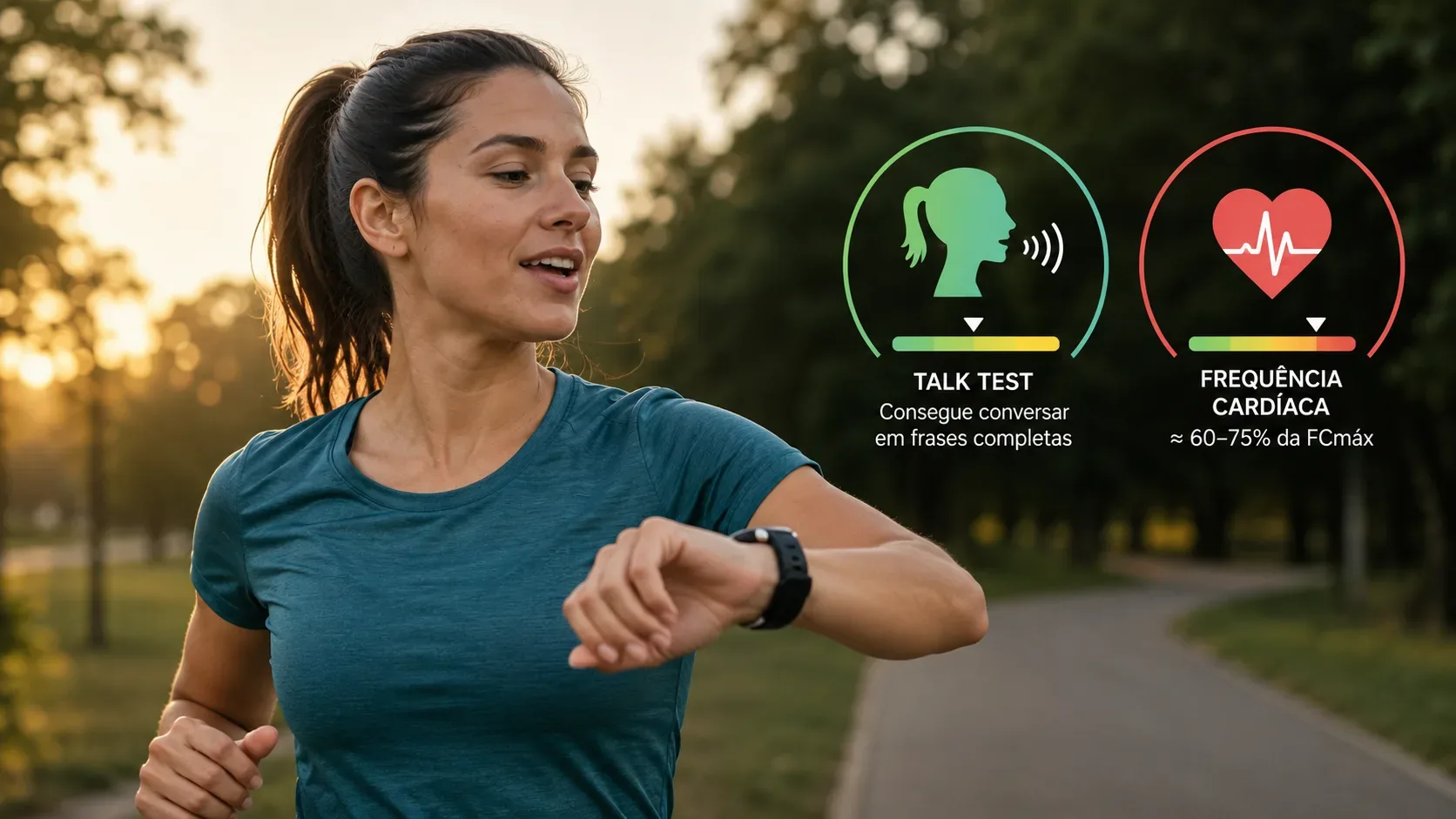

Incline walking and light jogging should not be compared by speed alone. Speed tells you how fast the treadmill belt or your movement is going, but it does not by itself show how demanding that session is for a particular person. Incline, fitness, movement economy, and individual response all change the cost of exercise. For a practical comparison, look at four things together: speed, incline, perceived exertion, and the talk test.
Why speed alone can be misleading
A relatively slow walk can become demanding when incline increases. In a study of 16 participants walking on a treadmill at 0%, 5%, and 10% grades, researchers examined how uphill grade changes metabolic cost and showed that incline is a relevant variable in explaining it. This does not create a universal formula for converting incline walking into running, but it shows why two workouts with very different speeds can produce efforts that are closer than the display suggests.
The reverse is also true. A run that looks slow in absolute terms can be vigorous for someone with lower fitness, while a well-trained person may experience it as moderate. The CDC distinguishes absolute intensity, based on the energy cost of the activity, from relative intensity, which reflects how demanding the activity is for the person doing it.
Use perceived exertion as the comparison point
A simple 0 to 10 scale helps compare different modes without requiring identical paces. In the CDC reference, 0 represents rest and 10 represents maximal effort. A relative effort of 5 to 6 corresponds to moderate intensity, while 7 to 8 is already in the vigorous range. The scale is not meant to convert one speed number into another. It answers a more useful question: how hard is this session for me?
If incline walking and light jogging both feel like a 5 or 6, they may be close in relative intensity even when their speeds are very different. If incline walking reaches 7 or 8, it may be more demanding than a light jog perceived as 5 or 6.
The talk test adds a simple cross-check
The CDC uses the talk test as a practical rule of thumb. At moderate intensity, a person can generally talk but not sing. At vigorous intensity, they can usually say only a few words before pausing for breath. The test does not replace clinical assessment or measure oxygen consumption, but it is useful for comparing effort across different activities.
For incline walking versus light jogging, the logic is straightforward: if in both you can talk but not sing, they may be in a similar relative-intensity range. If in one of them speech drops to only a few words, that session is imposing greater relative effort, regardless of the lower speed shown on the display.
Practical table: what to watch instead of pace alone
| Situation | Speed | Incline | Perceived exertion | Talk test | Likely interpretation |
|---|---|---|---|---|---|
| Comfortable walk | Lower than running speed | Low or moderate | 0 to 4, depending on the person | Easy conversation | Below the moderate-intensity threshold on this relative scale |
| More demanding incline walk | Can remain relatively low | Higher, increasing demand | 5 to 6 | Can talk, but singing is difficult | Moderate relative intensity |
| Controlled light jog | Higher than walking speed | Low or none | 5 to 6 | Can talk, but singing is difficult | May be comparable to incline walking in relative intensity |
| Very demanding walk or run | Any combination | Any combination | 7 to 8 or higher | Only a few words at a time | Vigorous relative intensity |
The table is descriptive, not a prescription for speed or incline. The same combination can produce different responses between people and even in the same person on different days.
Speed and incline are workload controls, not intensity labels
On a treadmill, speed and incline help define the external workload. Incline increases the mechanical and metabolic demand of walking, while higher speed generally raises demand and eventually changes the gait pattern into running. However, there is no universal equivalence such as “X km/h at Y% incline equals Z km/h running” that applies to everyone.
That is because relative intensity depends on fitness and individual response. Comparisons between treadmill and outdoor exercise can also shift with surface, wind, temperature, and familiarity with the equipment. For that reason, the display is best used as a record of the settings, while perceived exertion and the talk test help interpret what those settings actually meant.
What about METs?
METs are useful for classifying the absolute energy cost of activities. The 2024 Compendium of Physical Activities provides standardized values for hundreds of activities and uses 1 MET as the conventional resting reference. These tables are important for research and public health, but they do not replace the relative intensity experienced by a specific person.
In other words, two activities can have different absolute classifications and still produce similar relative effort in different people, or in the same person under different conditions. If the question is which session “felt harder,” perceived exertion plus the talk test usually answers that question more directly than speed alone.
How to compare two sessions without turning the process into a prescription
- Record speed and incline. They describe the external workload used.
- Give the effort a 0 to 10 rating. Compare the overall sensation, not only the legs or breathing.
- Notice your speech. Easy conversation, talking but not singing, or only a few words are practical signs of different intensity levels.
- Compare patterns, not isolated numbers. If two modes produce the same perceived exertion and the same speech pattern, they may be close in relative intensity even at different speeds.
- Do not turn one session into a formula for another. The result describes that person and that context, not a universal equivalence.
What can change the comparison
Fitness, fatigue, heat, sleep, surface, technique, treadmill familiarity, and some health conditions can change the response to the same settings. Medications can also alter heart rate, which is why heart rate does not need to be the only criterion and is not used here as an equivalence rule.
If exercise causes chest pain, fainting, significant dizziness, or unusual shortness of breath, the priority is no longer comparing intensity. Stop the effort and seek appropriate medical guidance.
Comparison in one sentence
To compare incline walking with light jogging, treat speed and incline as workout data, but use perceived exertion and the talk test to interpret relative intensity. A slower walk can be as demanding as, or more demanding than, a light jog if the incline raises the effort enough. The useful question is not which mode is “more intense” by definition, but which one demands more from you under the conditions being observed.