Tropicália ou Panis et Circencis arrived in 1968 as something greater than a collection of good songs. The LP included Caetano Veloso, Gilberto Gil, Gal Costa, Nara Leão, Tom Zé, Os Mutantes, poets Torquato Neto and José Carlos Capinam and conductor Rogério Duprat on the same project. The result condensed into an album an aesthetic proposal that had already been appearing at festivals, in individual recordings and in other areas of Brazilian culture. Therefore, more than just an MPB classic, it went down in history as the Tropicalismo manifesto.
On August 7, 2026, there is a historical detail that deserves precision. Jornal da USP records August 7, 1968 as the date on which the album was released on the market, which supports the 58-year anniversary. Rádio Senado, however, reports that the album hit stores in July of that year. Thus, August 7 is a date adopted by an important academic-cultural source to celebrate the launch, but there is no absolute uniformity among the references consulted.
A manifesto that didn't need to look like a pamphlet
Calling Tropicália or Panis et Circencis a manifesto does not mean that the album presented a political program organized into topics or a closed doctrine. His manifesto was in his own way of making music.
Researcher Pedro Duarte treats the LP as the synthesis of an avant-garde movement in which melodies, instruments, arrangements, clothes and image were part of the same aesthetic and cultural positioning. The album didn't just talk about transformation: it put transformation to work within the songs.
This difference helps explain its strength. Instead of establishing a rigid border between what would be authentically Brazilian and what would come from abroad, Tropicalismo worked precisely with the friction between references. A study published by the Universidade do Extremo Sul Catarinense describes this procedure not as a simple assimilation of foreign influences, but as a critical review of these languages based on the Brazilian historical, social and cultural reality.
The Brazil that appears on the album, therefore, is not homogeneous. It is contradictory, popular and erudite, traditional and modern, religious and pop, local and cosmopolitan at the same time.
The collective character was part of the message
Another reason for the album to function as a manifesto lies in its shared authorship.
Caetano Veloso and Gilberto Gil occupied central positions in the tropicalist articulation, but Tropicália ou Panis et Circencis was not released as an album by just one of them. The project also brought together Gal Costa, Tom Zé, Nara Leão and Os Mutantes, as well as Torquato Neto, Capinam and Rogério Duprat. Instituto Moreira Salles highlights this meeting by dedicating an entire series to the analysis of the album and its 12 tracks.
This matters because the idea of Tropicalismo gains a kind of collective demonstration in the LP. Different voices, composers and references coexist within the same object. There is no need to erase differences to create unity.
The song list itself reveals this movement. The repertoire includes “Miserere Nobis”, “Coração Materno”, “Panis et Circencis”, “Lindonéia”, “Parque Industrial”, “Geleia Geral”, “Baby”, “Três Caravelas”, “While Seu Lobo Não Vem”, “Mamãe, Coragem”, “Bat Macumba” and the “Hino do Senhor do Bonfim”. The Instituto Gilberto Gil record confirms this 12-track lineup.
More than the variety itself, what matters is how these pieces are brought together. A song by Vicente Celestino can share space with pop experimentation; religious references coexist with images of consumption and modernization; lyricism, satire and estrangement appear within the same path.
Rogério Duprat helped transform shock into language
Rogério Duprat's arrangements are fundamental to understanding why the album's mixes do not sound like a simple collection of references.
Duprat participates in the project as a bridge between avant-garde music procedures, orchestration, popular culture and pop language. Jornal da USP highlights its arrangements by presenting the album as the collective work that gave identity to the tropicalista movement.
Instead of softening contrasts, arrangements often let them emerge. The shock is part of the proposal. It is precisely in this coexistence between elements that seemed to belong to incompatible worlds that Tropicalism found a way to discuss Brazil itself.
The “general jelly” associated with movement does not mean randomly mixing everything together. There is selection, montage, irony and displacement. Known elements reappear in new contexts and, when contexts change, they also change meaning.
The criticism of the album went beyond institutional politics
Tropicália or Panis et Circencis emerged during the Brazilian military dictatorship, but reducing the album to a direct response to the regime also diminishes its scope.
In a study published by the historical magazine CLIO, Bruno Sanches Mariante Silva and Jessica Yohana Gonçalves observe that tropicalist criticism went beyond the repressive forces of the State and achieved musical, aesthetic, behavioral and social conservatism. The authors also classify the LP as a manifesto album linked to the opening of Brazilian music to new cultural dialogues.
This breadth helps to understand why the album continues to be debated decades later. Their dispute was not just about which political position should appear in a letter. It also involved questions such as: what could enter Brazilian popular music? Would an electric guitar diminish the Brazilianness of a song? Could so-called bad taste be artistic material? Were mass culture and tradition necessarily enemies?
Tropicalism responded to these tensions by placing the elements side by side, without seeking a comfortable purity.
The cover also participates in the manifesto
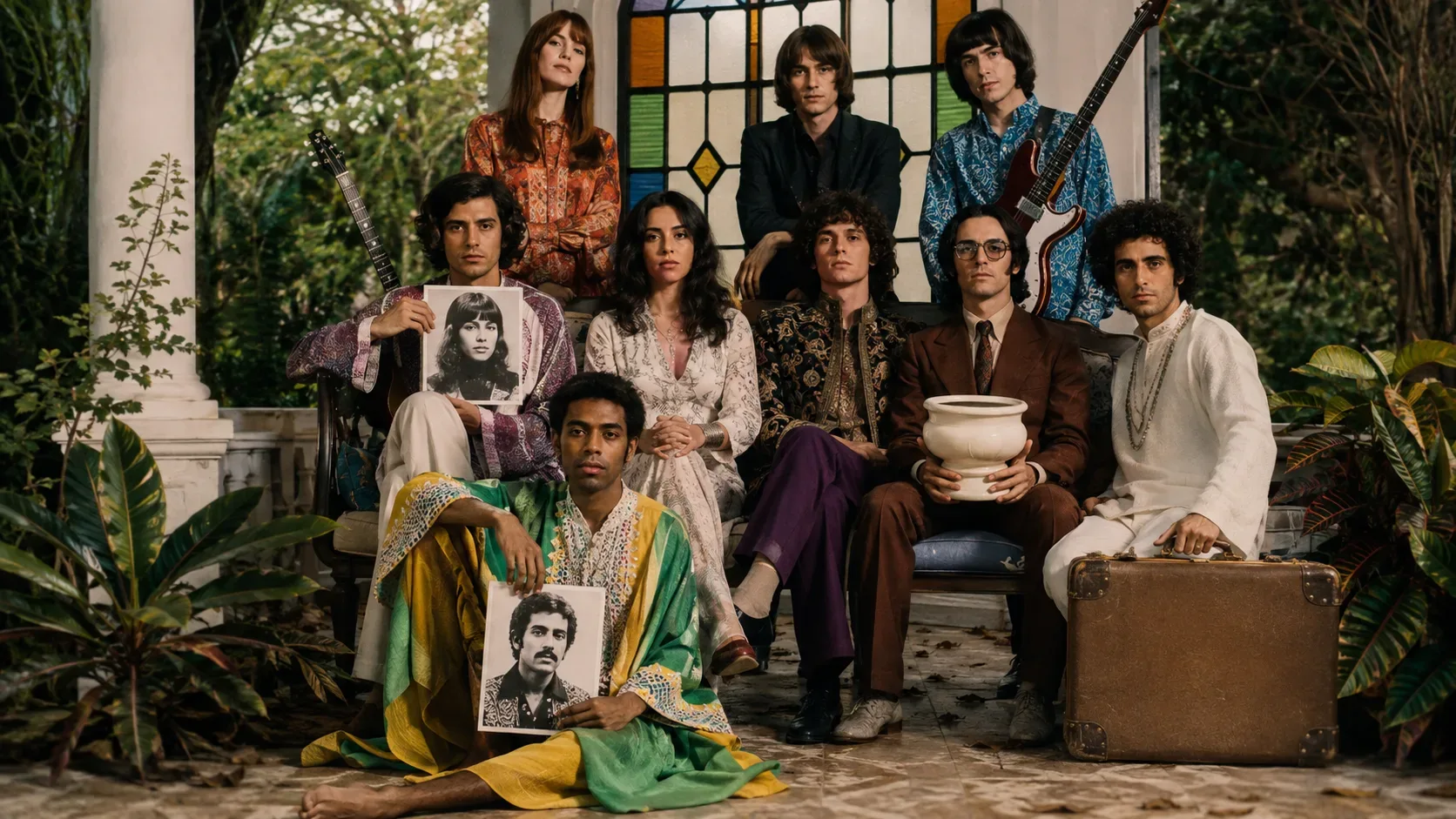
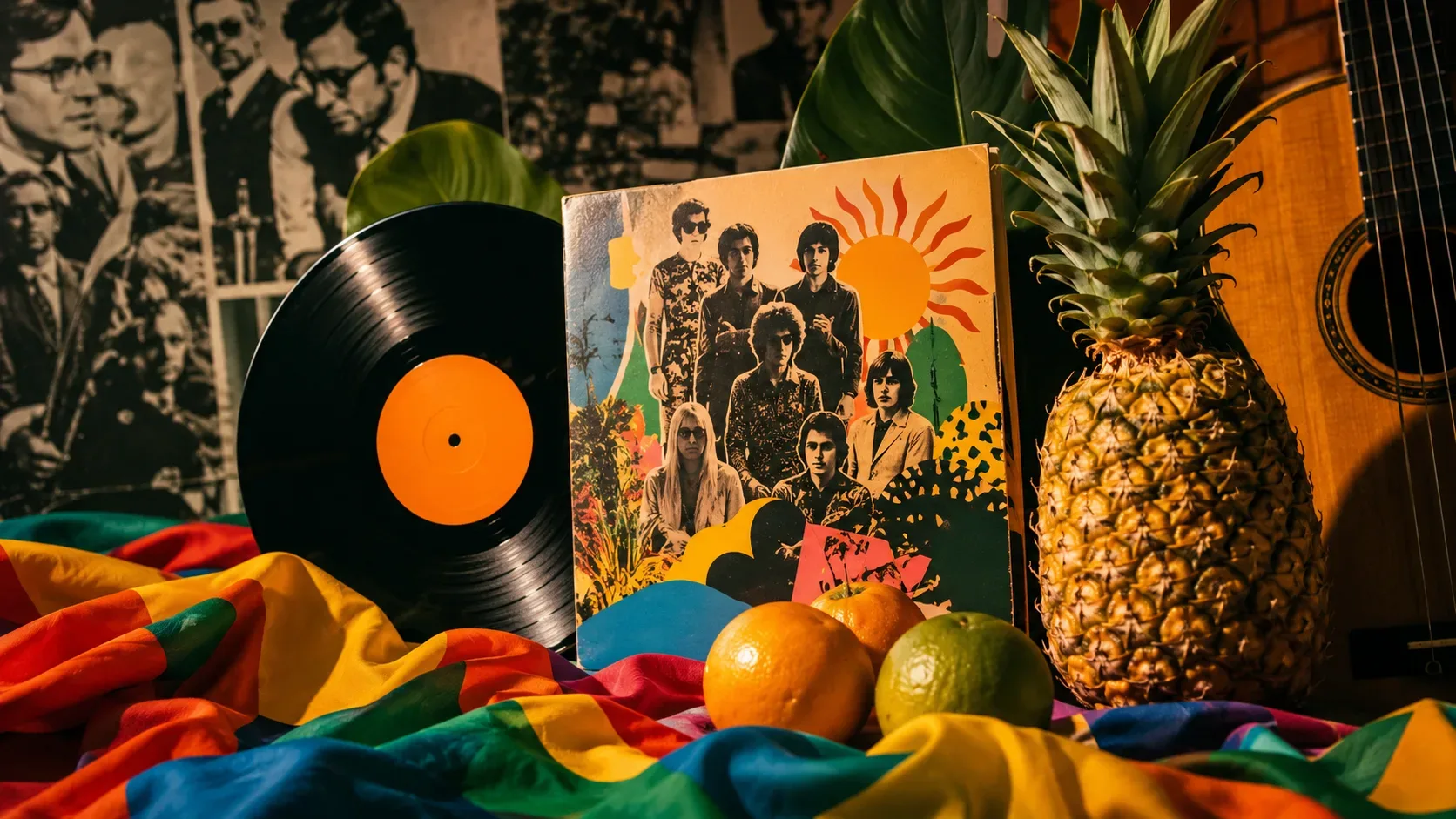
The visual dimension reinforces the collective character of the project. The Gilberto Gil Institute collection records the cover with the main members associated with the album and identifies Olivier Perroy as the photographer of the image produced in São Paulo.
This visual care is not a separate detail of the songs. In the reading presented by Editora Cobogó about Pedro Duarte's study, the tropicalist proposal permeated melodies, arrangements, instruments, clothes and the cover itself. The record functioned as a complete cultural object.
This is yet another reason why the word “manifesto” makes sense: the aesthetic position is not just hidden in the letters. She is in the mode of bringing together artists, organizing sounds and presenting herself visually.
Why the album still sounds like a statement of principles
Fifty-eight years after the August 7th date adopted by Jornal da USP, Tropicália ou Panis et Circencis remains relevant because its main invention does not depend on a specific sound fashion.
The album proposes a way of working with culture: absorbing references without submission, placing tradition and novelty in productive conflict, refusing easy divisions between sophisticated and popular and treating Brazilian contradictions as a matter of creation itself. Subsequent studies continue to find issues linked to cultural identity, counterculture and the formation of Brazil in the album.
That's why calling it a manifesto album says more than classifying it simply as a tropicalist collection. The LP did not just document a movement that already existed. He helped give recognizable form to what Tropicalismo wanted to do.
To listen to it today, a good choice is to abandon the logic of the isolated tracks for a few minutes and follow the entire album, in order. The approximations, contrasts and changes in atmosphere make it clearer what those 12 songs were proposing together.