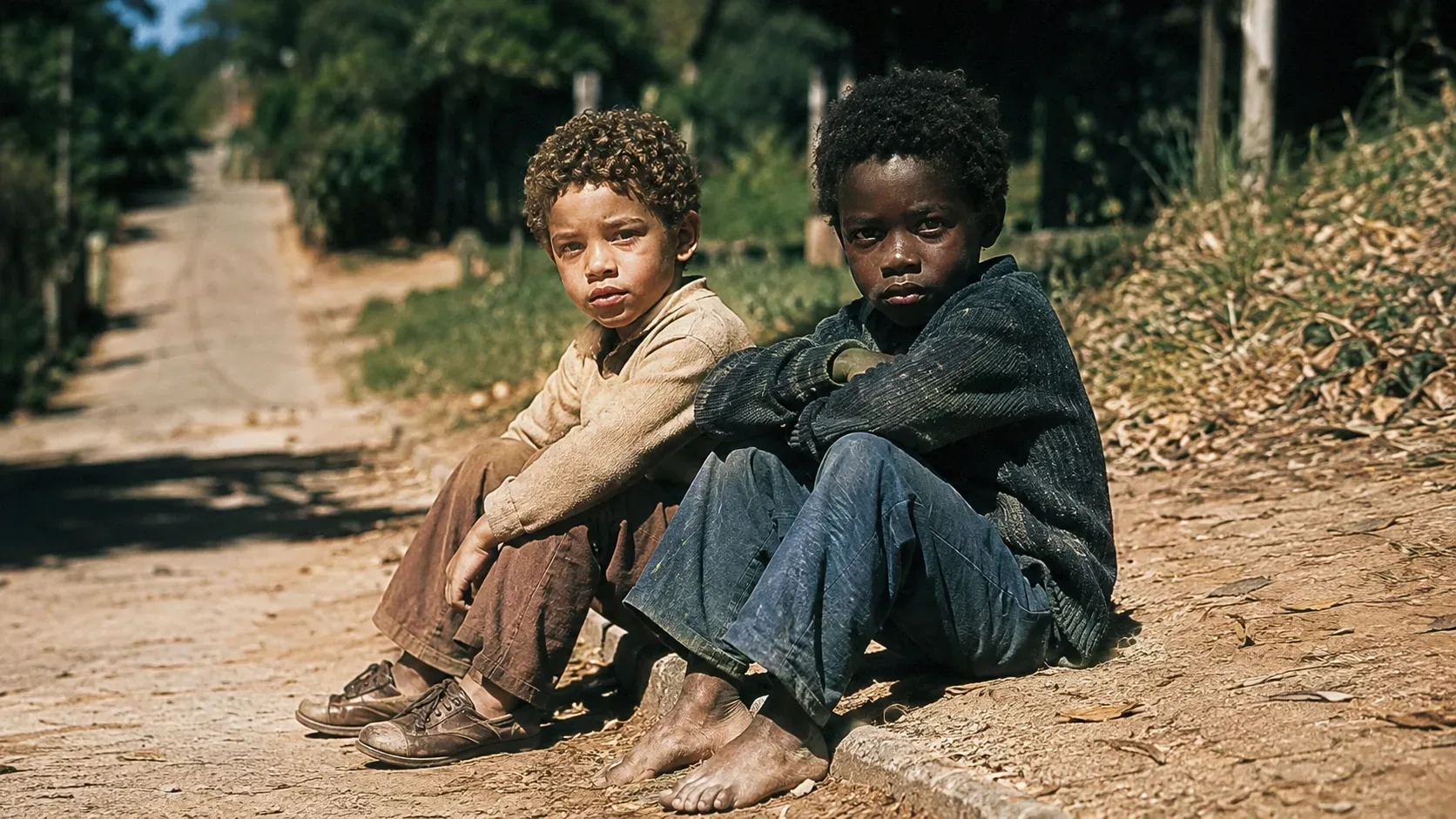
The boys on the cover of Clube da Esquina are José Antônio Rimes, known as Tonho, and Antônio Carlos Rosa de Oliveira, known as Cacau. They were childhood friends in the rural area of Nova Friburgo, in Rio de Janeiro state, when they were photographed in 1971 by Carlos da Silva Assunção Filho, better known as Cafi. The image became the cover of the double album by Milton Nascimento and Lô Borges released in 1972. For decades, the children's identities remained outside public knowledge, helping fuel the myth that the photograph showed Milton and Lô themselves as boys.
That mystery was cleared up in March 2012. For a 40th-anniversary feature on the album, the newspaper Estado de Minas sent reporter Ana Clara Brant and photographer Túlio Santos to Rio de Janeiro's mountain region. Starting with Cafi's imprecise memories, they carried reproductions of the cover, spoke with more than 50 residents and followed a chain of local clues that led to Tonho and Cacau. The original report, published by Uai/Estado de Minas, is the main source for reconstructing how the identification happened.
Who were Tonho and Cacau?
Tonho and Cacau grew up in the same rural area of Nova Friburgo. According to the 2012 report, both were born on the Mendes de Moraes family farm, where their parents worked as farm laborers. They were inseparable as children: they played soccer and marbles, swam in the Rio Grande and in waterfalls, and moved around the region together.
| Nickname | Full name | What the 2012 report recorded |
|---|---|---|
| Tonho | José Antônio Rimes | He was 47, worked at a supermarket in Nova Friburgo and lived in the city. He immediately recognized himself and Cacau when he saw the cover. |
| Cacau | Antônio Carlos Rosa de Oliveira | He was 48, lived in Rio das Ostras and worked as a gardener and painter. Years earlier, he had already suspected that he was the boy in the photograph after seeing the cover in a record store. |
The names are documented both in the Estado de Minas/Uai report published on March 18, 2012 and in later reporting that followed the story.
The photo was taken in 1971; the album came out in 1972
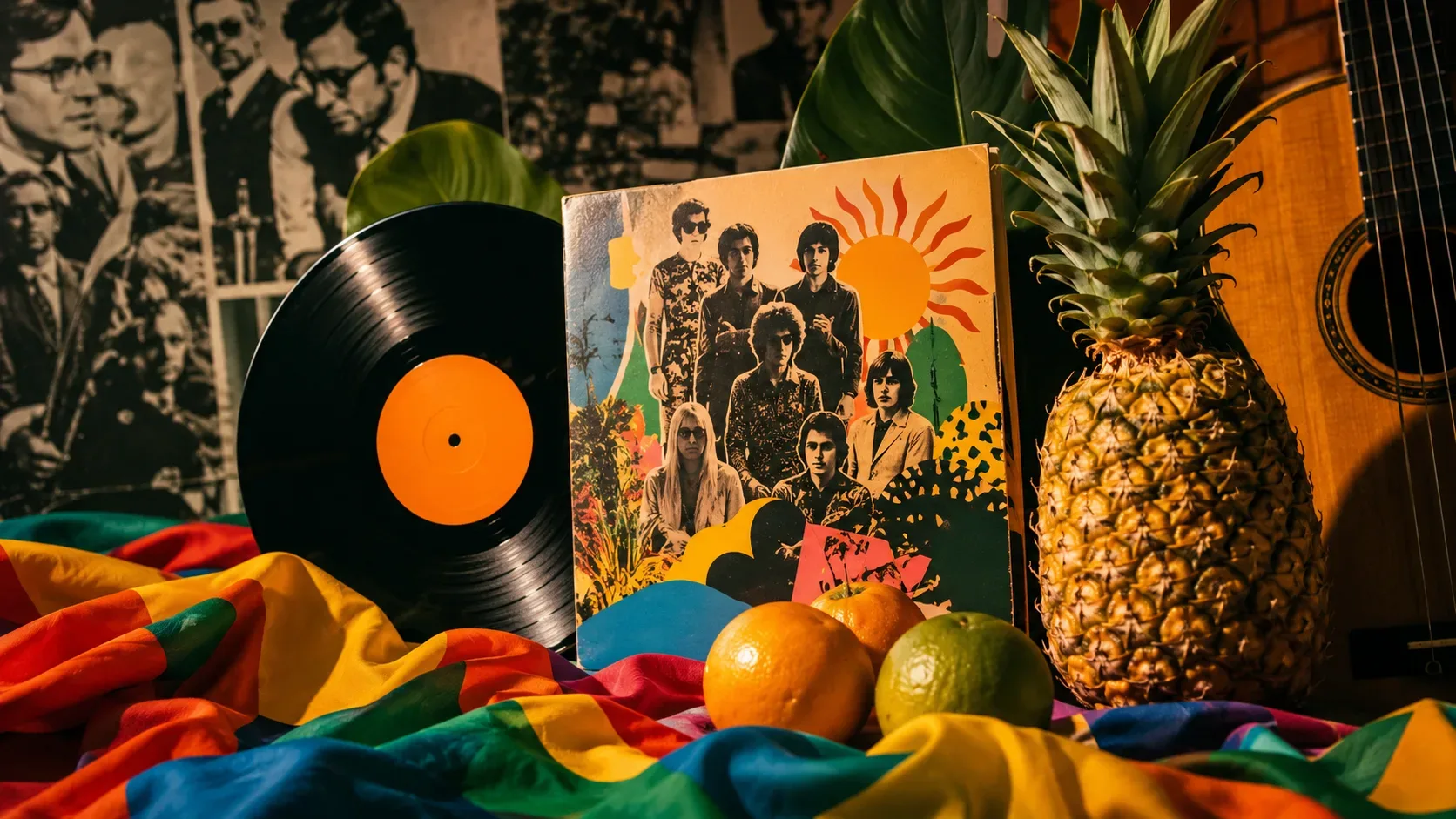
Clube da Esquina was released in 1972 by Odeon as a double album associated primarily with Milton Nascimento and Lô Borges, according to the Instituto Memória Musical Brasileira (IMMuB). The cover photograph, however, had been made the previous year.
Cafi told Estado de Minas that he was driving around the region in a Volkswagen Beetle with songwriter Ronaldo Bastos, taking photographs. When he saw the two boys, he made the image spontaneously. Tonho and Cacau were not hired models posing for an album-cover session; they were two local children caught in an everyday roadside scene.
That detail helps explain why the photograph feels so unstaged. The meanings later attached to it — rural life, childhood, friendship and Brazil — came from the editorial choice to use the image on the record, not from any preparation of the boys to represent those themes.
Why did so many people think they were Milton Nascimento and Lô Borges?
For many years, a popular interpretation held that the two children were Milton Nascimento and Lô Borges as boys. The association seemed intuitive: the two artists were the most visible names connected to the album, and the cover did not immediately explain who the children were.
But that reading was wrong. The 2012 report itself notes that the artists had already denied the idea. The boys were Tonho and Cacau, children from rural Nova Friburgo who had no musical role on the album.
The case is a good example of how a famous image can acquire an invented biography when information about the people in it is missing. Because their names were absent for decades, the simplest interpretation — “they are the artists as children” — could be repeated until it seemed like fact.
How Estado de Minas found them 40 years later
The search did not turn on one decisive clue. It was field reporting built through successive approximations.
- The starting point was Cafi. The photographer remembered making the picture near Nova Friburgo, on the way to a farm connected to Ronaldo Bastos's family, but he did not know the boys' names or how to find them four decades later.
- The team brought the album-cover image to the area. Ana Clara Brant and Túlio Santos showed it to residents and sought out people with long memories of the rural community.
- Local help expanded the search. A journalist in Nova Friburgo announced the search on local radio. Residents pointed the team toward families, workers and people who had known the area for decades.
- There were false leads and partial confirmations. The reporters checked people who turned out to have nothing to do with the image. A local florist, Erasmo Habata, recognized the lighter-skinned boy as a son of Laerte Rimes and suggested that he was Tonho.
- Elizabeth “Beth” Fernandes Silva and Fernando da Silva provided the decisive confirmation. According to the report, they had known the boys in that period and said they had no doubt the photograph showed Tonho and Cacau.
- Tonho was found in Nova Friburgo. Although the team had traveled for miles, he worked at a supermarket only one block from the reporters' hotel. When shown the cover, he immediately recognized himself and his friend.
- Cacau was called back from Rio das Ostras. He lived about 100 kilometers from Nova Friburgo and returned to the region to reunite with Tonho and recreate the cover pose.
The 2012 account says that at least 53 people played a direct or indirect role in the chain of clues that led to the two men.
What Tonho remembered about the day of the photograph
Tonho told the reporters that he remembered the moment. He said he was playing near a mound of dirt and a soccer field when the Beetle passed. Someone inside the car called to him, and he smiled toward the camera. He also remembered being barefoot and eating a piece of bread.
The discovery carried added weight because, according to him, his family had almost no childhood photographs of him. For Tonho, then, the famous cover was not only a public image he had not known about; it was also a rare visual record of himself as a child.
The 2012 story also records a striking contrast: at that point, Tonho said he did not know Milton Nascimento's work or Clube da Esquina itself. He recognized the photograph before he understood the cultural importance of the object on which it had circulated for decades.
What Cacau remembered — and what he had already suspected
Cacau did not say that he remembered the exact instant of the photograph. His memory was different. Years later, while living in Macaé, he saw the cover of Clube da Esquina in a record store and was struck by the serious-looking boy. He thought it might be him and ended up buying the CD.
So when the journalists arrived in 2012, Cacau was not seeing the image as something completely unfamiliar. He had already noticed the resemblance, but he had no public confirmation and did not know the full story of the photograph.
The difference between the two men's memories matters because it prevents the reunion from becoming an oversimplified tale. Tonho remembered the scene and immediately identified the pair; Cacau did not remember the click itself, but had already suspected his identity in the image years earlier.
They were not “lost” to each other for 40 years
Another detail often lost in shorter versions is that Tonho and Cacau did not disappear from each other's lives right after the photograph. The report says they remained very close until roughly age 20, when their families moved to different neighborhoods.
As adults, they saw each other less often because of work, family and distance, but they still met occasionally. What remained unknown for four decades was not their identity to each other; it was their identity to the public that knew the album cover.
That is why saying “the boys were found 40 years later” is accurate in a journalistic sense: the reporters located the people behind the image. It does not mean they were missing persons or that they had completely lost contact with each other.
The reunion recreated the cover, but the place had changed
After identifying both men, the team returned with Tonho and Cacau to the area where the original photograph had been made. The goal was to recreate the composition four decades later. Finding the exact spot, however, was difficult: the rural landscape had changed, and the region had been heavily affected by the January 2011 disaster in Nova Friburgo.
The new photograph therefore worked less as a frame-by-frame reproduction than as a visual bridge between two periods. The same friends appeared side by side again, now adults, carrying the memory of an image that had already lived a public life of its own for decades.
The lawsuit came after the rediscovery
Months after the 2012 report, Tonho and Cacau went to court alleging unauthorized use of their image and moral damages. Reporting by Folha de S.Paulo said that the lawsuit, filed in December 2012, sought R$500,000 and involved Milton Nascimento, Lô Borges, record company EMI and publisher Abril, among other procedural developments.
In August 2023, a first-instance ruling by the 1st Civil Court of Nova Friburgo held that the damages claim was time-barred. Coverage by UOL/Splash also reported that Tonho and Cacau's lawyers disagreed with the decision and said they would appeal.
The lawsuit is an important consequence of the rediscovery, but it should not be used to rewrite the identification story. The central documented fact remains that the two men learned the public scale of the use of their image — or had that history journalistically confirmed — in 2012, when Estado de Minas located them.
What is fact and what is myth in this story
- Fact: the boys are José Antônio Rimes (Tonho) and Antônio Carlos Rosa de Oliveira (Cacau).
- Fact: Cafi took the photograph in 1971 in a rural area near Nova Friburgo.
- Fact: the album Clube da Esquina was released in 1972.
- Fact: the 2012 reporting spoke with more than 50 people and relied on a local network to reach the two men.
- Myth: the boys on the cover were Milton Nascimento and Lô Borges as children.
- Common imprecision: saying the two men had no contact for 40 years. They remained connected to the same region and still met occasionally.
- Important nuance: Tonho said he had never known he was on the cover; Cacau said he had previously suspected it after seeing the record in a store, although without confirmation.
Why the discovery changed the way the cover is seen
Before 2012, the photograph could be read only as a symbolic image: two children on a dirt road, associated with childhood, friendship and rural Brazil. After their identification, the scene acquired names, biographies and specific memories.
Tonho and Cacau ceased to be anonymous figures on a celebrated cover and took their own place in the album's history. The value of the investigation was not merely solving a small curiosity; it restored biography to people who had already been in front of millions of listeners' eyes for 40 years.