Short answer: Charlie Brown Jr. didn't end in 2005. That year, Champignon, Marcão Britto and Renato Pelado left the formation that came from the Tamo Aí na Atividade phase. Chorão kept the name and reassembled the group with Thiago Castanho, Heitor Gomes and Pinguim. The idea of a “return” applies mainly to 2011, when Marcão and Champignon returned. The historic closure occurred in 2013, after Chorão's death, when the remaining members decided not to continue using the name Charlie Brown Jr. and created the band A Banca.
2005 was a formation break, not the end of Charlie Brown Jr.
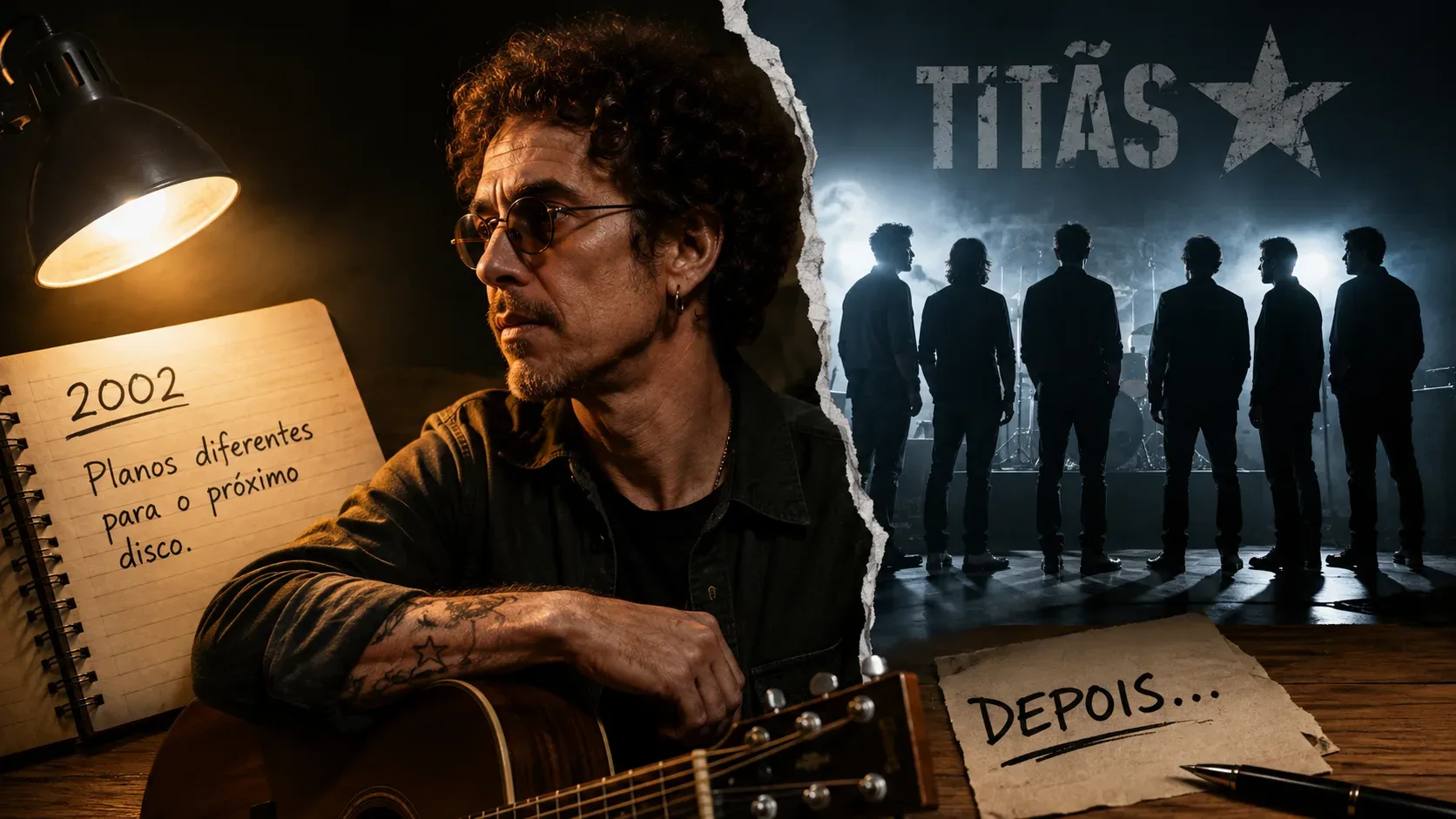
The starting point is 2004. Charlie Brown Jr. had released Tamo Aí na Atividade and remained one of the most popular rock bands in the country. In early 2005, however, news began to circulate that the group might be breaking up. The public version at that first moment was that the band was on vacation and that the musicians would take advantage of the break for personal projects.
The situation changed in April. Champignon, Marcão and Renato Pelado left the group. In statements released at the time, the three summarized the decision as the result of “divergence of professional ideas”. Chorão, in turn, stated that no one had been fired, said he was sad about his partners leaving and announced that he would continue singing with Charlie Brown Jr.
This detail solves a common confusion. The lineup that the public knew had broken up, but the name, agenda and activity of the band were not ended. Shortly afterwards, Chorão introduced Thiago Castanho, who returned to the group, bassist Heitor Gomes and drummer Pinguim. The new configuration debuted in April 2005.
The reason for leaving was more complex than simply
“fights”
The explanations given by those involved do not point to a single simple cause. The 2005 public note spoke of professional differences. In an interview with Jovem Pan magazine that year, Champignon denied that the separation had occurred due to musical differences and associated the breakup with a disagreement involving career management, in addition to demonstrating discomfort with the way the musicians' participation in building the band was publicly recognized. He also made it clear that there were particular aspects that he did not intend to detail.
Years later, Marcão described the episode in a less accusatory way. In a 2011 interview, when he was back, he spoke of an accumulation of disagreements that could have been resolved in another way. He said he made the decision to leave with his mood changed and that, looking back, he considered that choice a mistake.
The two lines are not identical, but they help to avoid a shallow explanation. There was personal exhaustion, professional issues and disagreements about internal relationships and recognition. What the sources do not allow us to say with certainty is that a single argument, a single person or a single financial problem alone was the cause of the breakup.
Why the band continued after 2005
Chorão was the only member who remained from that formation immediately before the breakup, but decided to keep Charlie Brown Jr. active. The return of Thiago Castanho, who had already been part of the band in the early years, also helped to preserve an important part of the group's musical identity.
Continuity was not just in the name. Still in 2005, Imunidade Musical came out, with the new line-up. Then came Ritmo, Ritual e Responsa, from 2007, and Camisa 10 Joga Bola À na Chuva, from 2009. Throughout this period there were other changes, including in the drums, but the band continued releasing albums and playing shows.
Therefore, saying that Charlie Brown Jr. “ended in 2005 and came back later” creates the wrong timeline. What ended in 2005 was a specific formation. The Charlie Brown Jr. project continued under Chorão's leadership.
2011: Marcão and Champignon return and the formation gets closer to the original
Reconciliation happened in stages. Marcão returned to playing with Charlie Brown Jr. in May 2011, during a performance at Viradão Carioca, in Rio de Janeiro. Shortly afterwards, his return was treated as definitive.
In July, it was Champignon's turn. Heitor Gomes' contract had come to an end and, according to a statement published by Chorão, he and Champignon had spoken, settled old differences and reviewed the way in which the 2005 separation had happened. Chorão also stated that Thiago Castanho, Bruno Graveto and Marcão agreed with the bassist's return.
The band was then very close to the classic formation: Chorão on vocals, Champignon on bass, Marcão and Thiago Castanho on guitars and Bruno Graveto on drums. Renato Pelado did not return. This distinction is important because the expression “original formation” appeared many times in publicity from that period, although the drummer from the initial phase was not in the reunion.
Popular Music Caiçara recorded the reunion
The return of Marcão and Champignon gained an important record in Caiçara Popular Music. The live project, recorded in Curitiba and Santos and released in 2012, was presented by Chorão himself as a record of the reunion.
This moment helps to understand why many people have the impression that “Charlie Brown is back”. It wasn't a band that had been officially closed for six years. It was the reunion of musicians closely associated with the group's best-known phase, after years in which Chorão had maintained the name with another formation.
The meeting did not erase the old problems
The 2011 reunion did not transform the relationship between Chorão and Champignon into a conflict-free coexistence. In September 2012, during a show in Apucarana, Paraná, Chorão publicly criticized the bassist and resumed accusations related to the 2005 breakup. Champignon left the stage before the end of the performance.
Two days later, the two released a reconciliation video. Chorão said that the matter had gotten out of control and acknowledged that it was an old, unresolved issue. Champignon also apologized. The band's publicist confirmed that he would remain in the group.
This episode is relevant because it shows two things at the same time: the wounds from 2005 still existed, but the argument from 2012 did not cause the band to end. Charlie Brown Jr. remained active and had commitments scheduled for 2013.
2013 was different: Chorão's death interrupted a band that was still active
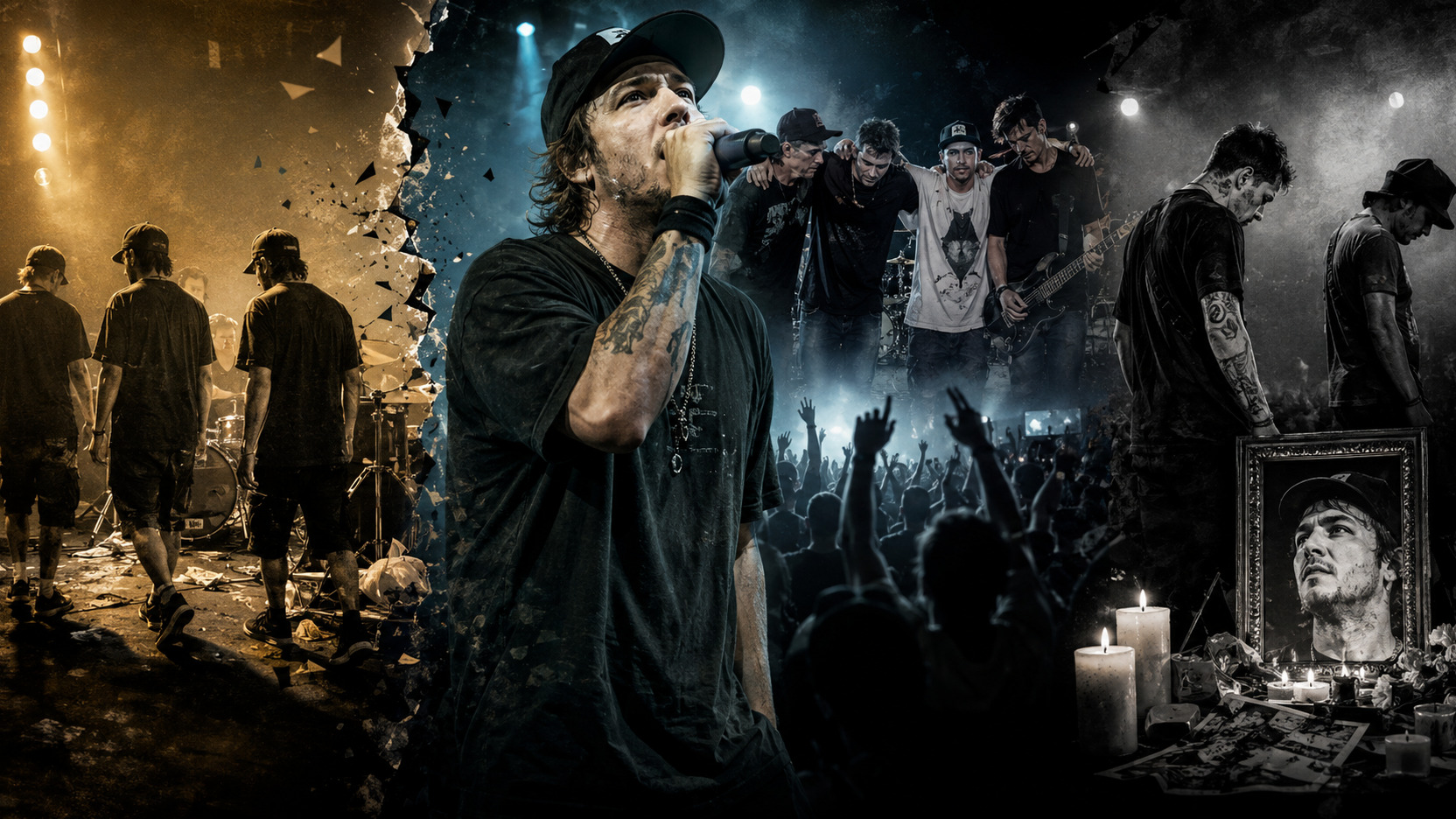
Chorão was found dead in São Paulo on March 6, 2013. At that time, Charlie Brown Jr. was not undergoing a disbandment announcement similar to the one in 2005. There were shows scheduled and new material in progress.
The death of the vocalist changed the nature of the issue. In 2005, it was possible to replace members and maintain the project because Chorão continued leading the band, writing lyrics, singing and maintaining its public identity. In 2013, precisely this central element disappeared.
Just over a month later, the remaining musicians announced that they would continue together, but under a different name. Champignon took over the vocals, Lena Papini joined on bass, and Marcão, Thiago Castanho and Bruno Graveto remained. The new group was named A Banca.
When explaining the decision, Champignon summarized the difference in one sentence: “Charlie Brown does not exist without Chorão”. Thiago Castanho also commented that the group knew it would be criticized both if it kept the name and if it created another project. The choice was to preserve Charlie Brown Jr.'s identity and pursue music in another way.
It is this gesture that marks the end most clearly. The members did not look for a replacement for Chorão and did not announce a new phase of Charlie Brown Jr. under the same brand. They recognized that that band, as it existed, was over.
The last album does not mean that the band came back after Chorão's death
La Familia 013, Charlie Brown Jr.'s last studio album, was released posthumously in October 2013. An essential part of the work had already been recorded before Chorão's death
and the album was later finished.
For this reason, the release should not be confused with a revival of the band. It works as the closure of a work that was in production when Chorão died. The Bank, on the other hand, was a new project and admittedly separate from the name Charlie Brown Jr.
The trajectory of 2013 had yet another loss: Champignon died in September, a few months after Chorão. This also ended A Banca's short experience in that configuration and reinforced the definitive nature of that year in the history of the original group.
So when did Charlie Brown Jr. really end?
If the question is about the classic formation, the big break happened in 2005, with the departure of Champignon, Marcão and Renato Pelado. If the question is about the existence of Charlie Brown Jr. as an active band, the milestone is 2013.
The most common mistake is to mix these two events. In 2005, Chorão preserved the name, reorganized the lineup and continued recording. In 2011, Marcão and Champignon returned and there was an important reunion, although Renato Pelado did not return. In 2013, Chorão's death led the remaining musicians to decide that Charlie Brown Jr. would not continue with another vocalist under the same name.
Thus, the timeline is more precise when it separates four stages: crisis and departure of members in 2005; continuity with new training; partial reunion of the classical formation in 2011; and the closure of Charlie Brown Jr. in 2013, followed by the creation of A Banca. This explains why the band had a major breakup in 2005 without actually breaking up at that time, and why 2013 became the end point of their active trajectory.