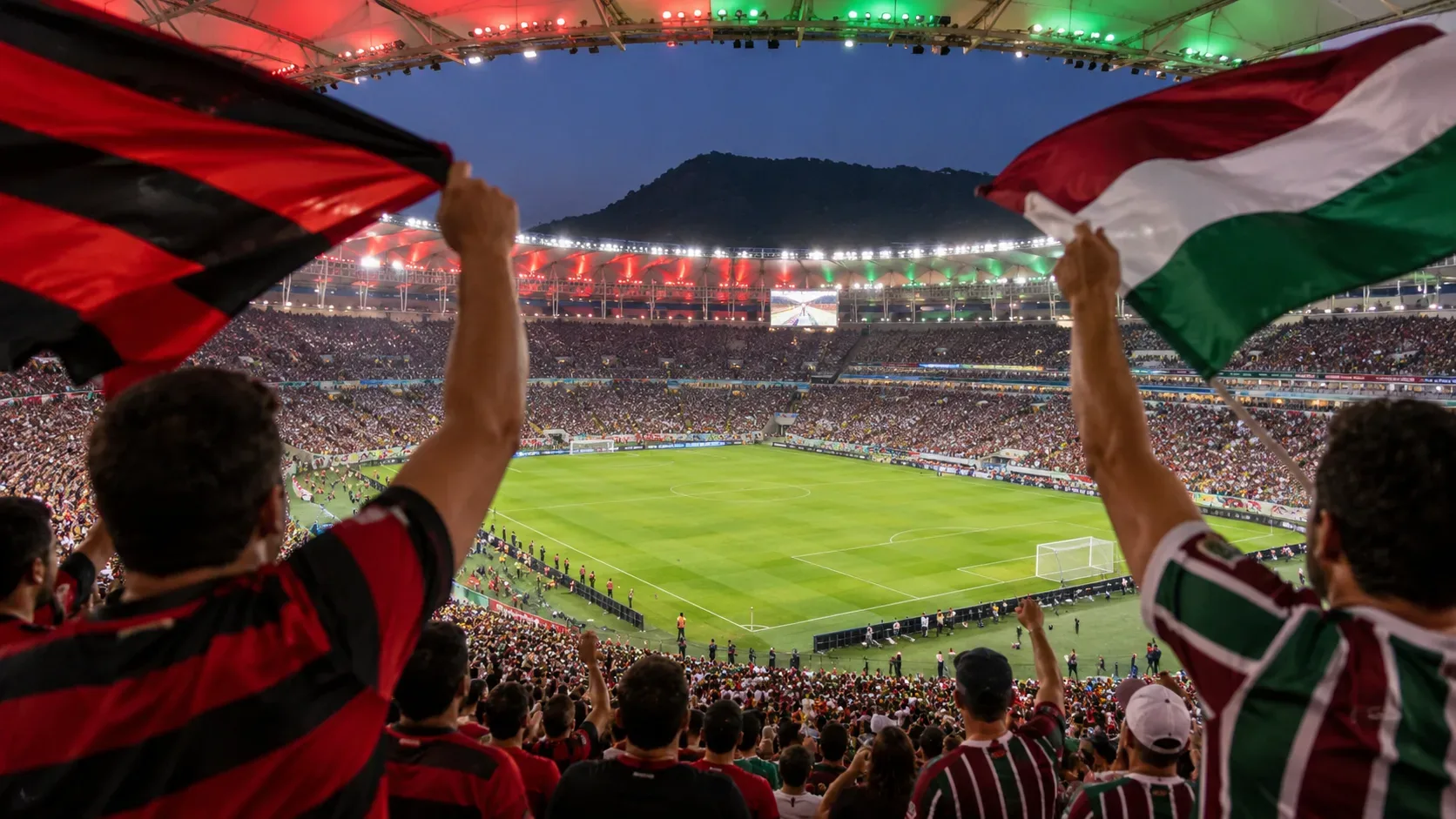

Cruzeiro and Flamengo begin deciding a place in the quarter-finals of the Libertadores on Wednesday, 12 August, at 9:30 pm, at Mineirão. The return is scheduled for August 19th, also at 9:30 pm, at Maracanã. The command accompanies the campaign in the group stage: Flamengo advanced to the top of Group A, while Cruzeiro finished second in Group D.
More than trying to resolve the classification in Belo Horizonte, the first game puts both teams in front of a risky choice. For Cruzeiro, attack enough to take advantage of Mineirão without offering Flamengo an open field. For the Rio team, threatening the opponent without turning the away match into a sequence of difficult-to-control transitions.
It is in this balance that four decisions can weigh more than any generic reading of favoritism.
How far should Cruzeiro accelerate in Mineirão
Cruzeiro's continental campaign has already shown two sides of an aggressive stance at home. The team beat Boca Juniors 1-0 at Mineirão and closed the group stage with a resounding 4-0 over Barcelona de Guayaquil. Between these games, however, they lost 2-1 to Universidad Católica in Belo Horizonte; Both Chilean goals came from heads, and the second was scored in the 49th minute of the final stage precisely at a time of strong pressure from Cruzeiro.
The point is not to conclude that pressing will be an error. Pressure could be one of the best ways for Cruzeiro to take Flamengo out of their comfort zone at Mineirão. The question is how many players will be behind the ball when the play is not over.
Flamengo has already demonstrated in this Libertadores the ability to accelerate when it finds space. In the first rounds of the group stage, they led the competition in direct attacks, with transitions that produced goals. This clipping is from the beginning of the tournament and should not be treated as a definitive portrait of the team, but it shows a resource that Cruzeiro needs to respect.
In practice, the best pressure for Cruzeiro is not necessarily the one that puts the most people in attack. It's the one that allows you to recover the ball early without letting the first Red and Black pass eliminate half of the defensive system.
Cruzeiro’s amplitude needs to be produced without opening the transition
The 4-0 over Barcelona offers a clue as to how Cruzeiro can transform breadth into clear chances. After just four minutes, Fagner arrived on the sidelines and crossed for Matheus Pereira to open the scoring. The team managed to push the opponent back and find space before the defense was reorganized.
The mechanism matters more than the name of who will occupy each position on August 12th. If the full-backs or wide players advance at the same time as Matheus Pereira approaches the area, Cruzeiro can create superiority and force Flamengo to defend lower.
The cost appears when possession is lost. The higher the player's width, the greater the need for a midfielder or defender to protect that sector immediately. Against an opponent capable of accelerating inside and on the flanks, this adjustment can decide whether a loss of the ball becomes just a defensive throw-in or an open field run towards the goal.
The lineup will help reveal what risk Artur Jorge intends to take, but the decision exists regardless of the names chosen: offensive breadth and transition protection need to work as parts of the same play.
How Flamengo occupies the area changes the type of match
Flamengo also has a relevant choice. Against Estudiantes, Pedro scored the winning goal in a 1-0 victory that confirmed qualification for the round of 16. In the following round, Bruno Henrique scored twice in a 3-0 victory over Cusco, a result that took the team to 16 points in Group A.
These results show that Leonardo Jardim has alternatives to attack the last line without depending on a single way of arrival. Against Estudiantes, the club itself highlighted the quality of the offensive transitions, the high pressure, the reversals and the exploration on both sides of the field.
In Mineirão, the number of players placed in or near the area will have an effect in both directions. More offensive presence increases the possibilities of second balls, crosses and short combinations. At the same time, it reduces the number of players available to control Cruzeiro's exit after a recovery.
Therefore, the question for Flamengo is not just who will be the center forward or which attackers will start. This is how many players Leonardo Jardim will be willing to place beyond the ball line when the match is still balanced.
If they opt for greater control, Flamengo may try to lengthen the game and transfer part of the pressure of the tie to Maracanã. Stacking players in the final third increases your ability to build an away advantage, but also allows for a more open match.
Aerial ball and final minutes cannot become details
The game against Universidad Católica left a specific warning for Cruzeiro: the two goals conceded at Mineirão came from the top, including the shot that decided the defeat in stoppage time. At the other end, Cruzeiro himself beat Boca Juniors at home with a goal in the 38th minute of the second half.
In a 180-minute qualifier, this magnifies the weight of seemingly minor decisions. A lateral free kick given unnecessarily, a corner in stoppage time or a substitution that disrupts the marking can change not only the score that night, but the mandatory behavior in the return.
The first game, therefore, does not end tactically when the clock reaches 80 minutes. Depending on the score, it is precisely in this section that managing territory and structure can be worth more than seeking an additional attack with many players.
For those who have the advantage, the issue will be to resist the temptation to turn control into excessive retreat. For those behind, it will be about attacking without allowing the attempted equalizer to produce an even greater disadvantage for Maracanã.
The scenario that each team wants to take to Maracanã
Cruzeiro tends to extract more from the first game if it manages to combine territorial pressure with sufficient protection against Flamengo's first acceleration. Strength in Mineirão can produce volume, but the history of the group stage itself shows that volume without control until the end does not guarantee safety.
For Flamengo, a favorable match involves going through the moments of greatest pressure without abandoning its ability to attack space. Leonardo Jardim's team has already shown in the competition both construction with possession and arrival in transition, which offers different paths depending on Cruzeiro's behavior.
The trip will hardly put an end to all the questions in the round. But you can determine which of them the confrontation will take to Maracanã: who will have to chase the score, who will be able to better choose the moments to accelerate and who will be forced to take risks that they would prefer to avoid.