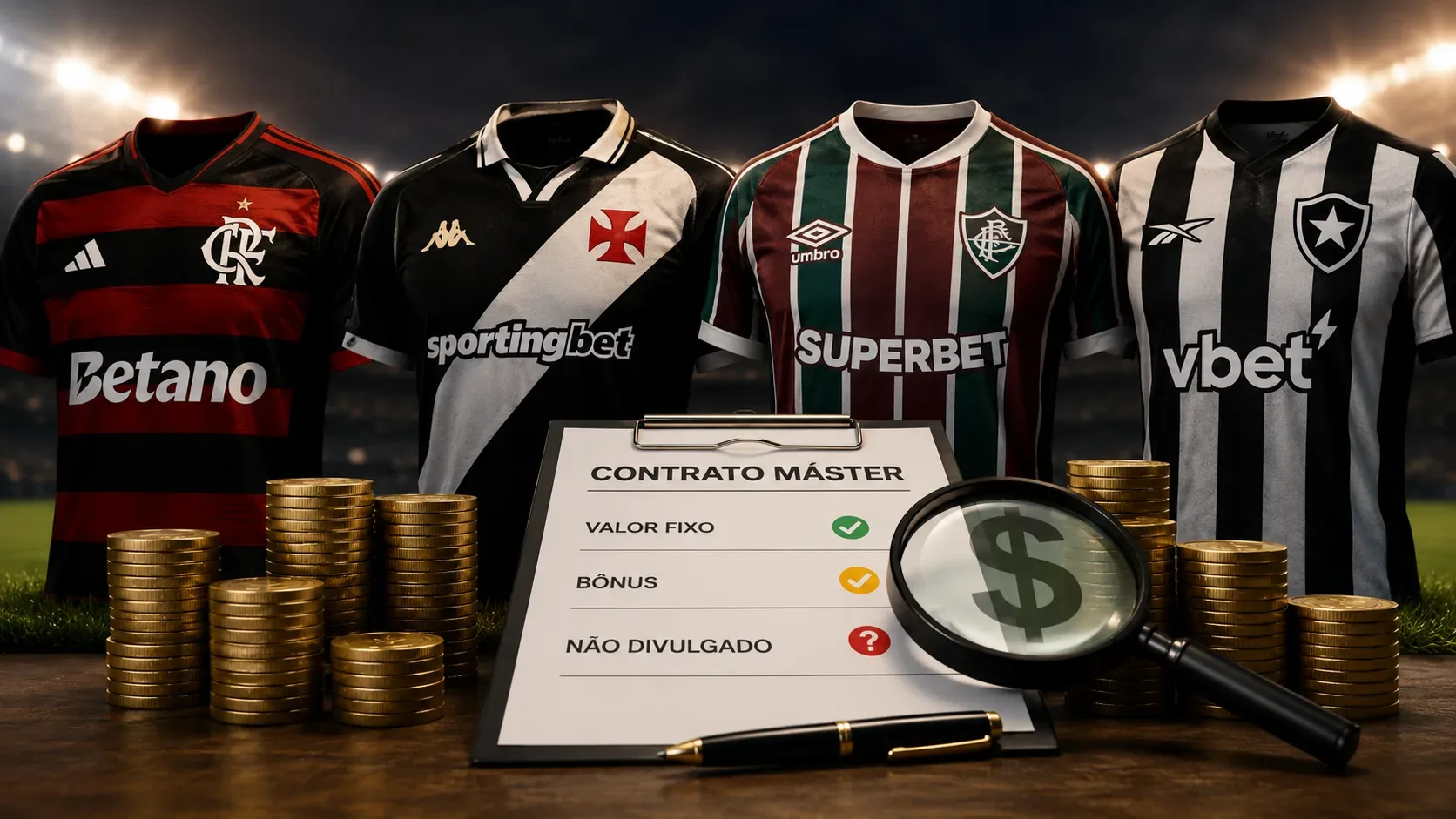
Short answer: Flamengo and Rio's other three major clubs appear across different broadcast ecosystems because their Brasileirão rights were sold through different commercial blocs for the 2025–2029 cycle. As of August 31, 2026, Flamengo is linked to Libra, while Fluminense, Vasco and Botafogo are listed under FFU, the current name of the former LFU. For viewers, the practical rule is even simpler: start with the home team. The home club holds the statutory audiovisual right, so its commercial package determines which companies may carry the match.
Libra and FFU are commercial blocs, not official halves of the Brasileirão
Libra and FFU operate as collective negotiating structures for media rights and other commercial properties. They are not sporting divisions of Série A, and the CBF did not assign clubs to two sides. Clubs joined different commercial arrangements, and each bloc sold the home-match rights of the clubs covered by its contracts.
In 2026, the name FFU — Futebol Forte União — replaced the former LFU label in current coverage. In February 2026, while reporting on the blocs' agreement with Brazil's antitrust authority Cade, ge listed Flamengo under Libra and Fluminense, Botafogo and Vasco under FFU. That is the commercial reason for Rio's current 1-versus-3 split; it is not a sporting alliance against Flamengo.
The home team is the key to understanding where a match is shown
Brazilian Law 14,205/2021 added article 42-A to the Pelé Law and states that the home football club owns the arena right. That includes the exclusive power to negotiate, authorize or prohibit the capture and transmission of match images.
That is why the platform can change when a derby reverses home field:
- Flamengo vs Vasco, with Flamengo at home: the match falls under the Libra home-game package sold exclusively to Globo for 2025–2029.
- Vasco vs Flamengo, with Vasco at home: the match enters FFU's inventory and may land in a Globo/Premiere package, the Prime Video exclusive slot, or the game shared by Record, CazéTV on YouTube and Premiere.
- The same logic applies to the Flamengo–Fluminense and Flamengo–Botafogo pairings.
This also fixes a common misconception: being an FFU club does not mean every home game is available on every FFU partner. The partners bought different packages, and the round-by-round allocation determines where a specific fixture is shown.
How Libra's 2025–2029 package works
Libra signed a deal with Globo covering the 2025 through 2029 editions of the Brazilian Championship. The agreement gives Globo exclusive rights across its platforms to home matches covered by the Libra contract. In practice, the ecosystem includes TV Globo, sportv and Premiere, according to each round's selections and schedule.
Libra's base revenue-sharing formula is:
| Component | Share |
|---|---|
| Equal split | 40% |
| Brasileirão performance | 30% |
| Audience | 30% |
In addition to fixed remuneration, the commercial structure includes a variable Premiere component. In a 2025 comparison, ge reported that Libra would receive 40% of Premiere's net pay-per-view revenue. Absolute annual amounts depend on contract conditions, the number of covered clubs, performance, audience, subscriptions and deductions, so the formula is more informative than treating one headline figure as every club's fixed “TV quota.”
What changed in the Flamengo–Libra settlement of May 2026
Flamengo had challenged the criterion used to split the audience portion. On May 5, 2026, the club and Libra announced an agreement ending the dispute. Flamengo's official statement confirms that this audience component represents 30% of the total fixed remuneration under the Globo contract through 2029.
The following day, Flamengo and Grêmio said that from 2026 through 2029 they would increase their shares of audience revenue compared with the previously proposed model. The official statements did not publish the full new formula. The supported conclusion is therefore that the dispute ended and both clubs' shares increased; assigning an undisclosed final individual percentage would go beyond the public evidence.
How FFU's 2025–2029 package works
FFU took a different approach: instead of concentrating all media rights with one buyer, it split its inventory among several partners. The Globo deal was designed around five FFU home matches per round, four exclusive and one non-exclusive; Amazon bought one exclusive Prime Video match; Record and YouTube/CazéTV acquired a shared match that is also available on Premiere. ge's breakdown of the former LFU contracts details this structure.
The Record and YouTube/CazéTV deals initially had shorter terms, but they were extended. In August 2025, Máquina do Esporte reported that both were renewed through 2029, aligning them with the cycle already agreed with Globo and Prime Video.
After the deductions provided by its structure, FFU's Série A distribution formula is:
| Component | Share |
|---|---|
| Equal split | 45% |
| Brasileirão performance | 30% |
| Audience | 25% |
There are other structural differences as well: FFU has commercial-intermediation fees, investor participation in future revenues for several clubs, and its own rules involving Série B. That is why a simple claim that “Libra pays X and FFU pays Y” can be misleading unless deductions, club count, audience and league position are considered.
Why Fluminense, Vasco and Botafogo can appear on Globo, Record, CazéTV or Prime Video
Because FFU sold different packages from the same pool of home-team rights. Globo is not absent from FFU; it bought the largest share of the available inventory. At the same time, Record/CazéTV and Prime Video have their own windows. A home match of Fluminense, Vasco or Botafogo may therefore:
- be exclusive to Globo platforms;
- be the shared Record and CazéTV match, also carried by Premiere;
- be the Prime Video exclusive match.
The specific assignment changes from round to round. To know where to watch, asking only “which bloc is this club in?” is not enough; you need the combination of home team + package selected for that fixture.
Practical summary for Rio's four major clubs
| Club | Bloc in the 2026 snapshot | When it is the Brasileirão home team | Bloc revenue formula |
|---|---|---|---|
| Flamengo | Libra | 2025–2029 rights concentrated with Globo | 40% equal, 30% performance, 30% audience |
| Fluminense | FFU | Match enters the inventory split among Globo/Premiere, Prime Video and Record/CazéTV | 45% equal, 30% performance, 25% audience |
| Vasco | FFU | Match enters the inventory split among Globo/Premiere, Prime Video and Record/CazéTV | 45% equal, 30% performance, 25% audience |
| Botafogo | FFU | Match enters the inventory split among Globo/Premiere, Prime Video and Record/CazéTV | 45% equal, 30% performance, 25% audience |
What can change before 2030 — and what remains contracted
The blocs continue to discuss a national league, and club affiliations have already shifted. That does not by itself mean every media contract signed for 2025–2029 is automatically rewritten. Institutional membership and already-contracted audiovisual rights are related issues, but they are not identical.
For supporters of the four Rio clubs, the safest reading through the end of this cycle is: Flamengo home matches follow the Libra architecture; Fluminense, Vasco and Botafogo home matches follow the FFU architecture; and the exact platform depends on the package selected for that match. For revenue, start with the 40–30–30 and 45–30–25 formulas, while remembering that audience, league position, variable commercial revenue and deductions make the final amount differ by club and by season.