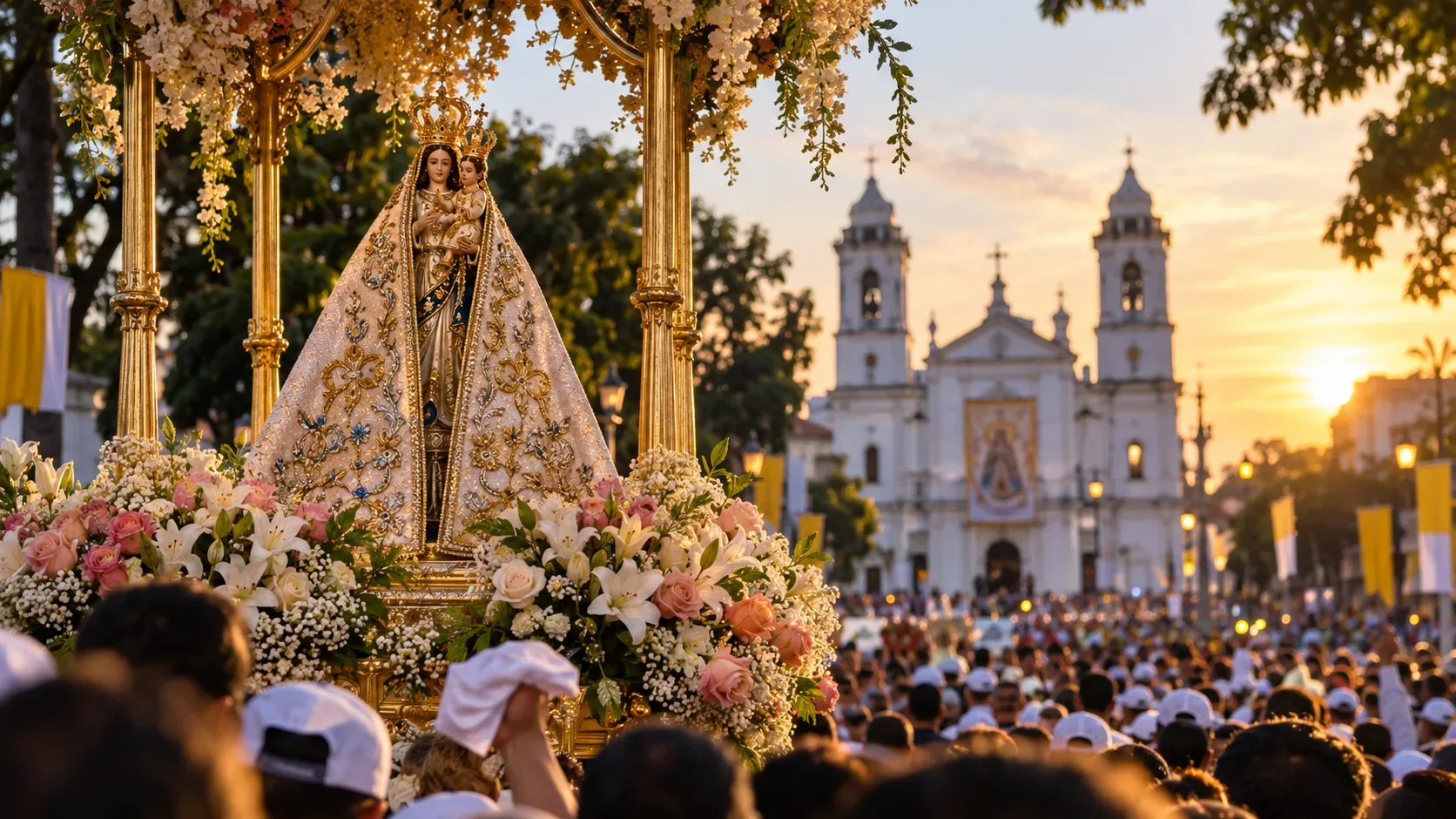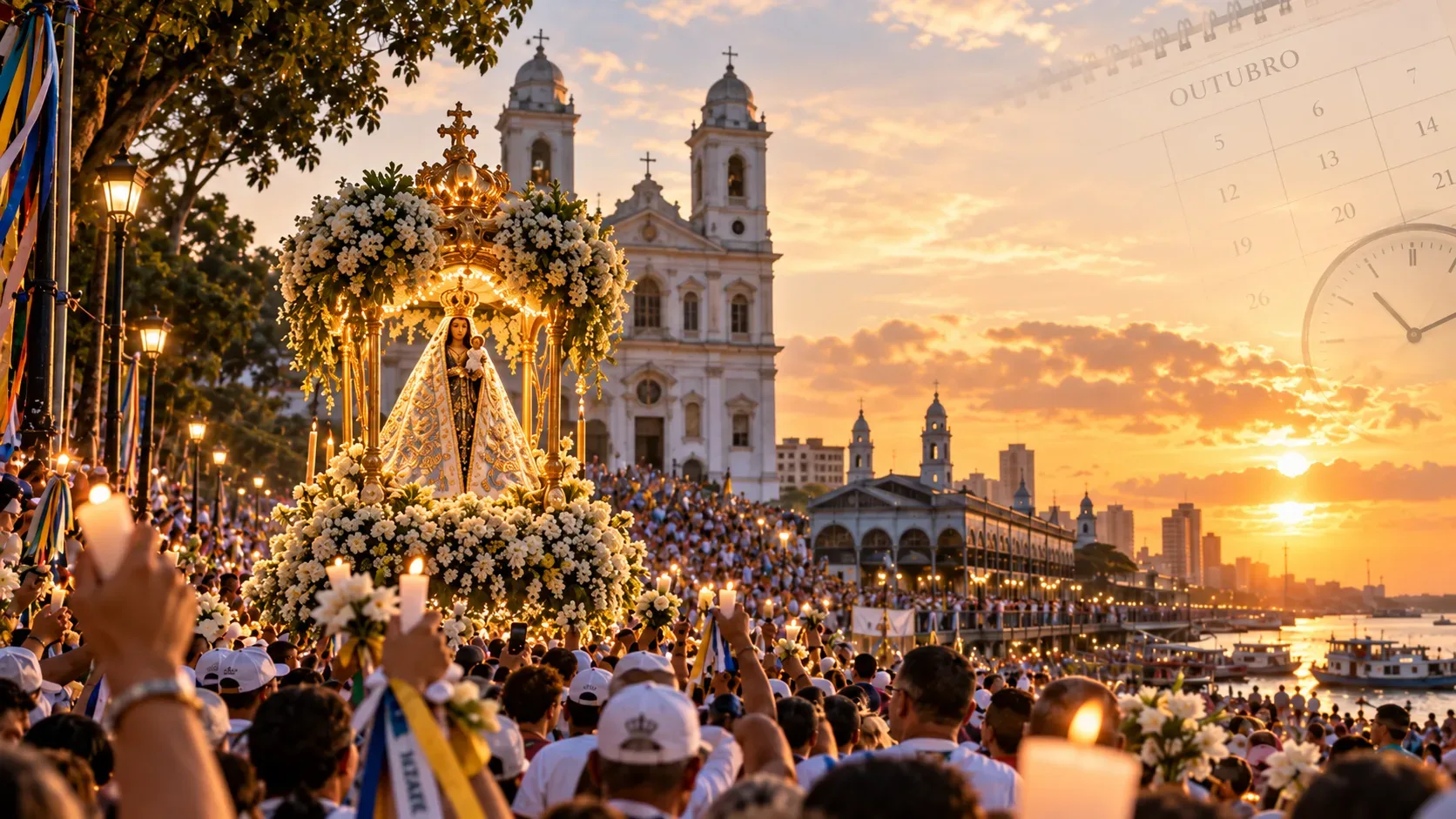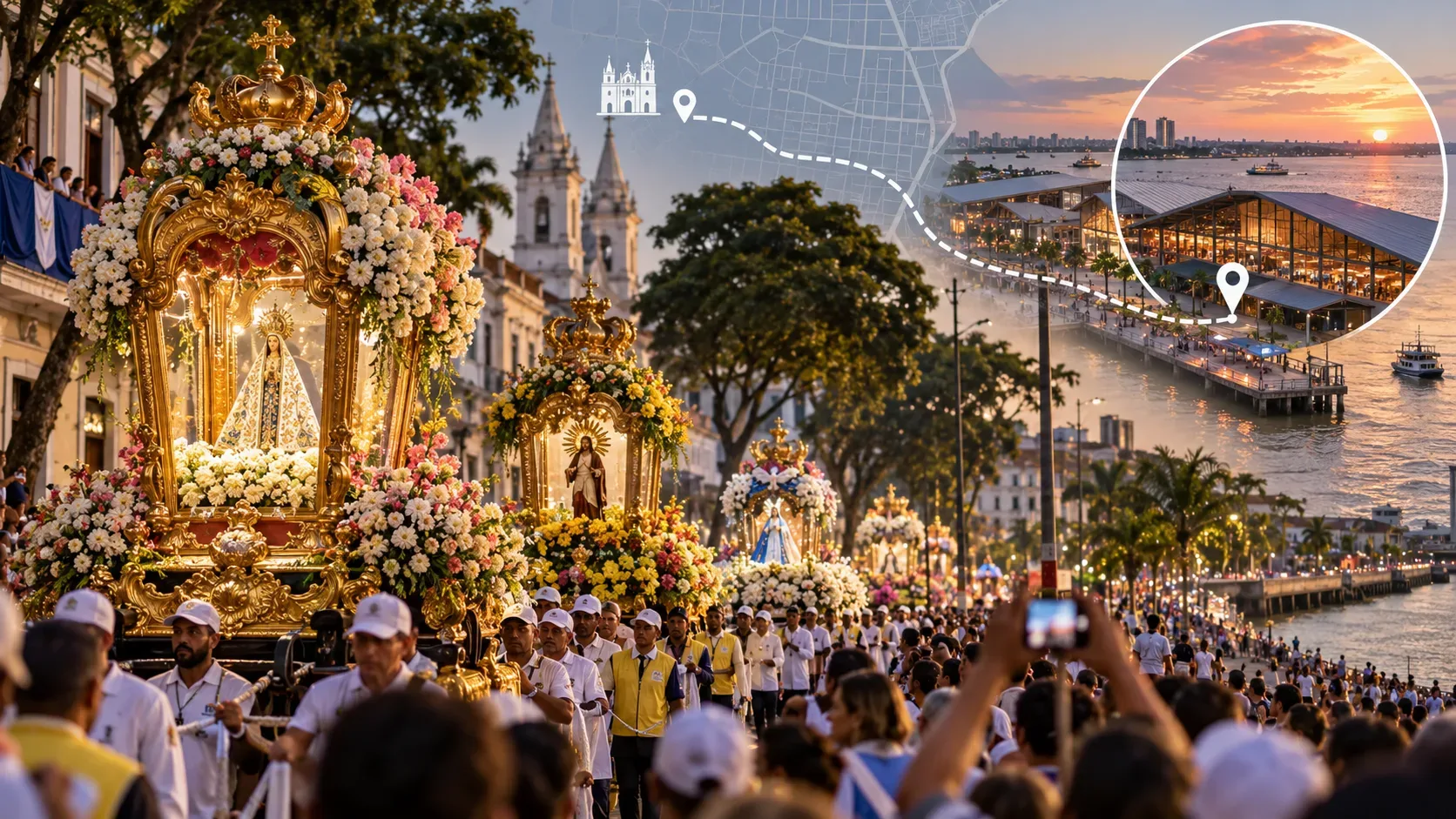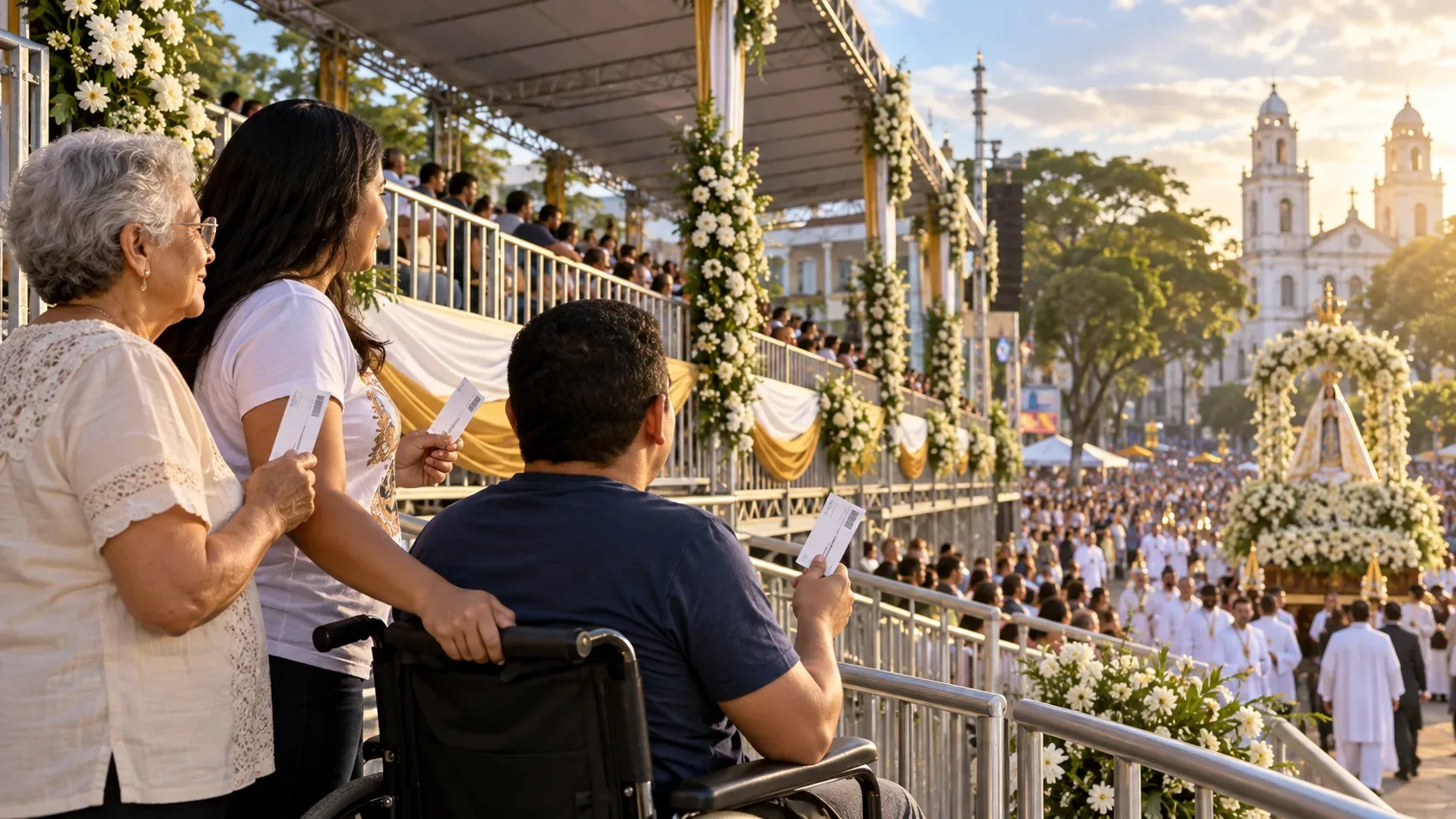
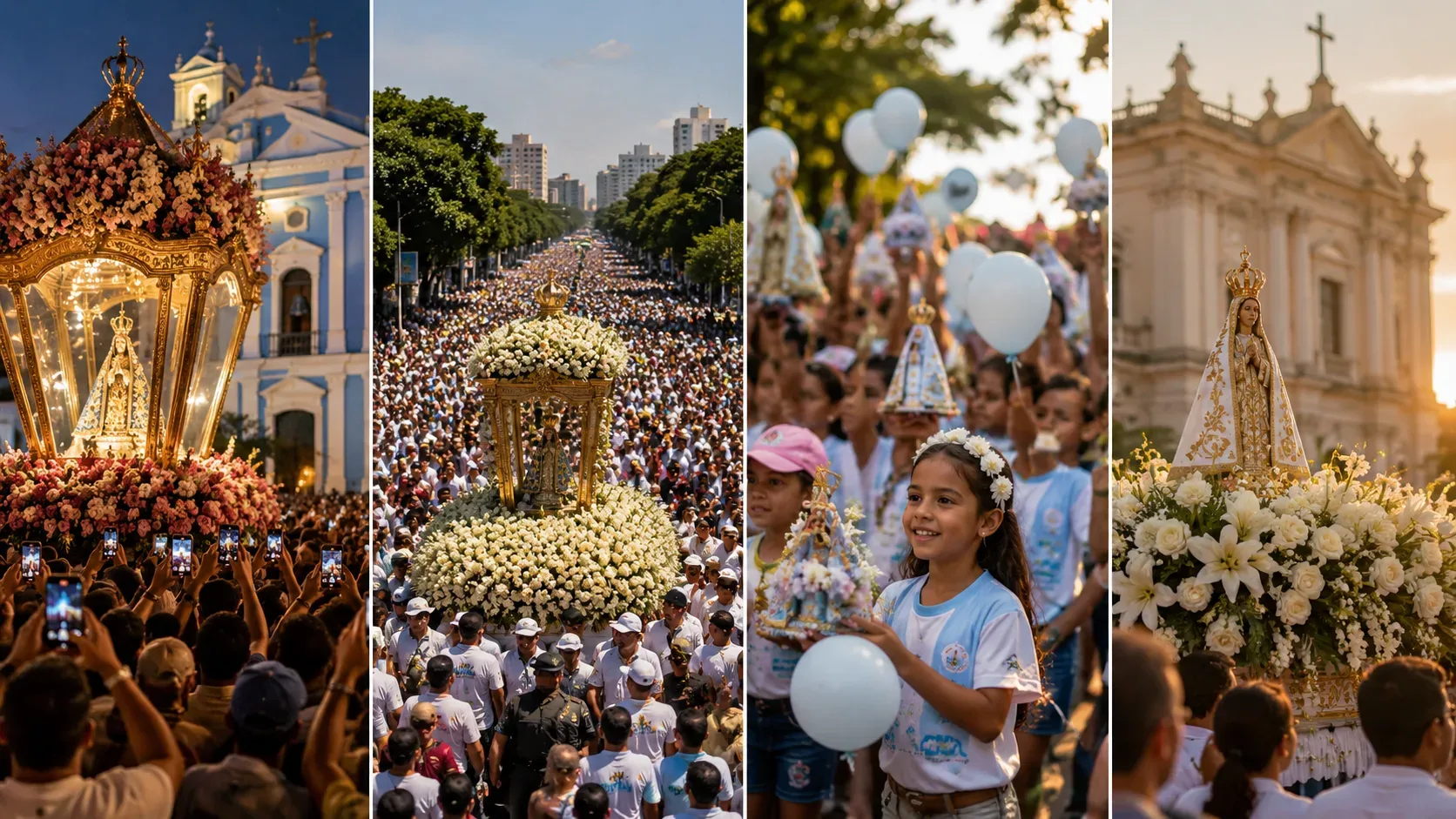
If you can attend only one of the major Círio de Nazaré 2026 processions, the decision is less about “which one is best” and more about the kind of experience you want. The Trasladação brings the emotional nighttime atmosphere of the eve; the Círio is the central and most crowded procession; the Children’s Procession is designed around young participants and families; and the Recírio marks the farewell to the Pilgrim Image and the close of the festivities.
For 2026, the official schedule lists the Trasladação on October 10 at 5:30 p.m.; the Círio on October 11 at 7 a.m.; the Children’s Procession on October 18 at 8 a.m.; and the Recírio on October 26 at 8 a.m.. Before heading out, check the official Círio 2026 calendar again and review updates from the festival organizers.
Quick comparison: which procession fits you?
| Procession | When in 2026 | What defines the experience | Good choice for | Main logistics issue |
|---|---|---|---|---|
| Trasladação | Sat., Oct. 10, 5:30 p.m. | Night procession on the eve of the Círio, following the same route in reverse | People seeking candles, hymns, anticipation and a highly emotional atmosphere | Large crowds and nighttime movement through central Belém |
| Círio | Sun., Oct. 11, 7 a.m. | Main procession, 3.6 km from the Cathedral of Sé to Sanctuary Square | People who want to experience the central moment of the festival | It is the most crowded option, so access, meeting points and exit plans matter most |
| Children’s Procession | Sun., Oct. 18, 8 a.m. | Procession centered on children, starting and ending at Sanctuary Square | Families with children who want a celebration explicitly designed for them | Although different from the main Círio, it still draws thousands and requires care with heat and crowding |
| Recírio | Mon., Oct. 26, 8 a.m. | Farewell procession taking the Pilgrim Image from Sanctuary Square to Gentil Bittencourt School | People drawn to the closing and farewell of the Nazarene festival cycle | A Monday morning event can affect hotel, work and return-travel plans |
Trasladação: for those who want the emotion of the eve
The Trasladação takes place on the Saturday night before the Círio. In 2026, Mass is scheduled for 4:30 p.m. at Gentil Bittencourt School, followed by the procession at 5:30 p.m.. The Pilgrim Image travels to the Cathedral of Belém along the same route used by the Círio, but in the opposite direction.
The official procession page describes the Trasladação as the Círio’s second-largest procession, with hundreds of thousands of participants, and highlights its candles and Marian hymns. It is a strong choice for people who want a major procession but especially value the nighttime atmosphere, the anticipation of the eve and a visual experience that differs from Sunday morning.
In practical terms, it is not a “light” alternative to the Círio. The scale of the crowd still calls for a planned meeting point, arrival route and exit strategy. Families with very young children, older adults or anyone who tires easily in long crowds should also factor in the evening schedule.
Círio: for those who want the festival’s central moment
The Círio itself takes place on the second Sunday in October. In 2026, Mass at the Cathedral of Sé is scheduled for 6 a.m., with the procession departing at 7 a.m.. The official route is listed as 3.6 km, from the Cathedral of Sé in Cidade Velha to Sanctuary Square in Nazaré.
The organizers state that more than two million people take part in the main procession. That explains why the Círio is the best choice for anyone seeking the full scale of the manifestation—and also why it demands the most planning. It is not enough to decide simply to “go to the Círio”: decide in advance where you want to watch, how you will arrive without depending on crossing restricted areas, and what the group will do if separated.
If your priority is being able to say “I experienced the main procession,” choose the Círio. If your priority is reducing exposure to the festival’s largest crowd, one of the other three processions is likely a better fit.
Children’s Procession: for families seeking an event made for young participants
The Children’s Procession will take place on October 18 at 8 a.m., with Mass at 7 a.m. in Sanctuary Square. Created to strengthen Marian devotion among children, it starts and ends at Sanctuary Square and travels through streets in the Nazaré neighborhood. The Pilgrim Image is carried in the berlinda, accompanied by the Angel Floats, while bands made up of children and young people provide music.
The updated 2026 calendar says the procession brings together thousands of young devotees. So “for children” does not mean “without crowds.” Its advantage is different: the celebration’s character, audience and procession elements are specifically oriented toward children’s participation.
For families traveling with children, comfort should matter more than trying to stand close to the berlinda. Water, sun protection, child identification and a simple reunion point are more useful decisions than competing for the busiest part of the route.
Recírio: for those who want to witness the farewell
The Recírio closes the festivities. In 2026, Mass is scheduled for 7 a.m. and the procession for 8 a.m. on Monday, October 26. The Pilgrim Image leaves Sanctuary Square for the chapel at Gentil Bittencourt School.
It is the most fitting choice for people interested in the sense of closure: after the two-week festival period, the Recírio symbolizes the farewell to the Pilgrim Image and the end of the official program. It should not be treated simply as “a smaller Círio,” because its ritual purpose is different.
The main constraint is the calendar. Because it happens on a Monday morning, it may require an extra hotel night or an adjustment to your return trip. For travelers who will already remain in Belém through the end of the Nazarene festivities, however, it provides a narrative ending that none of the other three processions offers.
How to choose in 30 seconds
- Choose the Trasladação if you want a large nighttime procession with candles, hymns and the atmosphere of the eve.
- Choose the Círio if your priority is the central manifestation and you accept the highest level of crowd and logistics intensity.
- Choose the Children’s Procession if you are traveling with kids and want a celebration explicitly centered on them.
- Choose the Recírio if you want the farewell and closing of the festivities and can stay in Belém until October 26.
What to confirm on the official website before you go
Even with dates set, operational details can change. In a check made on September 1, 2026, the official Círio Map page still displayed “Coming Soon.” Leave your final choice of viewing point, access and exit route until maps and traffic guidance are published.
There is another important detail if you plan to combine these four processions with other events: an official June 11 update changed dates and times for some post-Círio processions, including the Cycling Procession, Runners’ Procession and Accessibility Procession. The program PDF available on the website still shows the previous schedule in some of those cases. The four processions compared in this guide keep the dates listed above, but for any other event, prioritize the latest update and check again close to your trip.
During the week of each procession, also confirm times, route, street closures, public transport and safety guidance through official Círio channels and local authorities. That way, your choice reflects not only religious or emotional preference but also the real movement and access demands of each celebration.