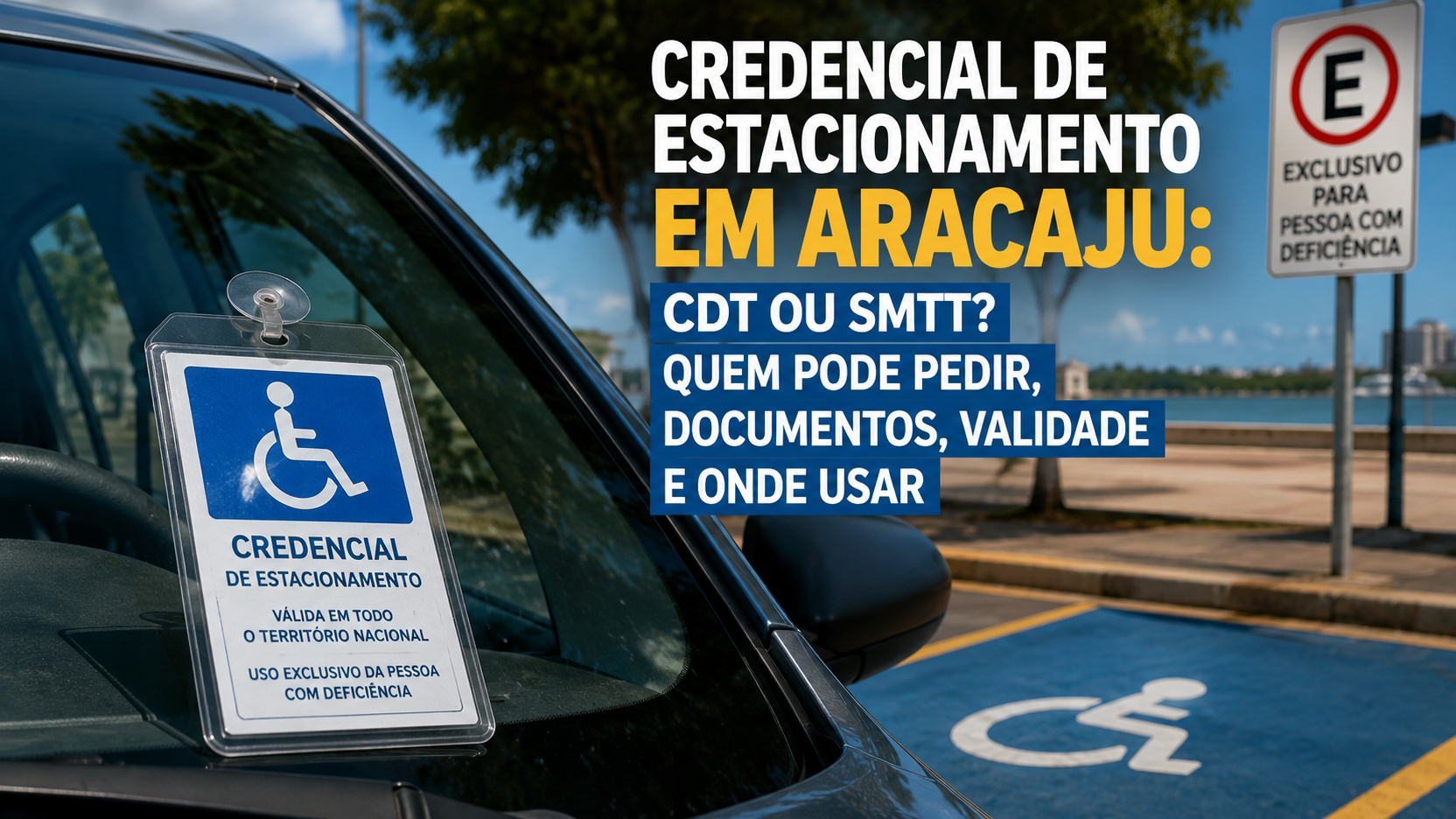
The choice between the Digital Traffic Card (Carteira Digital de Trânsito, CDT) and SMTT does not have a single answer for everyone in Aracaju. Senatran's digital permit is a national route for older adults and people with disabilities who can issue the document through federal systems. SMTT remains necessary for the physical municipal card, for in-person service, and especially for local situations that CDT does not cover in the same way, such as pregnant women, infants, and cases involving people with disabilities who depend on municipal documentation and medical assessment.
In May 2026, SMTT reported that it had issued 9,574 parking cards between January 2025 and May 11, 2026. The volume helps explain why the agency again provided guidance about misuse, such as leaving the permit face down, on the car seat, lending the card, or occupying the space without transporting the beneficiary.
CDT or SMTT: which route should you choose in Aracaju
For a person aged 60 or over who can already access the federal service, CDT tends to be the simplest route. Senatran's official service page allows the older adult parking permit to be issued through the Carteira Digital de Trânsito app or the Senatran Services Portal. The digital version can be linked to a vehicle and checked electronically by enforcement officers.
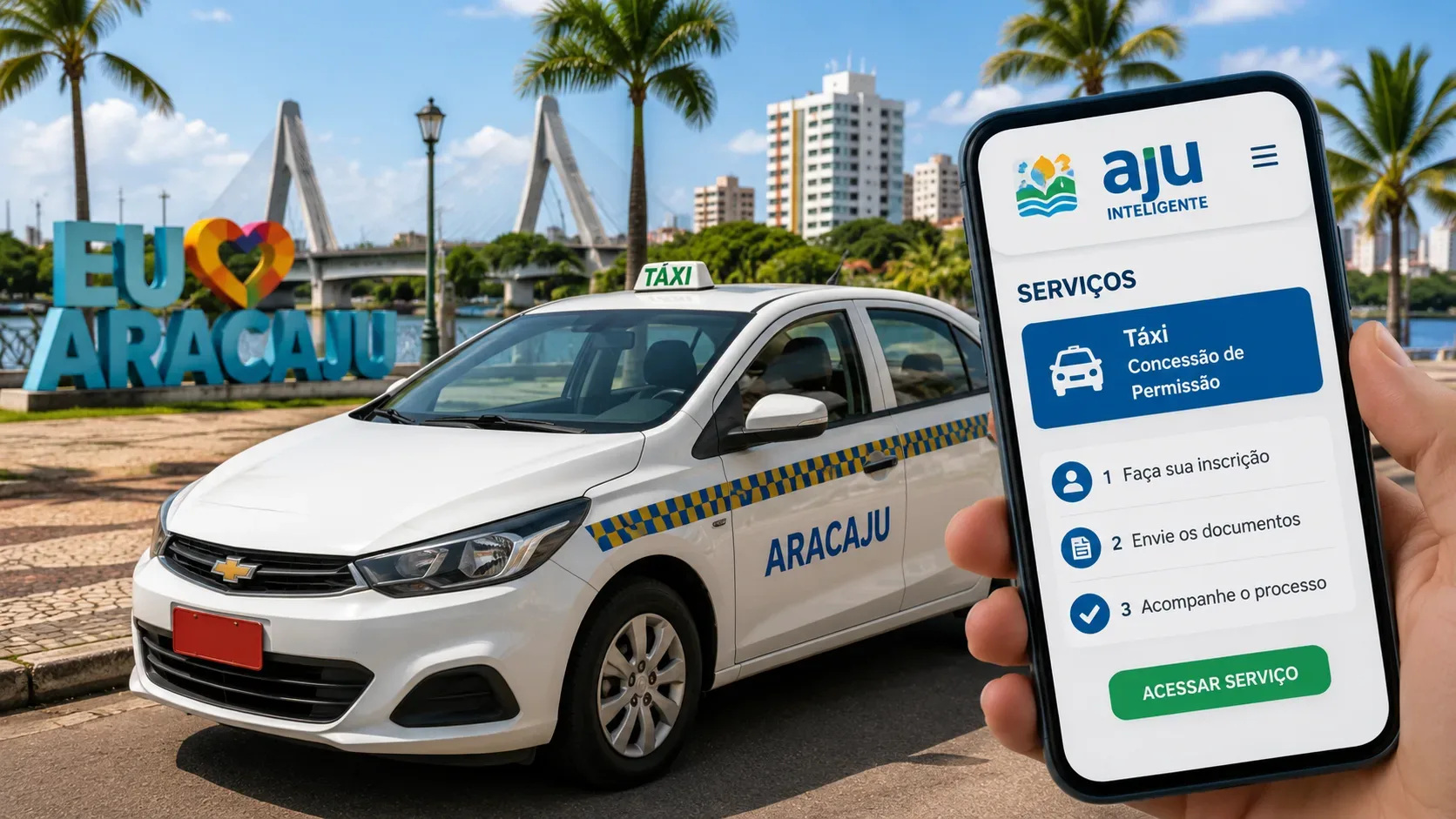
The municipal route remains useful when an older adult prefers a physical card, needs local assistance, or does not meet the requirements presented by the federal service. SMTT's operational page states that an older adult may request the card through AjuInteligente, at SMTT headquarters, or at the Ceac unit in Shopping Riomar.
For people with disabilities, the difference is greater. The federal digital permit depends on national databases and, under Contran Resolution No. 1,012/2024, digital issuance for PcD consults the Registro de Referência da Pessoa com Deficiência. SMTT, in turn, maintains its own procedure for the PcD parking card, with medical documentation and an assessment at the agency's headquarters.
Pregnant women and infants are the clearest examples of situations in which CDT does not replace SMTT. The federal digital permit service presents only the options for older adults and people with disabilities. Aracaju SMTT, meanwhile, maintains municipal permits for pregnant women and infants, as well as a specific route for autistic people.
What Senatran's digital permit changes
Contran Resolution No. 1,012/2024 began allowing the permit in physical or digital format and established nationwide validity for parking permits for older adults and people with disabilities with mobility impairment. The digital permit is issued by the federal government.
In practice, the beneficiary may use the digital version linked to one vehicle at a time. That vehicle can be changed when necessary. If the digital permit is linked to the car, enforcement officers can check the license plate and there is no need to leave a paper document on the dashboard. If the beneficiary does not link the permit, the resolution itself provides for a version printed on A4 paper, which must be placed on the dashboard with the front side facing up.
The official federal service page, updated in December 2025, lists the following access conditions: having a valid CNH, meeting the criteria of Contran Resolution No. 1,012/2024, and being authenticated on the Senatran Services Portal. This creates a practical difference from Aracaju's municipal route because SMTT's page for older adults does not require the beneficiary to be a licensed driver.
For older adults, the official communication that accompanied implementation of the digital permit stated that the federal authorization became valid for life. For PcD, the digital authorization remains valid while the beneficiary is listed in the Registro de Referência da Pessoa com Deficiência. This logic differs from the validity printed on municipal cards, so it is important not to mix the duration of one type with that of another.
How older adults can apply through SMTT or AjuInteligente
SMTT's current Parking Card page lists three routes for older adults: the AjuInteligente Portal, SMTT headquarters, and the Ceac unit in Shopping Riomar. For a first application, the agency requests an official identification document with CPF and proof of residence, when available. For an application filed by a third party, SMTT also provides for a permit request form.
SMTT headquarters is located at Rua Roberto Fonseca, No. 200, Inácio Barbosa neighborhood. The Ceac unit cited on the service page operates at Shopping Riomar, Avenida Delmiro Gouveia, No. 400, Coroa do Meio. Because service hours can change, the safest option is to check the official channel before leaving home.
For the municipal older adult card, SMTT itself states that renewal is required every five years. The permit is personal and may be used in any vehicle in which the beneficiary is being transported. In physical format, it must remain visible at the front of the dashboard.
How the municipal application for PcD works
For the PcD Parking Card, SMTT's Medical Assessment page instructs applicants to go to headquarters, to the Setor Perícia, for registration and scheduling of the medical evaluation. The listed documentation is an identity document and CPF, a medical report with CID, and an updated, legible proof of residence, presented as originals and copies.
There are additional requirements in some cases. For applicants under 18, the page requests the responsible adult's RG and CPF. For visual impairment, it requests a visual acuity exam. For hearing impairment, audiometry. After registration, the applicant waits for the assessment date, which is part of the municipal procedure for granting the card.
SMTT also maintains specific guidance for autistic people. In this modality, the page requests the holder's identity document and CPF, a medical report with the CID indicated by the agency, proof of residence, and a request form signed by the holder or responsible adult. The page states that issuance is immediate after registration and that renewal is required every five years.
At the federal level, the mere existence of the option labeled "Credencial PCD" in CDT does not mean that any diagnosis will be automatically recognized. The Contran Resolution links the national PcD permit to mobility impairment and requires consultation of the federal register during digital issuance. If the option does not appear, issuance fails, or the situation depends on a local medical assessment, SMTT is the appropriate channel to verify eligibility in Aracaju.
Pregnant women and infants: why local service remains relevant
SMTT's operational page states that, for a pregnant woman's first permit, an official document with CPF,
proof of residence, and an ultrasound exam showing the expected delivery date must be presented. Issuance is indicated as in person.
For an infant, the same page requests a birth certificate and documentation containing the CPF of the father or mother. The card is temporary, and the operational page states that it is valid until the child turns two.
There is a discrepancy between SMTT's own pages about the duration of the permit for pregnant women. The current operational page states that it is valid during pregnancy and for six months after birth. However, the news item published on May 18, 2026, describes the pregnant woman's benefit as lasting until the birth and says that, afterward, a new registration must be made in the baby's name. Because these two official instructions are not worded in the same way, it is worth checking the date printed on the card and confirming the rule with the service desk at the time of issuance.
This point also shows why a municipal permit should not automatically be confused with the national digital permit. The federal CDT regulation discussed here is specific to older adults and PcD. For pregnant women and infants, eligibility and use depend on the rules and signage applicable in each location.
Where the permit can be used
For older adults and PcD, the federal rule is clear: the permit is valid throughout the national territory, but only in reserved spaces that are properly marked for the relevant group. The beneficiary must be in the vehicle, either as the driver or a passenger. The permit is personal and must not be lent to anyone else.
For the physical card, SMTT instructs users to place the document on the dashboard with the registration side facing up. Under the federal digital model, displaying a document on the dashboard is no longer required when the permit is electronically linked to the vehicle. Without the digital link, the printed version must remain visible on the dashboard.
The permit does not turn any parking space into a reserved space. It also does not automatically eliminate parking charges. SMTT itself warns that, in regulated paid-parking areas, the user must follow the system's rules and use the applicable payment method when required. Contran regulations also make clear that the permit does not exempt users from charges for paid regulated parking or at private establishments for collective use.
For municipal permits for pregnant women and infants, it is prudent to observe the signage and regulations at the place where the vehicle will be parked, especially outside Aracaju. The existence of a card issued by SMTT does not mean that another city has created the same category of reserved space or the same local procedure.
Mistakes that can turn proper use into a violation
SMTT highlighted in 2026 that it still finds cards facing the wrong way or left on the vehicle seat, making enforcement more difficult. With the physical card, the document must be visible. Lending it to third parties, using a copy, altering or falsifying it, using an expired document, and occupying the space when the beneficiary is not being transported are also irregular uses.
Contran Resolution No. 1,012/2024 adapted enforcement to the digital permit. A car may be legally parked without a visible card on the dashboard when a valid digital permit is linked to that license plate. Therefore, the absence of a paper document alone is not proof of an irregularity.
So, which channel should you use
If you are an older adult and the federal option is available in your account, CDT or the Senatran Portal offers the fastest route and avoids travel. If you prefer the physical municipal card, need in-person support, or cannot issue the permit through the federal system, SMTT and AjuInteligente remain alternatives in Aracaju.
If you are PcD and are already recognized in the required federal databases, it is worth trying the digital permit. When a medical report, assessment, or analysis of local eligibility is needed, contact SMTT. For pregnant women and infants, the practical reference is the municipal service because these categories
do not appear in the federal CDT issuance process.
Before using the space, check three things: whether the space corresponds to the permit category, whether the beneficiary is in the vehicle, and whether there is any additional paid-parking rule or charge at that location. This simple check avoids most of the problems that SMTT itself has been finding during enforcement.