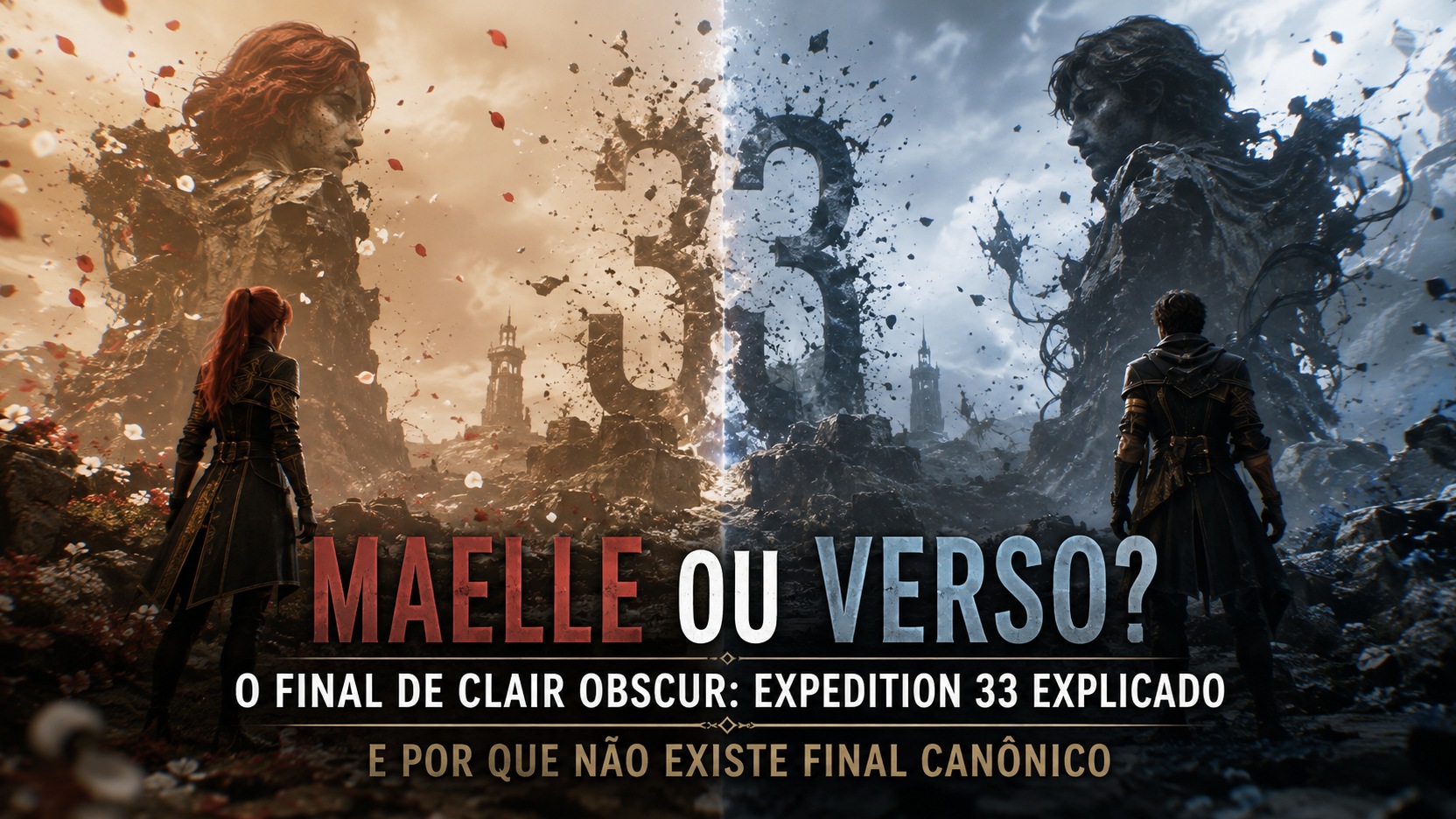
This text contains complete spoilers for Clair Obscur: Expedition 33, including the revelations of the third act and the two endings. The short answer is that the game doesn't offer a secret outcome that makes Maelle or Verso the officially correct choice. The two endings were designed to place different losses on opposite sides of the same decision.
To understand why the choice works, it is necessary to separate three questions that are often mixed up: what literally happens in each ending, what is the price of each decision and what the creative team said about the existence of a canonical ending. When these layers are viewed together, it becomes more difficult to reduce the conflict to "bad fantasy" versus "good reality" or, conversely, to "saving lives" versus "destroying a world."
What needs to be clear before making the final choice
The big twist of Expedition 33 is that Lumière and the world covered by the Expedition exist within a Screen. This world is linked to the Dessendre family and, in particular, to the mourning of the death of Verso from the real world. The figure of Verso who accompanies the group is not simply the dead son coming back to life; he belongs to the painted world and carries his own relationship with the existence that was imposed on him.
Maelle, in turn, discovers that it is Alicia Dessendre. The identity that we know throughout much of the game is born inside the Screen, where she finds a body, bonds and a life different from those she has outside of it. This matters because, in the final confrontation, Maelle is not just defending an abstract fantasy. She's defending the place she lived as Maelle, the friends she considers real, and a version of herself she doesn't want to let go of.
Verso sees the same scenario from another angle. For him, the Screen prolongs a cycle in which the death of the real Verse can never be fully accepted. The fragment linked to the original Verso continues to support the painting, while the family reorganizes its own existence around an absence that it cannot bring to an end. Undoing the Screen means allowing this cycle
end it, but it also means erasing all the beings that exist within it.
That's why the fight between Maelle and Verso doesn't appear as just any last obstacle. The game makes the player part of the conflict. Who you control in the final battle is, in effect, your answer to the question of what must be preserved and who will have to pay for it.
Maelle's ending: what literally happens
By choosing Maelle, the player faces Verso and wins the duel. Verso begins to disappear and makes it clear that he does not want to continue being kept in that existence. Maelle, however, decides to preserve the Screen and continue inside it.
The epilogue shows a rebuilt Lumière. People who had died return, including characters whose loss had a profound impact on the campaign. Gustave and other beloved faces reappear, and the overall look of the world is one of restoration. It is the closest achievement to the objective that seemed to drive the adventure at the beginning: keeping those people alive and giving back to the characters what was taken from them.
The final scene, however, changes the tone. Verso is older and is preparing to play the piano in front of an audience that includes Maelle and her friends. The moment could function as an image of achieved happiness, but the game introduces signs of deterioration in Maelle. Verso notices that she begins to suffer effects similar to those that had already affected Aline due to her stay on Tela.
The detail is decisive because it prevents Lumière's reconstruction from being treated as a cost-free solution. Maelle has managed to preserve the world she loves, but her stay there continues to take a physical and mental toll. At the same time, Verso remains in a reality that he had asked to leave. The joy of the concert exists alongside the feeling that that happiness depends on maintaining something that at least one of those involved has explicitly rejected.
What Maelle's ending preserves and what it sacrifices
The strength of Maelle's choice lies in the fact that the Screen is not presented just as a setting. For dozens of hours, the player creates bonds with people who think, suffer, remember and make decisions within that world. Treating all these characters as disposable objects would be ignoring the emotional experience that the game itself built.
Maelle chooses this side of the scale. She preserves Lumière, preserves friends and preserves the possibility of continuing to be the person she built inside the Screen. For Alicia, the outside world is not simply "real life" in a comforting sense. It is associated with trauma, guilt, limitations and the death of one's brother. Remaining as Maelle is also an attempt to choose an existence that feels more livable.
The cost appears on two fronts. The first is your own deterioration. The second is Verso’s autonomy. The game does not need to state that all inhabitants have been turned into puppets to produce discomfort; it is enough to show that Maelle reconstructs a world in which Verso continues to be present despite his refusal. The concert is beautiful, but his expression and her condition prevent the scene from being read simply as a reward.
Therefore, interpreting Maelle's ending as a form of escape or denial of grief makes sense, but it does not exhaust the scene. There is also an inverse ethical question: if the beings on the Screen are capable of feeling and have value for those who lived with them, destroy this world in their name
recovering an external family also requires a moral justification. The game leaves this problem open on purpose.
The end of Verso: what literally happens
By choosing Verso, the player defeats Maelle. She is expelled from the Screen and returns to the outside world as Alicia. Verso then allows the fragment linked to the real Verso to stop supporting the painting. The consequence is definitive: the Screen is erased, and with it Verso and the inhabitants of that world disappear.
The epilogue shifts to the Dessendre family standing before the grave of the real Verse. The scene suggests reconciliation and a first movement of acceptance of a loss that had organized the family's life for a long time. Alicia continues to bear the marks of what she experienced, but she can no longer return to the same version of Lumière to avoid external reality.
Before closing, she sees the Expedition companions as a farewell. The image is important because it does not treat those relationships as irrelevant just because the painted world ceased to exist. The end of Verso asks Alicia to move forward, but visually recognizes that what she lost within the Screen had meaning.
What the end of Verso preserves and what it sacrifices
Verso prioritizes the end of the cycle. The fragment of the dead brother stops supporting the painting, the painted Verse may disappear and the Dessendre family is forced to deal with death without preserving an entire world as an extension of this mourning.. In this sense, the ending approaches a reading of acceptance: the loss is not corrected, but incorporated into the life that continues.
This reading usually makes the outcome seem more "mature" or closer to a good ending. The problem is that the family's catharsis depends on the destruction of the Screen. Lumière, its inhabitants and the companions that the player learned to treat as people disappear. Verso's decision is not just to leave an illusion behind; it encloses a world full of consciousnesses that, within the logic of the narrative, were capable of loving, suffering and choosing.
There is also a specific cost for Alicia. She loses Maelle as a way of existing, loses the friends she found and returns to a reality that was not presented as a simple promise of recovery. The epilogue offers the possibility of continuing to live, not the guarantee that the pain has disappeared or that the family is automatically healed.
For this reason, the end of Verso can be read as acceptance without needing to be called a correct ending. He exchanges the continuity of the painted world for the possibility of ending the repetition of mourning. The gain is real, but so is the loss.
Grief, escape and acceptance: why the readings clash
The most common interpretation places Maelle on the side of escape and Verso on the side of acceptance. There is a basis for this. Maelle prefers to remain in a space where she can recover people and rebuild a life she lost; Verso wants to interrupt the maintenance of this space and force the family to face their brother's absence.
But Expedition 33 complicates the opposition in two ways. First, Maelle's escape contains people the game treated as emotionally real. Second, acceptance of Verso requires an irreversible decision about the existence of these people. In other words, each path
turns a reasonable psychological idea into a broader moral problem.
Maelle also doesn't just choose the past. By rebuilding Lumière, she attempts to produce a future within the Screen. Verso, on the other hand, does not just choose suffering. By destroying the Screen, he opens up to Alicia and her family the possibility of a future that does not depend on repeating the image of her dead son. In both cases there is movement and stagnation at the same time.
This ambiguity helps explain why discussions about the "best" ending often seem to be talking about different games. A player can give more weight to Verso's autonomy and the risk of Maelle being consumed on the Screen. Another may give more weight to the existence of the inhabitants of Lumière and consider it unacceptable to destroy them to resolve the Dessendre family's pain. The facts of the epilogue are the same; the value assigned to each loss changes.
Is there a right or canonical ending in Clair Obscur?
Until 2026, the answer given by the team is no. Lead screenwriter Jennifer Svedberg-Yen stated that the two endings were thought of as a pair from the beginning and that they needed to be understood together. In interviews from 2026, she reinforced that there is no canonical outcome and that the central question is not which character is objectively right, but whose happiness is being prioritized and what cost is imposed on the others.
This position also prevents the visual tone of the epilogues from being used as proof of canon. Verso's ending has a quality of farewell and reconciliation that can feel more cathartic.. Maelle's begins with restoration and happiness, but ends on an unsettling note. Management uses this difference to state consequences, not to put a stamp of approval on one of the options.
Creative director Guillaume Broche has already described the decision as deliberately impossible, with good and bad elements on both sides. The absence of dialogue in most of the epilogues expands this opening: the staging shows what has changed, but leaves the player to interpret the emotional and moral weight of what they see.
So calling Verso's ending "true" because it seems to talk about acceptance is going beyond what the authors have confirmed. Likewise, calling Maelle's ending "good" because it returns Lumière and his characters ignores Verso's request and the deterioration that closes the scene. The narrative project depends precisely on none of these readings solving everything alone.
Maelle or Verso: what each choice really means
Maelle's choice affirms that preserving the lived world, the bonds built and a chosen identity may be worth the risk of remaining within the Screen. The price is to prolong a system that consumes Maelle and keeps Verso in an existence he does not want.
Verso's choice states that some losses cannot be corrected without prolonging suffering and that accepting death may be necessary for life to continue. The price is to erase Lumière and all beings that depend on the Screen, in addition to returning Alicia to a reality she began to reject.
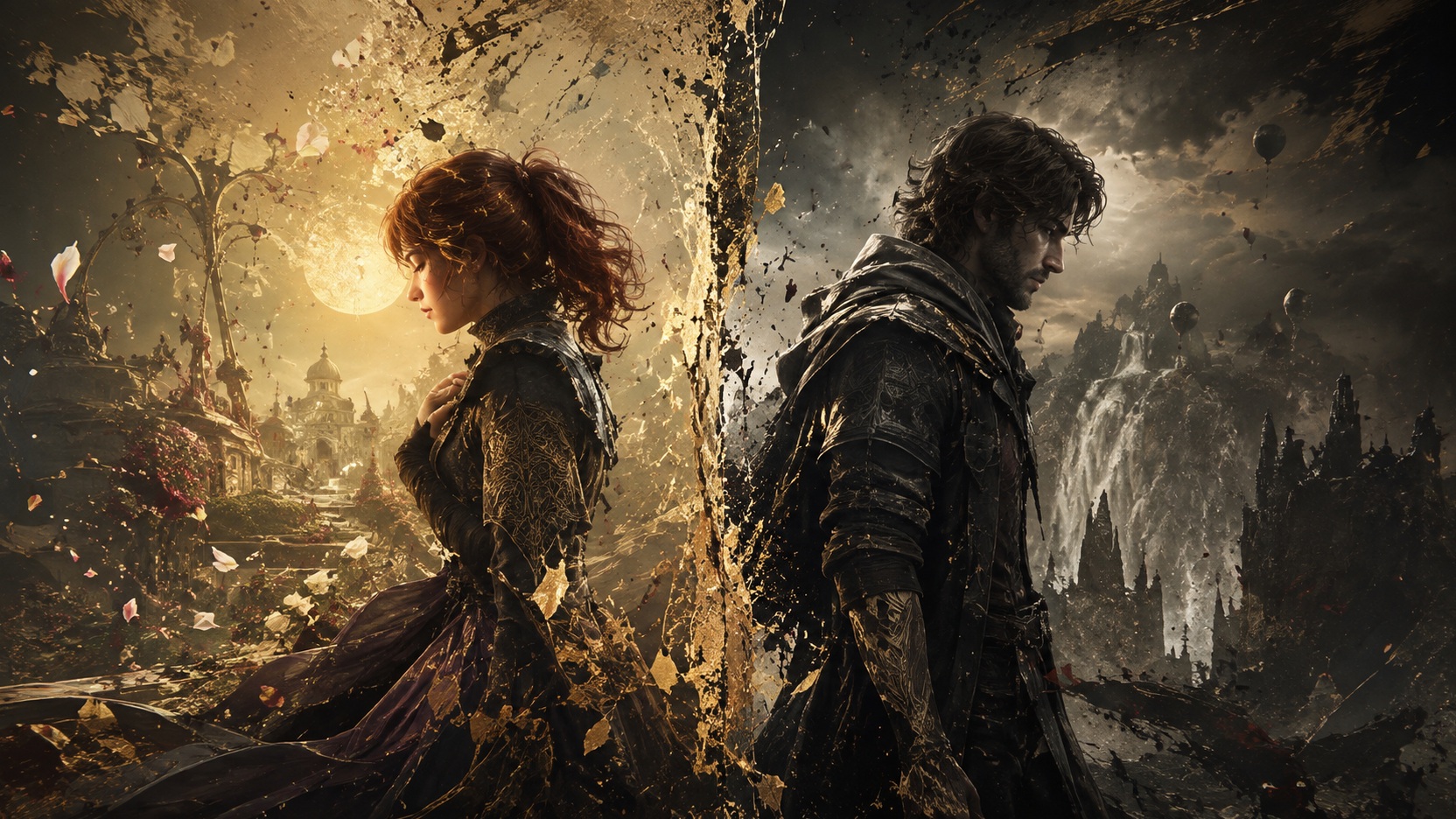
Neither ending eliminates pain; each person decides where it will be located. Maelle focuses the cost on herself and Verso to preserve the painted world. Verso shifts the cost to the painted world to give the family a chance to break out of the cycle. This is the duality that sustains the last confrontation.
Therefore, the best way to understand Expedition 33 is not to look for a hidden answer that declares the winner. It's looking at the two epilogues as complementary parts of the same question about grief: when does preserving a memory stop being love and starts preventing life, and when does abandoning that memory require sacrificing something that also became real for those who lived it?
The game ends without answering for you. And, according to its own authors, this lack of a single answer is not a gap to be filled later; is a central part of the ending.