Warning: This text contains full spoilers for Clair Obscur: Expedition 33, including the revelation about the Screen, Maelle's identity and the two final outcomes.
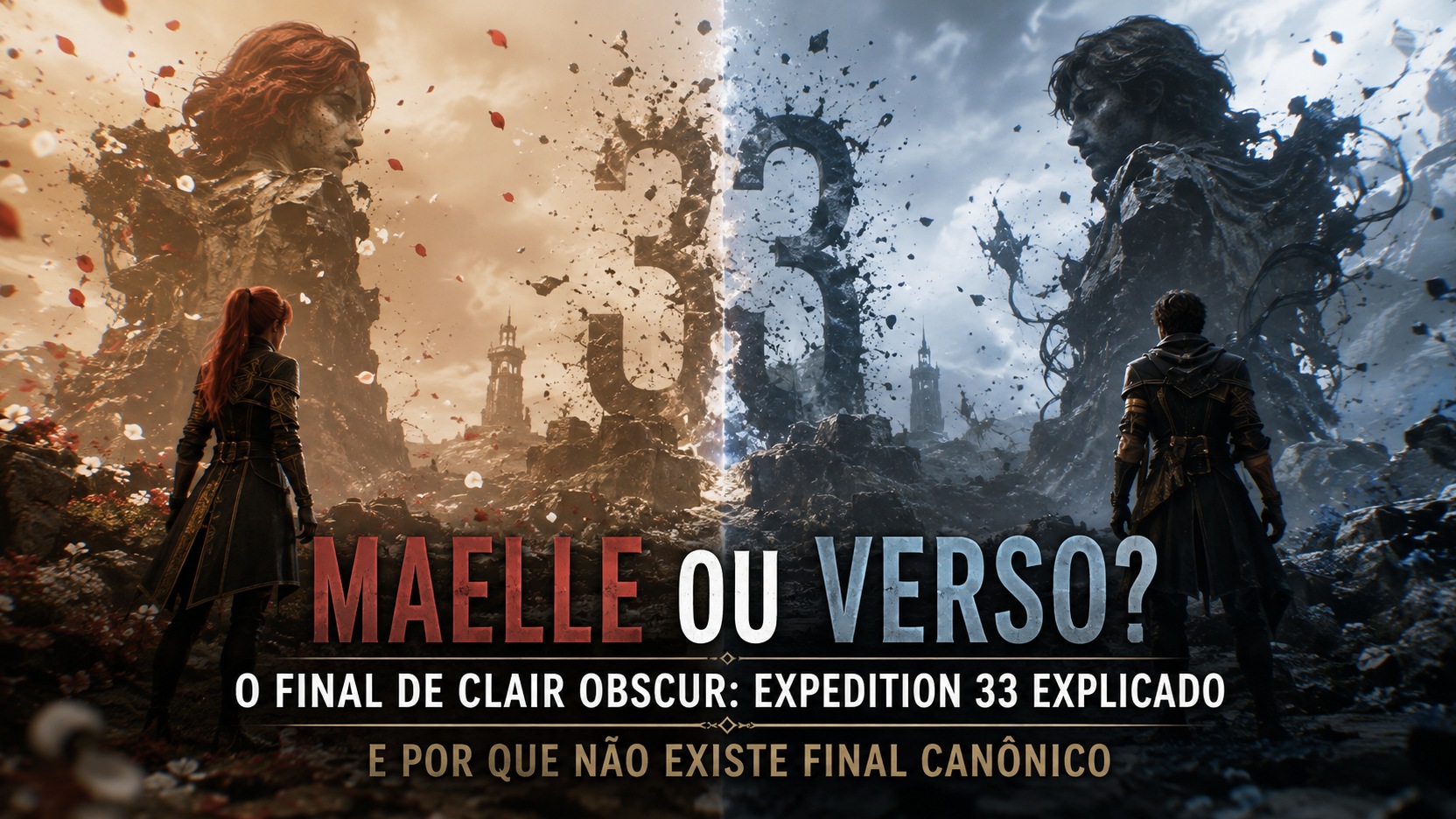
The short answer to the question that remains after the credits is: no, Clair Obscur: Expedition 33 does not have a true ending hidden behind the choice between Maelle and Verso. Both outcomes are valid within the narrative proposal. What changes is what each character decides to preserve, the price of that decision and who needs to pay that price.
This is not just one possible reading of the game. In March 2026, lead writer Jennifer Svedberg-Yen stated in an interview with Game File that the two endings were planned from the beginning and needed to be understood together. Asked directly about canon, she was even more explicit: there is no canonical ending, and that is intentional. At the same time, in an interview with GamesRadar+ during GDC 2026, he explained that the endings were written in parallel, as a pair and as two sides of the same coin.
This confirmation changes the best way to read the last choice. Instead of asking which ending corrects the other, it's worth asking what Maelle saves, what Verso saves, and what losses each victory makes inevitable.
What the final choice really decides
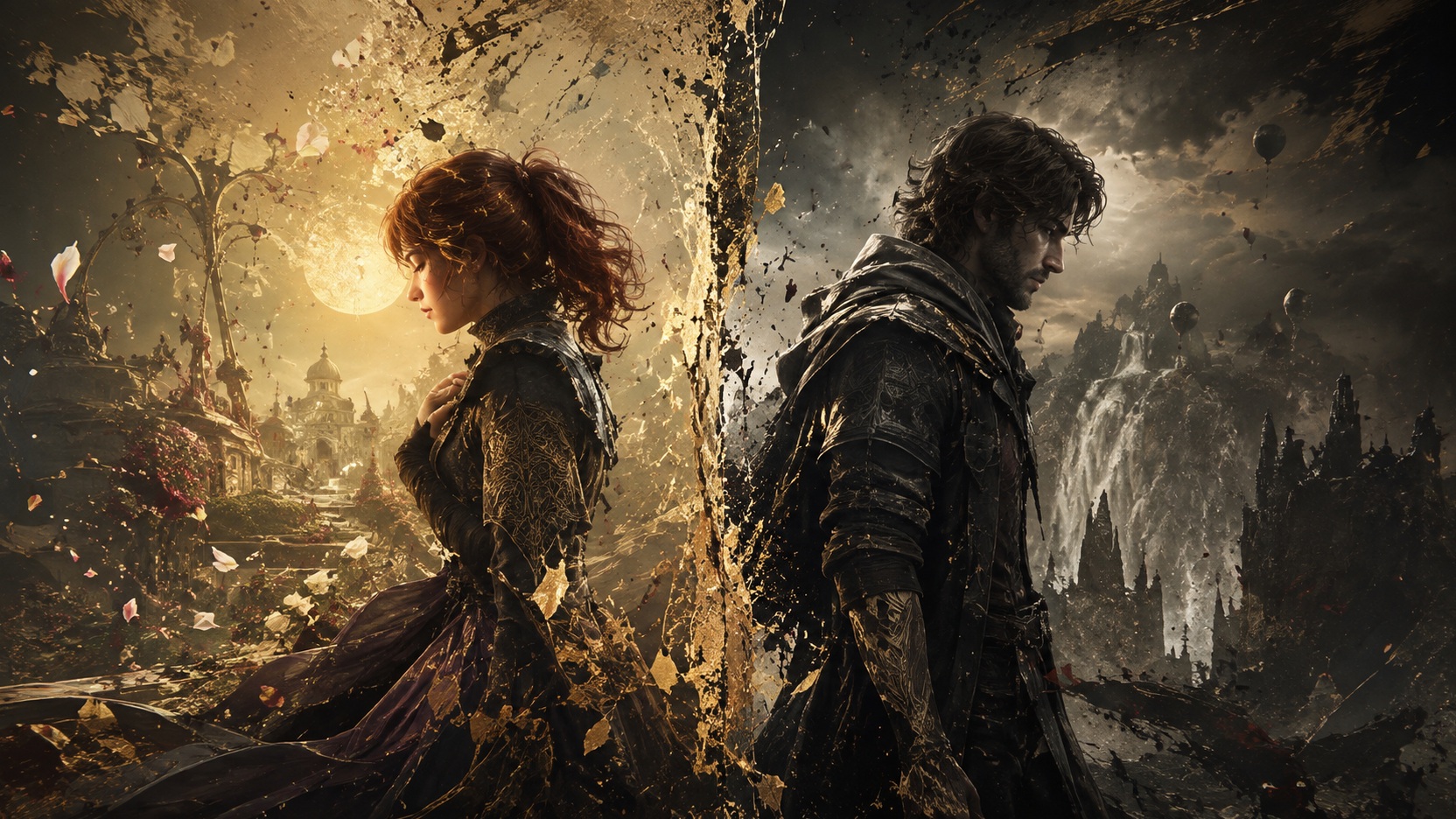
At the end of Expedition 33, the great opposition is no longer simply between the Expedition and the Paintress. The game revealed that Lumière and the world traveled by the characters exist within a Screen linked to the Dessendre family. Maelle is Alicia's assumed identity within this painted world, while Verso is a painted existence associated with the family's dead son.
After the confrontation with Renoir, the conflict is reduced to a much more intimate question. Maelle wants to keep Tela alive. Verso wants to allow the last bond that sustains that world to end, even though he knows that this will erase his own existence and that of all the painted beings that still live there.
For this reason, the battle between the two does not function as a selection between hero and villain. It forces the player to choose which type of loss they consider bearable. Maelle privileges the continuity of life within the Screen. The verse focuses on closing the cycle that keeps the family tied to the dead person and the world created around him.
Maelle's ending: preserving the Screen and refusing definitive loss
By choosing Maelle, the player defeats Verso and prevents the Screen from closing. The visible consequence is powerful: Lumière is rebuilt and people who died return to exist in the painted world. The epilogue brings together figures like Gustave and Sophie again, transforming Maelle's choice into the only route capable of returning to the scenario that semblance of complete life that the story had destroyed.
This is the strongest benefit of the outcome. For the inhabitants of Tela, the decision prevents total extinction. For Maelle, she preserves friends, bonds and the identity in which she found belonging. After so many deaths, the ending offers what the adventure itself seemed to deny: the possibility of bringing back those who were lost.
The problem is that this restoration does not come without coercion. Verso had made it clear that he wanted the cycle to end. Even so, he returns to exist in the reconstructed world. The epilogue concert, which at first glance seems like a celebration, becomes more uncomfortable when we remember that his stay is precisely what he had fought against.
There is also a second cost, now concentrated on Maelle. The game associates the prolonged stay of real family members within the Screen with a process of deterioration. In the epilogue, visual cues on Maelle suggest she is following a similar path to Aline. The ending, therefore, does not show a stable fantasy guaranteed forever. It leaves open the prospect that preserving that world can consume the person who chose to sustain it.
Who benefits at the end of Maelle
The inhabitants of Tela are the biggest beneficiaries because they continue to exist. Maelle also receives what she wants most at that moment: to remain in the space where she built a life and recover the people she loves. The choice recognizes that a created world can have real value for those who live in it and for those who have created links with it.
Who pays the price
Verso loses the right to end its own connection with that world. The family in the real world continues without Alicia's full presence, and the grieving process remains suspended. Maelle herself starts to bear the risk of losing herself in the permanence she chose. What seems like a victory over death can also be read as the perpetuation of the mechanism that prevented the family from accepting Verso's original death.
The end of Verso: destroy the Screen so that the mourning can continue
By choosing Verso, the player defeats Maelle. Verso then allows the bond that holds the Screen to no longer support it. The result is the disappearance of that world and, with it, the painted beings that inhabit it, including the Verse itself.
This is the point that prevents a simple reading of accepting reality is the good ending. For the Dessendre family, the outcome opens up space to escape the cycle of denial. For the painted world, however, the decision amounts to an absolute end. People with memories, relationships and desires cease to exist so that the living on the outside can finally move on.
The epilogue in the real world places the family facing Verso's death without the same escape into the Screen. Alicia is back to reality and the scene suggests a movement of reconciliation and mourning. Farewell to the characters linked to Maelle's experience makes this victory deliberately bitter: accepting the irreversible requires giving up a place where those presences could still continue.
Who benefits at the end of Verse
The Dessendre family gains the possibility of reorganizing their lives off screen and facing Verso's death as a fact that cannot be undone. Alicia returns to the real world instead of continuing to consume herself inside the painting. Verso, in turn, achieves what he was looking for: the end of an existence built on the family's inability to let him go.
Who pays the price
The cost is collective for Lumière. Saving Alicia and allowing the family to move forward means erasing an entire world. The game doesn't treat its inhabitants as unimportant decorative objects; spent dozens of hours making the player live with them, lose companions and create bonds. This is precisely why the disappearance of the Screen cannot be reduced to turning off an illusion without consequences.
Maelle preserves people; Verse preserves the possibility of moving forward
The opposition between the endings becomes clearer when the criterion stops being morality and becomes a priority. Maelle prioritizes the continuity of relationships that exist within Tela. Verso prioritizes the possibility that the Dessendres stop reorganizing their lives around a loss that was never fully accepted.
Maelle has an answer to the injustice of death: if it is possible to keep those we love existing, why accept their disappearance? Verso responds with the opposite concern: if every loss can be replaced by a created permanence, at what point do the living return to living their own lives?
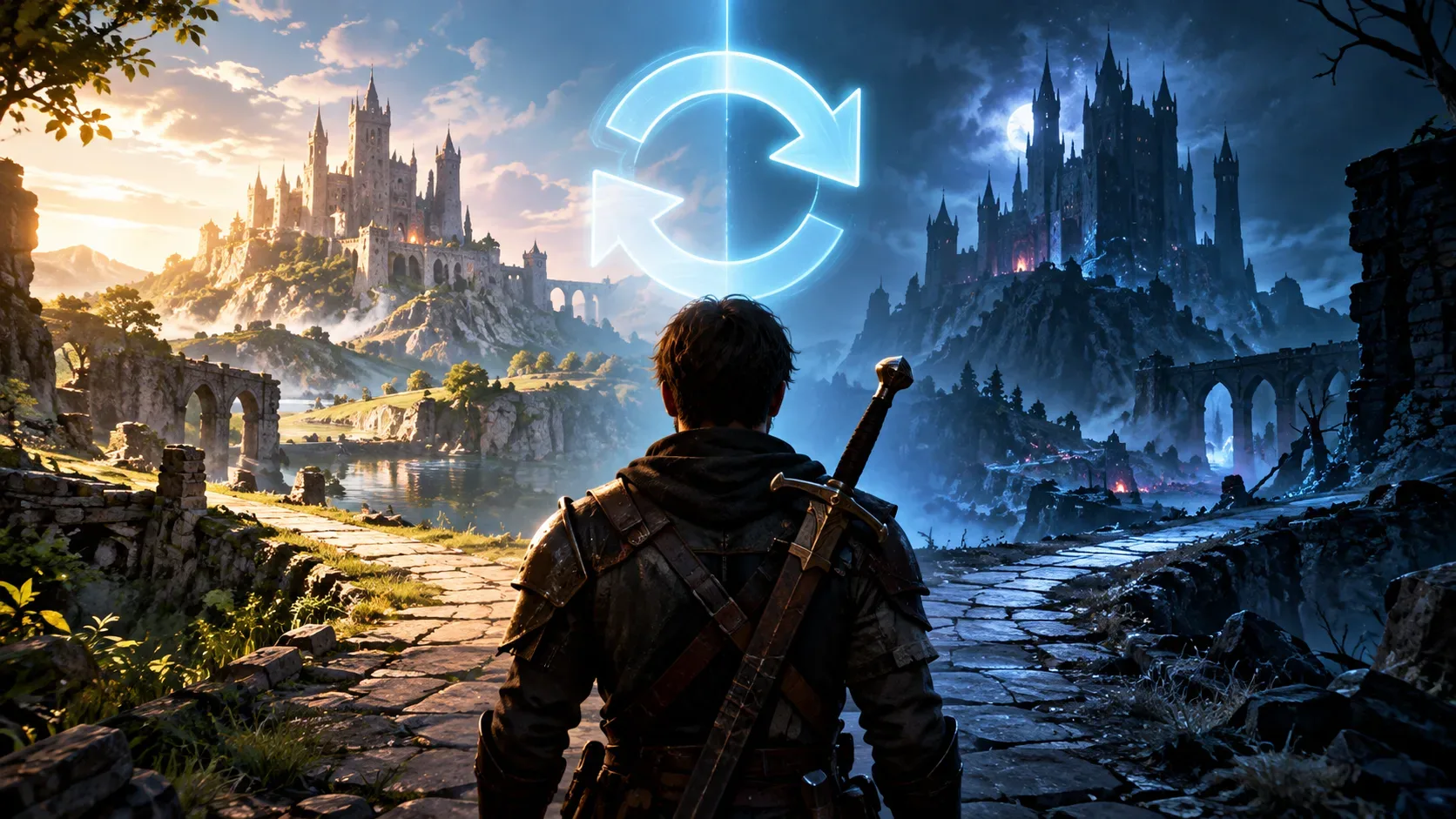
The game makes both positions more difficult by denying a neutral exit. There is no option to preserve Lumière without consequences, free Verso without erasing the Canvas, return Alicia to her family and at the same time keep intact the life she built as Maelle. The player does not choose between having everything and losing everything. Choose which loss will be assumed.
Why there is no canonical ending
Jennifer Svedberg-Yen's statement in 2026 eliminates the hypothesis that Sandfall has hidden an official answer that would make one of the choices just a deviation. According to the screenwriter, the endings were conceived from the beginning as two and need to be understood together. To Game File, she rejected both the idea of a correct ending and that of a canonical ending. He explained to GamesRadar+ that the two were written in tandem and represent different outcomes for the characters and the world.
This intention also clarifies why the game does not offer a third, conciliatory outcome. The central question is not how to technically solve the Screen problem. He is the one who has priority when desires conflict and when the happiness of one character requires a cost imposed on another.
Svedberg-Yen summarized this axis in terms of priority and cost: whose happiness we choose to protect and what this search exacts from others. This formulation describes the ending better than the division between good and bad. In both paths there is relief, there is violence, there is hope and there is something that can no longer be recovered.
So is there a better ending?
There is an ending that may make more sense for each player, but this is different from there being an official superior ending. Those who consider that the inhabitants of Tela have their own moral value tend to feel more strongly the destruction caused by Verso's choice. Those who read Maelle's stay as a continuation of the cycle of denial and self-destruction tend to see the end of Verso as the most coherent way out.
Both readings find support in what the game shows, but neither automatically turns the other ending into an error. The text of the results itself was constructed to remove the feeling of a clean victory. Maelle saves a world and increases the risk of being trapped in it. Verso frees a family and, to do so, accepts the disappearance of an entire world.
Calling one of them a good ending may be useful to express personal preference, but it loses part of the structure that the narrative wants to put in conflict. The same goes for the true ending. The writer's confirmation makes this expression especially inappropriate when used as canon fact.
What the two endings say together
Seen side by side, the outcomes stop being competing answers and start to function as two ways of testing the same question about grief. A person can continue to exist through memories, art, and created worlds, but turning this permanence into a permanent substitute for life also has a cost. Accepting death allows us to move forward, but this acceptance does not make the bonds less real or the renunciation of what could be preserved less painful.
That's why the image of two sides of the same coin used by the screenwriter herself is more accurate than the search for a correct secret route. Maelle shows the danger and beauty of not wanting to let go. Verse shows the need and cruelty to let go. An ending asks how much we are willing to sacrifice to maintain a beloved world; the other asks how much we are willing to destroy to allow someone to leave.
Do I need to finish the game twice to understand the endings?
It is not necessary to redo the entire campaign. After completing an outcome, it is possible to reload the save prior to the final decision and choose the other side. As the team itself states that the two endings were designed to be understood together, seeing both helps you notice details that a single route leaves incomplete.
This does not mean that the second choice invalidates the first. The value is precisely in comparison. Maelle's ending makes more visible what Verso's choice erases. The end of Verso makes what Maelle's choice prolongs more visible.
In the end, Expedition 33 doesn't ask the player to figure out which one actually happened. It asks you to face the fact that they both say something true about the characters. The official answer about canon is clear: none were chosen as definitive. The part that remains open is another - which loss can you accept after understanding the full cost of both.