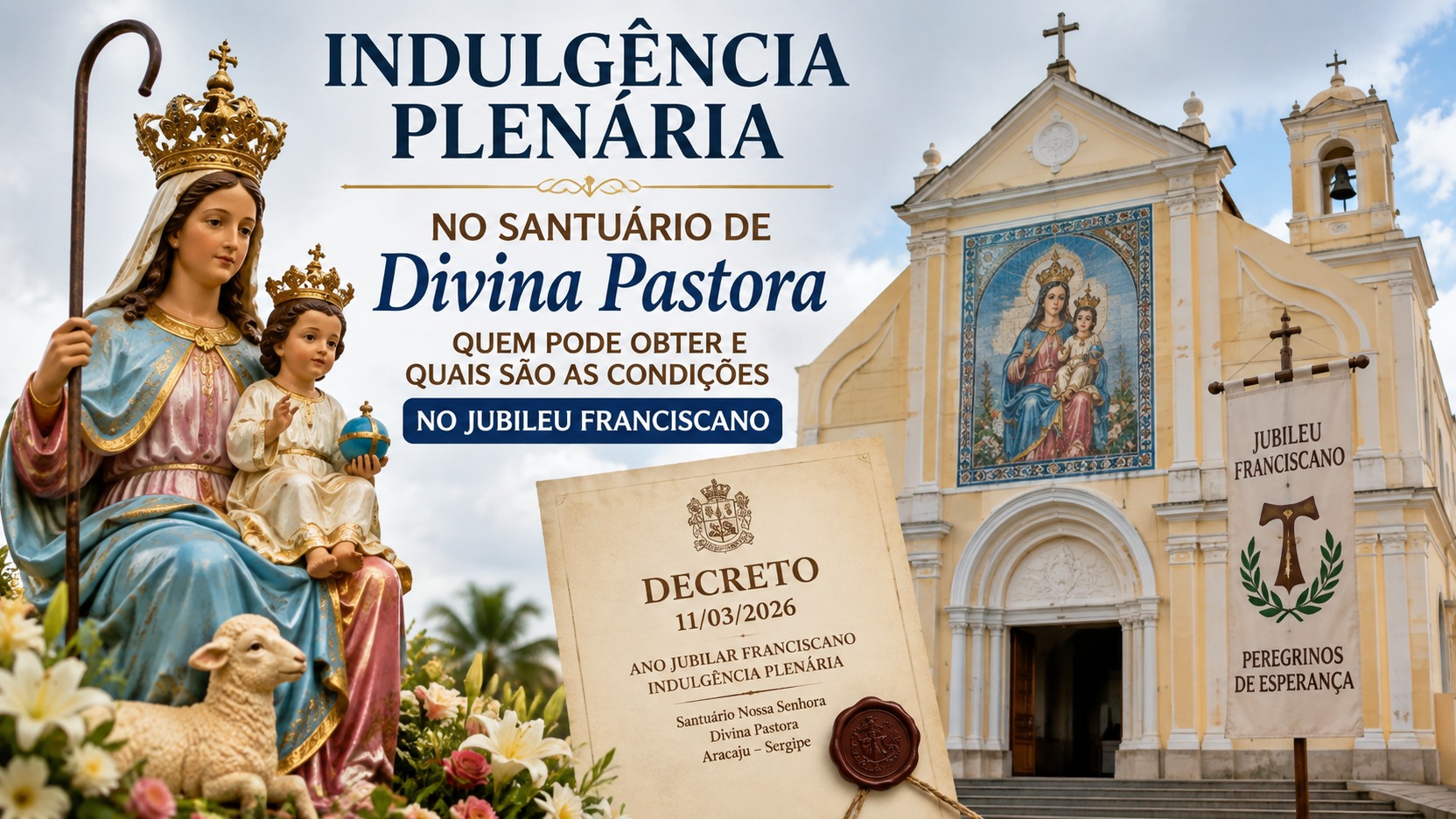
The Sanctuary of Nossa Senhora Divina Pastora, in Divina Pastora (SE), was designated as a place to obtain plenary indulgences in the Archdiocese of Aracaju during the Franciscan Jubilee Year. The local decision was formalized by decree signed by the Metropolitan Archbishop of Aracaju, Dom Josafá Menezes da Silva, on March 9, 2026 and published by the Archdiocese on March 11. The concession is based on the special jubilee established by the Apostolic Penitentiary to mark the 800th anniversary of the death of Saint Francis of Assisi.
In practice, the opportunity is not restricted to friars, nuns or members of Franciscan movements. The universal decree also opens plenary indulgence to all the faithful who participate in the Year of Saint Francis under the stipulated conditions. In Divina Pastora, this means that the pilgrim can seek indulgence in the designated sanctuary, but a simple visit to the place is not enough: there are sacramental conditions, interior disposition and a jubilee practice to be fulfilled.
What the Aracaju decree changed
The local decree transformed the Sanctuary of Nossa Senhora Divina Pastora into one of the reference places in the Archdiocese of Aracaju for experiencing this grace during the Franciscan Jubilee. The Archdiocese informed that the choice considers the historical relationship of the Franciscan presence with popular devotion in the Northeast and the pilgrimage nature of the sanctuary.
The background is the decree of the Apostolic Penitentiary, dated January 10, 2026, which proclaimed a special Year of Saint Francis between January 10, 2026 and January 10, 2027. The document was issued at the will of Pope Leo XIV to mark the eighth centenary of the death of Saint Francis of Assisi, which occurred in 1226.
Who can obtain indulgence in Divina Pastora
The decree of the Holy See expressly contemplates members of the Franciscan families of the First, Second and Third Orders, regular and secular, as well as institutes, societies and associations that follow the Rule of Saint Francis, are inspired by his spirituality or perpetuate his charisma.
But the concession does not end there. The same text states that all believers, without distinction, can obtain a plenary indulgence by participating in the Year of Saint Francis and making a pilgrimage to a Franciscan place of worship, dedicated to Saint Francis or linked to him in a recognized way. The designation made by the Archdiocese of Aracaju frames the Sanctuary of Nossa Senhora Divina Pastora as a place for this experience in the archdiocesan territory.
The conditions that need to be met
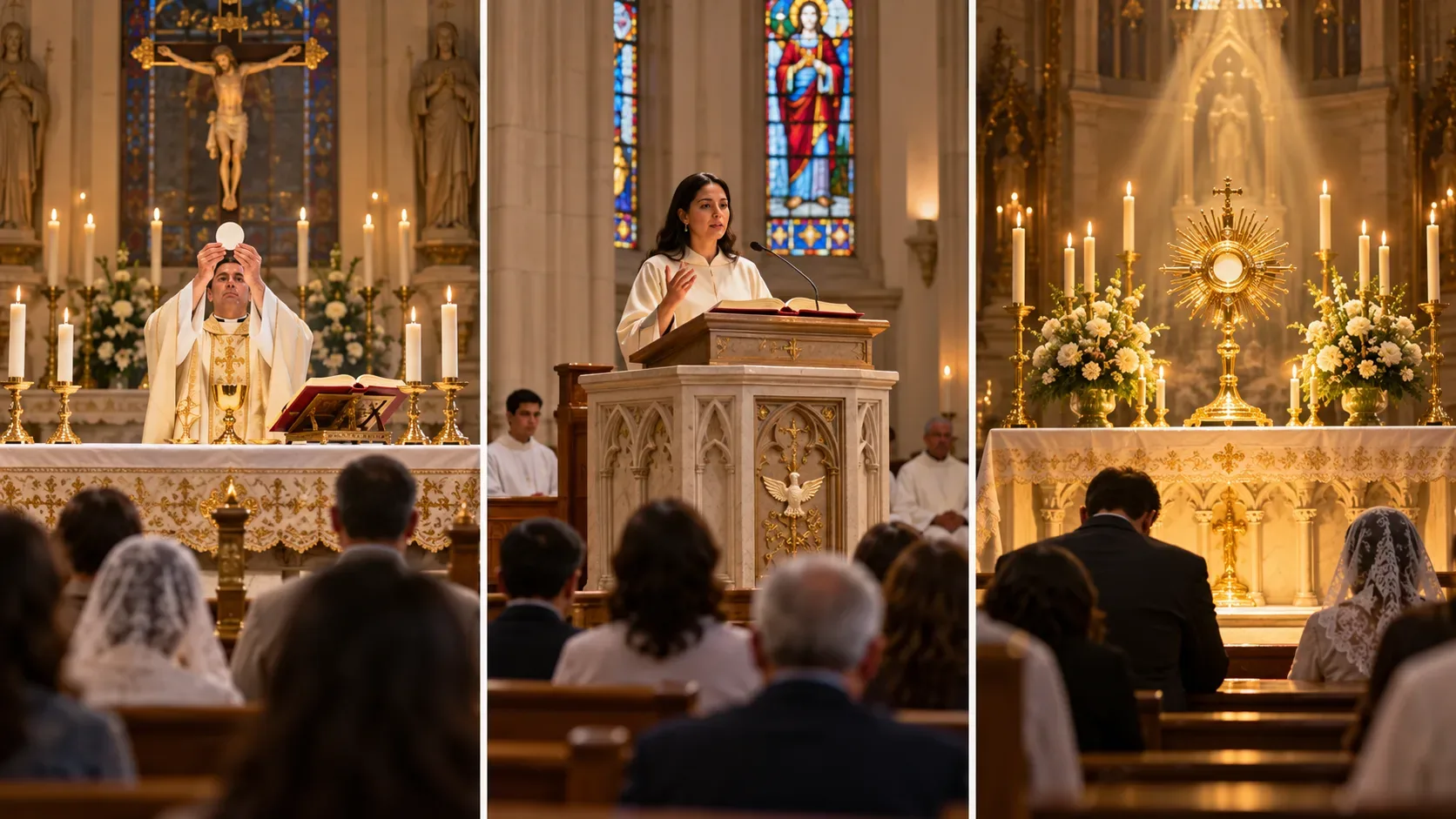
For the indulgence to be plenary, the 2026 decree maintains the usual conditions of the Church: sacramental confession, Eucharistic communion and prayer according to the Holy Father's intentions. Furthermore, the believer must be interiorly detached from sin. This provision is not an optional detail, because the plenary indulgence presupposes a sincere conversion and does not function as an automatic benefit linked to a religious visit.
Pilgrimage and prayer at the sanctuary
At the Jubilee site, the faithful must participate devoutly in the Jubilee rites or dedicate a convenient time to pious meditation. The decree of the Apostolic Penitentiary directs that this moment be concluded with the Our Father, the Creed and invocations to the Blessed Virgin Mary, Saint Francis of Assisi, Saint Clare and the saints of the Franciscan family.
In other words, going to the sanctuary just for a walk or quickly entering the church does not correspond, in itself, to the spiritual work described in the decree. The pilgrimage must be accompanied by prayer and the religious intention typical of the Jubilee.
Confession, communion and prayer for the pope
The three usual conditions appear clearly in the decree: receiving the sacrament of Reconciliation, participating in Eucharistic communion and praying for the pope's intentions. For those who intend to organize the pilgrimage, it is prudent to check in advance the Mass and confession times published through the official channels of the sanctuary or the Archdiocese, as these times may change.
And who can't go to the sanctuary?
The universal decree also provides a form of participation for the elderly, sick, people who care for them and believers prevented from leaving home for serious reasons. In these cases, it is possible to obtain plenary indulgence through spiritual union with the celebrations of the Year of Saint Francis, offering to God the prayers, pains or sufferings of one's life.
For this situation, the document maintains two important requirements: detachment from sin and the intention to fulfill, as soon as possible, the three usual conditions of sacramental confession, Eucharistic communion and prayer for the Holy Father's intentions.
Does indulgence replace confession?
No. According to the Catechism of the Catholic Church, indulgence concerns the remission of the temporal penalty due to sins whose guilt has already been forgiven. Therefore, it does not replace the sacrament of Reconciliation, it does not act as a license to continue sinning and it does not automatically erase a guilt that the person refuses to recognize and confess.
This distinction helps to understand why confession appears among the usual conditions. Indulgence is linked to a path of conversion, communion with the Church and spiritual practice. The objective of the Jubilee is not to offer a bureaucratic shortcut, but to encourage an experience of reconciliation, prayer and renewal of Christian life inspired by Saint Francis.
Can it be applied by a deceased person?
Yes. The decree of the Apostolic Penitentiary establishes that the plenary indulgence granted during the Year of Saint Francis can be applied, in the form of suffrage, to the souls in Purgatory. This means that the living believer fulfills the conditions of the indulgence and can offer it for a deceased person, in accordance with Church practice.
How long is the Franciscan Jubilee valid?
The special period runs from January 10, 2026 to January 10, 2027. Therefore, the designation of Divina Pastora is included in this jubilee interval. Anyone wishing to undertake the pilgrimage must consider this final date and follow any local pastoral guidance from the Archdiocese of Aracaju.
What to do in practice when you arrive at Divina Pastora
The safest path is to treat the pilgrimage as a complete spiritual experience: going to the sanctuary with the intention of participating in the Jubilee, setting aside time for prayer and meditation, completing the prayers indicated in the decree, seeking sacramental confession, receiving the Eucharist and praying for the Pope's intentions, maintaining a sincere willingness to turn away from sin.
The designation of the Sanctuary of Our Lady Divine Shepherd increases, for the faithful in the region, access to a practice that is part of the Year of Saint Francis throughout the Church. The central point, however, is that the plenary indulgence depends both on the place and the Jubilee work and on the spiritual conditions established by the Church.