This Friday, August 7, 2026, the Catholic Church remembers Saint Cajetan of Thiene, an Italian priest who lived between 1480 and 1547 and started, with companions, the Regular Clerics known as Theatines. The Vatican records August 7 as its liturgical memory, and the Vatican News calendar lists him among the saints remembered on this date.
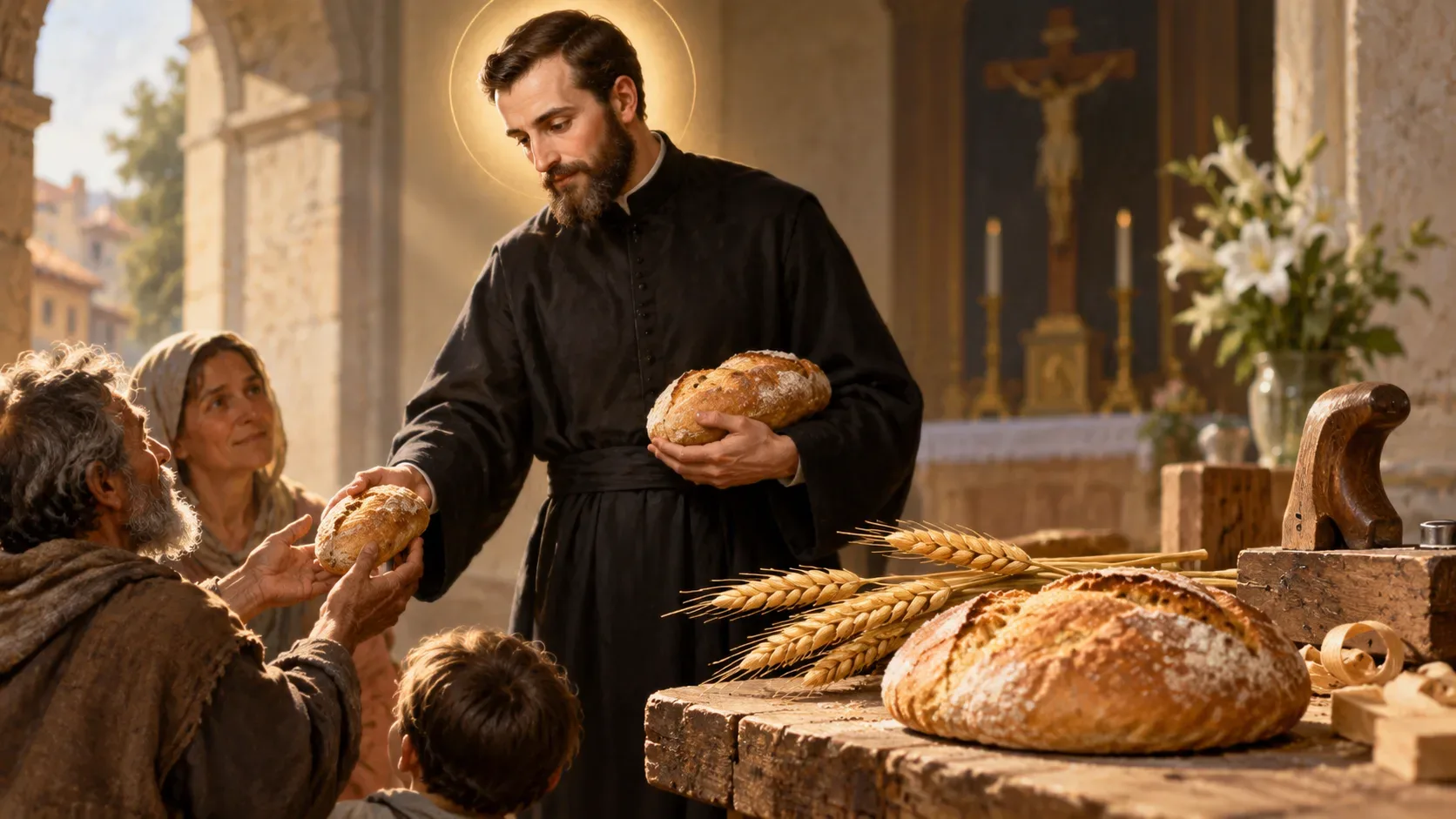
For many people, however, the name of Saint Cajetan is accompanied by another expression: “the saint of bread and work”. This association exists and is recognized in Vatican News publications, but it needs to be understood in the right context. It is linked to trust in Providence, service to those in need and the development of popular devotion, especially in Argentina. It does not mean that August 7th is a liturgical celebration of work or bread itself.
Why is Saint Cajetan remembered on August 7th?
The date is linked to the memory of his death. Saint Cajetan was born in Vicenza, in present-day Italy, in 1480. He studied in Padua, worked in the Roman Curia and then followed the priestly life. Vatican sources highlight above all his dedication to the poor, the sick and the renewal of Christian life and the clergy.
On September 14, 1524, Gaetano and his first companions made solemn profession at the tomb of Saint Peter, in the Vatican, starting the Institute of Regular Clerics. The project sought to recover characteristics of the first Christian community described in the Acts of the Apostles: common life, prayer, sharing and attention to the needs of each person.
Although reports on major popular celebrations frequently use the word “feast”, the documentation from the Dicastery for the Causes of Saints specifically records August 7th as a liturgical memory of Saint Cajetan. This distinction avoids confusing liturgical classification with the popular way of calling celebrations held in sanctuaries and communities.
The oldest connection is with Providence
Trust in God occupies a central place in the spirituality associated with Saint Cajetan. According to the Dicastery for the Causes of Saints, Caetano and his companions gave up their assets and fixed income and sought to live off the ministry and the spontaneous offerings of the faithful, placing their own subsistence in trust in divine Providence.
The same document explains that this evangelical poverty and trust in the Father contributed to the spread of the cult of the saint among people of the Latin tradition and to him being invoked as “Saint of Providence”. The liturgical prayer associated with his memory highlights trust in God and the search for the Kingdom.
This is an important key to understanding current devotion: asking for the intercession of Saint Cajetan in the face of material difficulties is not just born from a later association with employment. There is a previous relationship between his spirituality, trust in Providence and his concrete work with the poor, sick and helpless people.
Where do “bread and labor” come from?
The expression gained particular strength in Argentine popular religiosity. Vatican News records Saint Cajetan as the “patron saint of bread and work” when dealing with the great demonstrations of faith that traditionally take place in Buenos Aires on August 7. In 2021, for example, the publication highlighted prayers for work and its relationship with human dignity.
The history published by the Sanctuary of Saint Caetano de Liniers, in Buenos Aires, helps to explain how this devotion took on a strong social dimension. The document distinguishes the saint's ancient connection with Providence from the modern expression “Bread and Work” and relates the growth of this form of devotion to the context of economic crisis, hunger and unemployment experienced in Argentina after the global crisis of 1929.
Thus, “bread” represents the necessary sustenance for life, while “work” expresses the possibility of obtaining it with dignity. The sources consulted do not present this association as a consequence of a profession carried out by Caetano or an isolated episode involving bread. It develops from his spirituality of trust in God, his attention to those in need and the way in which popular devotion began to bring concrete requests for subsistence and employment to the saint.
The strength of this tradition also appears in the relationship between Saint Cajetan and the then cardinal Jorge Mario Bergoglio. As Pope Francis, he sent a message on August 7, 2013 to the faithful gathered in Buenos Aires and associated the pilgrimage with the encounter with Jesus and caring for those most in need.
What does the Church remember today, then?
The memory of São Caetano is not limited to asking for a job or material prosperity. The center of his figure, according to Vatican documentation, is the imitation of the apostolic life, trust in God, interior reform and service to the poor and the sick. “Bread and work” has become a popular and concrete way of expressing human needs in light of this spirituality.
For this reason, anyone who encounters a prayer, novena or celebration dedicated to Saint Cajetan today can better understand the meaning of this devotion: the request for daily bread and dignified work goes hand in hand with trust in Providence and Christian responsibility towards those in need.
In the case of Sergipe, this agenda does not attribute to any parish, city or diocese a party, procession, novena or specific program on August 7, 2026. The research carried out for this text did not find sufficient official confirmation to make this statement. The safe data for publication is the memory of Saint Cajetan in the Church and the broader tradition linked to Providence, bread and work. Any religious agenda in Sergipe must be added only after confirmation from the respective parish or ecclesiastical district.