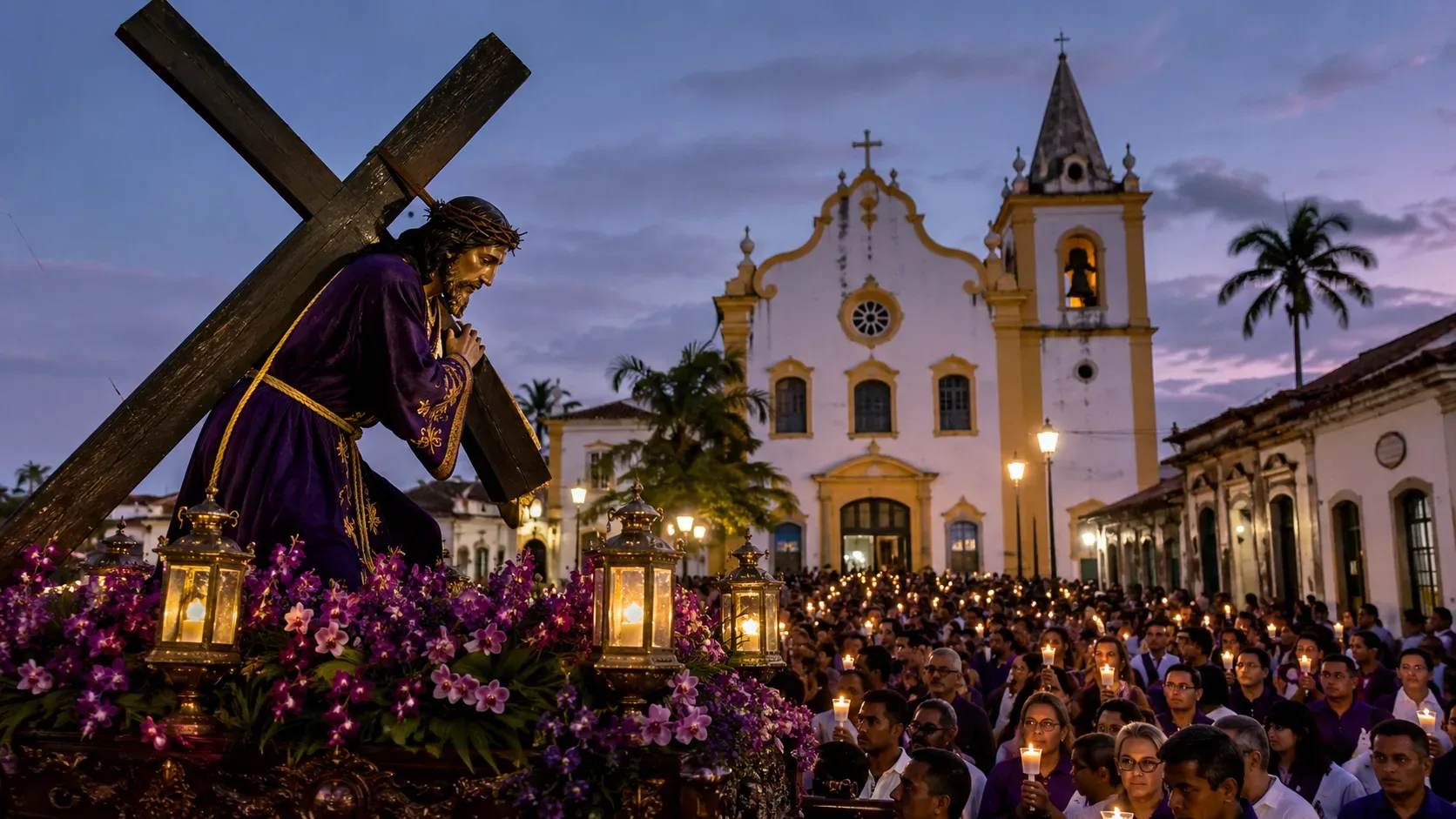
The Lord of the Steps Pilgrimage in São Cristóvão, Sergipe, does not have a fixed civil-calendar date: it takes place on the second weekend of Lent, so it shifts from year to year according to the Easter calendar. Its current format spans three days, from Friday through Sunday. In recent editions, Friday has opened with Mass in Aracaju and an overnight walk of roughly 20 to 21 km to São Cristóvão; Saturday centers on Masses and the Penitential Procession; and Sunday culminates in the Procession of the Encounter, with the images of the Lord of the Steps and the Virgin Mary, followed by the Sermon of the Encounter and the Veronica chant.
When the Lord of the Steps Pilgrimage takes place
The safest reference for planning a trip is the liturgical calendar, not a fixed date in February or March. The Archdiocese of Aracaju states that the pilgrimage always takes place on the second weekend of Lent, and a study published by the Federal University of Sergipe uses the same timing reference.
This explains the recent variation: in 2024, the program ran from February 23 to 25; in 2025, from March 14 to 16; and in 2026, from February 27 to March 1. Anyone planning a future edition should therefore use “the second weekend of Lent” only as a planning rule and wait for the official announcement to confirm dates, times, the route, traffic arrangements, and services.
How the pilgrimage works: what recurs and what changes
The clearest way to understand the celebration is to separate the structure that repeats from the detailed schedule, which can change every year.
| Moment | Recurring core | What may change |
|---|---|---|
| Friday | In recent editions, Mass in Aracaju followed by an overnight walk/transfer of the image toward São Cristóvão. | Times, support points, traffic operation, and route details. |
| Saturday | Masses, reception of pilgrims, and the Penitential Procession with the image of the Lord of the Steps. | Number and times of Masses, departure time, and procession organization. |
| Sunday | Masses throughout the day, the Procession of the Encounter, Sermon of the Encounter, Veronica chant, and closing celebration. | Mass schedule, confessions, exact times, and access logistics in the Historic Center. |
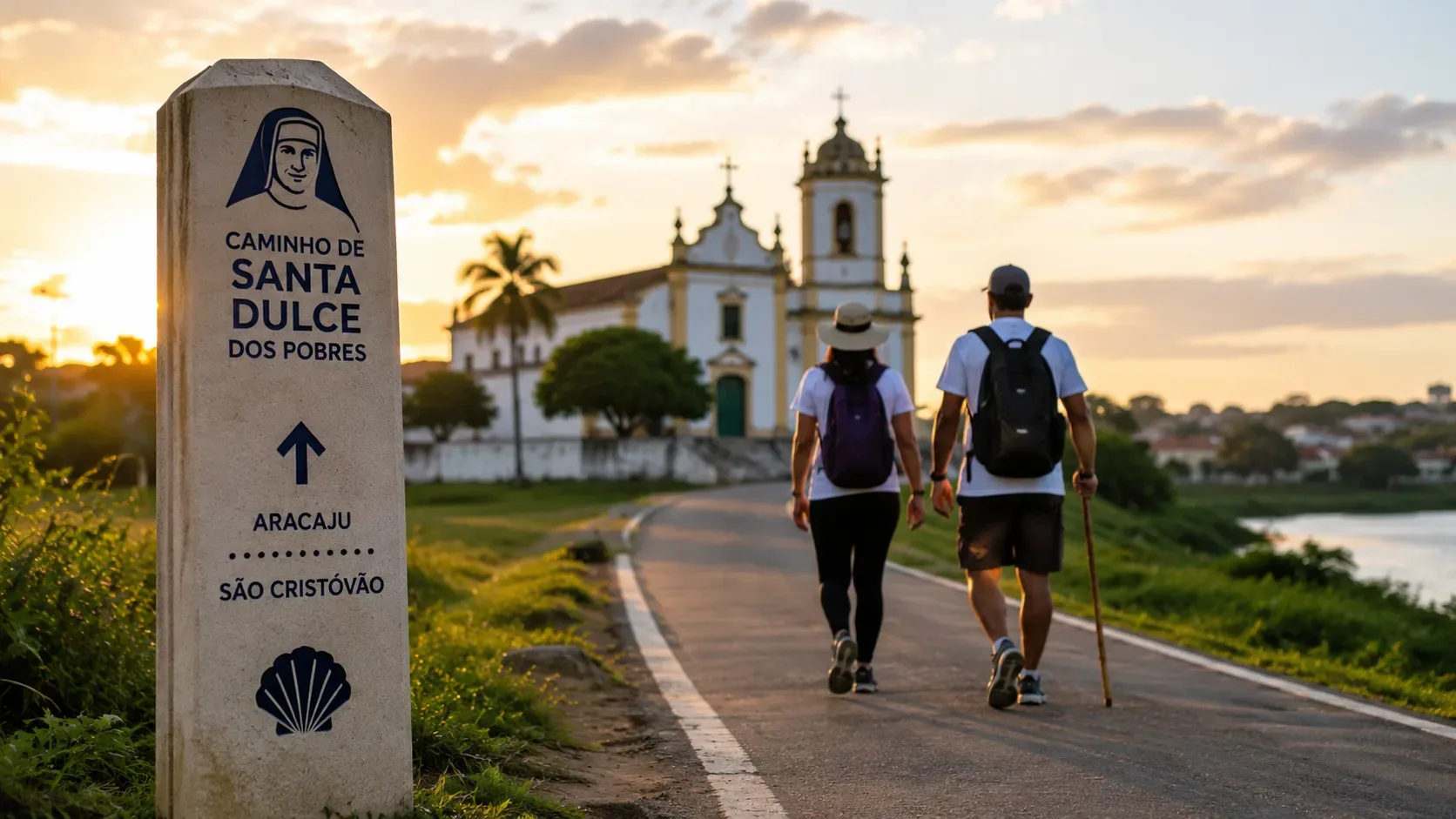
Friday: the overnight walk from Aracaju to São Cristóvão
In the official programs for 2024, 2025, and 2026, the opening includes a celebration at São Judas Tadeu Sanctuary, commonly known as the Capuchin Church, in Aracaju, followed by an overnight walk with the image of the Lord of the Steps toward São Cristóvão. In 2026, the municipal schedule listed Mass at 9 p.m. and departure at 10 p.m., with Nossa Senhora da Vitória Sanctuary identified as the destination.
The official sources themselves treat the distance as approximate. Before the 2026 event, São Cristóvão City Hall described a route of about 21 km; in its coverage of the opening, it described the walk as approximately 20 km. The difference does not necessarily mean that the route changed: it shows that the figure should be read as a practical estimate, not as a precisely measured sports-course distance.
This walk is one way to experience the pilgrimage, but not the only one. The weekend program includes celebrations and processions inside São Cristóvão, so visitors can take part on Saturday and Sunday without walking from Aracaju overnight.
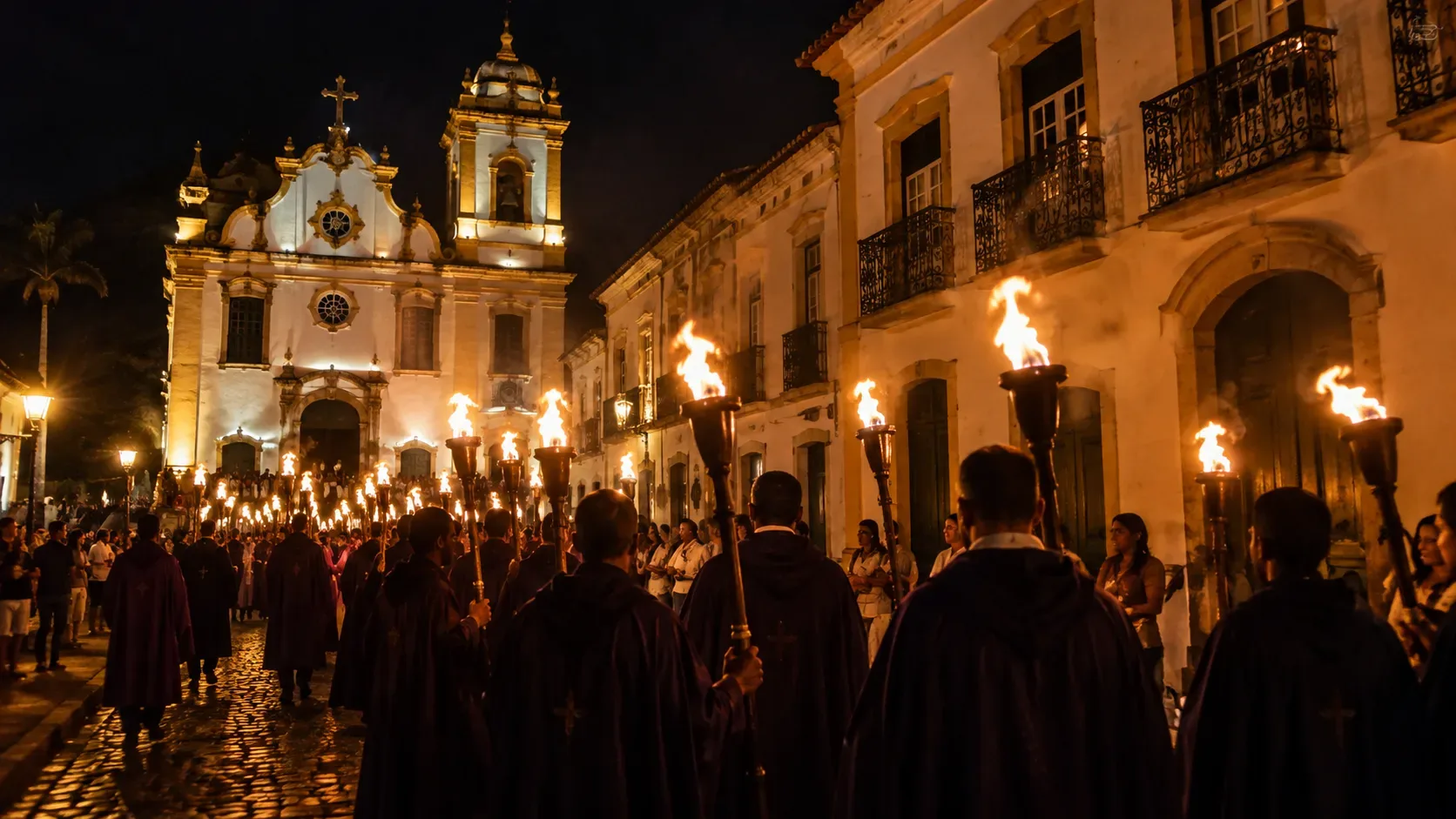
Saturday: the Penitential Procession
Saturday combines Masses with the traditional Penitential Procession. In 2026, the official program included celebrations at Nossa Senhora da Vitória Sanctuary, Carmo Menor Church, and an outdoor Mass in Senhor dos Passos Square; at 9 p.m., the image of the Lord of the Steps left Carmo Menor Church for Nossa Senhora da Vitória Sanctuary.
The penitential dimension is central to the tradition. Some pilgrims wear purple, walk barefoot, carry rosaries, or fulfill personal vows, practices recorded in religious and historical sources. Visitors should understand that this is not simply a cultural parade: the procession is a devotional celebration shaped by silence, prayer, and the acts of faith of thousands of participants.
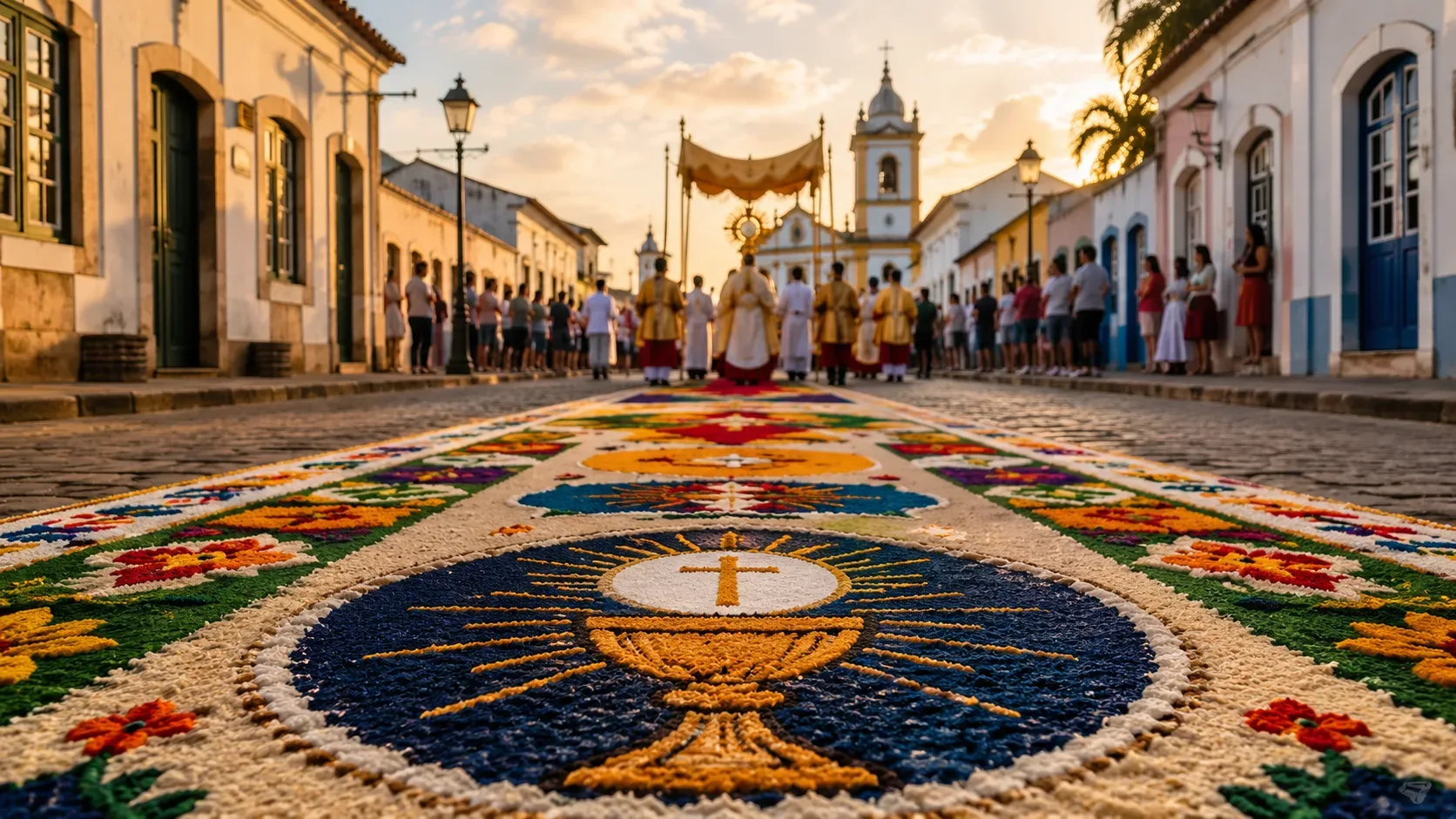
Sunday: the Procession of the Encounter
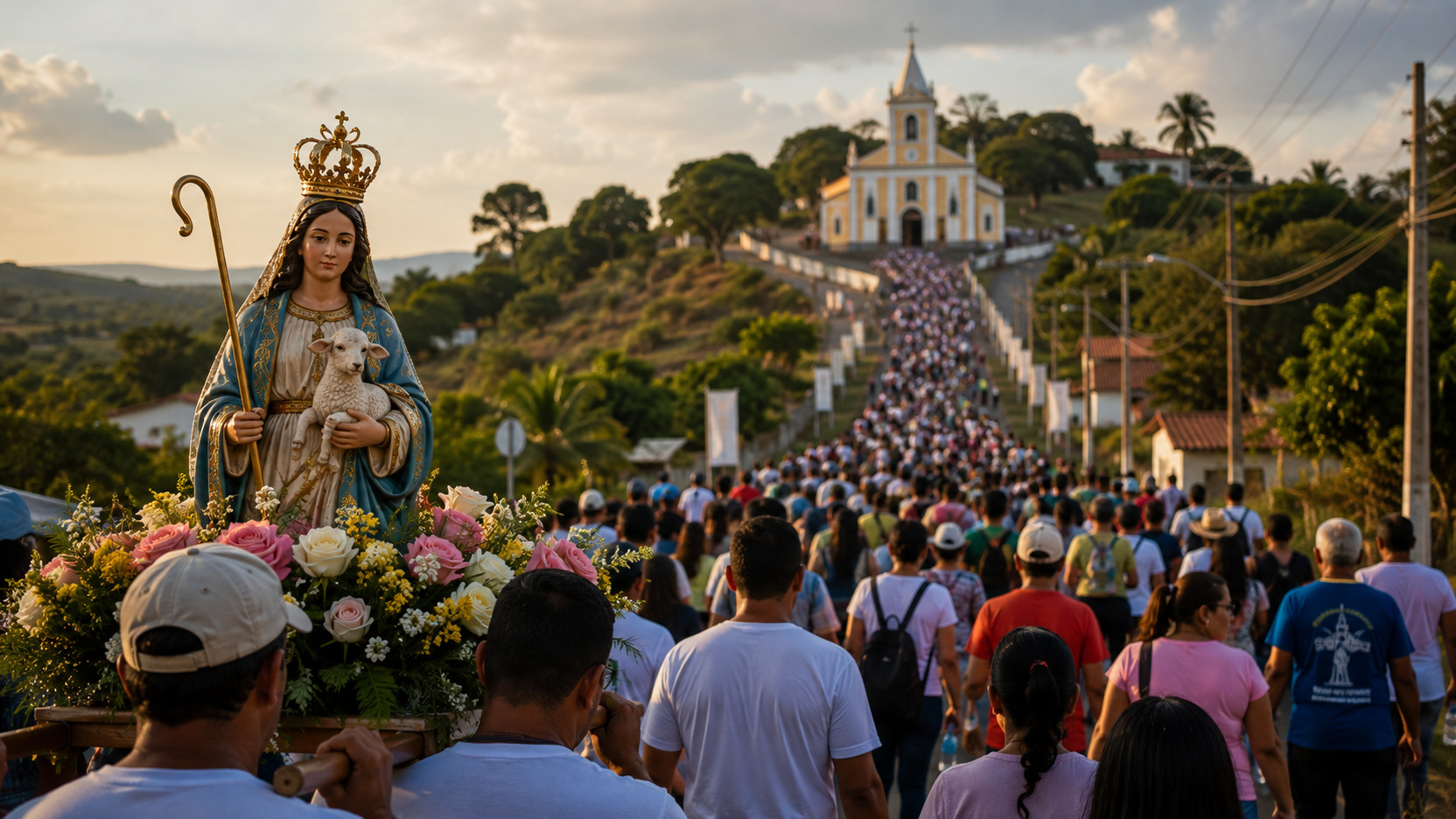
Sunday is the high point for many pilgrims. The schedule generally includes Masses from early morning at several churches and spaces in the Historic Center and, in the late afternoon, the Procession of the Encounter. The images of the Lord of the Steps and the Virgin Mary proceed along separate routes to São Francisco Square, where the encounter traditionally takes place, accompanied by the Sermon of the Encounter and the Veronica chant.
Recent official sources use both “Our Lady of Sorrows” and “Our Lady of Solitude” for the Marian image associated with the encounter. For visitors, the naming difference does not change the practical guidance: the parish and Archdiocese program for that year is the reference for where each image will be and when each procession will depart.
What 2026 shows about the size of the event
In 2026, City Hall stated that the pilgrimage draws around 70,000 devotees each year and, after Sunday’s events, published coverage referring to more than 70,000 participants in the Historic Center. That scale helps explain why arrival and departure planning matters just as much as knowing the religious schedule.
That year, the municipality provided health and security infrastructure and changed vehicle circulation. On Saturday, partial road closures in the Historic Center began at 9 a.m. and full closures at 4 p.m.; on Sunday, partial closures began at 9 a.m. and full closures at noon. Those times are a 2026 example, not a permanent rule. For a future edition, check the traffic plan released shortly before the event.
How to prepare to participate
Before choosing an itinerary, decide what experience you want: the Friday overnight walk, Saturday’s Penitential Procession, Sunday’s Procession of the Encounter, or a combination. That choice changes transportation, lodging, physical effort, and how long you should stay.
- If you plan to do the overnight walk: recent official routes are roughly 20 to 21 km and continue through the night. Wear broken-in footwear, light clothing, carry water, and take only what you need. Assess your physical condition beforehand.
- If you are only going to São Cristóvão: arrive early. The Historic Center receives tens of thousands of people and vehicle access may be restricted many hours before the processions.
- Transportation: do not count on parking close to the churches or central squares. Road closures and no-parking areas are set up every year.
- Lodging: if you want to follow more than one day, booking early reduces dependence on travel during the busiest periods.
- During religious acts: keep passageways clear, follow organizers’ instructions, and avoid interrupting vows, prayers, or processions for photographs.
- Weather and hydration: the pilgrimage takes place in a warm climate and involves long periods on foot. Sun protection for Sunday, hydration, and a light rain layer can be useful.
What to confirm before leaving home
The general structure is predictable; the operating details are not. In the week of the pilgrimage, verify five points:
- the official dates for that edition;
- the Friday walk’s departure time and starting point;
- Mass, confession, and procession times;
- traffic closures, parking restrictions, and any special transportation;
- health stations, support points, and safety guidance announced for that year.
The most useful sources are São Cristóvão City Hall, the Archdiocese of Aracaju, and, for mobility changes, the specific traffic notices from Setran/City Hall.
Quick questions
Does the Lord of the Steps Pilgrimage happen on the same date every year?
No. It is tied to the second weekend of Lent, so it may fall in late February or in March depending on the date of Easter.
Do I have to walk from Aracaju to São Cristóvão?
No. The overnight walk is an important part of the recent program, but Masses and processions take place in São Cristóvão on Saturday and Sunday.
Where does the Procession of the Encounter take place?
The traditional encounter takes place in São Francisco Square, in São Cristóvão’s Historic Center, after the images depart in separate processions.
Is the Friday route exactly 21 km?
Treat the distance as approximate. Municipal sources in 2026 used both about 21 km and approximately 20 km to describe the walk.
Which day is best for a first-time visitor?
It depends on your purpose. Friday offers the physical experience of the overnight pilgrimage; Saturday emphasizes penitence; Sunday centers on the Procession of the Encounter and usually brings the largest flow of people. Anyone who wants to understand the pilgrimage as a whole should, if possible, follow more than one day.
Sources and updates
This guide separates the recurring structure of the pilgrimage from annual details. For the 2026 edition, it draws on the city’s official schedule, its coverage of the opening walk, and its traffic guidance, along with references from the Archdiocese of Aracaju and historical research from UFS. For any future edition, check the program again: times and services can change even when the tradition remains.