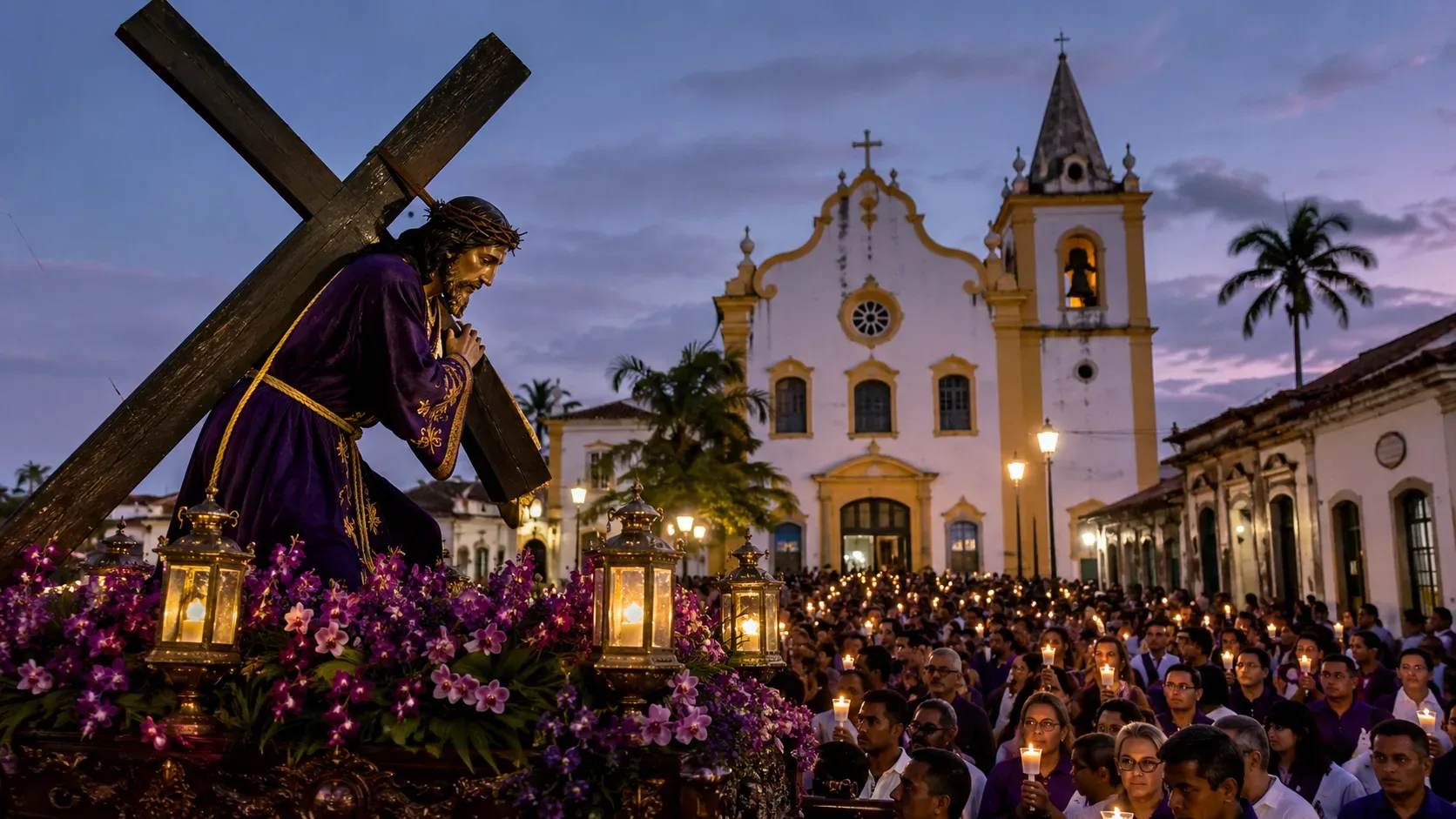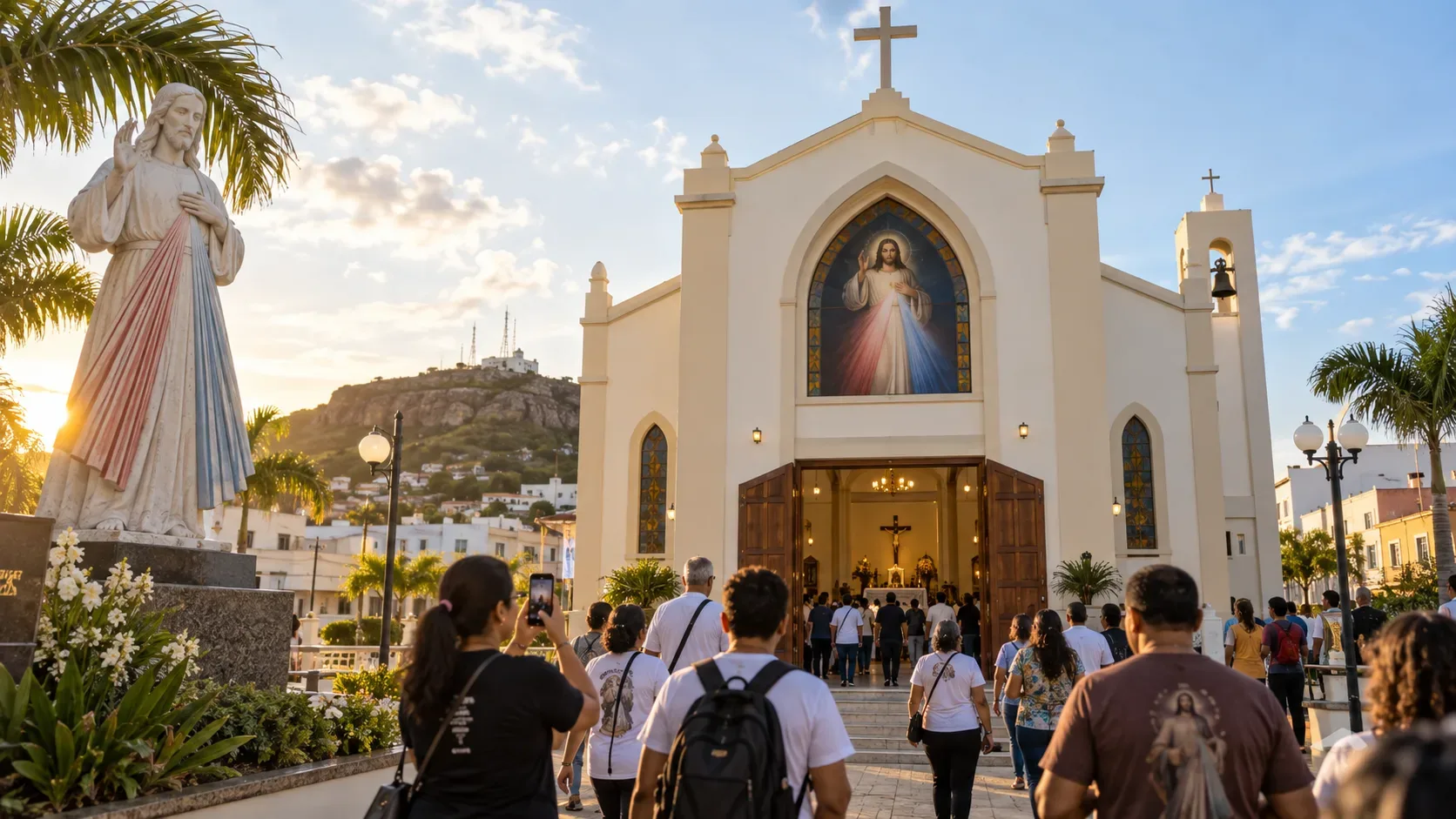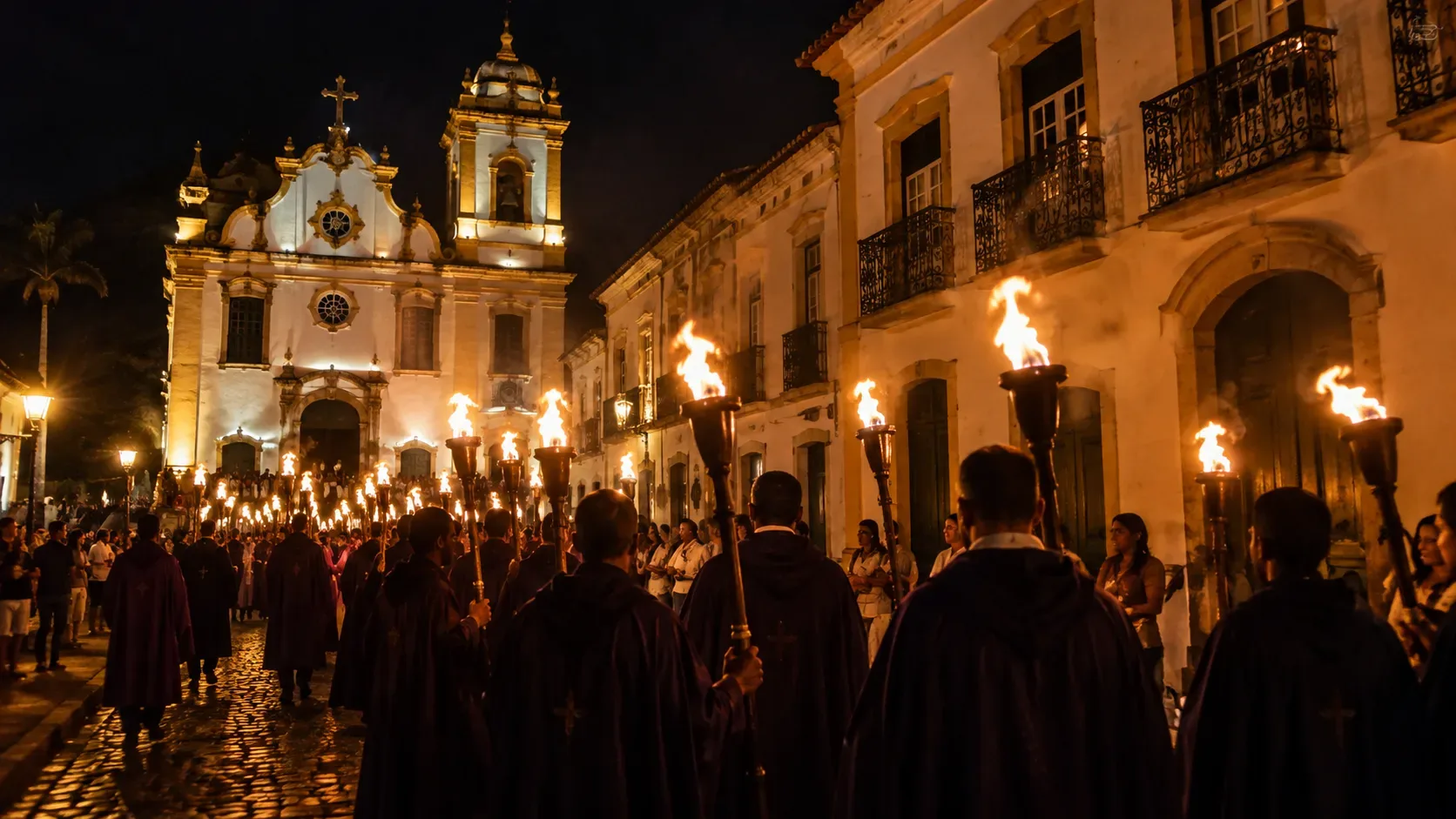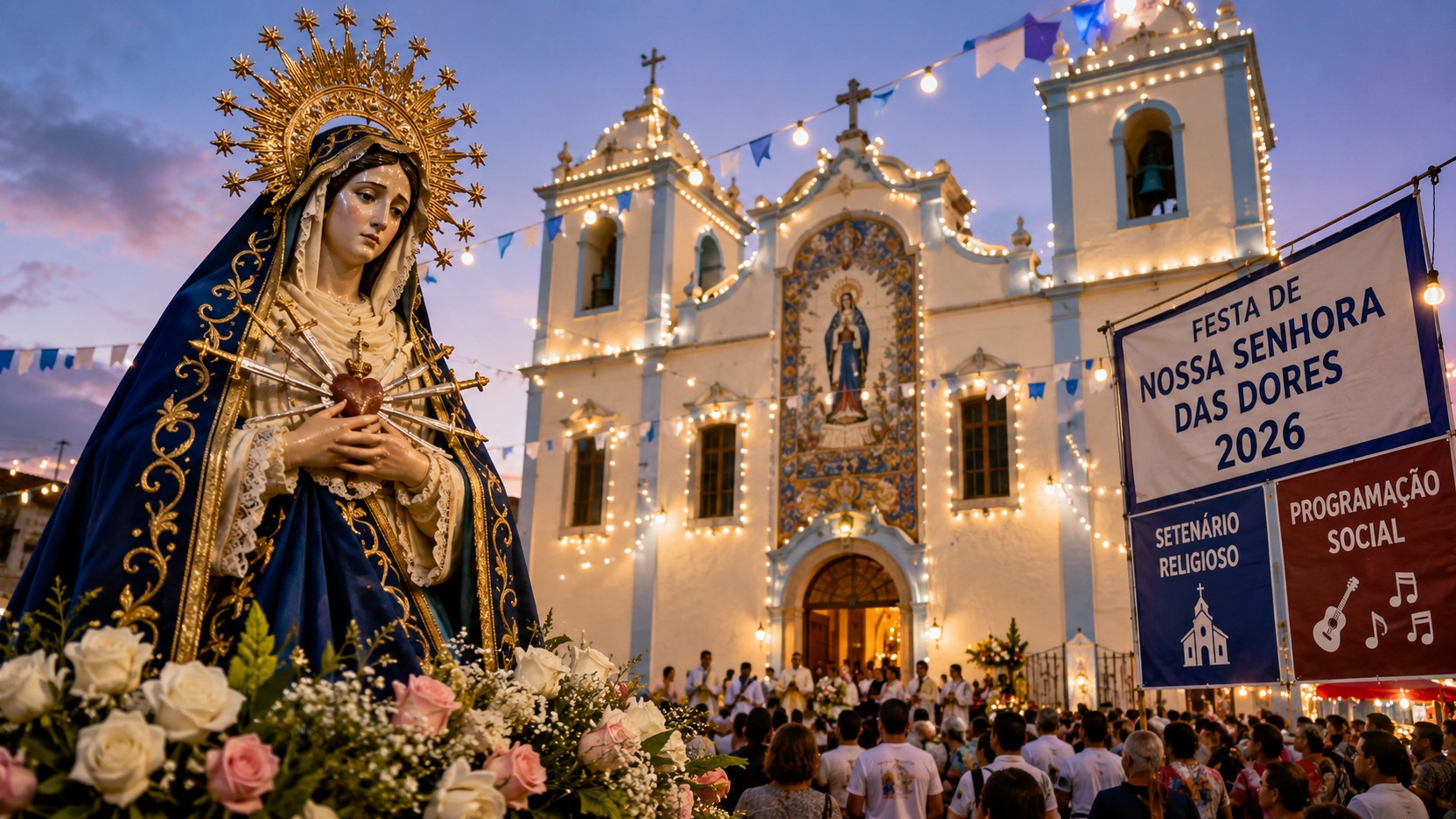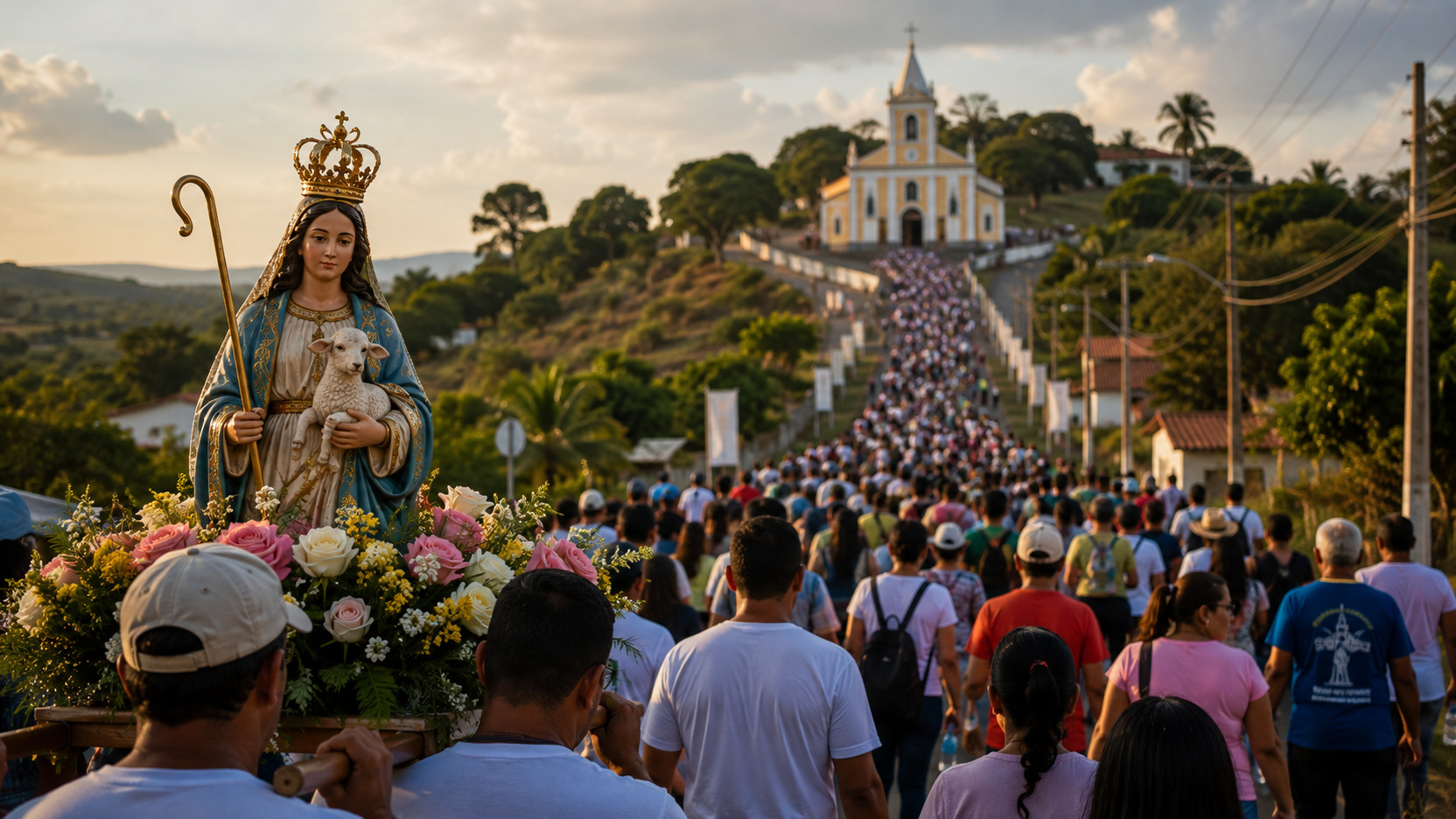
The Divina Pastora Pilgrimage, also officially called the Pilgrimage to the Sanctuary of Our Lady Divina Pastora, has a nucleus that has been repeated for decades: the great walk leaves Riachuelo and continues to Divina Pastora on the third Sunday of October. What changes from one edition to another are the detailed timetables, the Saturday schedule, the traffic schedule, support points and other services. Therefore, it is worth separating permanent tradition from information that needs to be reconfirmed closer to the date.
In 2026, the Sanctuary announces the 68th Pilgrimage for the 17th and 18th of October. Sunday, October 18th, is the third Sunday of the month and corresponds to the traditional day of the main walk. On August 12, the Archdiocese of Aracaju had already published pastoral guidelines for priests to assist pilgrims, but the detailed public program for the edition still needed to be followed on official channels.
When does the Pilgrimage of Divina Pastora take place
The structural date is the third Sunday in October. The Sanctuary itself records that this reference was established in 1971 by Dom Luciano José Cabral Duarte, after the rains of August and September made it difficult to carry out the pilgrimage during the period in which it had begun.
The tradition was born before. The Sanctuary places the first pilgrimage on August 24, 1958, organized by the then priest Luciano Cabral Duarte after his return from France and inspired by the pilgrimages to Chartres Cathedral. The group left Riachuelo towards Divina Pastora. After an interruption in a few years, the walk resumed its route in 1972 and was consolidated in October.
In practice, the schedule usually takes up the weekend. Saturday can have masses, processions, welcomes and other activities, while Sunday focuses on the walk between Riachuelo and Divina Pastora and the celebrations at the destination. These timetables should not be copied from a previous edition: they are precisely the part most subject to change.
What is the route from Riachuelo to Divina Pastora
The traditional axis connects Riachuelo to the Sanctuary of Nossa Senhora Divina Pastora. The historical reference point in Riachuelo is the Parish of the Immaculate Conception, where the pilgrimage was born and where recent editions also had celebrations before leaving.
The route follows the section of SE-160 between the two municipalities. Since 2014, this connection has been named Caminho dos Pilgrims de Divina Pastora "Padre Raimundo Cruz", in honor of one of the great propagators of the pilgrimage.
For physical planning, it is reasonable to consider a walk of about 10 kilometers. Local sources use small variations in measurement, approximately 9 to 10 kilometers, and a 2026 state legislative document cites around 9.8 kilometers for the road connection between Riachuelo and Divina Pastora. The difference does not change the practical preparation: it is a long walk, done in a large group and, part of the route, exposed to the weather.
Upon arriving at Divina Pastora, the flow focuses on the Sanctuary area and the celebrations planned for that year. As the operational design may change, pilgrims must check whether there will be changes to the exact exit point, vehicle access, embarkation and disembarkation areas and road closures.
What is permanent and what needs to be checked with each edition
What can be treated as a permanent structure is the realization on the third Sunday of October, the meaning of Riachuelo-Divina Pastora, the penitential and devotional walk, the Sanctuary as a destination and the centrality of Our Lady Divina Pastora. Also part of the event's identity is the character of a major religious event in Sergipe, recognized as the state's intangible cultural heritage since 2014.
The detailed schedule is annual. Mass times in Riachuelo, moment of image departure, masses in Divina Pastora, confessions, shows or presentations, hydration points, health care, bathrooms, parking, special transport and traffic schedule may change. The same goes for safety guidelines and possible movement restrictions.
This precaution avoids a common mistake when searching for the pilgrimage: finding a page from 2024 or 2025 and assuming that the times are still valid. In 2025, for example, the public program predicted mass in Riachuelo at 5am and pilgrims leaving at 6am. This data helps to understand the dynamics of the party, but should not be used as an automatic timetable for 2026.
How to prepare for the hike
Distance test before the day of the pilgrimage
Anyone who intends to do the entire route must remember that around 10 kilometers require more than momentary willingness. If you don't usually walk this distance, doing progressive routes in the preceding weeks helps you understand how your feet, knees and pace respond to effort. The objective is not to transform the pilgrimage into a sporting event, but to arrive with a realistic notion of one's own limits.
Already worn and comfortable footwear tends to be safer than wearing sneakers on the day. Appropriate socks, light clothing and a light load also reduce unnecessary discomfort during several hours on the move.
Plan hydration and heat protection
The walk takes place outdoors and may involve sun and heat. The Ministry of Health warns that prolonged exposure, strenuous activity and lack of hydration increase the risk of heat-related problems. Water, head protection, appropriate clothing and sunscreen are basic planning items.
Dizziness, weakness, headache, nausea, confusion or significant discomfort should not be treated as a normal part of the sacrifice of walking. In the face of relevant symptoms, the advice is to stop the effort and seek available care.
Take only what you need
Identification document, charged cell phone, water, commonly used medication, some simple food and protection from sun or rain usually solve the most predictable needs. The lighter the weight carried, the better for those who will spend hours walking and standing.
It is also useful to arrange a meeting point with companions. In a crowd, relying solely on calls or messages may be insufficient, especially if there is congested signal or separation from the group.
Children, elderly people and people with disabilities need their own plan
Not every participant needs to walk the entire route. For young children, the elderly, people with reduced mobility or with health conditions that make prolonged effort difficult, the decision must consider safety, the possibility of rest and an alternative transportation or departure from the route.
Anyone who has doubts about their ability to undertake a walk of this magnitude should seek guidance from a health professional who knows their condition. It is also worth locating in advance where the support points announced for the edition will be.
What to check before leaving home
The first check must be on the official channels of the Sanctuary of Nossa Senhora Divina Pastora and the Archdiocese of Aracaju. They are the most direct references for dates, celebrations, pastoral guidance and pilgrimage updates.
During the event week, confirm the departure time in Riachuelo, the complete schedule for Saturday and Sunday, the traffic schedule on SE-160, parking and transport, hydration and service points, weather forecast and any guidance from local authorities. If there is a caravan, also check where the bus can drop off and pick up participants.
The Sanctuary has been running a campaign for years to preserve the religious nature of the pilgrimage and discourage alcohol consumption during the event. For those who are going to walk, this also favors a safer and more coherent participation with the devotional proposal of the pilgrimage.
What is already confirmed for 2026
The 68th Pilgrimage is announced for October 17th and 18th, 2026. The main date coincides with the third Sunday in October, October 18th, maintaining the historical tradition. The Archdiocese of Aracaju has also mobilized the clergy to assist pilgrims, including providing guidance to increase the availability of priests for confessions and reception at the Sanctuary.
What should not be assumed based on previous years are the exact schedule times, transit logistics, services and support points. When these details are published, they shall supersede any older guidance.
A guide that remains valid after 2026
For future editions, the logic is simple: use the third Sunday in October and the Riachuelo-Divina Pastora route as a structural reference, but treat timetables, programming and traffic operations as annual information. Therefore, this guide helps you understand the tradition without turning details of a specific edition into a permanent rule.
The pilgrimage was born as a journey of faith and continues to be organized around this gesture: leaving Riachuelo, following the Pilgrims' Path and arriving at the Sanctuary. Those who separate what is tradition from what is temporary service can prepare better and avoid depending on old information when participating.