Updated September 3, 2026: Contran Resolution No. 1,027 has already created the nationwide legal framework for electronic vehicle ownership transfers, but that does not mean the new integrated flow is automatically available to everyone in the CNH do Brasil app. In the official communication reviewed, the National Traffic Secretariat (Senatran) still says it is working on implementing the feature for used-vehicle transfers between individuals.
In practice, two different things are happening at the same time: the rule already exists and defines how the digital operation may work; the integrated service still depends on system rollout. For that reason, the publication of the resolution should not be treated as if it had already created a universal “transfer vehicle” button in the app.
What the new nationwide rule already allows
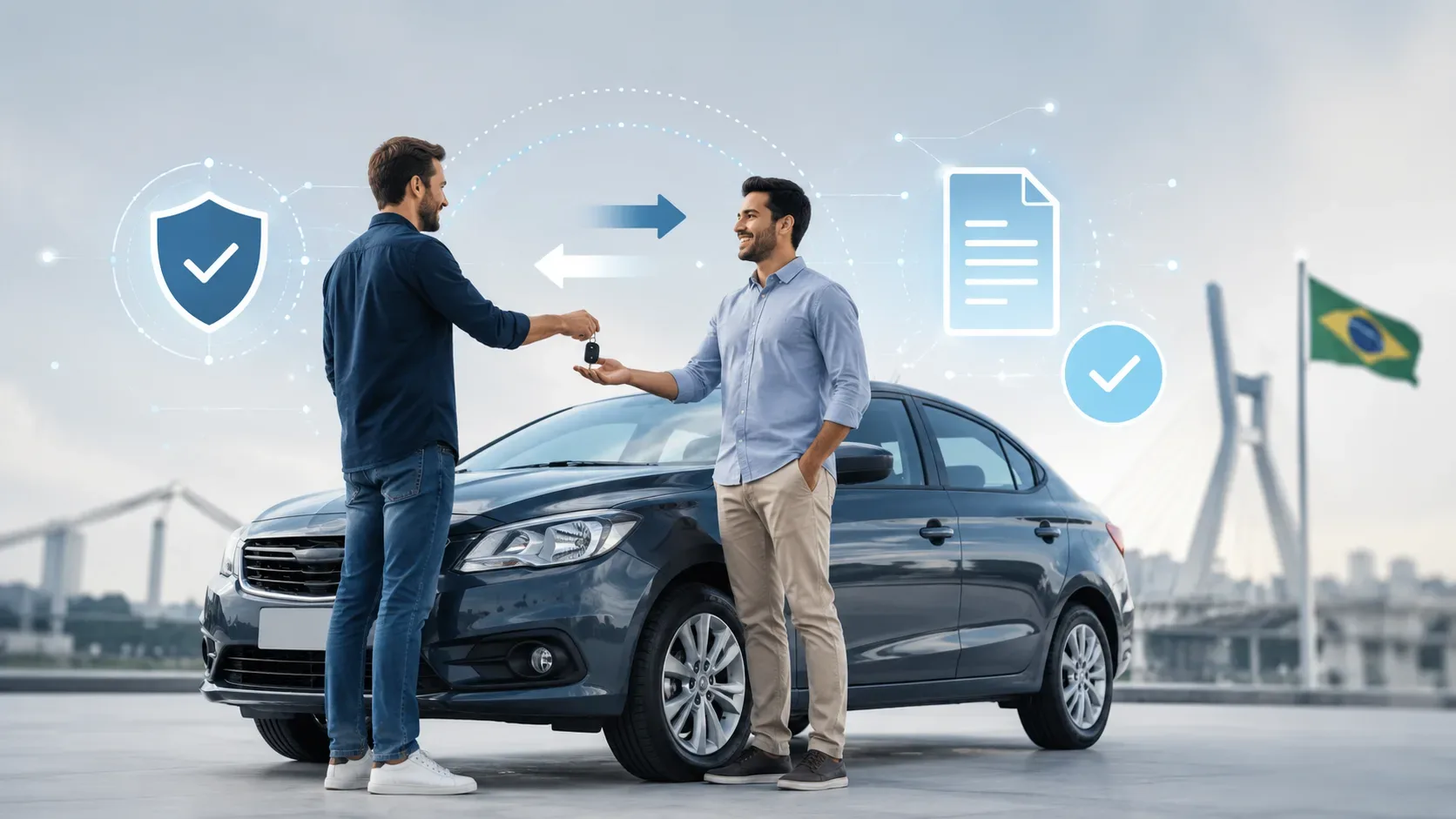
Contran Resolution No. 1,027, dated August 17, 2026 and published on August 18, now governs vehicle registration, licensing and ownership transfers and consolidates three transfer modes: conventional, electronic and electronic with custody.
Under an electronic transfer, the regulatory design is for the steps to be processed in a digital environment and integrated with the National Motor Vehicle Registry (Renavam), using user authentication and electronic signatures. The vehicle identification inspection remains an applicable requirement; it is expected to be integrated into the flow through available services rather than simply eliminated.
The rule also provides for an electronic transfer with custody. In this model, the transaction payment may be held in custody and released only when the requirements needed to complete the transfer are met. The regulation also provides for blocking, reversal and refund mechanisms if the transaction is not completed.
Already regulated, still being implemented, and current alternatives
| Status | What it means for the vehicle owner |
|---|---|
| Already regulated | There are nationwide rules for conventional, electronic and electronic-with-custody transfers, Renavam integration, electronic signatures and security requirements. |
| Still being implemented | The integrated flow for used vehicles between individuals in the CNH do Brasil app depends on Senatran rolling out the feature and on the necessary integrations with the services involved. |
| Current alternatives | Procedures currently offered by state Detrans remain available, including digital tools already in use such as ATPV-e, electronic signatures and electronic notice of sale, depending on availability and the rules of the state where the vehicle is registered. |
What the CNH do Brasil app is expected to combine once the feature is available
According to Brazil's Ministry of Transport, the feature under development is intended to bring into one electronic flow steps that today may take place in separate systems. The expected journey includes:
- recording the transaction;
- electronic signing of the transfer by buyer and seller;
- checking debts linked to the vehicle;
- payment of debts and state Detran fees, when applicable;
- integration of the vehicle identification inspection into the process;
- completion of the ownership change and issuance of the new document.
This design explains the main benefit of Resolution No. 1,027: it is not simply creating another digital document. The goal is to connect stages that already have electronic components but may still be scattered across different systems.
What should not yet be treated as available
The official announcement itself uses future-oriented language when describing the app flow: Senatran is “working on implementation” and explains what buyers and sellers will be able to do “when the feature is available.” Therefore, as of this update, it would be premature to publish click-by-click instructions, screen sequences or button paths as if a nationwide procedure had already been released.
The official source reviewed also does not give a single nationwide launch date for this feature. Availability and access procedures depend on deployment of the services contemplated by the resolution.
Does the inspection disappear in an electronic transfer?
No. The electronic transfer was regulated to reduce in-person steps and integrate systems, but the vehicle identification inspection remains among the process requirements. What changes is the possibility of integrating the inspection result into the electronic flow, depending on the services available.
This matters because “fully digital transfer” should not be understood as “no physical verification of the vehicle.” Digitalization applies to processing and declarations of intent, while the inspection remains a separate vehicle validation requirement.
What happens to ATPV-e and electronic notice of sale
These tools did not begin with the new resolution. The Ministry of Transport notes that vehicle ownership transfers already use digital resources such as the electronic Authorization for Transfer of Vehicle Ownership (ATPV-e), electronic signatures and electronic notice of sale.
The difference is that these steps may currently occur separately or depend on state systems. The new regulation establishes a basis for integrating them into an electronic flow linked to Renavam. Until the nationwide integration is available for a user's specific case, the procedure in force at the Detran responsible for the vehicle's registration should still be followed.
What security requirements the rule provides
Because a transfer changes the registered ownership of a valuable asset, the resolution sets safeguards for the digital environment. Officially cited measures include individual and multifactor authentication, transaction traceability, audit trails, and fraud-prevention and fraud-detection mechanisms.
These requirements are meant to ensure that simplification is not confused with weaker controls. The idea is to let the transaction move through integrated systems while preserving identification, event records and validation checks.
What to do today if you need to transfer a used vehicle
- Check the Detran in the state where the vehicle is registered. Procedures, fees, inspection channels and digital steps already available may vary.
- Use the official digital tools already offered. ATPV-e, electronic signatures and electronic notice of sale may be part of the process depending on the vehicle's situation and local infrastructure.
- Do not assume the new app feature is available merely because the resolution was published. Look for an official Senatran announcement or an app update before following tutorials that claim a nationwide flow is live.
- Check debts, restrictions and inspection requirements. Digitalization does not remove conditions that must be met to complete the ownership change.
In short
Contran Resolution No. 1,027 has already settled the regulatory side: it defined transfer modes, enabled an electronic process integrated with Renavam, and established security and custody requirements. What is still missing from the citizen experience is the full rollout of the functions and integrations that will turn that legal framework into a single flow in the CNH do Brasil app.
Until then, the practical approach is to distinguish a published rule from a service that is actually available and use official Detran and Senatran channels to confirm the procedure that applies to the vehicle.