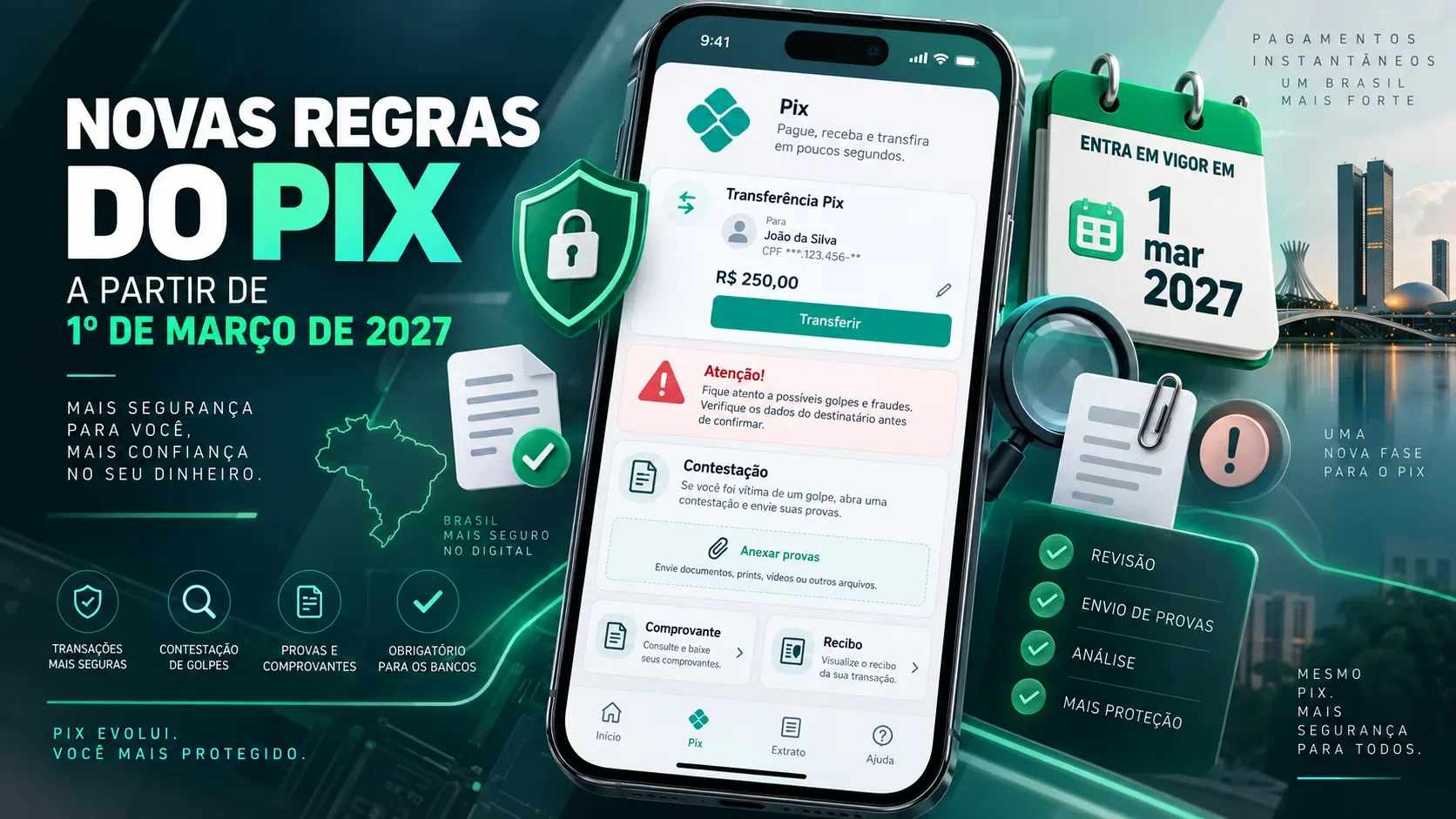
Starting on March 1, 2027, banks and other Pix participants will have to follow version 7.4 of the Minimum Requirements for User Experience. The update, introduced by BCB Normative Instruction No. 774 of September 3, 2026, mainly changes how apps handle disputes involving scams and fraud through the Special Refund Mechanism (MED). It also changes payment receipts, recipient identification, and security messages.
For users, the most important change is that disputes should become more guided, with case screening, space to explain what happened, and the ability to attach documents and supporting records. This does not mean an automatic refund. MED still depends on the institutions’ analysis and the conditions in the Pix Regulation. The Pix user-experience requirements manual is part of that framework and sets minimum obligations; its sample screens are illustrative, so each bank may organize its interface differently as long as the requirements are met.
What changes in scam disputes
Version 7.4 overhauls the MED self-service chapter. The new journey should help customers identify the type of situation they experienced and separate cases that may proceed through MED from those that require another channel. Instead of a generic complaint, the bank must provide ways for users to add context to the transaction, explain the scam, and submit evidence.
One of the changes is the ability to attach documents and supporting records to the dispute flow. Depending on the case, this may include a police report, screenshots, and other records that help demonstrate fraud. The Central Bank already advises victims to gather data, documents, and evidence when reporting a scam; version 7.4 brings that information collection into a more structured app experience. See the official guidance on what to do when a Pix transfer is involved in a scam.
The rule also mentions improvements to dispute tracking and cancellation, as well as records related to refunds carried out through MED. The goal is to reduce ambiguity for customers and provide better-qualified information to the institutions analyzing the case.
What happens when a case is not eligible for MED
MED is not a general refund mechanism. It was created for fraud, scams, crimes, and other situations covered by Pix rules. For that reason, the new journey must make it clearer when the reported situation does not qualify for the mechanism.
A commercial dispute without fraud, buyer’s remorse, or a transfer made by mistake should not automatically be treated as a fraud dispute. In those cases, the app must guide the user and point to the appropriate support channels. This matters because a “dispute” button should not create the expectation that any Pix payment can be reversed unilaterally by the payer.
| Situation | What changes in the experience | Limit of the rule |
|---|---|---|
| Suspected scam or fraud | Clearer screening, description of what happened, and document/evidence uploads. | No automatic or guaranteed refund. |
| Commercial dispute without fraud | The app must state that the case is not eligible for MED and indicate another support channel. | MED does not become a general shopping chargeback system. |
| Pix sent by mistake | The journey should avoid labeling the case as fraud merely because the payer wants the money back. | No automatic right to a MED reversal is created. |
| Dispute already opened | Tracking, status checks, and cancellation are improved. | Institutional analysis is still required. |
Receipts and transaction records: the document must be cleaner
Version 7.4 provides that Pix payment receipts may not contain advertising, commercial offers, hyperlinks, or other content unrelated to the transaction. The document’s role should be to record and demonstrate the payment, not to serve as ad space or a shortcut to external pages.
When available, the receipt must also display the trade name of a corporate recipient. This can help consumers recognize the company that received the Pix payment when its legal corporate name differs from the brand they know. The change is reflected in different payment journeys and also appears in Pix Automático requirements. Agência Brasil reported on the ban on advertising and links in Pix receipts.
Some banks may label the final screen “receipt,” “proof of payment,” or use another term. The regulatory requirement applies to the transaction record itself: it should focus on payment data and useful recipient identification.
Favorite contacts and security warnings
Another relevant change concerns favorite contacts. Version 7.4 adds requirements for storing the Pix key used to initiate a payment and requires a warning to the payer when the recipient identification associated with a saved contact changes. This helps prevent familiarity with an old contact from replacing a fresh check of current data.
The manual also requires a specific message when a transaction cannot be completed because of a flag indicating a well-founded suspicion of transactional fraud. Instead of merely showing a generic error, the participant must tell the user that the failure is connected to that type of fraud-related flag under the rules.
What does not change under MED
The new version is mainly a change in user experience and information quality. It does not make refunds guaranteed. According to the Central Bank, a request involving fraud, scams, or crimes must be filed within 80 days of the transaction. The institution evaluates whether the case fits MED and, when there are signs of fraud, available funds may be blocked and returned under the mechanism.
Under the Central Bank’s current guidance, the case is analyzed within up to 7 calendar days; if fraud is confirmed, available funds are returned within up to 96 hours. In practice, this explains public references to a process that may take about 11 days. If the recipient account lacks enough funds, partial refunds may occur under the applicable rules. See the Central Bank’s guide on how MED works.
It is therefore important to distinguish a better-documented dispute from guaranteed reimbursement. The first becomes a more detailed user-experience obligation; the second still depends on analysis and on the availability of funds under the regulation.
What banks must implement by March 2027
- MED screening: distinguish eligible and ineligible situations before opening the recovery process.
- More context: allow customers to describe the scam and detail the disputed transaction.
- Attachments: incorporate documents and supporting records into the dispute flow.
- Guidance outside MED: direct users to appropriate channels when the case is not an eligible fraud case.
- Receipts: remove advertising, offers, external links, and unrelated content.
- Identification: display the corporate recipient’s trade name when available.
- Saved contacts: warn the payer when the recipient identification tied to a favorite contact changes.
- Risk messages: explain rejections associated with fraud-suspicion flags.
What depends on each app
The Central Bank defines the minimum outcome but does not require every bank to use an identical design. The location of the dispute button, menu names, the order of some screens, and the visual presentation may vary. What cannot vary is compliance with the obligations in version 7.4.
As a result, two banks may offer visually different journeys and still comply. From the user’s perspective, the key is whether the app allows the case to be explained, evidence to be attached, MED eligibility to be understood, and the dispute to be followed without ambiguous messages.
How to act after the change if you are scammed
If you are a fraud victim, the new experience should make reporting easier, but the advice to act quickly still applies. Report the case to your bank, describe what happened accurately, and gather documents that support the fraud allegation. The better the context, the better the institution can classify and analyze the request.
If the app says the situation does not qualify for MED, that does not necessarily mean there is no other consumer right or complaint path. It only means the Pix special refund mechanism is not the correct route for that case. Depending on the issue, the consumer may need to contact the bank, the merchant, a consumer-protection authority, or the courts.
The March 1, 2027 effective date gives institutions time to adapt their apps. Until then, screens may change gradually. Coverage published when the rule was released is available from UOL.