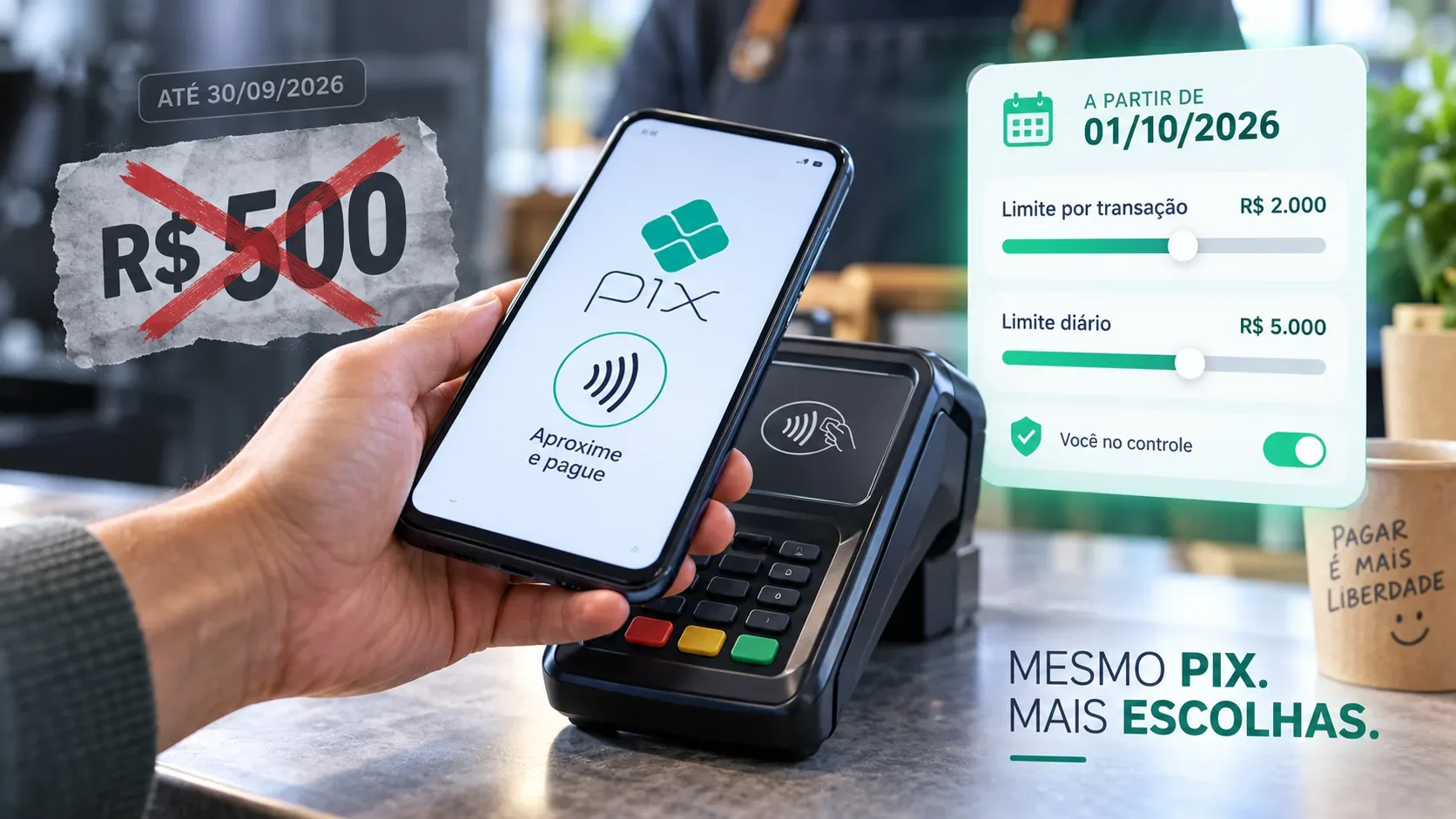
From October 1, 2026, contactless Pix will no longer be subject to the specific regulatory cap of R$500 per transaction. The change was set by the Central Bank of Brazil in BCB Normative Instruction No. 746, giving institutions until that date to adapt their systems. Removing the R$500 cap, however, does not turn contactless Pix into an unlimited payment method: the general Pix limit framework, the limits configured for the account and the institution's security controls will still apply.
In practice, users will be able to request increases or reductions to the per-transaction limit and the daily limit applicable to the payment journey through the limit-management tool provided by their institution. The Central Bank explained the change in its announcement on the new rule.
What changes for contactless Pix on October 1
| Until September 30, 2026 | From October 1, 2026 |
|---|---|
| There is a specific R$500 cap per contactless transaction. | The specific R$500 cap is removed. |
| Users may lower the maximum per-transaction amount and set a daily limit. | Users will be able to request adjustments to the per-transaction and daily limits through the bank's limit-management tool. |
| Even if other Pix limits are higher, contactless payments remain subject to their own R$500 ceiling. | Contactless Pix follows the same limit logic as other Pix payments, without a regulatory ceiling exclusive to this journey. |
The key point is to separate two ideas: removing the fixed cap does not automatically raise a customer's limit. The amount actually available will still depend on the limits applicable to the account, the user's settings and the institution's security rules.
So what will the contactless Pix limit be?
There will not be a single nationwide amount that answers this question. From October 1, the limit will depend on the settings available at the institution and on the general Pix limits for that account. This means users can keep low amounts or, if the bank approves the request and the other limits allow it, use contactless Pix for payments above R$500.
A few examples make the logic clearer:
- R$250 per-transaction limit: a R$300 contactless payment would be above the configured limit, even after the R$500 ceiling is removed.
- R$700 purchase: from October 1, it may be possible by contactless Pix if the per-transaction and period limits applicable to the account cover the amount and the institution authorizes the payment. Until September 30, the specific R$500 cap remains the barrier.
- R$1,000 daily limit: if the user has already used R$800 of the available amount for the period, a new R$300 payment may not be authorized even if the standalone per-transaction limit is higher.
These examples only illustrate how the mechanism works. The new rule does not require users to raise their limits and does not create any obligation to use higher amounts.
How to configure limits in the bank's app
Screen names vary by institution, but the Central Bank requires Pix participants to offer individual customers a limit-change feature in the app used to initiate Pix transactions. It is commonly found under sections such as Pix > Limits, Security or Limit management.
- Open the app of the institution that holds the account used for contactless Pix.
- Go to the Pix area and look for limits or limit management.
- Check the per-transaction and period limits currently available for the account.
- After the new rule is implemented, see how the institution presents controls for contactless Pix or no-redirect payment journeys.
- If you want a lower amount, request a reduction. If you want a higher amount, submit the request in advance and monitor the institution's response.
Under the general Pix limit-change rules, requests to reduce limits must be processed immediately. Requests to increase limits may be approved or denied by the institution and, when approved, take effect between 24 and 48 hours later. Because banks have until October 1 to adapt the contactless experience, labels and screen layouts may differ from one app to another.
What does not change when the R$500 cap ends
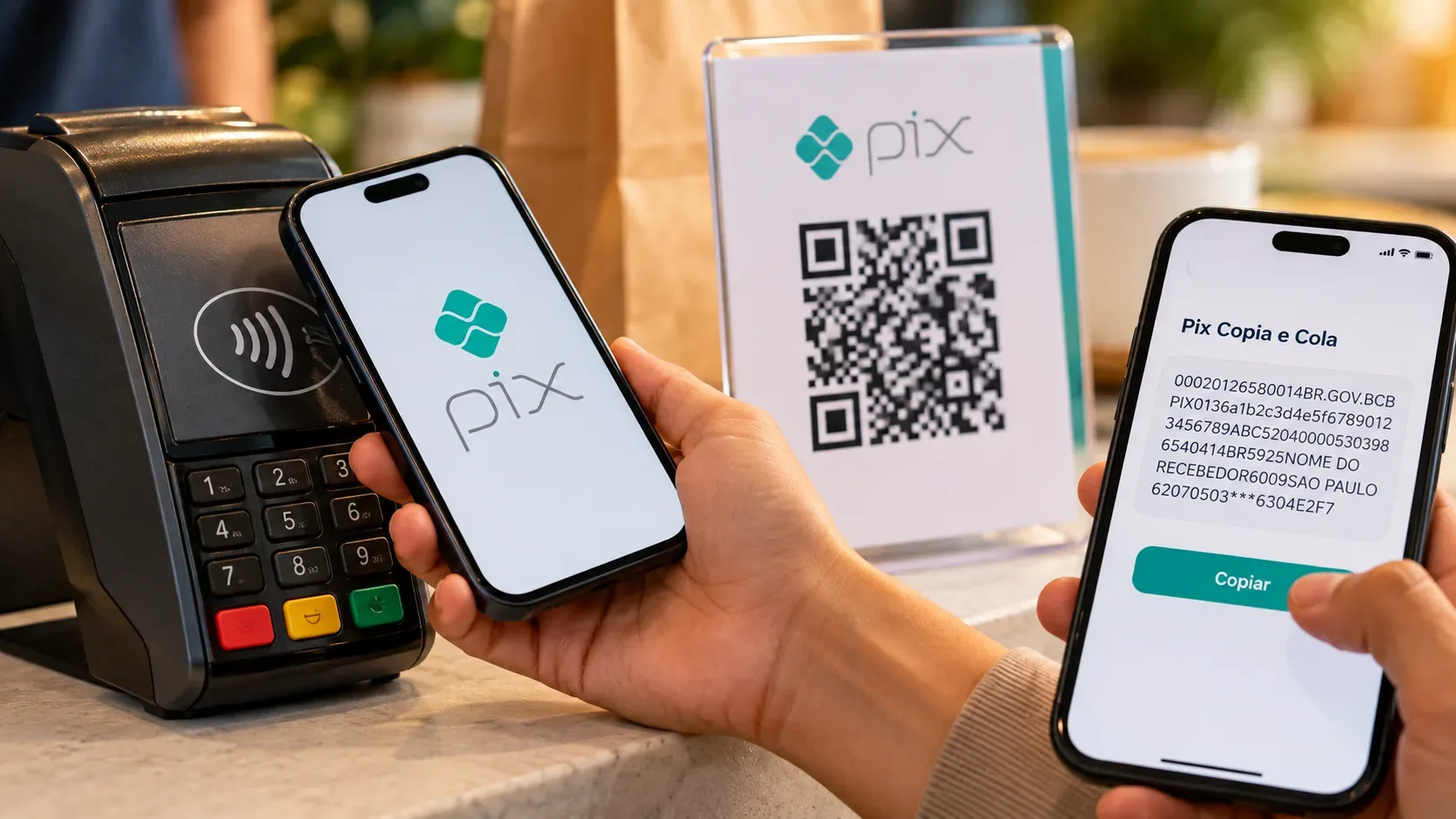
The update changes the limit rule, not the basic requirements for using the service. According to the Central Bank, contactless Pix depends on technical compatibility and authentication. The phone must support NFC, the operating system and payment solution must be compatible, and the merchant's device must support contactless communication.
Payment can be initiated through a bank app or through a compatible, authorized digital wallet. When a digital wallet is used, the account must be linked beforehand. The payment process still requires users to review the transaction details and confirm on the device. The Central Bank also says the journey uses authentication mechanisms such as biometrics or the device password, along with encryption. See the official page on contactless Pix.
Do I need to increase my limit to keep using it?
No. Removing the R$500 cap increases regulatory flexibility, but it does not require customers to choose a higher limit. Users who prefer to restrict amounts per transaction or per day can keep a lower setting, provided the institution offers the required controls.
It is also important not to confuse the maximum permitted by the rule with the amount actually released for the account. Banks and payment institutions continue to apply risk criteria and security mechanisms. As a result, two customers may have different amounts available, and an increase request is not guaranteed to be approved.
Does the change also apply to digital wallets and Open Finance?
Yes. The same update reaches transactions initiated through the No-Redirect Journey in Open Finance, including experiences offered through compatible digital wallets. The Central Bank's stated goal is to reduce regulatory differences between journeys that, from the user's perspective, provide a similar faster and lower-friction payment experience.
Therefore, from October 1, both contactless Pix and these no-redirect journeys will no longer be tied to the specific R$500 cap and will instead follow the limit logic applicable to other Pix transactions.
What to check before October 1
- Until September 30, 2026, the specific R$500 cap per contactless transaction remains in force.
- Institutions have until October 1, 2026 to complete the required adaptations.
- After the change, check the limits configured in your own app before attempting a higher-value purchase.
- If your goal is only to reduce exposure, there is no need to wait for the new rule: Pix limit management already allows reduction requests.
In short, contactless Pix becomes more flexible on October 1, but it remains a payment subject to limits. What disappears is the specific R$500 regulatory barrier; the amount that can actually be used will depend on the account settings, limit management and the institution's security controls.