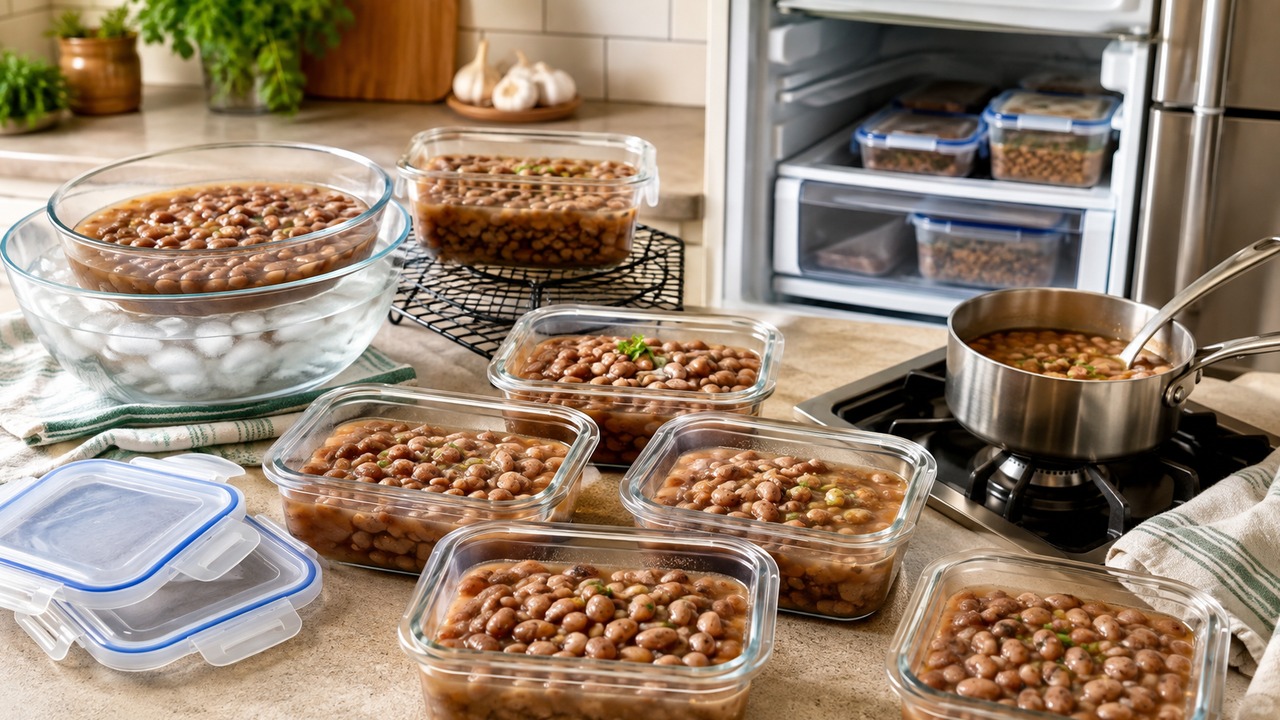
Freezing cooked beans works well, but the result depends less on a “freezer secret” than on what happens before and after freezing. The most consistent approach is to cool the beans without leaving them lukewarm on the counter for hours, divide them into portions that can thaw all the way through, choose the amount of cooking liquid according to how they will be used, and reheat them without cooking the beans longer than necessary.
Brazil's Dietary Guidelines (Guia Alimentar para a População Brasileira) specifically recommends cooking beans in larger quantities and storing them in the freezer for use in meals throughout the week. The idea is practical: freezing can reduce work and waste without turning beans into an inferior preparation, as long as the cooling stage is taken seriously.
The critical point comes before the freezer: cool quickly
The advice to “let it cool” is often misunderstood. It does not mean leaving a large pot of beans on the stove or counter until it is completely cold. The larger the volume, the more slowly the center of the food loses heat and the longer the food can remain in a temperature range favorable to microbial growth.
In consumer guidance published in 2025, Anvisa recommends not leaving food at room temperature for more than two hours and refrigerating leftovers soon afterward. RDC 216/2004, a regulation for food-service establishments that appears in the AnvisaLegis system as currently in force with amendments, provides an even more detailed technical parameter for that professional setting: reduce the temperature of prepared food from 60 °C to 10 °C within two hours and then keep it below 5 °C or freeze it at -18 °C or lower.
Those RDC figures should not be presented as a household legal requirement because the regulation applies to food-service establishments. They do, however, help explain the principle: cooling is not passive waiting; it is a stage that should be accelerated.
How to speed up cooling at home
Instead of leaving the beans in the pot in which they were cooked, transfer the amount that will be stored to smaller, shallower containers. Smaller portions lose heat faster and also make subsequent freezing and reheating easier.
When the batch is large, an ice-water bath can help. Place the container of beans inside a larger bowl with water and ice, without letting that water get into the food, and stir the beans from time to time with a clean utensil. The goal is to remove heat faster, not to keep the food chilling on the counter for hours.
As soon as the food has lost its intense heat and is in suitable containers, move it to refrigeration or freezing without extending the time at room temperature. Putting a huge, steaming pot in the refrigerator is not a good solution either: besides cooling slowly in the center, it can warm the surrounding area. Dividing the batch first solves both problems.
Is it better to freeze beans seasoned or plain?
Both approaches can work. Freezing beans plain is especially useful when you want to turn the same batch into different meals during the week. It also lets you adjust salt, garlic, onion, herbs and other seasonings when reheating.
The Brazilian Ministry of Health uses this logic in a guide on feeding children under 2 years old: it advises cooking beans without other seasonings, separating portions and freezing them. That material also includes nutritional reasons specific to young children. For general home cooking, therefore, freezing beans without seasoning should be understood as a flexibility strategy, not a food-safety rule.
If the beans are already seasoned the way the household normally eats them, the sources consulted do not indicate a general prohibition on freezing them that way. The main care remains the same: cool them quickly, use suitable packaging, freeze in portions and reheat thoroughly. Preparations with meat or other ingredients should be treated as a composed dish because thawing quality will also depend on those components.
Does the cooking liquid help or hurt texture?
For beans that will go back into a pot and be served with rice, freezing them with some of the cooking liquid is usually the most practical option. The liquid helps transfer heat during reheating and makes it possible to adjust consistency without having to cook the beans for a long time. If the liquid is very concentrated, it can be adjusted later with a little water.
It is also possible to freeze the beans with little liquid or drained. That makes sense when the destination is a salad, a filling, a puree, a soup that will already have another broth, or a recipe that calls for drier beans. University of Maine Extension material notes that cooked legumes can be frozen with or without their cooking liquid.
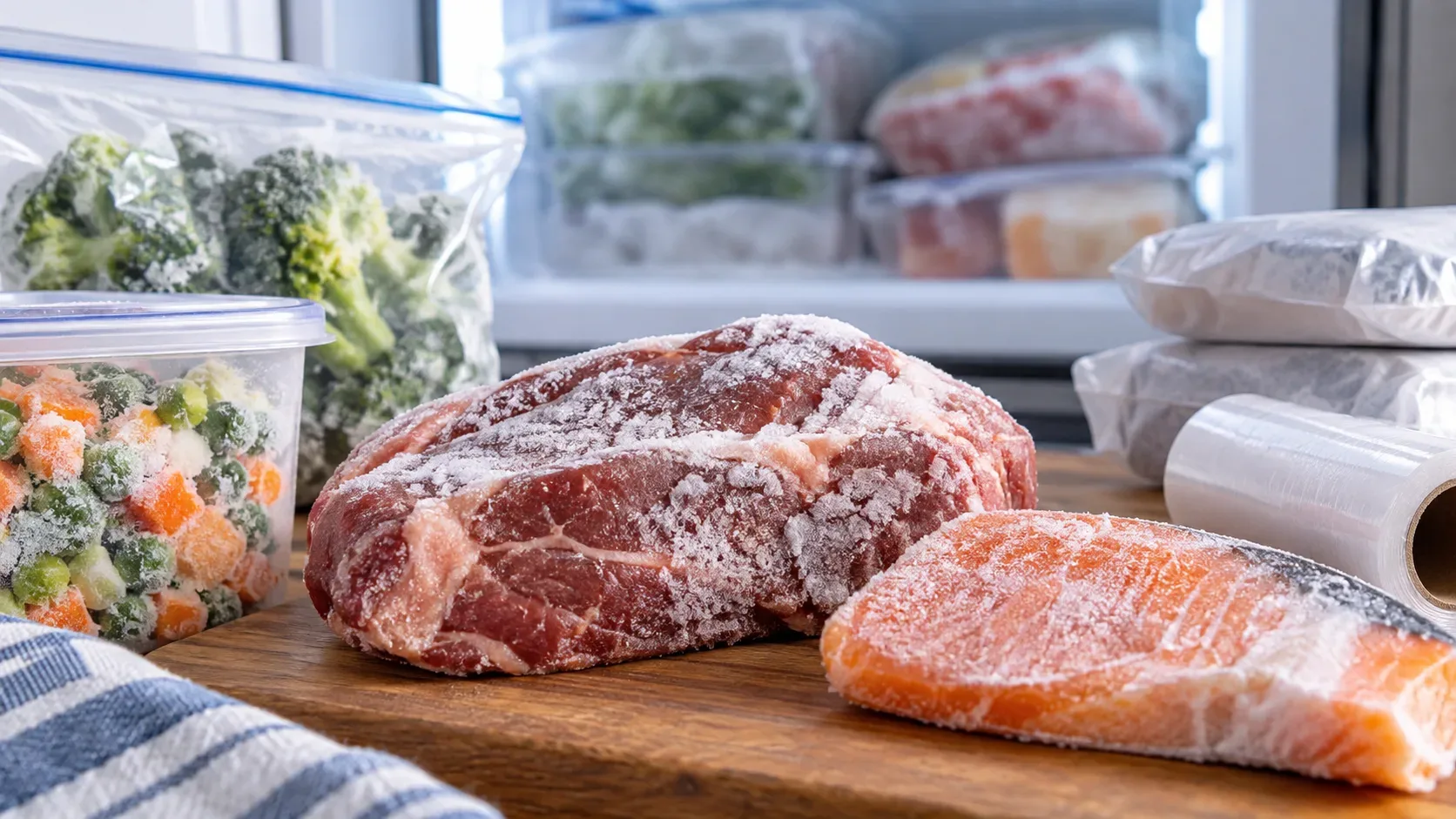
The best criterion, then, is to freeze the portion in the form in which it will be used. There is no need to fill the container to the rim. Foods with a lot of liquid expand when frozen, so leave some free space and use freezer-safe containers.
Portion based on the meal, not the size of the pot
A large batch is practical only if you do not have to thaw all of it at once. Make portions that correspond to what the household eats in one meal or in one day. If you also use beans in
recipes, it can be useful to set aside a few smaller portions.
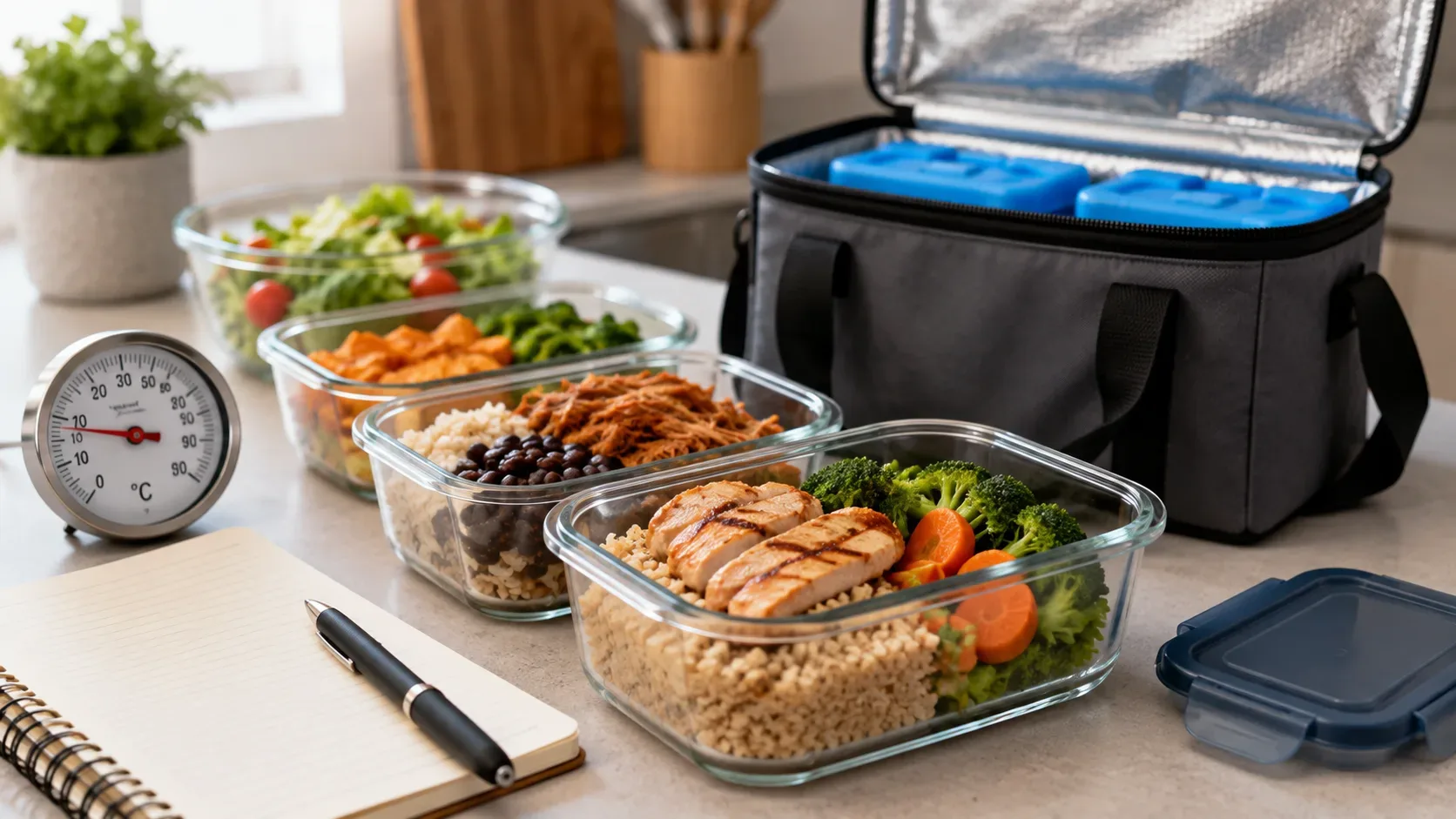
University extension references often suggest one- to two-cup containers as a practical measure for cooked beans. This is not a mandatory amount. The principle is to reduce the volume per package so freezing and thawing happen faster and repeated leftovers are avoided.
Label the container with the contents and the date. The label does not improve texture, but it keeps the freezer from becoming an unorganized archive. Using the oldest portions first is more reliable than trying to remember when each one was prepared.
How long can beans stay frozen?
The Brazilian sources consulted confirm the use of freezing for cooked beans but do not establish a single, specific household storage time for this preparation. The University of Maine uses up to six months as a quality guideline for frozen cooked beans.
That figure should be read as a quality guideline, not as a magic date when the food changes from safe to unsafe. FoodSafety.gov notes that when food remains continuously at -18 °C or below, freezer times used in charts are primarily limits for best quality. In real life, home freezers are opened, temperatures fluctuate and power outages sometimes occur; that is why the date on the container and the storage history matter.
For a simple system, freeze well-labeled portions and rotate them, using the oldest first. The sooner they are consumed within a reasonable period, the lower the chance of losing aroma, developing surface dryness or having texture changes.
How to thaw without leaving beans on the counter for hours
The most predictable option is to move the portion from the freezer to the refrigerator the day before. Anvisa advises thawing under refrigeration, below 5 °C, or in a microwave when the food will be heated immediately afterward. The Brazilian Ministry of Health also recommends reheating foods that have been frozen or refrigerated thoroughly before consumption.
For a small portion of beans with cooking liquid, it is also possible to go straight from the freezer to the pot and heat over low heat, loosening the frozen block gradually and adding a little water if necessary. This technique avoids a waiting stage at room temperature. The important point is for the food to go directly into heating and become hot evenly.
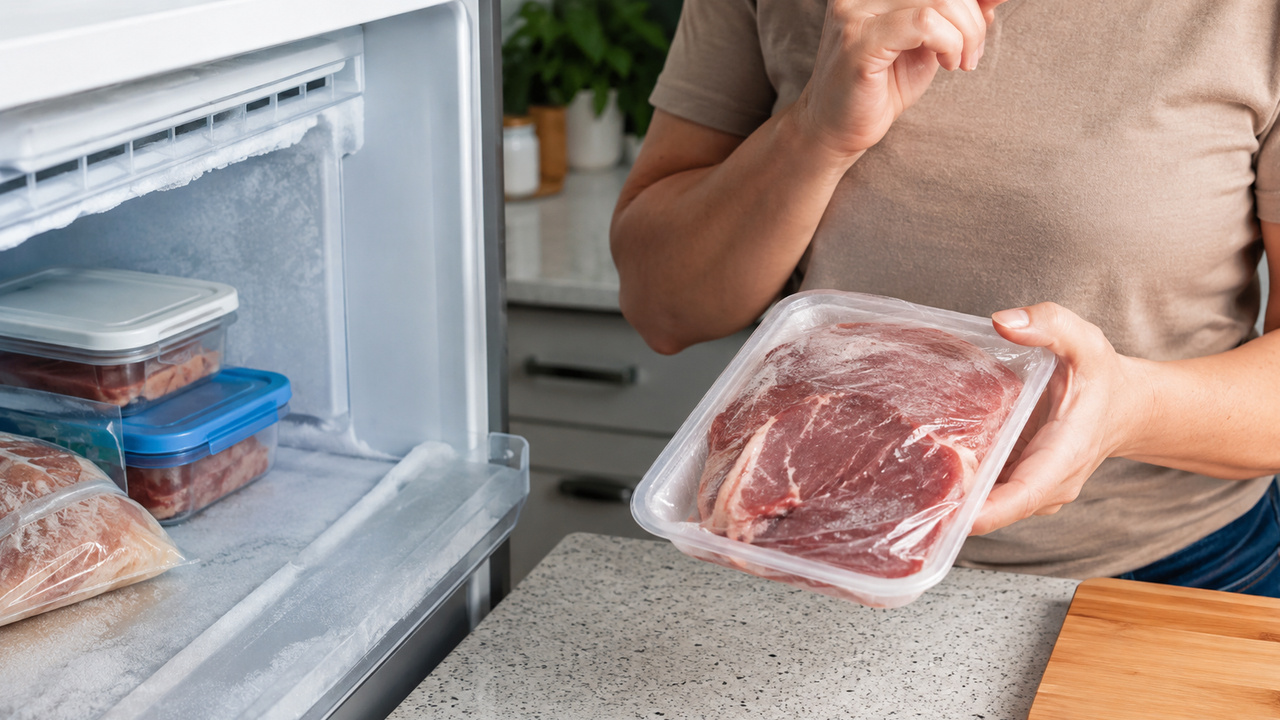
What should be avoided is leaving the container on the counter for hours “until it thaws.” The outside can warm up long before the center loses its ice. That contrast is exactly the kind of situation food-safety guidance seeks to avoid.
How to reheat while preserving texture
Beans that are already cooked need to be reheated, not cooked again. Use low to medium heat, stir only as much as necessary and stop when the portion is thoroughly hot and has the desired consistency. If the beans are too firm after freezing, a few extra minutes with a little water work better than high heat.
If the cooking liquid becomes thin after thawing, mash a small amount of beans against the side of the pot and stir them back in. This thickens the liquid without requiring a long boil. If it becomes too thick, add water little by little.
Stirring aggressively while the beans are still partly frozen tends to break more beans. First loosen the portion with heat and liquid; then adjust the texture. This care is especially useful for beans that were already very soft before going into the freezer.
The best point for freezing starts with cooking
There is no need to leave the beans intentionally hard, but it is also not useful to cook them until they fall apart if the plan is to freeze and reheat them later. The beans should reach the point where they are tender and pleasant to eat while still holding together well. Reheating will add more time under heat.
If the batch has already gone past that point, freezing will not restore the structure that was lost. In that case, the portion can still be useful in thicker broths, soups, purees or blended bean dishes. Reducing waste also means choosing a use that fits the texture you have instead of forcing the food back to a stage that no longer exists.
Freezing does not fix poor cooling
If the beans spent many hours lukewarm at room temperature, putting them in the freezer afterward does not “reset” the problem. Freezing drastically reduces microbial activity, but it does not turn an earlier stage of inadequate storage into a safe one.
That is why the order matters: finish cooking, separate the part that will be stored, speed up heat loss, portion it, and refrigerate or freeze it. The same logic applies on the way back: thaw under refrigeration or heat immediately, without long waits on the counter.
A practical routine for the week's beans
Cook a larger amount when that makes sense for the household. Set aside what will be eaten right away and divide the rest while the batch is still easy to organize. For maximum flexibility, keep part of it plain and season only the portion for the day; if the family prefers maximum convenience, freeze the portions already fully seasoned.
Keep enough cooking liquid for the intended use, leave space in the container, label the date and freeze small portions. When it is time to eat, move the portion to the refrigerator the day before or heat it directly when the preparation allows. Adjust water and seasoning at the end, when the beans are already hot.
The most consistent result comes from this sequence, not from an arbitrary deadline or a ban on seasonings. Fast cooling takes care of safety; portions and cooking liquid take care of convenience; gentle reheating takes care of texture.