If the beans have been cooking for a long time and are still hard, increasing the clock does not always solve the right problem. The texture may be being hampered by an aged batch, an acidic environment, calcium and magnesium in the water or simply insufficient hydration and cooking. Diagnosis becomes easier when you observe when the pan stopped evolving and what changed in relation to successful preparations.
The bottom line is this: beans soften when the structures that hold the cells together, especially the pectins in the cell wall and middle lamella, lose rigidity and become solubilized during cooking. Grain age, pH and certain minerals alter this process. Therefore, two pans with the same heat can end up with very different textures.
Old grain and the hard-to-cook defect
Dried beans don't just age in the sense that they stay in the pantry longer. In unfavorable storage conditions, especially with heat and humidity, so-called hard-to-cook, or HTC, can arise: a defect in which the cotyledon absorbs water, but takes much longer to soften during cooking.
Studies with common beans show that aging alters the interactions between pectin and minerals in the cell wall. In aged batches, more calcium may be associated with this structure, making it difficult for pectin to solubilize during cooking. The practical result is familiar: the grain appears hydrated on the outside, but remains firm, grainy or tough on the inside for too long.
The strongest clue to aged grain is the repetition of the problem within the same batch. If you use the same pan, the same water and the same method as always, you didn't add acidic ingredients early and a specific packaging started to require much more time, the hypothesis gains strength. The variation between grains in the same package as well
it can be big: some give in while others remain tough.
What to do? Pressure, time and a slightly alkaline medium can accelerate softening, but do not return the batch to exactly the uniformity of good quality beans. If part of the grains is already falling apart and another part remains grainy, prolonging cooking indefinitely tends to exchange one problem for another. At this point, it's worth testing a new batch before concluding that your technique is wrong.
Acid entered early: tomato, vinegar, lemon or wine
Acid and table salt do not have the same effect on beans. In experiments with common beans, low pH media slowed cooking, while more alkaline media accelerated softening. Research also shows that acidic treatments can favor conditions in which calcium remains associated with pectin and makes it less soluble.
In the kitchen, this makes ingredients such as tomatoes, tomato sauce, vinegar, lemon, wine and other acidic components suspect when they enter before the beans reach the desired tenderness. They won't make any beans impossible to cook, but they can greatly increase the time needed, especially if the batch is already sturdier.
If the pan is still in its infancy and you realize you added acid too early, the best fix is to stop adding acid and continue cooking. If the recipe allows, removing part of a very acidic broth and completing it with low-hard water can reduce the acidity of the medium.. This does not undo what has already happened inside the grain, but it avoids keeping the pan in the least favorable scenario for softening. Adjust tomato, lemon or vinegar again after the beans are tender.
Next time, the rule of thumb is simple: first soften the beans; then adjust the acidity. In preparations in which the tomato is part of the flavor from the beginning, it is possible to cook the grains separately until almost cooked and only then add them to the sauce.
Hard water: when calcium and magnesium get in the way
Hard water is water with a relatively high concentration of minerals, especially calcium and magnesium. These ions are relevant because they can form bonds with pectins and reinforce the structure that holds plant cells together. In studies with beans, solutions containing calcium prolonged cooking and produced firmer beans.
Hard water is a more convincing hypothesis when the problem appears in several different batches prepared in the same household, especially if the local water is known to be highly hard. It becomes less likely when an old package has a problem, but other recent beans soften normally using the same tap and the same pan.
The best home test is not to guess by the appearance of the water, but to compare. In other preparations, use water with a low concentration of calcium and magnesium and keep the beans, soaking time and cooking method the same. If the difference is consistent, water was involved in the problem.
In the pan that is already on the fire, topping up the liquid with low-hard water can prevent the additional entry of these minerals, but it will not remove the calcium that has already bonded to the wall
cell phone. For a stubborn batch, a little alkalization with bicarbonate is a possible rescue tool because it favors the softening of the pectins. It should be used with caution: too much alkalinity can cause the grains to crack, lose shape and acquire an unwanted flavor.
When the problem is hydration or cooking
Not all firm beans are a hard-to-cook case. Sometimes it is simply behind the normal process. Controlled studies show that soaking beans reduces cooking time, and that a quick soak can also help. In USDA work on pinto beans, both 12-hour soaking and quick soaking decreased time compared to unsoaked beans.
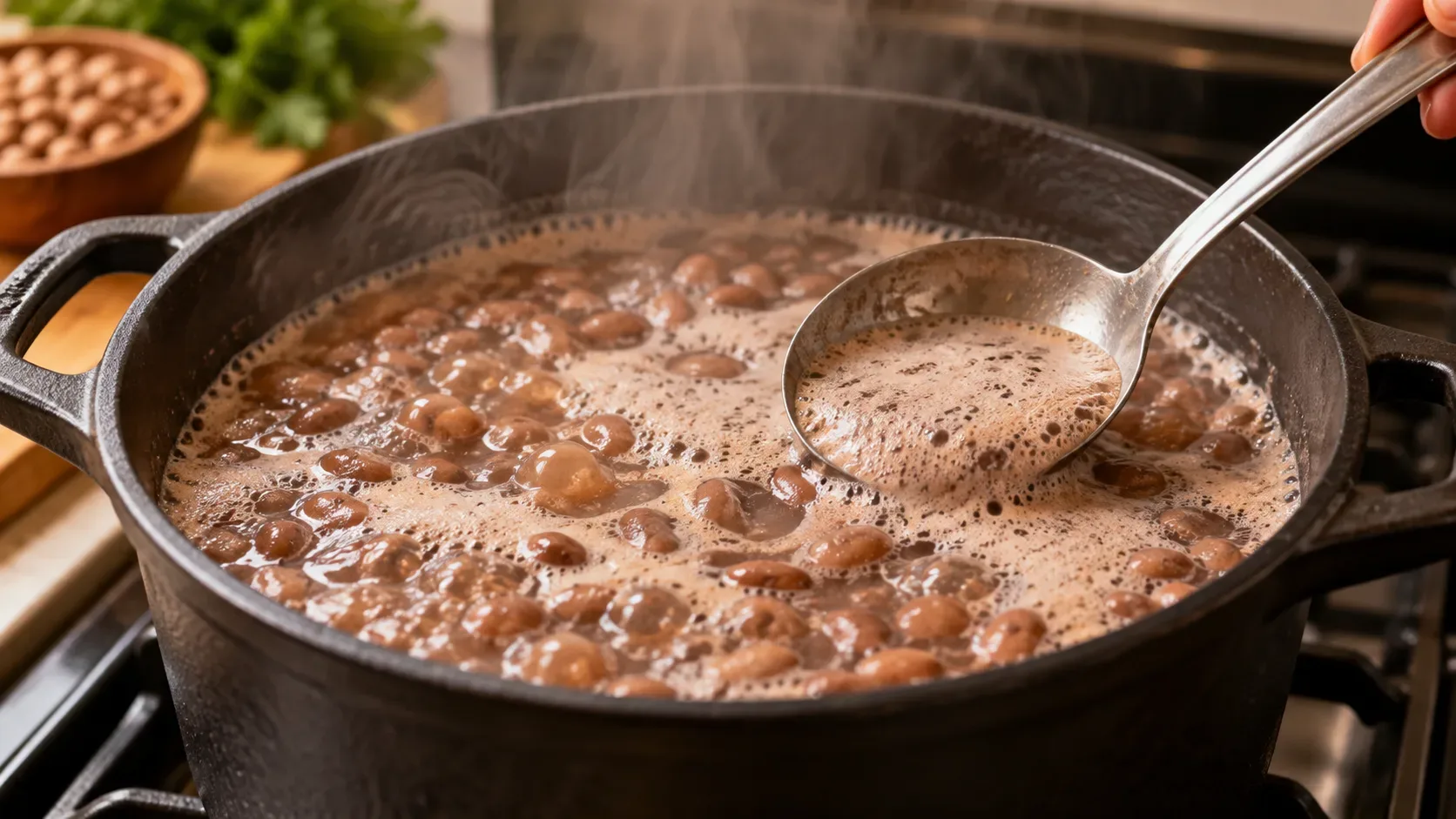
The difference is noticeable in the behavior of the pan. When the problem is just time, hydration or temperature, the grains tend to improve progressively: they become less opaque in the center, yield more to pressure and move towards softness. In severe hard-to-cook, the sensation is of stagnation or very uneven evolution even after prolonged heat treatment.
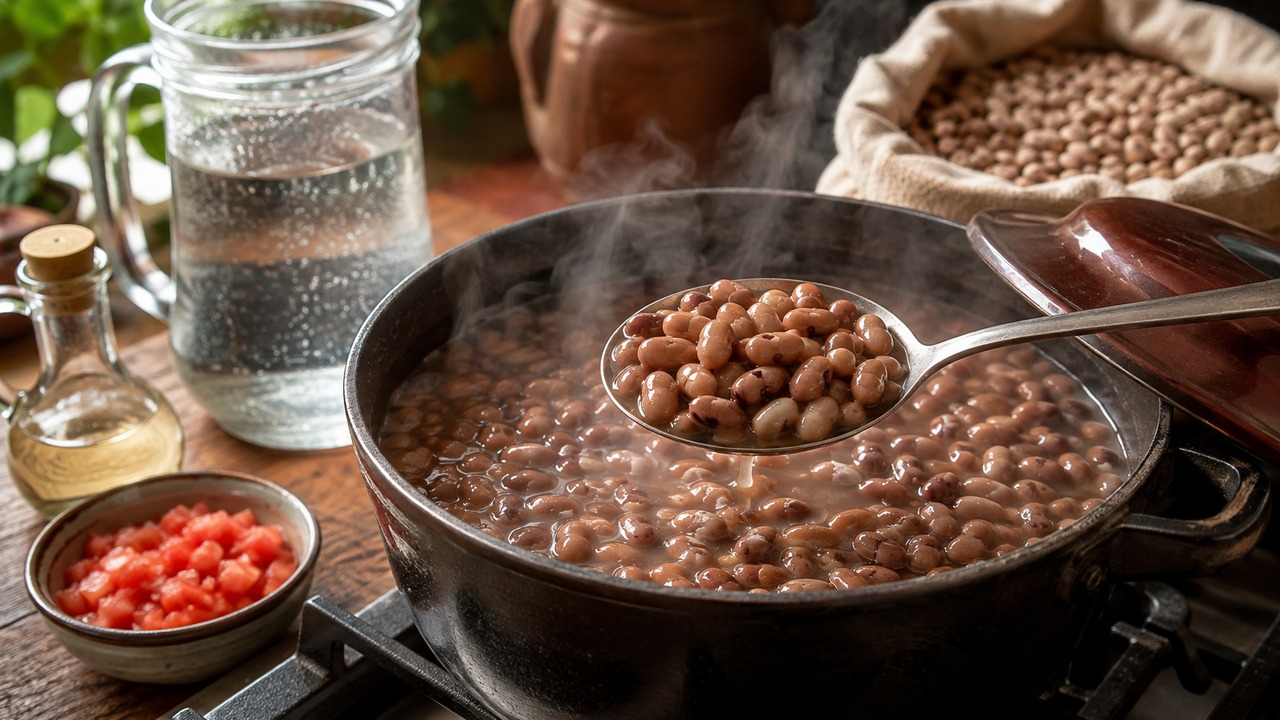
Also check out the method. In a common pan, it is necessary to maintain sufficient liquid and heat compatible with constant boiling or cooking. In a pressure cooker, the gain comes from increasing the cooking temperature; If the equipment does not reach or maintain adequate pressure, the expected time is no longer a good reference.. In high-altitude locations, water boils at lower temperatures and pressure-free cooking can take substantially longer.
Sal is not the automatic villain
The recommendation to never salt beans before softening mixes the effects of different substances. Sodium chloride does not behave like calcium or magnesium. In a study published in 2023, soaking pinto beans in a salt solution reduced cooking time compared to soaking them in water alone, although bicarbonate was even more effective.
This does not mean that any salt concentration is ideal for any recipe. It just means that the explanation “the beans became hard because they received salt” is weak when compared to better demonstrated causes, such as acidity, calcium, unfavorable storage and inadequate cooking. If you have salted and the beans have not softened, look for the rest of the diagnosis first.
Bicarbonate: rescue tool, not rule
Sodium bicarbonate increases the pH of water and accelerates changes in pectin associated with softening. In experiments, bicarbonate solutions reduced the cooking time of fresh and aged beans. A study with different types of water also found a shorter average cooking time in water with bicarbonate, but observed a higher percentage of broken grains.
This is the cost of the intervention. If creamy beans are the goal, a little alkaline help can be helpful. If you want very whole grains for salad or presentation, the
The same feature can go too far. Therefore, concentrations used in studies, which vary depending on the protocol, should not be mechanically copied like a universal kitchen recipe.
In practice, reserve the bicarbonate for a batch that has already shown abnormal strength or for a controlled test. Use little, let the cooking progress and evaluate the texture before repeating. If the grain starts to open, the skin comes off quickly, or the broth takes on an alkaline flavor, you are past the point of useful correction.
A decision tree without tricks
Did an acid ingredient enter before the grain softened?
If so, treat acidity as the first suspicion. Stop adding acid, reduce or dilute the acidic broth if the recipe allows and continue cooking. Next time, bring the beans to tenderness before adding tomatoes, vinegar, lemon or wine.
Do multiple batches fail in the same water?
If so, test low hardness water in a new pan. If only one package causes a problem and others cook normally in the same house, the water loses strength as an explanation and the aged batch gains strength.
Is this package much slower?
This pattern points to age and storage. Pressure and baking soda can rescue some of the texture, but a severely hard-to-cook batch may remain uneven. A new package is the simplest control to separate ingredient from equipment.
Are all grains improving little by little?
If so, you may still be within the normal time range. Ensure enough water, constant heat and, if using pressure, confirm that the cooker has actually reached pressure. Pre-saucing can reduce future preparation time.
When to stop insisting
Cooking longer makes sense as long as the texture continues to advance relatively evenly. When some grains have already fallen apart and others remain hard or sandy, continuing for a long time tends to worsen the average quality of the pot. This pattern is compatible with strong heterogeneity in an aged batch.
In this scenario, you can change the culinary objective - for example, use beans that have softened in a mashed preparation - or end the test and compare with beans from another batch. The most useful diagnosis is not proving that a grain can finally give way after hours, but figuring out which variable needs to change for the next pot to cook predictably.
What's really worth remembering
Old grain, acidic ingredient and hard water can end in the same symptom, but leave different clues. Aged batch usually fails despite the usual technique being correct. Early acid points to the time when tomato, vinegar, lemon or wine entered. Hard water gains strength when the defect crosses different batches prepared in the same location. And insufficient hydration or cooking often shows continued progress, just slower.
With this sequence, the beans that don't soften stops being a “secret trick” problem and becomes a testable question. Change one variable at a time, compare batches, and use baking soda as a rescue tool, not a substitute for understanding the cause.