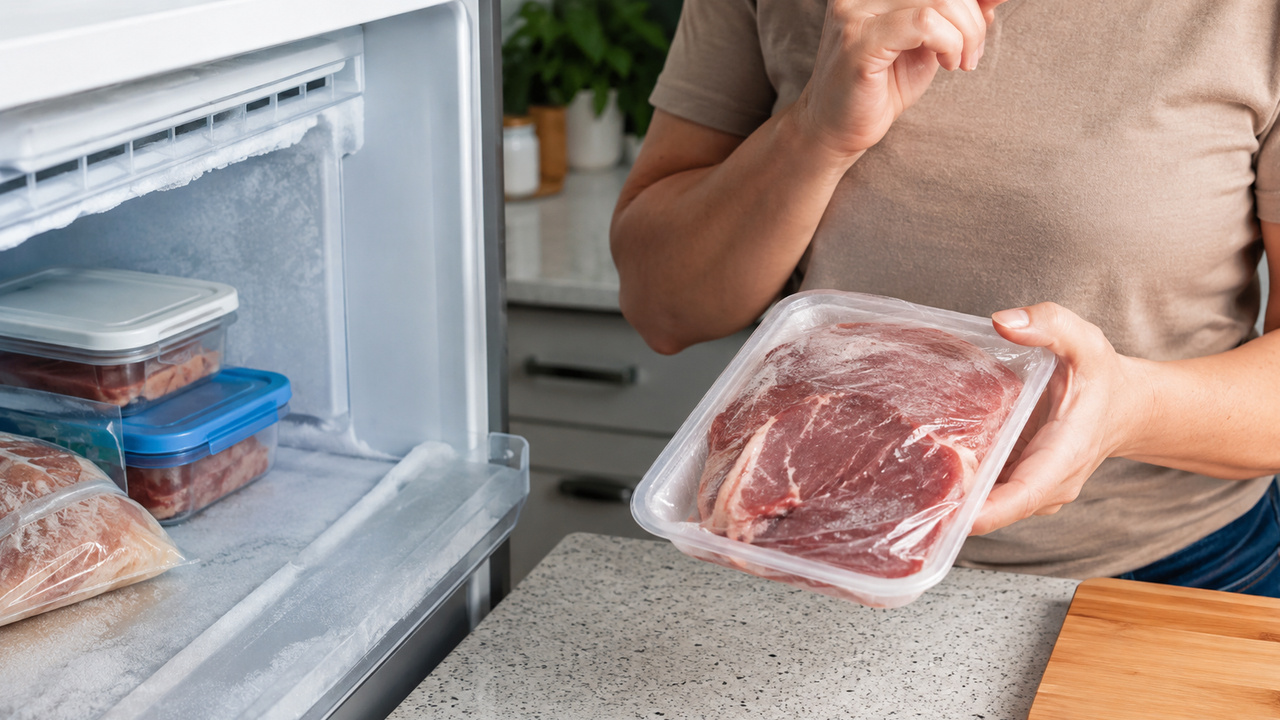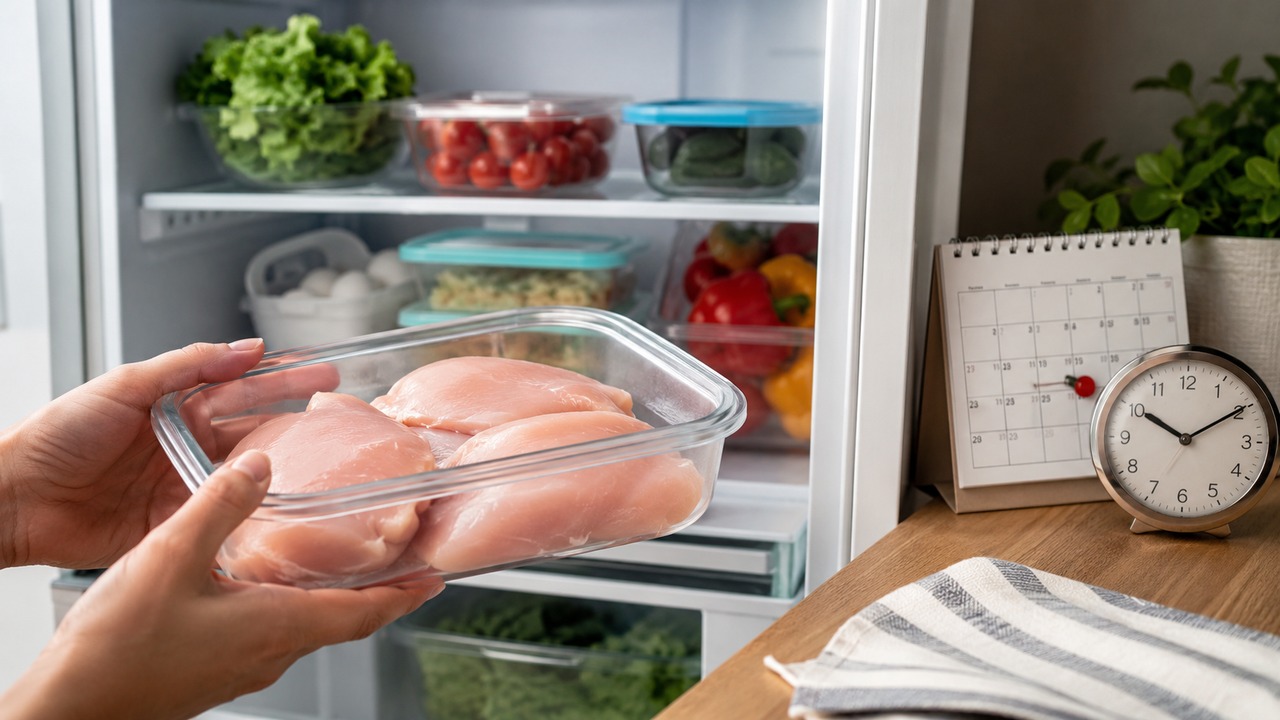
If the chicken thawed the entire time inside the refrigerator, the answer does not begin with an isolated count of days. What matters is the combination of temperature, label instructions, the point when the food finished thawing, and any break in refrigeration. In Brazil, federal health guidance used as a reference for good practices requires thawing under refrigeration below 5 °C and keeping the food refrigerated if it is not used immediately.
That is different from saying there is a universal Brazilian rule of “1 or 2 days after thawing.” That interval is repeated so often because it appears in guidance from the food inspection service of the U.S. Department of Agriculture, the USDA: for raw chicken thawed in the refrigerator, the agency allows another one or two days before cooking. It is a useful reference, but it does not replace the label and should not be presented as though it were a legal Brazilian time limit for every chicken product and every refrigerator.
The practical answer: once it has thawed, cook it soon and use the label as the limit
When the package explains how to store the product after a change in temperature, that instruction is the first limit to follow. Brazilian labeling regulations provide that foods requiring special storage conditions must state the necessary conditions and the period of durability guaranteed by the manufacturer under those conditions. For frozen foods, the label may even give different shelf-life periods according to storage temperature.
So look for phrases such as “after thawing,” “keep refrigerated,” “consume within,” “shelf life at 4 °C,” or equivalent instructions. If there is a specific time limit after thawing, do not extend it based on a rule found online. The original expiration date must not be exceeded either.
If the label does not say how long the chicken can remain refrigerated after thawing, the decision should be more conservative: keep it below 5 °C and plan to cook it as soon as thawing is complete.
If it is already on its second day fully thawed, cooking it today is more prudent than trying to gain another one or two days.
Where the “1-2 days” seen in so many answers come from
The USDA advises that raw chicken thawed slowly in the refrigerator can remain refrigerated for another one or two days before preparation. The same guidance notes that chicken parts and whole birds may take one or two days, or even longer, just to finish thawing.
This helps separate two clocks that many people mix together. The time during which the chicken is still thawing is not automatically the same interval counted after it has become fully thawed. To apply any time-limit reference, it is important to know approximately when the center of the piece stopped being frozen.
But there is an important reason not to import the U.S. guidance as a ready-made rule: the recommendations on refreezing themselves differ. The USDA allows chicken that has thawed in the refrigerator to be refrozen without cooking. Brazilian good-practice rules for food services, on the other hand, state that foods that have undergone thawing must not be refrozen. This policy difference shows that the numbers need to be read within the guidance system that produced them.
What about the 72-hour limit that appears in some Brazilian references?
Some Brazilian rules and operational manuals use up to 72 hours, at 4 °C or below, for handled raw poultry or thawed meats in certain institutional settings. This type of criterion is useful because it shows that the Brazilian context cannot be reduced to the U.S. interval of one or two days.
Even so, 72 hours should not become an automatic household authorization. Those documents were written for food services, institutional kitchens, or operations with temperature control and their own routines. At home, the refrigerator may fluctuate, the food may have spent some time outside refrigeration, and the label may set a stricter condition.
When the choice is between “it still fits within the count” and “I should prepare it now,” the safer choice is to cook it sooner rather than push the time limit to the last moment.
Temperature changes the answer more than it may seem
Anvisa uses a temperature below 5 °C for refrigerated thawing. That number matters because cold slows the multiplication of microorganisms, but it does not sterilize the food. If the refrigerator is too warm, is opened very often, is so crowded that air circulation is impaired, or does not maintain a stable temperature, a day count becomes less reliable.
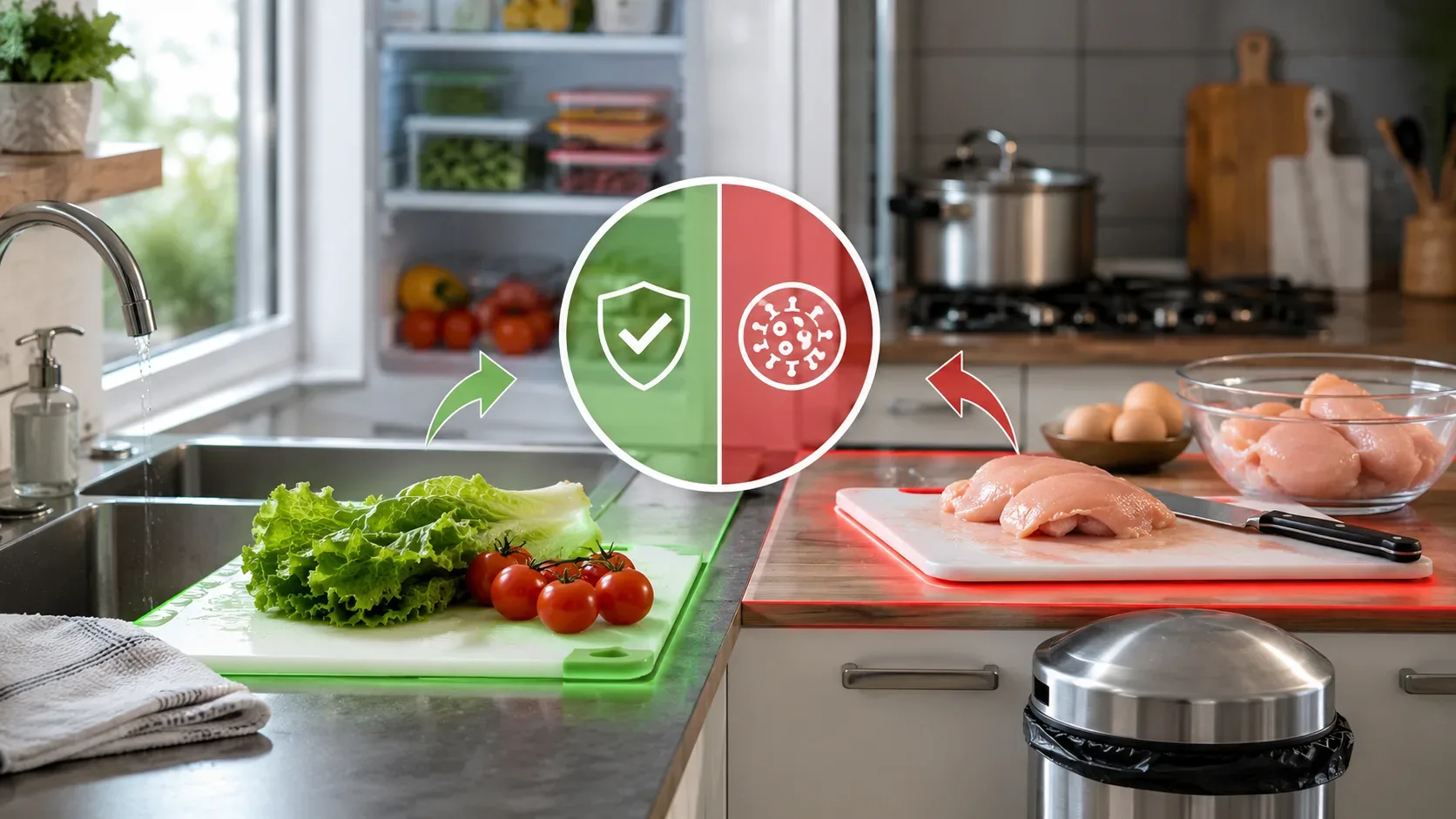
For chicken that will thaw in the refrigerator, use a container that can hold liquids and keep the raw food separate from ready-to-eat items. Brazilian food-safety guides recommend keeping raw foods on the lower shelves specifically to reduce the risk of cross-contamination.
If you do not know the refrigerator’s actual temperature, a refrigerator thermometer helps turn an impression into a measurement. “It feels cold” is not the same as confirming that the food remained below 5 °C.
Smell, color and texture cannot give a safety “yes”
A strong change in odor, abnormal appearance, a swollen package, or a major change in texture are reasons not to use the food. The problem is the reverse: chicken that looks normal does not, because of that, receive a safety certificate.
Anvisa itself warns that some microorganisms do not change appearance, taste or smell. Therefore, do not use “it doesn’t smell bad” as a reason to extend an uncertain time limit. Do not taste raw chicken to judge whether it is good either.
When the history of time and temperature is unknown, sensory information cannot reconstruct it.
What changes if the chicken thawed outside the refrigerator
Brazilian guidance discourages thawing at room temperature. The recommended method is refrigeration below 5 °C or, when cooking will be immediate, the microwave.
If the chicken was left thawing on the counter, inside a car, in a bag outside refrigeration, or in another situation with uncertain temperature, do not automatically apply the one- or two-day window used for continuous refrigerator thawing. In that case, the problem is not only “how many days are left,” but how long the surface spent in conditions more favorable to microbial growth.
When that history cannot be reconstructed safely, it is better not to try to compensate for the risk simply by cooking later.
A common scenario: “it thawed two days ago, can I still cook it?”
If the chicken finished thawing about two days ago, remained continuously under adequate refrigeration, the package and expiration date are in order, and the label does not set a shorter limit, that scenario still matches the USDA’s one- to two-day reference. It also falls below the operational ceiling of 72 hours used in some specific Brazilian guidance.
That does not mean it is a universal guarantee. It means that, between cooking now and waiting longer, cooking now is the more sensible decision. If it has already gone beyond that point, if the refrigerator temperature is uncertain, or if there was a meaningful period outside refrigeration, the basis for extending storage becomes increasingly weak.
The label can answer a question the internet cannot
Before looking for a generic chart, read the package again. Brazilian law treats the expiration date as a guarantee tied to the storage conditions defined by the manufacturer. For frozen foods, temperature and shelf life may appear together, and thawing or use instructions may be necessary for correct consumption.
This explains why two packages of chicken that look similar may not have exactly the same guidance. Processing, packaging, expected temperature, and the manufacturer’s validation can change the time limit.
If you moved the chicken to another container, it is worth photographing the label before discarding the package. That way, the instruction is not lost precisely when it becomes most important.
After deciding to use it, avoid creating a new problem during preparation
Keep raw chicken separate from ready-to-eat foods, wash hands, utensils and surfaces after contact, and cook it thoroughly. As an internal-temperature reference for poultry, Brazil’s Ministério
da Saúde publishes 73.9 °C; in household practice, rounding to 74 °C at the thickest point is an objective reference when using a food thermometer.
The goal is not to “save” chicken that spent too long under uncertain conditions. Proper cooking is a safety step for food that was stored acceptably, not a way to erase a poor storage history.
So how long can it wait?
The most accurate answer for Brazil is: there is no single number that replaces temperature and the label. Thaw below 5 °C, keep refrigerated, respect the expiration date and any specific package instruction, and cook as soon as possible after the chicken is fully thawed.
The one- to two-day interval is a USDA reference for chicken thawed in the refrigerator, not a universal Brazilian rule. Criteria of up to 72 hours appear in some Brazilian operational contexts at 4 °C or below, but they likewise should not be used to expand the manufacturer’s guidance.
If the question came up because the chicken has already completed its second day thawed and the entire refrigeration history is reliable, the best next step is to prepare it now. If the time or temperature is uncertain, do not let smell and appearance decide on their own.