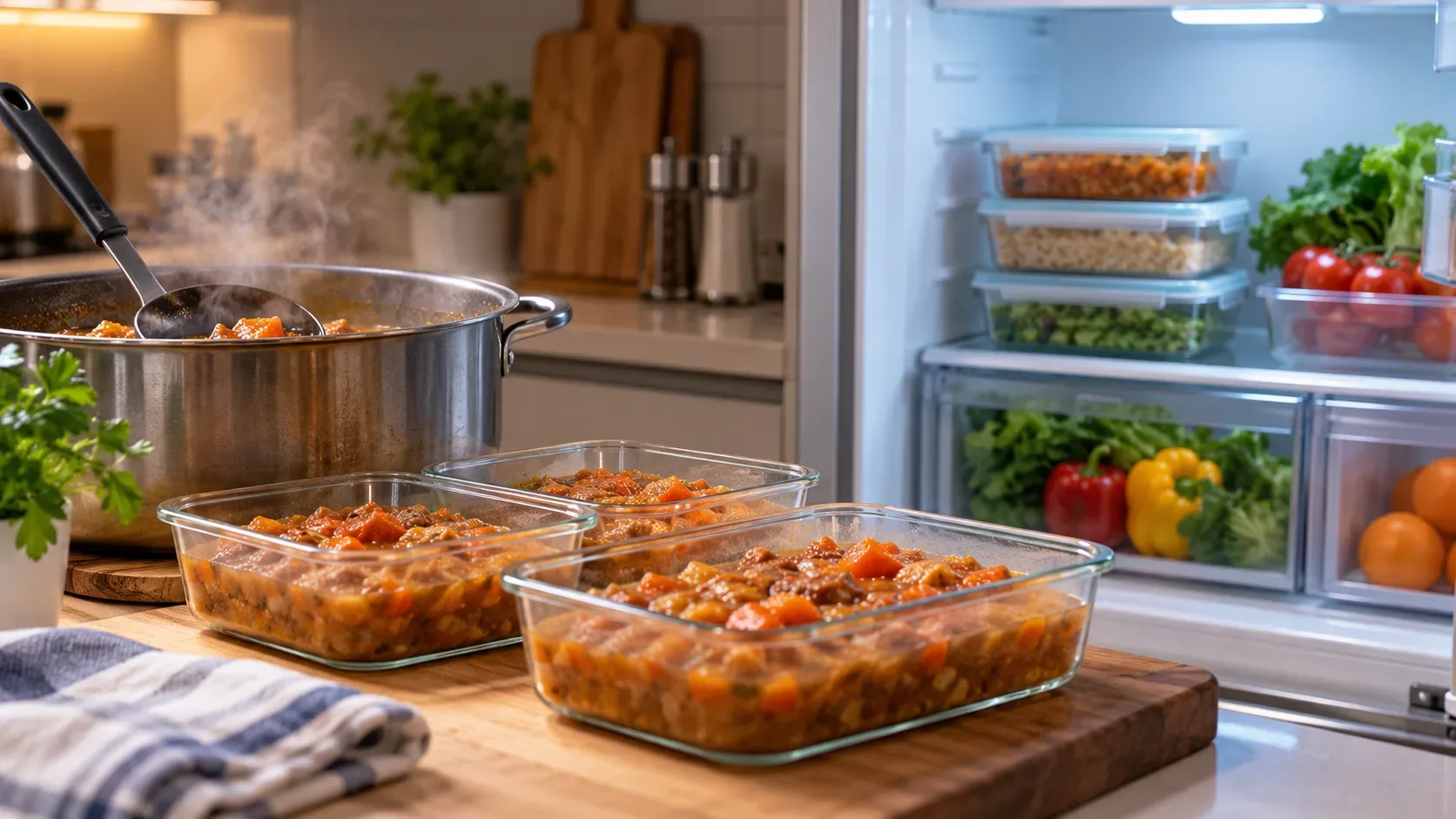
Yes. Hot food can go in the refrigerator, and leaving a pot on the counter for hours “to cool down” is not the safer strategy. The key is to lower the temperature of leftovers quickly and reduce the time perishable food spends at room temperature. Small amounts of hot food can be refrigerated directly; a large pot of soup, beans, sauce, or stew should be divided into smaller portions and shallow containers before refrigeration.
Can hot food go straight into the refrigerator?
Yes. The USDA says small amounts of hot food can be placed directly in the refrigerator. The FDA also states that putting hot food in the refrigerator does not harm the appliance and recommends dividing large amounts into smaller containers so they cool faster.
That does not mean a deep, full stockpot should be stored exactly as it comes off the stove. With a large volume, the center of the food takes longer to cool. The USDA uses a large pot of soup as an example: the food should be divided among shallow containers so heat can dissipate more quickly.
Why waiting for a pot to cool for hours can be worse
Microorganisms multiply more rapidly when perishable food remains in an intermediate temperature range. Brazil’s Anvisa advises keeping hot food above 60 °C while serving and cold food below 5 °C, while minimizing the time between preparation and consumption.
For household leftovers, the USDA and FDA use a practical limit of two hours without refrigeration; when the ambient temperature exceeds about 32 °C (90 °F), the recommended limit drops to one hour. The goal, therefore, is not to wait until food reaches room temperature, but to move it through the cooling stage quickly.
How to cool food quickly: steps by volume
| Situation | What to do | Why |
|---|---|---|
| One or two servings | Transfer to a clean, shallow container and refrigerate without waiting for it to cool completely. | Small volumes lose heat faster and can be refrigerated directly. |
| Large pot of soup, beans, sauce, or stew | Divide into several shallow containers. To speed things up further, use a cold-water or ice-water bath before refrigerating. | A large mass of food cools slowly at the center; smaller portions increase the surface area available for heat loss. |
| Large cut of meat or whole poultry | Cut into smaller pieces before storage and distribute among suitable containers. | Reducing the size helps the interior cool more quickly. |
1. Think about portion size, not the original pot
If leftovers fill a deep pot, transfer them soon after serving the portion that will be eaten. Shallow containers are preferable because they reduce the thickness of the food layer and make heat loss easier.
2. Do not leave the food on the counter for hours
Time outside refrigeration matters once the food is no longer being held safely hot. When the meal is over and leftovers will be stored, start the cooling and refrigeration process instead of adding a long “waiting to cool” stage.
3. For large volumes, use an extra cooling method if needed
The USDA considers it safe to put hot food in the refrigerator, but it also lists a cold-water or ice-water bath as an option for rapid chilling before refrigeration. This can be especially useful when you have a large amount of hot liquid and only a few suitable containers.
How to arrange the refrigerator so food cools better
A shallow container is less helpful if the refrigerator is so crowded that cold air cannot circulate. The FDA advises against overpacking the refrigerator for this reason. When storing several portions at once, spread the containers out rather than stacking them tightly, and keep the refrigerator door open only as long as necessary.
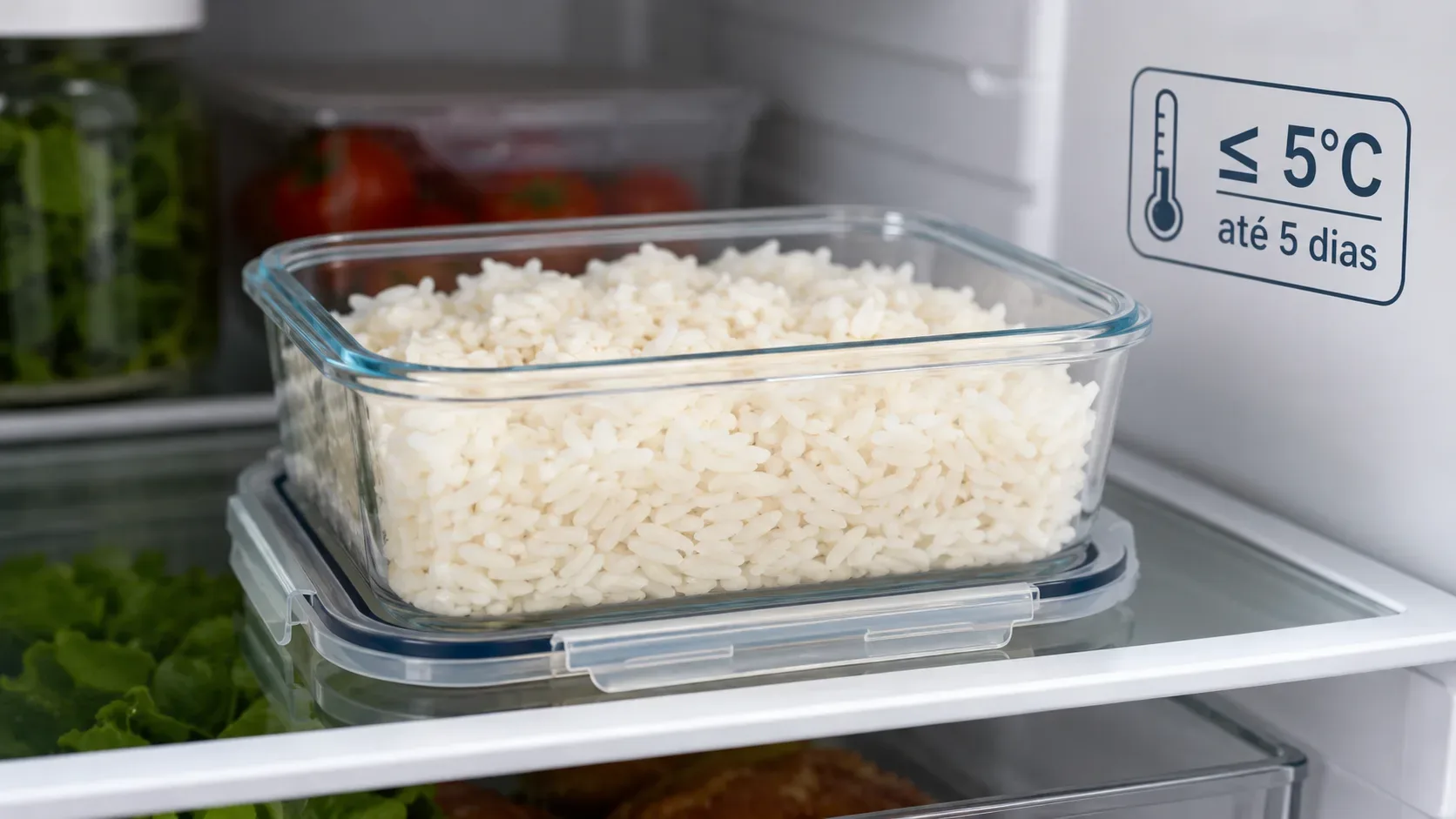
Refrigerator temperature also matters. Anvisa recommends keeping cooked and perishable foods below 5 °C. The USDA and FDA use 4 °C (40 °F) or below as the reference for household refrigeration. A refrigerator thermometer is the most objective way to check whether the appliance is actually cold enough.
How long can food stay out before it is refrigerated?
As a practical household rule, the USDA and FDA recommend refrigerating perishable food and leftovers within two hours. In very warm conditions, above about 32 °C (90 °F), the recommended limit is one hour. If food has already exceeded that period without being kept safely hot or cold, these authorities advise discarding it rather than trying to make it safe simply by refrigerating it later.
How long do leftovers last in the refrigerator?
Official guidance is not identical. Anvisa states a maximum of five days for prepared food kept refrigerated below 5 °C. The USDA recommends using most cooked leftovers within three to four days. For a conservative household routine, planning to eat leftovers within three to four days reduces uncertainty; any recipe-specific, manufacturer, or health-authority instruction should take priority.
Common mistakes when cooling food
- Waiting for the entire pot to reach room temperature: this unnecessarily increases time outside refrigeration.
- Storing a large volume in a deep container: the center may take much longer to cool.
- Crowding several hot containers together: this reduces cold-air circulation around them.
- Relying only on how cold the refrigerator feels: checking the actual temperature is better.
- Assuming refrigeration resets time spent on the counter: the earlier room-temperature period still matters for food safety.
Quick checklist for storing food while it is still hot
- Separate the amount that will be eaten from the amount that will be stored.
- Divide large volumes into smaller portions.
- Use shallow, food-safe containers.
- Refrigerate without waiting for hours until the food reaches room temperature.
- If needed, use a cold-water or ice bath to accelerate cooling of large volumes.
- Avoid overloading the refrigerator and leave room for air to circulate.
- Keep the refrigerator below 5 °C and, when possible, check with a thermometer.
- Use two hours outside refrigeration as a practical reference, or one hour when the ambient temperature is above about 32 °C (90 °F).
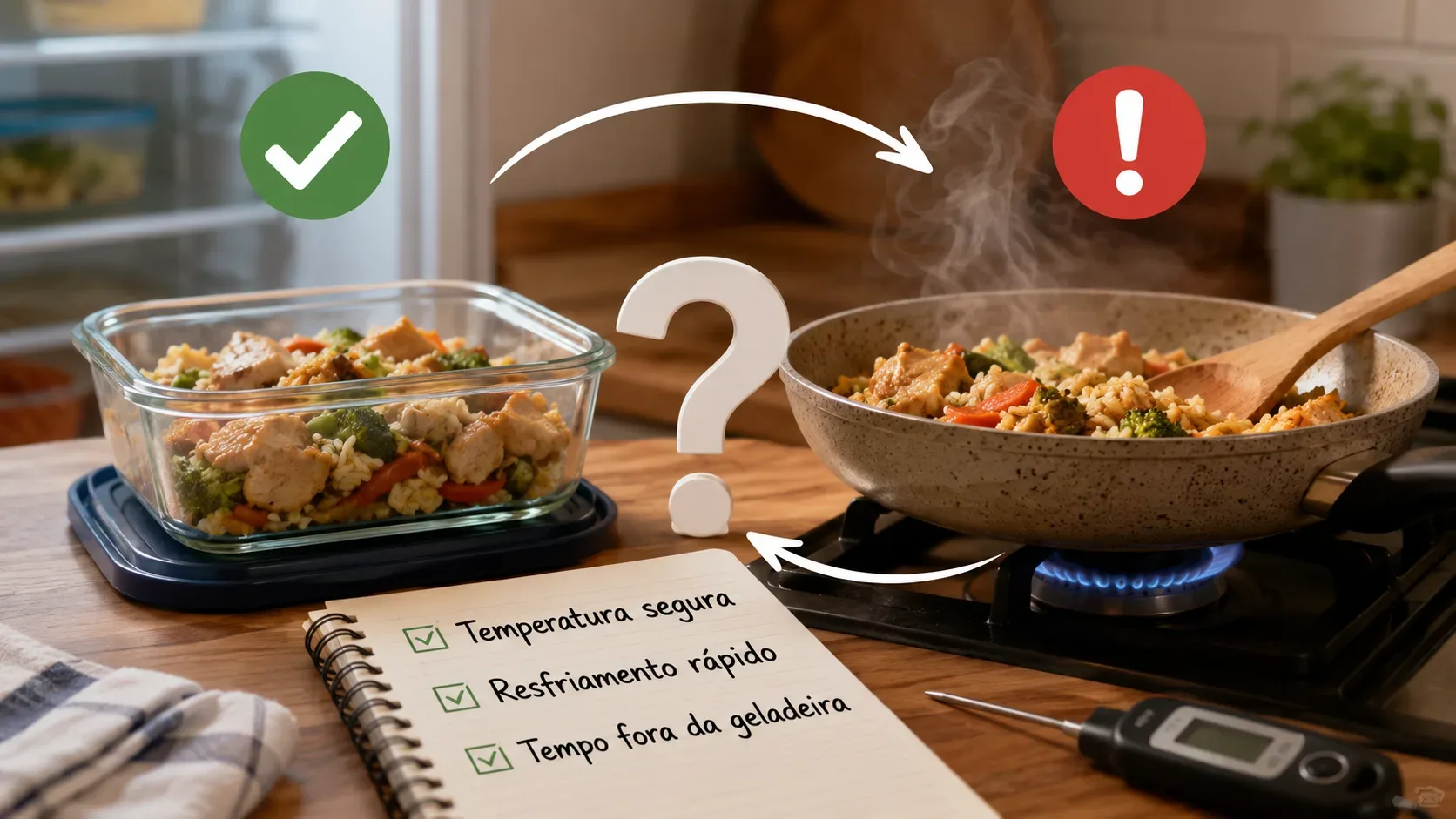
In short, the useful distinction is not “hot food versus refrigerator,” but fast cooling versus slow cooling. A small hot portion can go straight into the refrigerator; a large pot should be divided. What should be avoided is leaving perishable leftovers on the counter for hours while waiting for them to cool on their own.