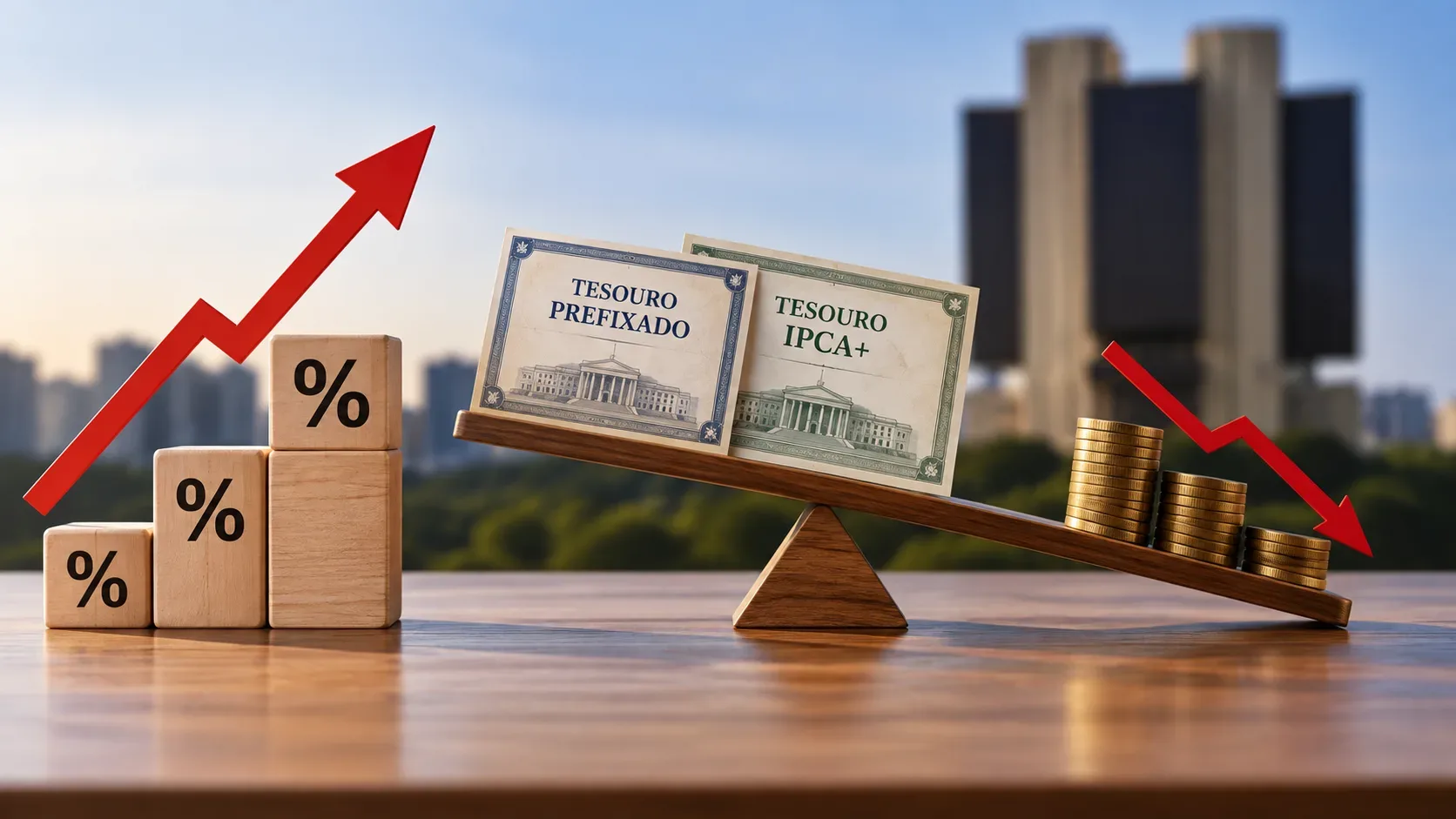

Tesouro IPCA+ and Tesouro IPCA+ with Semiannual Interest share the same basic return structure: they combine the change in Brazil's IPCA inflation index with an interest rate set at purchase. The key difference is cash flow. The version without coupons makes no periodic payments and concentrates the payment at maturity. The version with semiannual interest distributes part of the return along the way, while principal is paid at maturity.
This difference changes three practical issues: when cash reaches the investor, when Brazilian income tax is brought forward, and whether coupon payments need to be reinvested. That is why comparing only the rate shown on the screen is not enough.
What changes between Tesouro IPCA+ with and without coupons
| Comparison point | IPCA+ without semiannual coupons | IPCA+ with semiannual coupons |
|---|---|---|
| Payments during the holding period | No periodic coupons | Interest payments every six months according to the bond's payment calendar |
| Payment at maturity | Amount due is paid at maturity | Principal due at maturity is paid in addition to the scheduled coupon flow |
| Income tax along the way | No coupon tax because there is no coupon; tax may arise on an early sale or at maturity | Income tax applies to the investment income paid in each coupon, in addition to the rules for early sale and maturity |
| Accumulation objective | No need to reinvest intermediate distributions | Each coupon creates a decision about what to do with the cash received |
| Periodic income objective | No periodic distribution unless the investor sells part of the position | Creates periodic cash flow without requiring a sale every six months |
Brazil's Investor Portal summarizes the coupon mechanism and notes that, for investors focused only on wealth accumulation, the version without semiannual interest avoids bringing income tax forward and keeps more resources invested until maturity. The Tesouro Direto rules also distinguish the semiannual payments of the NTN-B from the payment concentrated at maturity in the NTN-B Principal.
How to visualize the cash flow
A conceptual timeline makes the difference easier to see. Actual coupon dates follow the schedule of each bond series, so the table below is illustrative and does not replace the official calendar.
| Moment | IPCA+ without coupons | IPCA+ with coupons |
|---|---|---|
| Purchase | Cash outflow to buy the bond | Cash outflow to buy the bond |
| First semester | No periodic payment | Possible coupon payment according to the series calendar |
| Following semesters | No periodic payments | New semiannual coupons while the bond remains in the portfolio |
| Maturity | Amount due is paid at maturity | Principal and the final scheduled flow for the bond are paid |
In practice, the coupon-paying bond turns part of the return into available cash before maturity. That can be useful for someone who wants periodic income. For someone who does not need the cash, however, every payment creates a new decision: spend it, hold it as cash, or reinvest it.
The coupon is not simply half of the rate shown at purchase
It is important to separate the contracted yield from the coupon payment rule. The IPCA + x% rate observed at purchase helps determine the price paid for the bond and the expected return to maturity if the contracted conditions are maintained. The NTN-B coupons, however, follow the bond's own payment structure.
Therefore, it is not correct to assume that a rate such as IPCA + 6% per year will simply be split into two deposits of 3% on the amount originally invested. Coupon values depend on the bond methodology, inflation indexation and the price actually paid by the investor. The safer comparison looks at the full cash flow rather than dividing the annual rate by two.
How Brazilian income tax changes the comparison
Tesouro Direto states that income tax follows Brazil's declining fixed-income tax table and applies to investment income. The current rates listed in the program rules are:
| Holding period | Income tax rate on investment income |
|---|---|
| Up to 180 days | 22.5% |
| 181 to 360 days | 20% |
| 361 to 720 days | 17.5% |
| More than 721 days | 15% |
In the semiannual coupon version, each coupon is a payment of investment income and is taxed according to the period counted from settlement of the investment. As a result, earlier coupons can face higher tax rates than payments made after two years.
In the version without coupons, there are no periodic payments that bring this taxation forward. If the investor holds the bond to maturity, tax related to the return is concentrated in the final event. If the bond is sold early, taxation also applies to the investment income recognized in that transaction under the rules then in force.
This does not mean the coupon-paying bond has a different income tax table. The table is the same. What changes is the timing at which part of the return becomes available and taxable.
Why reinvesting coupons matters
An investor who receives a coupon and wants to keep accumulating must reinvest the net amount after tax. The new investment will be made at the market conditions available at that time, which may differ from the conditions of the original purchase.
This is reinvestment risk: the future return on the distributed cash depends on the rate and price available when the coupon is reinvested. It is not an extra fee charged by Tesouro Direto. It is a consequence of receiving part of the return before the final objective date.
With the no-coupon version, this operational issue is smaller because there is no semiannual distribution to reinvest. The return remains embedded in the bond's economic value until sale or maturity, subject to the bond rules and mark-to-market pricing.
Three decisions that help compare the structures
1. Do you want periodic income?
If the objective is to receive cash over time without selling part of the position every six months, coupons create that flow. The central question is whether that income will actually be used, because receiving it also brings forward taxation on the distributed investment income.
2. Do you want to accumulate until a future date?
For an accumulation objective, the absence of coupons reduces the need for intermediate decisions and avoids taxation triggered by semiannual payments. This does not eliminate income tax, but it postpones the tax event related to investment income while there is no sale or maturity.
3. Do you plan to reinvest every coupon?
If so, compare the work and uncertainty involved in reinvesting every payment. The net amount after tax will need a new investment with the rate, price and maturity available at that time. The final outcome will also depend on those future reinvestment conditions.
What does not change between the two versions
- IPCA exposure: both belong to the family of inflation-linked government bonds and combine IPCA with a rate set at purchase.
- Mark-to-market pricing: before maturity, the price can rise or fall as market rates change. An early sale can produce a result different from the return expected at purchase.
- Fixed-income tax brackets: the income tax rates are the same; the calendar of taxable events changes when coupons exist.
- The need to consider maturity: comparing bonds requires looking at term, price, rate and objective, not only whether semiannual payments exist.
An example of the decision process without recommending a purchase
Imagine two investors with the same long-term horizon. The first wants to use cash received over the years to help cover expenses. For that person, semiannual cash flow is a relevant feature to analyze. The second does not need income today and wants the money to keep accumulating until a future date. For that person, each coupon would create a cash distribution, income tax on the return paid and a new reinvestment decision.
This example does not establish which bond is better in absolute terms. It shows that the payment structure should fit the purpose of the money.
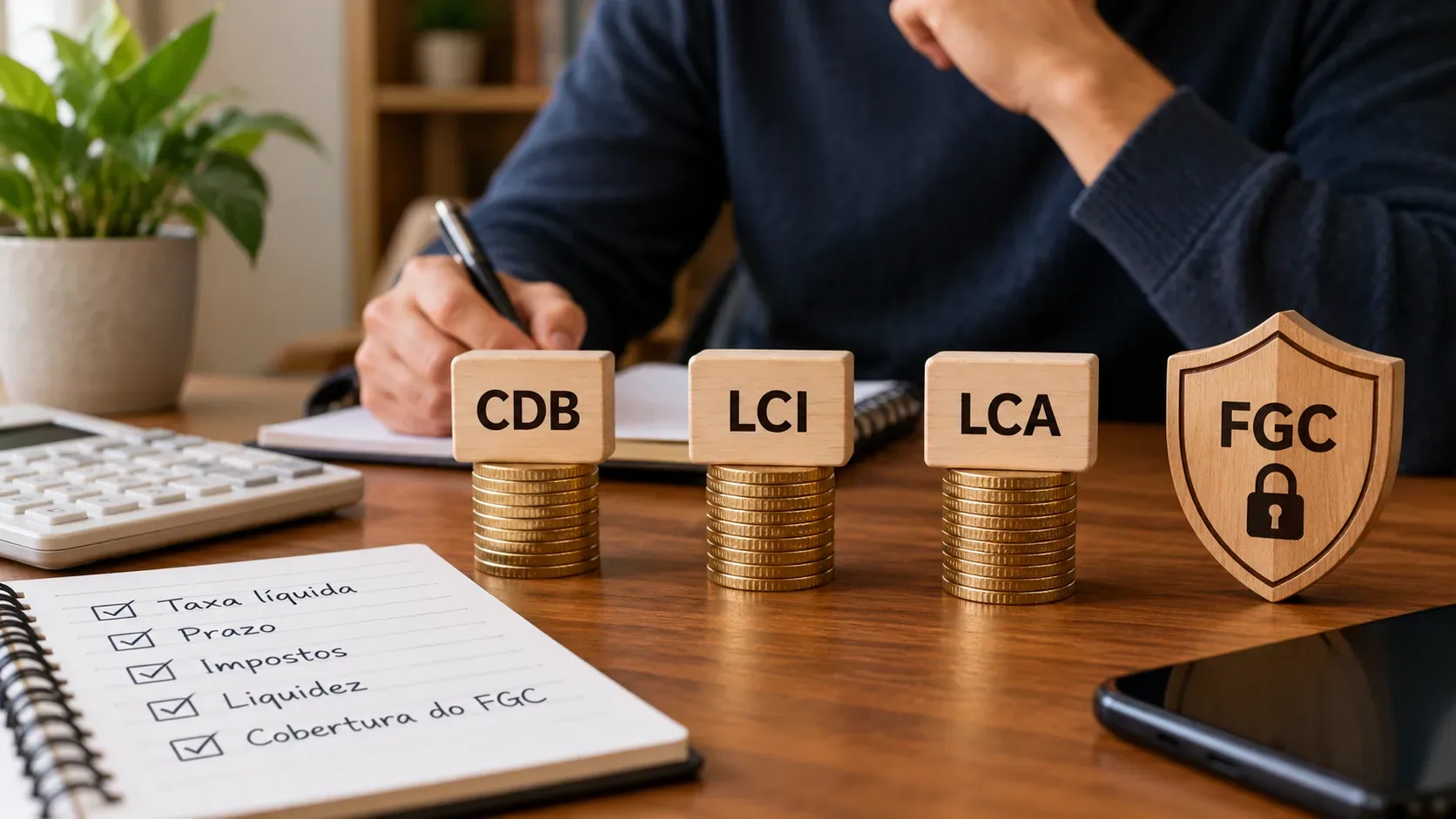
Checklist before comparing two Tesouro IPCA+ bonds
- Confirm whether the bond pays coupons or only at maturity.
- Check the maturity date and the official payment calendar.
- Compare the rate and price at the time of the inquiry.
- Consider when income tax will be charged on each cash flow.
- If there are coupons, decide whether they will be spent or reinvested.
- If you may sell before maturity, consider mark-to-market pricing.
For updated rules, see Tesouro Direto and the educational material from Brazil's Investor Portal.