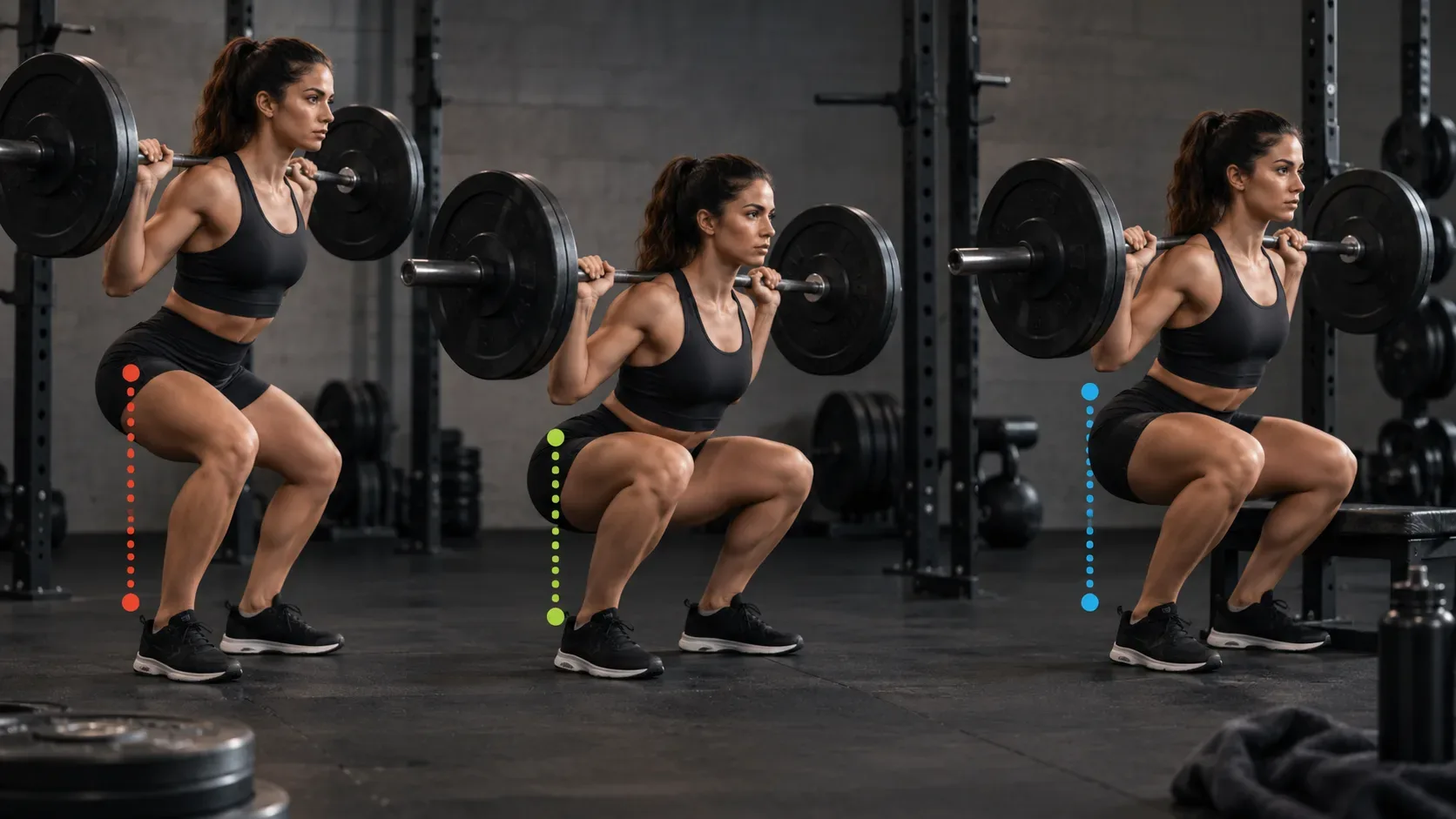

There is no single “correct” rest interval between sets. For hypertrophy, the most recent evidence suggests that resting more than 60 seconds may offer a small advantage over very short rests, mainly because it allows you to better sustain repetitions, load, and training volume. At the same time, the available meta-analysis did not find a clear and consistent benefit from extending rest beyond about 90 seconds. For maximal strength, the picture is different: rests of 2 to 5 minutes tend to be more useful, especially in trained people and during heavy multi-joint exercises.
This means that 60, 90, and 180 seconds should not be treated as three “magic protocols.” The best interval depends on the goal of the set, the exercise, the load, proximity to failure, and how much performance you need to preserve in the following sets.
What the recent meta-analysis found for hypertrophy
A systematic review with Bayesian meta-analysis published in 2024 pooled nine studies comparing different inter-set rest intervals in healthy adults. The authors classified rest periods into four ranges: short (up to 60 s), intermediate (61–119 s), long (120–179 s), and very long (180 s or more). The main result was substantial overlap across the ranges, with hypertrophy observed across the full spectrum of rest durations and considerable heterogeneity among studies.
When the analysis was simplified to up to 60 s versus more than 60 s, central estimates slightly favored the longer intervals. However, the review itself concluded that the evidence remains uncertain and that no appreciable difference in hypertrophy was detected when resting beyond 90 s. In other words, the data do not support a simple linear rule that “more rest always means more muscle.” Sources: PubMed — Singer et al., 2024 and the full text at Frontiers.
60, 90, or 180 seconds: translating the finding into practice
| Interval | When it may work well | Main limitation |
|---|---|---|
| 60 s | Moderate sets, isolation exercises, time-limited sessions, or situations where performance drops only slightly. | May reduce repetitions and load in later sets, especially near failure or in demanding exercises. |
| 90 s | A practical range for many hypertrophy sets, especially exercises with a lower systemic cost. | It is not a biological cutoff; some exercises and loads require more recovery. |
| 180 s | Heavy compound exercises, low-repetition sets, strength-focused work, or situations where preserving performance is the priority. | Lengthens the session and has not shown a clear hypertrophy advantage over rests above 90 s in every situation. |
The table is a decision heuristic, not a universal prescription. For example, 90 s may be enough for a biceps curl but too short for a heavy squat set performed close to failure.
Why short rests can hurt performance even when they “burn more”
Rest is not only about reducing the feeling of fatigue. It affects how much performance you can repeat. In one study of trained men, resting 1 minute instead of 3 minutes reduced the total number of repetitions in resistance-training protocols; in another eight-week trial, the 3-minute group achieved larger strength gains and some superior hypertrophy outcomes compared with the 1-minute group. These individual studies do not settle the question by themselves, but they help explain the mechanism by which short intervals may limit the stimulus: you begin the next set while still fatigued and produce less high-quality work. Sources: Willardson & Burkett, 2008 and Schoenfeld et al., 2016.
This also helps clear up a common misconception: more burning, lactate, or “pump” does not automatically mean more hypertrophy. The 2024 meta-analysis discusses how the older preference for short rests was partly based on acute hormonal responses, whereas current evidence places more emphasis on the ability to sustain mechanical tension and training volume.
For strength, longer rests have a stronger rationale
A systematic review on strength found that robust gains can occur even with short rests, but that more than 2 minutes tends to be necessary to maximize strength in trained individuals. In beginners, 60–120 s may be sufficient in many contexts because absolute loads and technical demands are often lower. Source: Grgic et al., 2018.
The logic is straightforward: if the main goal is to lift as much weight as possible with good technique, it makes sense to preserve force-producing capacity from one set to the next. In exercises such as squats, deadlifts, bench presses, and heavy rows, 180 s is often a more coherent starting point than 60 s. In very heavy sets, athletes may need 3–5 minutes or more depending on the protocol.
What to do when hypertrophy and strength appear in the same workout
You do not need to use one timer for the entire session. A simple strategy is to match rest duration to the role of the exercise:
- Main heavy exercises: about 2–4 minutes, adjusting to preserve technique, load, and repetitions.
- Moderate compound exercises for hypertrophy: roughly 90–180 s, using more rest if performance drops sharply.
- Isolation or lower-demand exercises: roughly 60–120 s, provided the next set remains high quality.
- Sets very close to failure: generally require more recovery than sets stopped with several repetitions in reserve.
These ranges are intentionally broad because the literature itself is heterogeneous. The American College of Sports Medicine's 2026 update also emphasizes that resistance-training prescription should be individualized according to goals, capacity, and adherence rather than relying on rigid rules. The document synthesized 137 systematic reviews involving more than 30,000 participants. See the Position Stand on PubMed and the official ACSM summary.
How to tell if your rest interval is too short
Instead of following the clock without context, watch what happens to your sets. An interval is probably too short when, with the same load and intended effort, performance falls more than planned.
- Record repetitions and load in the first set.
- Use your chosen interval, for example 90 s.
- Compare the following sets. If repetitions collapse or technique worsens early, test an extra 30–60 s of rest.
- If performance stays stable and the workout is excessively long, try shortening rests in less demanding exercises.
This adjustment is especially useful because different people recover at different rates, and the same person may need different rest periods for different exercises.
So, which number should you choose?
For hypertrophy, 90–180 s is a practical range for most sets, with 60–90 s working better when the exercise is less demanding and performance loss is small. There is no strong evidence that 180 s is always superior to 90 s for muscle growth.
For strength, 180 s is often a better starting point for heavy sets, and 3–5 minutes may be appropriate when preserving maximal performance is the priority. If your goal combines strength and hypertrophy, use more rest for the main lifts and less for accessory work.
The central question is less “which timer wins?” and more “how much rest lets you perform the next set with the stimulus you want?” The best range is the one that preserves enough performance without turning the workout into unnecessarily long waiting.
Limits of the evidence and safety
The hypertrophy meta-analysis included only nine studies with different samples and protocols, which limits highly precise conclusions about 60, 90, or 180 seconds as exact cutoffs. In addition, the findings mainly apply to healthy adults performing resistance-training programs and do not replace individual assessment.
If you have pain, an injury, cardiovascular or metabolic disease, are returning after a long period of inactivity, use medications that affect heart rate or blood pressure, or have been given medical restrictions for exercise, adjust training with a qualified health or exercise professional. Rest between sets is a programming variable, not a medical treatment.