
Independent blog

Strength in Alignment

Strength training explained through strength, biomechanics, movement, and evidence for people who want to train better, understand their bodies, and build a sustainable fitness routine.

Explore articles

Main featured article

The most important content to start with.

Featured articles

Other selected strategic content.

Atleta realiza três profundidades de agachamento com barra em academia, com marcadores coloridos ao lado do quadril indicando diferentes faixas de movimento.
Biomechanics & Technique21/09/20267 min read

Full or partial range of motion in strength training: when each approach makes sense

Full range is a solid foundation for strength and hypertrophy, while lengthened partials can have specific uses. Learn how to choose a range without turning ROM into a universal ru...

Read article
Mulher treina em máquina de musculação enquanto homem executa levantamento com barra em área de pesos livres de uma academia.
Biomechanics & Technique21/09/20268 min read

Machines or free weights? What really changes for strength, hypertrophy and stability

Learn where machines and free weights actually differ, why hypertrophy tends to be similar, and how specificity changes strength gains.

Read article
Homem musculoso descansando em um banco de academia ao lado de uma barra carregada, com cronômetros marcando 60, 90 e 180 segundos ao fundo.
Training & Progression13/09/20266 min read

Rest Between Sets: 60, 90, or 180 Seconds? What the Evidence Shows for Hypertrophy and Strength

Evidence does not support one universal interval: rests over 60 s may slightly favor hypertrophy, while heavy strength work often benefits from 2–5 minutes.

Read article

Categories

Browse the blog main topics.

Latest articles

Recent posts and new content.

View all
Homem musculoso sentado em banco de academia entre uma barra muito carregada e outra mais leve, com toalha e itens de recuperação ao lado.
Preparation & Recovery13/09/20269 min read

Deload in resistance training: does reducing volume help or hurt strength and hypertrophy?

Recent studies show important differences between reducing volume, stopping completely, and continuing normal training. Here is what the evidence says about strength, hypertrophy, ...

Read article
Mulher sentada no chão de uma academia fazendo alongamento de perna ao lado de uma barra com anilhas e halteres.
Preparation & Recovery12/09/20266 min read

Does static stretching before lifting reduce strength? Duration, intensity and timing matter

Stretching before lifting is not automatically harmful: duration, intensity, time to the set and the type of effort shape the risk of an acute strength drop.

Read article
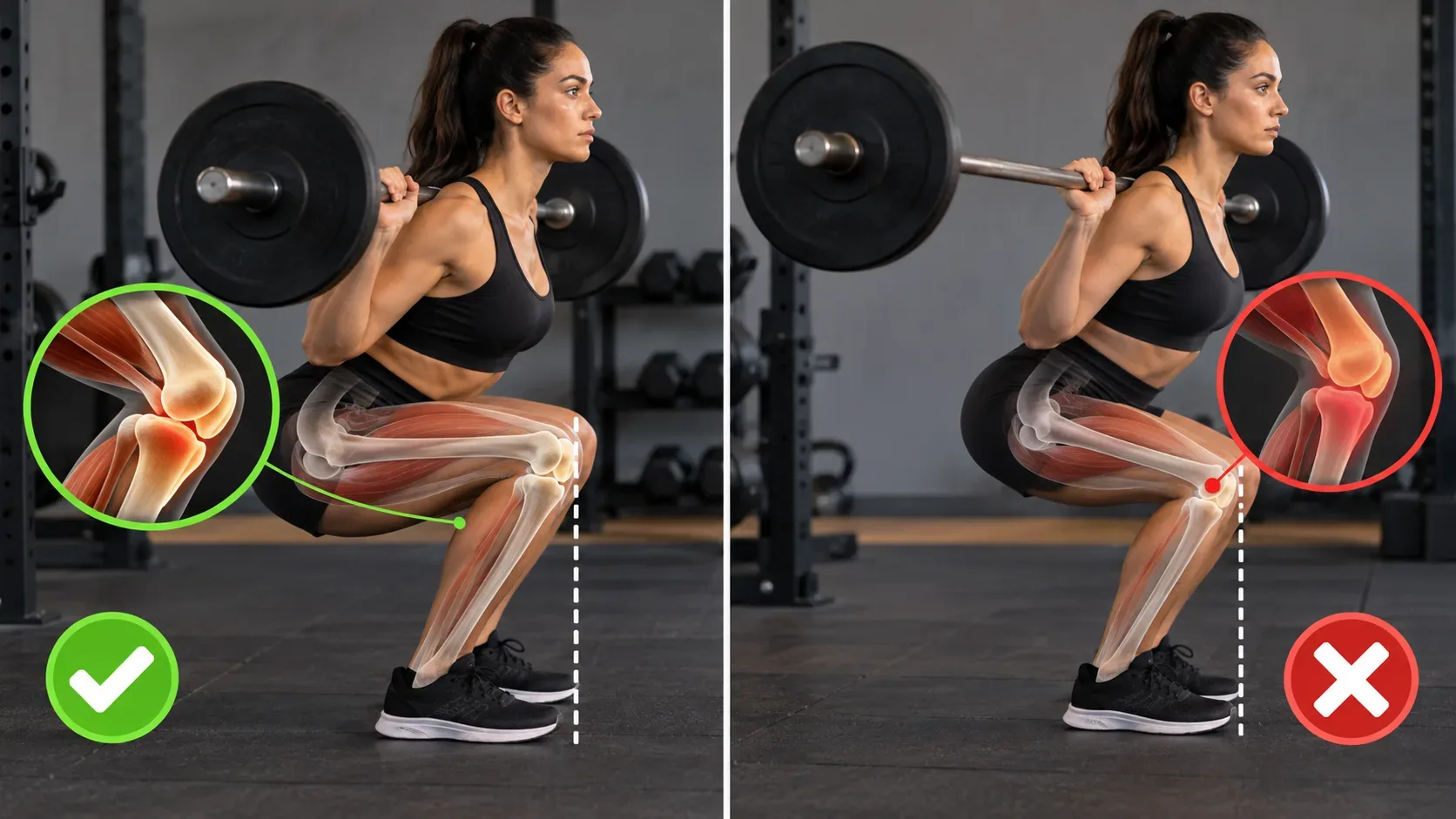
Mulher faz agachamento com barra em comparação lado a lado, com sobreposição anatômica das pernas, linhas de referência e ícones verde de confirmação e vermelho de erro.
Biomechanics & Technique11/09/20266 min read

Can your knees go past your toes in a squat? What changes at the knee, hip and trunk when you restrict the motion

Letting the knee travel past the toes increases mechanical demand at the knee, while restricting that travel tends to shift more demand to the hip and trunk. That does not, by itse...

Read article
Mulher fazendo remada com halter e homem treinando com barra em academia, ao lado de quadro visual sobre séries, frequência, carga e falha.
Training & Progression10/09/20266 min read

ACSM 2026 and resistance training: what changes for sets, frequency, load and training to failure

The new ACSM guideline explains how to adjust resistance training for strength, hypertrophy and power — and why training to failure is not mandatory.

Read article
Mulher realiza agachamento com barra carregada enquanto um treinador acompanha de perto em uma academia.
Training & Progression08/09/20266 min read

Is RIR reliable? What 26 studies show about when estimates miss more

A systematic review of 26 studies suggests RIR is more accurate closer to failure and at higher relative loads, and less accurate in long, lighter sets.

Read article
Mulher aparece em dois momentos de um agachamento com barra em uma academia, um na posição baixa e outro durante a subida.
Biomechanics & Technique28/09/20267 min read

Strength training tempo: what changes when you slow the lowering or lifting phase

Slowing the eccentric or concentric phase changes time under tension, load, repetitions, and velocity. Evidence does not support the idea that slower is automatically better for st...

Read article
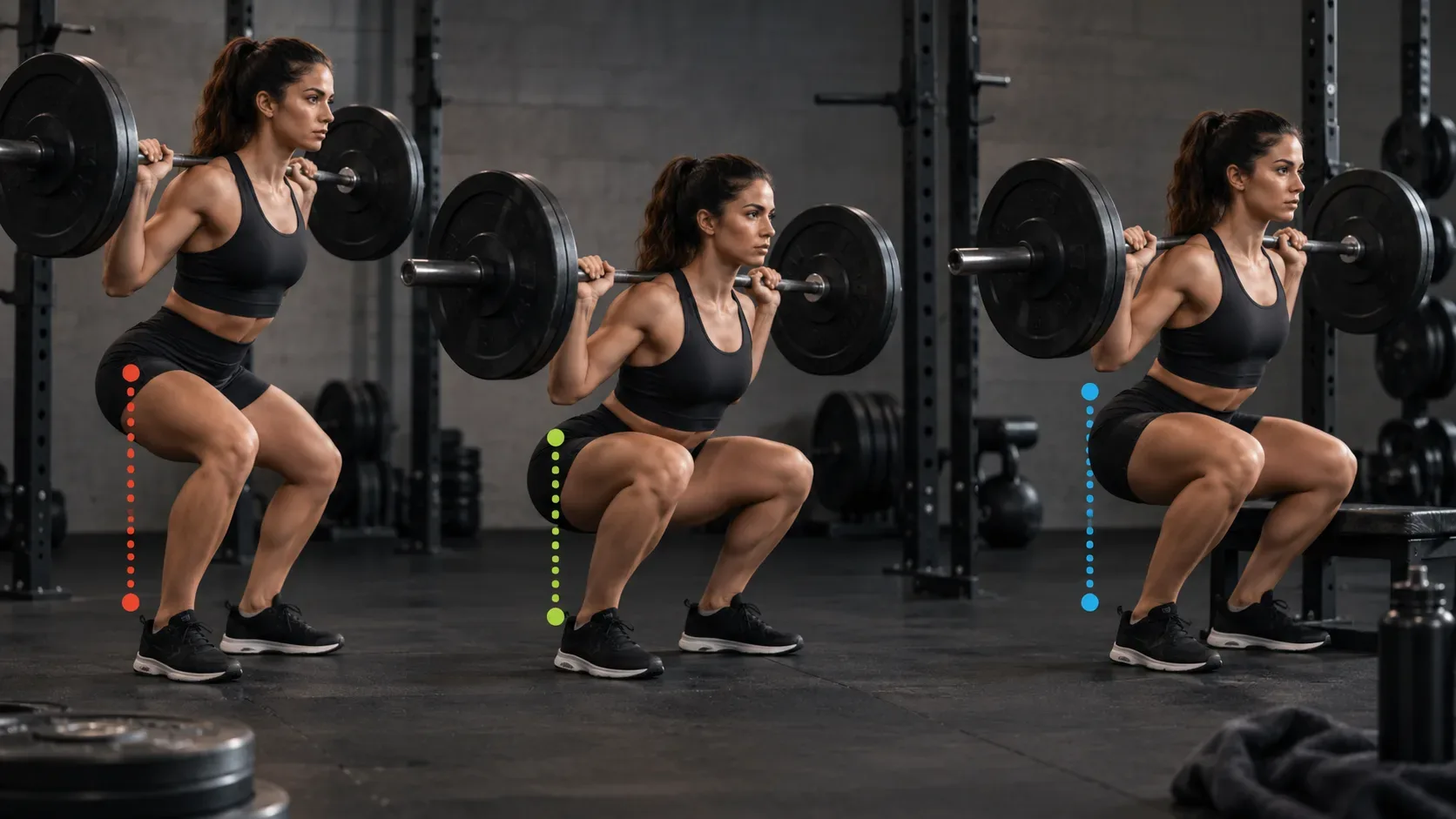

Atleta realiza três profundidades de agachamento com barra em academia, com marcadores coloridos ao lado do quadril indicando diferentes faixas de movimento.
Biomechanics & Technique21/09/20267 min read

Full or partial range of motion in strength training: when each approach makes sense

Full range is a solid foundation for strength and hypertrophy, while lengthened partials can have specific uses. Learn how to choose a range without turning ROM into a universal ru...

Read article
Mulher treina em máquina de musculação enquanto homem executa levantamento com barra em área de pesos livres de uma academia.
Biomechanics & Technique21/09/20268 min read

Machines or free weights? What really changes for strength, hypertrophy and stability

Learn where machines and free weights actually differ, why hypertrophy tends to be similar, and how specificity changes strength gains.

Read article
Homem musculoso descansando em um banco de academia ao lado de uma barra carregada, com cronômetros marcando 60, 90 e 180 segundos ao fundo.
Training & Progression13/09/20266 min read

Rest Between Sets: 60, 90, or 180 Seconds? What the Evidence Shows for Hypertrophy and Strength

Evidence does not support one universal interval: rests over 60 s may slightly favor hypertrophy, while heavy strength work often benefits from 2–5 minutes.

Read article

Training & Progression

Strength, hypertrophy, volume, intensity, frequency and progression explained to help organize training more effectively.

View all
Homem musculoso descansando em um banco de academia ao lado de uma barra carregada, com cronômetros marcando 60, 90 e 180 segundos ao fundo.
Training & Progression13/09/20266 min read

Rest Between Sets: 60, 90, or 180 Seconds? What the Evidence Shows for Hypertrophy and Strength

Evidence does not support one universal interval: rests over 60 s may slightly favor hypertrophy, while heavy strength work often benefits from 2–5 minutes.

Read article
Mulher fazendo remada com halter e homem treinando com barra em academia, ao lado de quadro visual sobre séries, frequência, carga e falha.
Training & Progression10/09/20266 min read

ACSM 2026 and resistance training: what changes for sets, frequency, load and training to failure

The new ACSM guideline explains how to adjust resistance training for strength, hypertrophy and power — and why training to failure is not mandatory.

Read article
Mulher realiza agachamento com barra carregada enquanto um treinador acompanha de perto em uma academia.
Training & Progression08/09/20266 min read

Is RIR reliable? What 26 studies show about when estimates miss more

A systematic review of 26 studies suggests RIR is more accurate closer to failure and at higher relative loads, and less accurate in long, lighter sets.

Read article

Biomechanics & Technique

How exercises, machines, joints, levers and positions change movement and training stimulus.

View all
Mulher aparece em dois momentos de um agachamento com barra em uma academia, um na posição baixa e outro durante a subida.
Biomechanics & Technique28/09/20267 min read

Strength training tempo: what changes when you slow the lowering or lifting phase

Slowing the eccentric or concentric phase changes time under tension, load, repetitions, and velocity. Evidence does not support the idea that slower is automatically better for st...

Read article

Atleta realiza três profundidades de agachamento com barra em academia, com marcadores coloridos ao lado do quadril indicando diferentes faixas de movimento.
Biomechanics & Technique21/09/20267 min read

Full or partial range of motion in strength training: when each approach makes sense

Full range is a solid foundation for strength and hypertrophy, while lengthened partials can have specific uses. Learn how to choose a range without turning ROM into a universal ru...

Read article
Mulher treina em máquina de musculação enquanto homem executa levantamento com barra em área de pesos livres de uma academia.
Biomechanics & Technique21/09/20268 min read

Machines or free weights? What really changes for strength, hypertrophy and stability

Learn where machines and free weights actually differ, why hypertrophy tends to be similar, and how specificity changes strength gains.

Read article
Mulher faz agachamento com barra em comparação lado a lado, com sobreposição anatômica das pernas, linhas de referência e ícones verde de confirmação e vermelho de erro.
Biomechanics & Technique11/09/20266 min read

Can your knees go past your toes in a squat? What changes at the knee, hip and trunk when you restrict the motion

Letting the knee travel past the toes increases mechanical demand at the knee, while restricting that travel tends to shift more demand to the hip and trunk. That does not, by itse...

Read article

Preparation & Recovery

Warm-up, pre- and post-workout, rest, fatigue, sleep and recovery strategies.

View all
Homem musculoso sentado em banco de academia entre uma barra muito carregada e outra mais leve, com toalha e itens de recuperação ao lado.
Preparation & Recovery13/09/20269 min read

Deload in resistance training: does reducing volume help or hurt strength and hypertrophy?

Recent studies show important differences between reducing volume, stopping completely, and continuing normal training. Here is what the evidence says about strength, hypertrophy, ...

Read article
Mulher sentada no chão de uma academia fazendo alongamento de perna ao lado de uma barra com anilhas e halteres.
Preparation & Recovery12/09/20266 min read

Does static stretching before lifting reduce strength? Duration, intensity and timing matter

Stretching before lifting is not automatically harmful: duration, intensity, time to the set and the type of effort shape the risk of an acute strength drop.

Read article

Training better starts with understanding what you are doing

Strength in Alignment exists to explain resistance training beyond sets and repetitions. The blog covers strength, hypertrophy, range of motion, biomechanics, body awareness, recovery, supplementation, and strengthening using accessible language and verifiable sources. When a topic involves pain, injury, illness, medication, or an individual need for treatment, the content explains the limits of the evidence and does not replace professional evaluation.

Responsible: Núcleo de Treino e Movimento