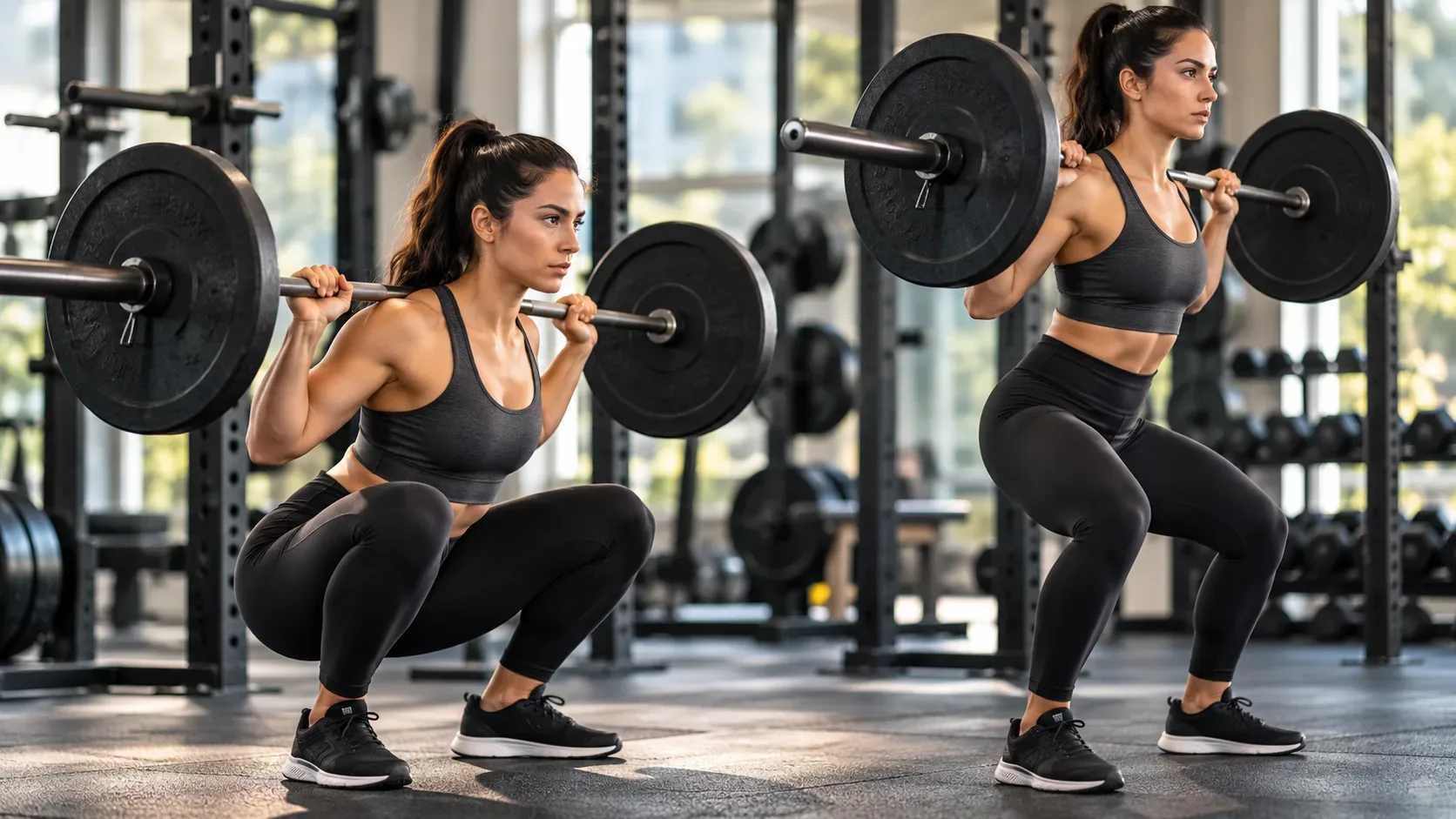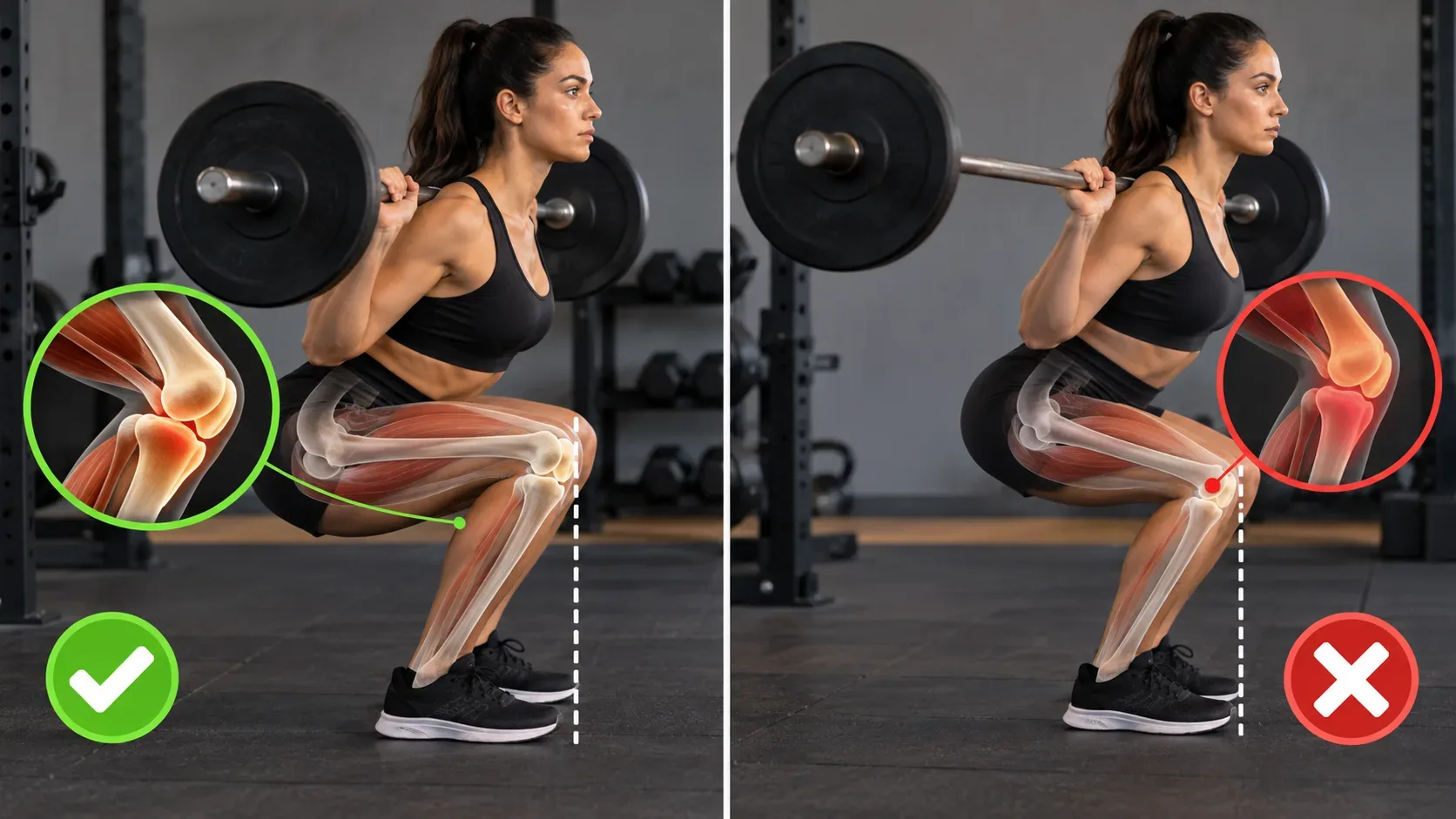
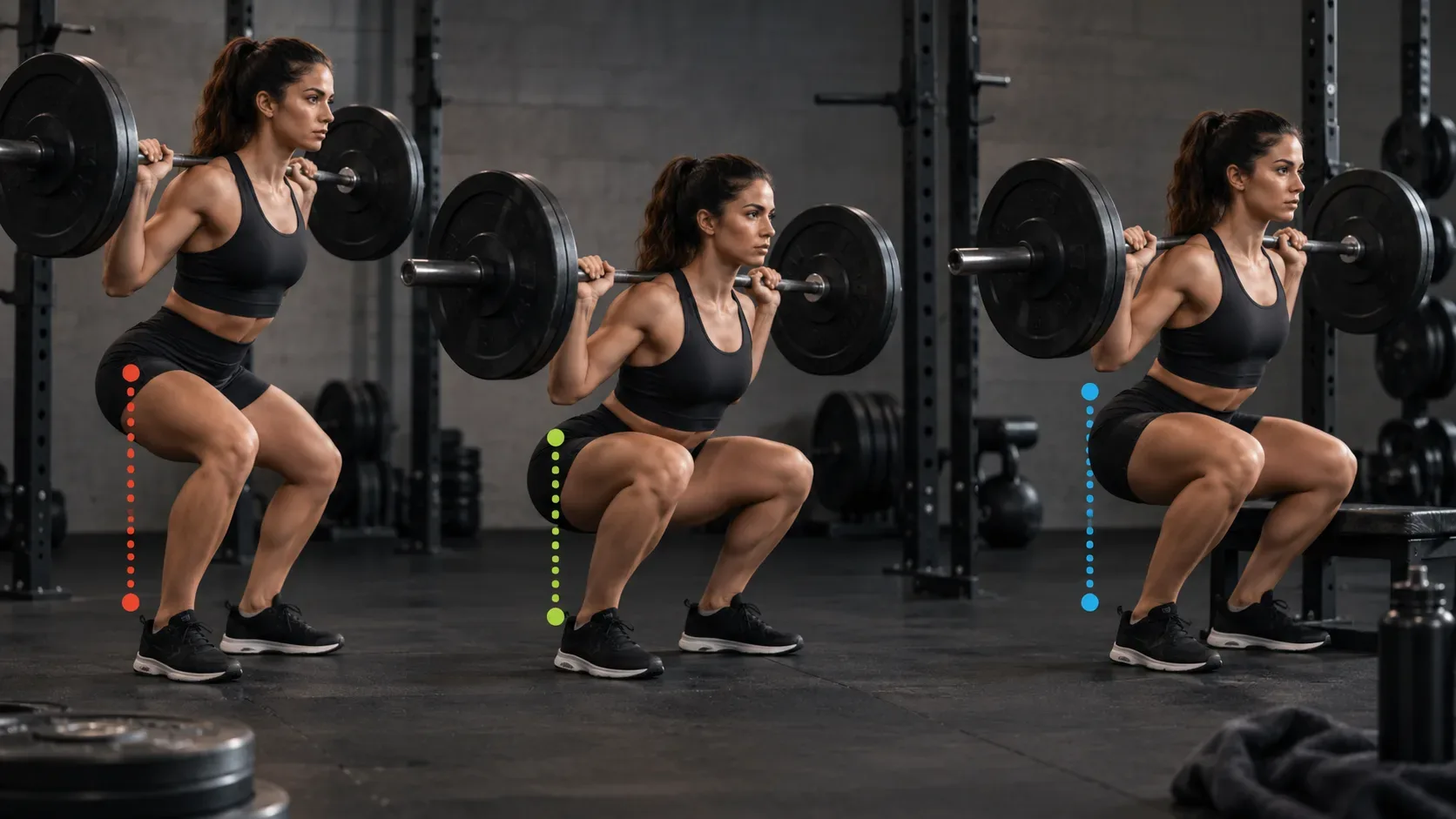
Range of motion is not a binary choice between a right and a wrong technique. In resistance training, it works better as a programming variable. Full range of motion is usually the most consistent foundation for developing strength across a broad range, while partial repetitions can be useful when they preserve a relevant portion of the exercise, especially positions in which the target muscle works at a longer length.
The evidence does not support a universal rule such as “partials are better for hypertrophy” or “full range is always superior.” The effect depends on the goal, exercise, muscle, region being trained, and how load, volume, and effort are compared. A practical strategy is to first master a controllable full range and then use partials for a clear purpose.
Short answer: which range makes more sense?
| Goal | Most defensible base | Where partial range can fit |
|---|---|---|
| General strength | Full range with stable technique | To reinforce specific joint angles or a portion of the movement |
| Hypertrophy | Full range remains a solid choice | Lengthened partials can complement full range or, in some exercises, produce similar adaptations |
| Learning the exercise | The largest range a person can control | A temporarily reduced range to build control and progress |
| Targeting a specific region | Keep full-range work as a base when possible | Add practice or overload to the chosen region |
What range of motion actually changes
Changing range of motion changes the joint angles trained, the muscle length reached in different portions, moment arms, the relative difficulty of each point, and often the external load that can be used. This is why two sets using the same exercise and repetition count can represent different stimuli when they are performed over different ranges.
For strength, joint-angle and task specificity matter
Getting stronger is not only about increasing muscle size. The nervous system and movement coordination also adapt to what is practiced. Training through a broad range gives you experience producing force in more positions. Training only a narrow range tends to concentrate adaptation around that region and nearby angles.
A 2021 meta-analysis found an average advantage for full range for strength and lower-body hypertrophy compared with partial ranges, although the included studies were heterogeneous. In 2026, the American College of Sports Medicine position stand, based on an overview of 137 systematic reviews, also reported that voluntary strength is enhanced by training through a complete range of motion. Sources: 2021 meta-analysis and 2026 ACSM position stand.
For hypertrophy, the region of the range matters
When all partial repetitions are treated as equivalent, an important detail can disappear: training the half in which the muscle is relatively lengthened is not the same as training the half in which it is relatively shortened.
A 2023 systematic review observed that full range and partials performed in the initial portion of the movement, often associated with longer muscle lengths in the exercises studied, tended to outperform partials performed in the final region for some muscles. The authors suggested considering a combination of full range and partials in this more lengthened region in hypertrophy-oriented programs. Source: review on range of motion and hypertrophy.
Why muscle length became central to the discussion
Range of motion describes the joint excursion. Muscle length describes the muscle's position within that excursion. They are related, but they are not synonyms. The same joint angle can place different muscles at different lengths, especially in muscles that cross two joints.
This explains why there is no single rule that applies equally to squats, calf raises, curls, extensions, and pulling movements. The practical question is not only how much of the movement is being performed, but which portion is being kept or removed and where the target muscle receives tension.
Recent results make the conclusion more cautious, not more absolute. A 2025 trial in trained participants found similar adaptations between lengthened partials and full range in upper-body exercises. A 2025 meta-analysis on muscle length and regional hypertrophy found small differences, with a trend toward longer muscle lengths in some regions but substantial overlap between conditions. Sources: trial in trained participants and 2025 meta-analysis.
Why full range remains a good foundation
- It trains more positions: this matters when the goal includes strength across a broad range.
- It standardizes repetitions more clearly: consistent start and end points make it easier to compare load and performance across weeks.
- It reduces the risk of confusing heavier loads with equivalent progress: shortening the range often allows more weight to be moved, but that does not mean strength improved across the previous range.
- It supports technical progression: when a person controls the range they have, it is easier to identify where execution begins to deteriorate.
Full does not mean forcing every exercise to the anatomical maximum. It means using the planned, controllable range for that exercise, with joint positions the person can sustain without losing the purpose of the movement. Available mobility, body proportions, equipment, and pain history can all change that practical range.
When partial repetitions make sense
1. To emphasize longer muscle lengths
This is the use that has received the most recent attention. In some exercises, keeping the half in which the target muscle is more lengthened can preserve an important part of the hypertrophy stimulus. A 2023 calf-raise study found greater gastrocnemius growth with partials performed in the more lengthened region than with partials in the shortened region, with favorable results compared with full range in some measurements as well. This is an exercise- and population-specific finding, not a rule for every muscle. Source: calf study at longer muscle lengths.
2. To add work after a full-range set
In suitable exercises, some trainees use lengthened partials after they can no longer complete another full repetition. This increases work performed without requiring a new set. A 2026 calf-raise study found similar hypertrophy when this strategy was compared with traditional sets under equalized total volume, although the partial-repetition strategy accumulated more work per set. Source: study of partials after full-range failure.
3. To train a specific strength region
If a sport or technical goal requires force production in a particular range, partials can increase practice in that region. The expected benefit is specific. For that reason, they often work best as a complement rather than an automatic replacement for broader training.
4. To build range gradually
A reduced range can be useful as a learning step when a person loses control, balance, or position at a certain depth. In that case, the goal is to use a controllable range and expand it progressively as technique and tolerance improve.
The exercise changes the interpretation
In a squat, reducing depth changes hip, knee, and ankle angles at the same time. In a calf raise, the distinction between the lengthened and shortened regions is more direct. In a preacher curl, the relationship among elbow angle, biceps length, and resistance profile depends on shoulder position and the equipment. In pulldowns and rows, the scapula, shoulder, and elbow all change together.
That is why simply saying “do the bottom half” or “do the top half” is not a universal prescription. First identify the muscle you want to emphasize, where it is more lengthened, where the exercise provides more resistance, and whether execution remains stable.
How to program range of motion without turning it into a trend
- Define a reference range. Use a complete, repeatable execution that you can control.
- Progress without silently changing the excursion. If load rises while range shrinks, interpret the comparison cautiously.
- Choose partials for a specific reason. Lengthened-position hypertrophy, angle-specific strength, intensification, and technical progression are different reasons.
- Change one variable at a time. If range, load, volume, and proximity to failure all change together, it becomes difficult to identify what drove the result.
- Evaluate over several weeks. Technique, discomfort, repetition progression, and performance in the reference range are more useful indicators than the feeling from one workout.
A practical decision rule
If you do not have a clear reason to shorten the movement, start with the largest range you can perform with control and consistency. For general strength, this choice is also aligned with the latest ACSM synthesis. If hypertrophy is the main goal, lengthened partials can be tested as a complement, especially in exercises where that region is easy to identify and keep under tension.
The best reading of the current evidence is less full versus partial and more which range, for which goal, in which exercise. Full range offers a robust, comparable foundation. Partials become valuable when the chosen region and the reason for using it are defined before the set begins.